
Filters
Level
Grade
Subject
Subject Area
Subject Topic
Standard(s)
Audience
Keyword
DurationMinutes
Elementary School Lesson Plans

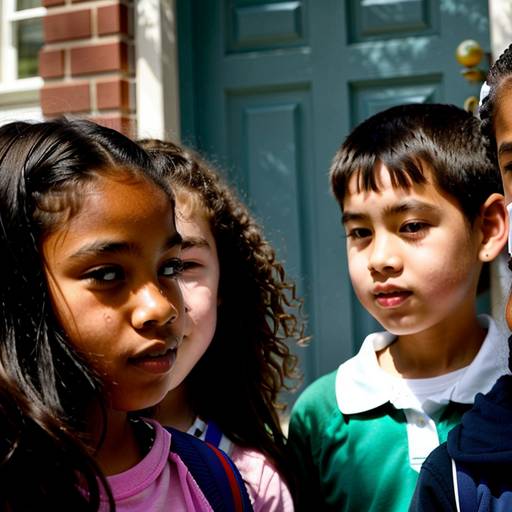
In this 4th-grade Social Studies lesson, students will explore the concepts of community and diversity by investigating the unique cultural, ethnic, and social backgrounds present in their neighborhood. The lesson begins with a class discussion to identify what makes their community special and introduces key terms related to diversity. Students will then work in small groups to research specific aspects of diversity in their area, such as various cultures, languages, and local celebrations.
Following their research, each group will create a visual "Diversity Map" that illustrates their findings, allowing them to creatively express the contributions of different individuals and groups. After completing their maps, students will present their work to the class, fostering a sense of pride and awareness regarding their community's richness.
The lesson concludes with a reflective writing exercise, where students articulate how diversity strengthens their community. Assessment will include participation in discussions and presentations, creativity in their maps, and reflective writing. Extensions might involve inviting community members to share their stories or organizing a “Community Fair” to celebrate and learn more about different cultures. Overall, the lesson aims to instill appreciation for diversity and promote an inclusive community environment.

In this 3rd-grade social studies lesson, students will explore geography and countries through an engaging and interactive format. The lesson begins with a discussion about countries and travel, introducing students to the concept of passports. Following a brief direct instruction on basic geographic terms and the locations of various countries using a world map or globe, students will engage in guided practice by researching two countries of their choice. They will fill out a "passport" template with information about each country, including the capital city, a landmark, traditional food, and a fun fact.
Next, students will create mini-posters to visually represent their findings, including illustrations such as the country’s flag and cultural symbols. The lesson culminates in a presentation where students share their projects with the class, offering an opportunity to learn from each other. Assessment will be conducted through observation and review of completed materials. The lesson also includes extensions, such as a potential "World Cultures Day" to further immerse students in different cultural practices. Overall, this lesson emphasizes the importance of understanding geography and cultural diversity.

In this Kindergarten math lesson, students will explore basic geometric shapes and patterns through various engaging activities. The lesson begins with an interactive introduction where students identify and describe shapes in their environment. Following this, the teacher introduces simple patterns using shapes and colors, encouraging student participation in completing examples on the whiteboard.
In small groups, students will engage in a shape sorting activity, organizing cut-outs based on characteristics like the number of sides or color, and sharing their sorting methods with the class. They will then create their own patterns using blocks, applying terms like “repeat” and “design” while describing their creations.
A collaborative challenge will allow the class to work together to create a large pattern on paper, fostering teamwork and discussion about their choices. The lesson concludes with a summary of key concepts, and students will receive worksheets for additional practice at home. Throughout the session, the teacher will assess student understanding through observation and review of their worksheets. Extension activities will encourage students to look for patterns in their daily lives and share their findings in the next class.
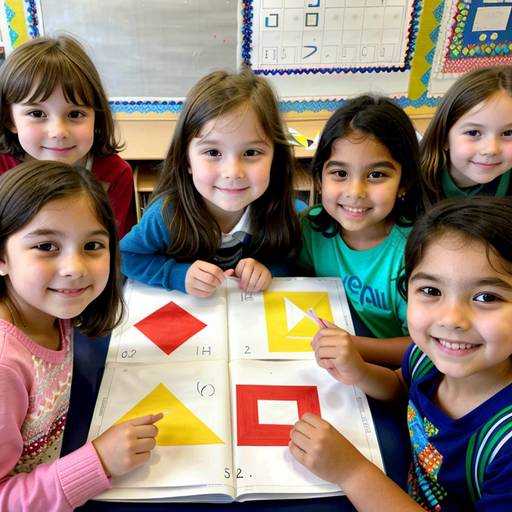
In this engaging math lesson for first graders, students will explore basic geometric shapes and patterns through interactive activities. The lesson begins with a discussion about shapes found in their environment, followed by direct instruction on identifying and naming circles, squares, triangles, and rectangles. Students will learn how to create simple patterns by arranging these shapes in a sequence.
Working in pairs, they will create unique patterns using pre-cut shapes and share their creations with the class. For independent practice, students will use construction paper and markers to design a poster featuring their own patterns and provide a brief description. Throughout the lesson, the teacher will observe and assess students' understanding of shapes and patterns.
To reinforce learning, students will present their posters to the group, highlighting their creativity and comprehension. The lesson also includes optional extension activities, such as a "Shape Hunt," encouraging students to connect classroom learning with the real world. Overall, this lesson fosters an interactive and visual approach to understanding geometry and patterns.

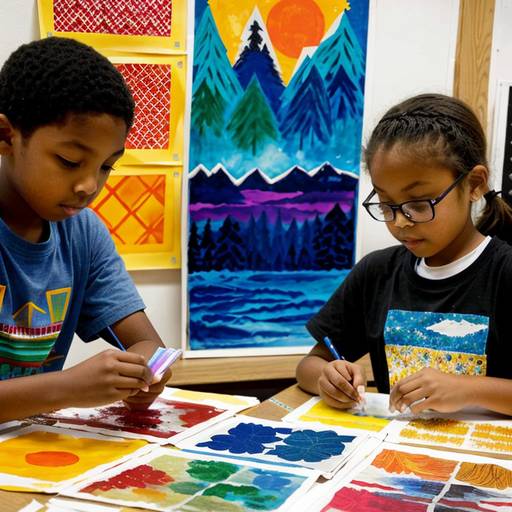
In this 4th-grade art lesson, students will explore the fascinating world of printmaking through nature-inspired creations. They will be introduced to the significance of printmaking as a form of artistic expression while examining patterns and textures found in the natural environment. The lesson begins with a discussion about printmaking techniques, followed by a demonstration of various methods, including the use of foam blocks and natural materials to create prints.
Students will engage in hands-on activities, producing multiple prints using their chosen techniques while experimenting with color and design. The lesson concludes with a mini art gallery walk, allowing students to showcase their work and discuss their favorite prints and the materials they used. Throughout the lesson, students will learn to reflect on their creative processes while enhancing their understanding of both art and nature. Assessment will focus on participation, engagement, and the originality displayed in their prints. Options for extension include incorporating scientific concepts related to the plants used in their artwork.

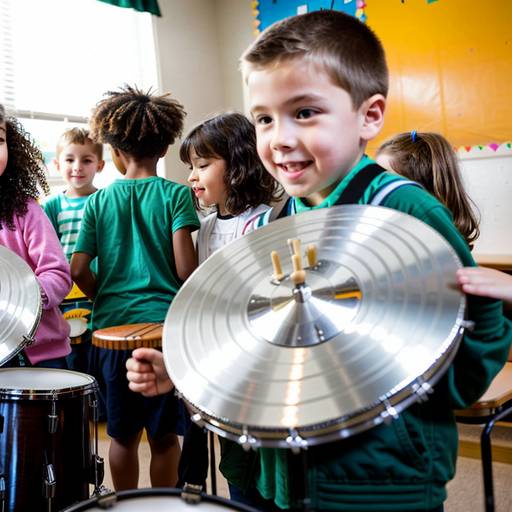
In this 1st Grade music lesson, students will explore percussion instruments and the concept of rhythm. The lesson begins with a discussion about various percussion instruments, using visual aids to help students identify them and understand their unique sounds. Students will then practice body percussion, learning simple rhythmic patterns through clapping, stomping, and patting.
After familiarizing themselves with body rhythms, students will work in small groups to explore different percussion instruments, creating their own rhythmic patterns to share with the class. Each group will have the opportunity to perform their rhythms, encouraging collaboration and active listening. The lesson concludes with a group reflection, where students share their favorite instruments and what they learned about rhythm.
Assessment will focus on students' participation and ability to replicate rhythms, while extension activities may include bringing in instruments from home or creating a classroom rhythm book. Overall, this lesson fosters creativity, teamwork, and a foundational understanding of rhythm and percussion.
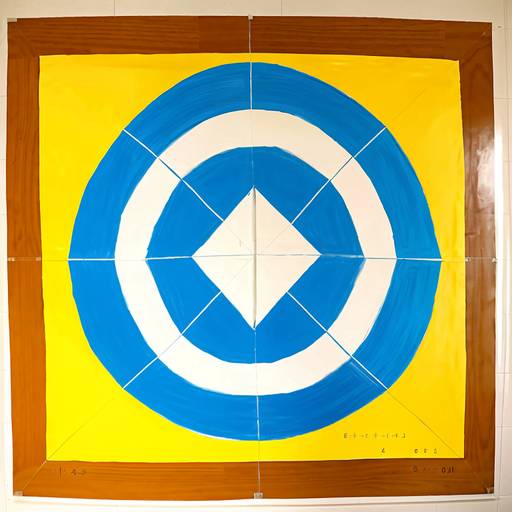
In this 4th grade math lesson, students will explore the concept of perimeter, learning how to measure and calculate the distance around various geometric shapes, such as squares, rectangles, and triangles. The lesson begins with a discussion about measurement, followed by direct instruction on perimeter formulas specific to each shape. Students will engage in guided practice in small groups, using rulers and measuring tapes to accurately measure sides of shape cutouts and calculate their perimeters. Independent practice will involve worksheets with perimeter calculations and real-world application problems. The lesson concludes with a class discussion to reflect on their findings, emphasizing the importance of accurate measurement and real-life applications of perimeter. Assessments will include evaluating group participation and worksheet accuracy, with extensions available for advanced learners. Modifications will also be provided to support diverse learners in the classroom.
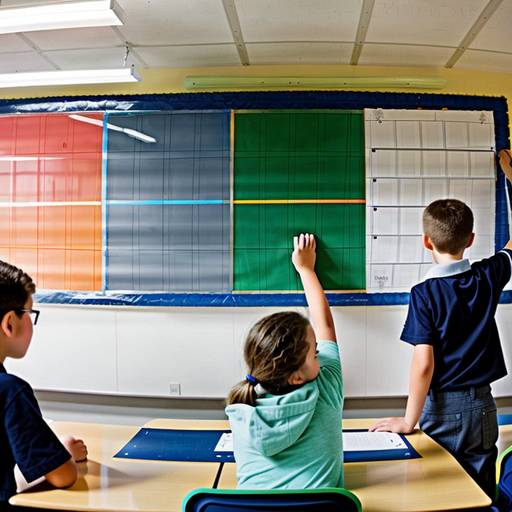
This 5th-grade mathematics lesson focuses on the concepts of measurement and perimeter. The lesson begins with an engaging introduction where students discuss their understanding of perimeter, followed by a clear explanation and demonstration of how to measure lengths and calculate the perimeter of shapes.
Students then pair up to measure various objects in the classroom, recording their findings and calculating perimeters collaboratively. After this guided practice, they will create their own shapes on graph paper, measure each side, and calculate the perimeter, showcasing their creativity.
The lesson concludes with a sharing session where students present their shapes and calculations, reinforcing their understanding of perimeter and measurement. Assessment will be based on observation during activities and the accuracy of their calculations. This lesson encourages hands-on learning, collaboration, and critical thinking, while also providing opportunities for differentiation based on student needs.
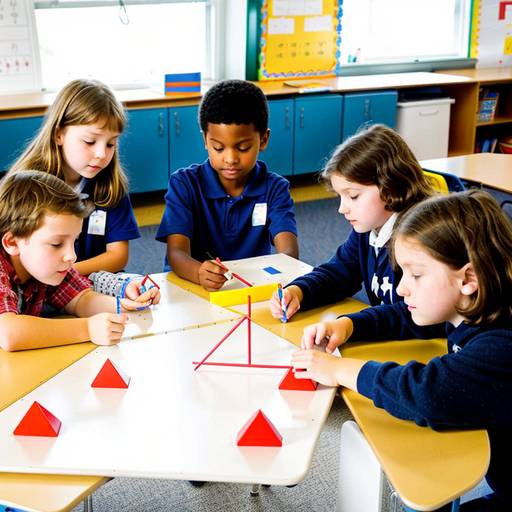
This 3rd-grade math lesson focuses on introducing students to the concept of perimeter. The lesson begins with an engaging discussion to elicit prior knowledge and define perimeter as the distance around a shape. Through guided practice, students use rulers and measuring tools to measure the sides of given polygons and calculate their perimeters by adding the lengths together.
Students then participate in an independent activity where they choose an object in the classroom, measure its sides using string or yarn, and calculate its perimeter. The lesson concludes with students sharing their findings and reflecting on their learning experiences. Assessment includes observation of group interactions, reviewing completed worksheets for measurement accuracy, and evaluating exit tickets to gauge individual understanding. Differentiation strategies are in place to support varying skill levels, ensuring all students can engage meaningfully with the content. Overall, students will gain practical measurement skills and a solid understanding of perimeter through interactive activities.

In this 5th-grade Language Arts lesson, students will explore persuasive writing, focusing on how to craft a compelling argument. The lesson begins with a discussion on the purpose and elements of persuasive writing, including clear opinions, reasons, evidence, counterarguments, and calls to action. Students will work in small groups to brainstorm ideas on a given topic, filling out a graphic organizer to structure their thoughts. Following the group activity, each student will write a persuasive paragraph on a topic of their choice, incorporating the discussed elements. The lesson concludes with opportunities for students to share their writing with the class, allowing for feedback and discussion on the effectiveness of their arguments. Assessment will involve evaluating the written paragraphs based on a rubric focused on clarity, reasoning, evidence, organization, and grammatical conventions. Extensions and adaptations are provided to support diverse learning needs and interests.