
Filters
Level
Grade
Subject
Subject Area
Subject Topic
Standard(s)
Audience
Keyword
DurationMinutes
Elementary School Lesson Plans

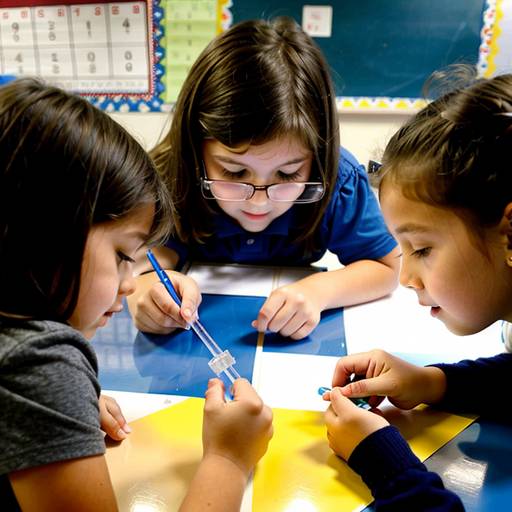
This 1st-grade math lesson focuses on the concepts of measurement and time, aiming to develop students' understanding of length using standard units (inches and feet) and their ability to read clocks to tell time to the hour and half-hour. The lesson begins with an engaging introduction that highlights the importance of measurement in everyday life, followed by direct instruction that demonstrates how to use a ruler and interpret a clock.
Students participate in guided practice through measurement stations, where they measure various objects and record their findings, as well as practice telling time with worksheets featuring clock faces. Independent practice involves a short quiz to reinforce their understanding of both measurement and time-telling skills. Assessment is conducted through observation during activities and evaluating the quizzes to ensure comprehension.
Differentiation strategies are included to support advanced learners and those needing extra assistance, while extensions suggest further engagement with measurement in real-life contexts. This interactive lesson fosters student participation and provides a solid foundation in measurement and time concepts.
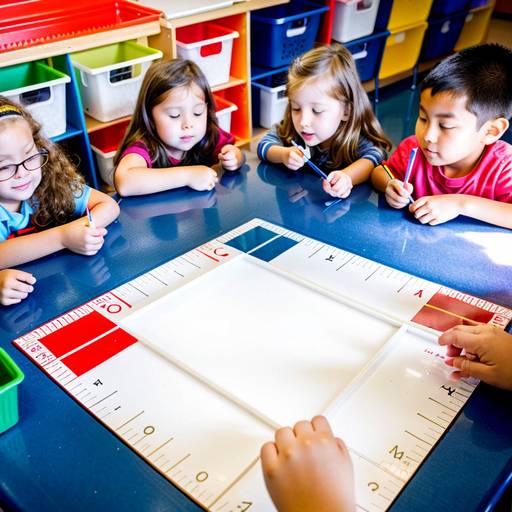
This Kindergarten math lesson focuses on introducing students to the concepts of measurement and weight. The objectives include helping students understand how to measure length using non-standard units, such as unifix cubes and paperclips, and to compare the weight of various objects using balance scales.
The lesson begins with a discussion about the importance of measurement in everyday life, followed by a warm-up activity where students measure classroom items using non-standard units. In small groups, students then explore the weights of different objects using balance scales, making predictions about which items are heavier or lighter before weighing them. They document their findings on a worksheet, which encourages collaboration and discussion.
At the end of the lesson, the class comes together to share their observations and findings, reinforcing the vocabulary related to measurement and weight. Assessment is based on student engagement, group collaboration, and the accuracy of their recorded findings. Opportunities for extensions and differentiation are provided to accommodate varying skill levels among students. Overall, the lesson emphasizes hands-on learning, critical thinking, and effective communication in understanding measurement.

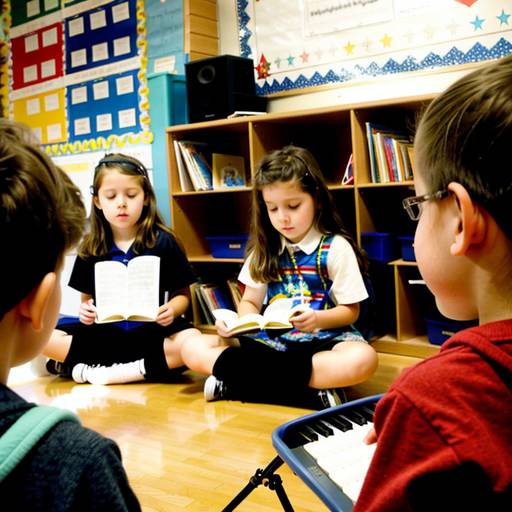
In this first-grade music lesson, students will explore the concept of pitch by learning to identify and produce high and low sounds through singing, movement, and instrument exploration. The class will begin with vocal warm-ups and a discussion about different animal sounds representing high and low pitches. Students will engage in a call-and-response singing game, where they will alternate between high and low notes. They will also participate in a movement activity called "Pitch Freeze," where they will physically respond to changes in pitch by adjusting their body positions.
Students will have the opportunity to explore various musical instruments to further understand the differences in sound pitches. The lesson will conclude with a reflective discussion, where students share their favorite sounds, followed by a group sing-along that incorporates both high and low pitches. Assessment will be based on student participation, pitch matching, and understanding during discussions. Extensions and adaptations will be offered to ensure all students can engage meaningfully with the material. Overall, the lesson aims to create a lively and interactive environment that fosters musical expression and understanding.
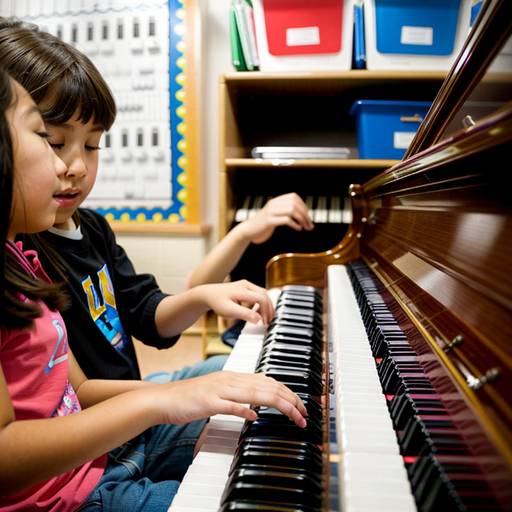
This 2nd-grade music lesson focuses on exploring keyboard instruments and their sounds. Students will begin by discussing different types of keyboard instruments, such as pianos and organs, while engaging with images and sound clips. They will then participate in small groups to explore and experiment with playing sounds on an available keyboard or by listening to recordings. Afterward, the class will learn a simple melody together, practicing it in groups to enhance creativity with variations. The lesson concludes with a reflection on their experiences and a takeaway worksheet for students to color, reinforcing their learning about keyboard instruments. Assessment will be based on participation, group practices, and completed worksheets, with an extension activity offered for those interested in further study.
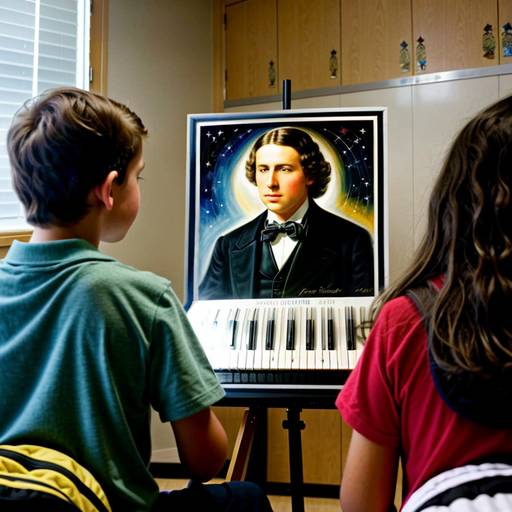
In this 5th-grade music lesson, students will explore the lives and contributions of famous composers from various musical eras, including Baroque, Classical, Romantic, and 20th Century. The class begins with an engaging discussion and audio clips that introduce students to key composers such as Johann Sebastian Bach, Wolfgang Amadeus Mozart, Ludwig van Beethoven, and Igor Stravinsky. Students will then work in small groups to research a specific composer, creating a presentation or poster that highlights the composer's significant contributions, interesting facts, and visual representations of their work. Groups will present their projects to the class, fostering collaboration and public speaking skills. The lesson concludes with a summary of what was learned about the evolution of music and its cultural significance, along with an optional homework assignment to further explore a piece of music from one of the composers. Assessment will focus on group participation and the quality of presentations, while extension activities will deepen students' understanding of music history.
This lesson plan is designed for 4th-grade students and focuses on introducing them to significant composers in music history. Over the course of one hour, students will engage in discussions about composers, their contributions, and the historical contexts of their works. The lesson begins with an interactive conversation about the nature of music, followed by a group activity where students research specific composers and present their findings to the class.
Students will also participate in listening activities, where they will hear audio clips of various pieces, noting their emotional responses and observations about the music's characteristics. To further reinforce their understanding, students will create a poster for their assigned composer, incorporating key information and creative elements that reflect the composer's style. The class will conclude with a recap of the composers studied, fostering appreciation for their music and encouraging students to share their favorite discoveries. Throughout the lesson, students will develop research, teamwork, and presentation skills while enjoying an exploration of musical history.
In this 45-minute lesson aimed at 3rd graders, students will explore significant composers in music history, focusing on Beethoven, Mozart, and Bach. The lesson begins with an engaging introduction where students share any prior knowledge about composers.
Following this, the teacher presents audio clips of each composer’s notable works, discussing their unique contributions to the music world. Students will then break into small groups, each assigned a composer to analyze and discuss the feelings, instruments, and historical significance of the music they hear. Each group will create a drawing or "album cover" that represents their composer.
After sharing their artwork and insights, the class will summarize key points about the composers and their enduring impact on music. The lesson concludes with the assignment of a worksheet that reinforces their learning and encourages students to further explore their favorite music and its composers. Assessment will be based on participation, completeness of the artwork and worksheet, and the ability to recall important details about each composer. The lesson also includes opportunities for extension and reflection to enhance future learning experiences.
In this 4th-grade music lesson, students will explore the concept of dynamics in music, focusing on how loudness and softness can enhance expressiveness. The lesson begins with an introduction to dynamic terms, including forte, piano, mezzo forte, mezzo piano, crescendo, and decrescendo. Students will engage in active listening exercises, identifying changes in volume within a selected piece of music.
Following the listening activity, the class will study a familiar song, discussing sections where dynamic contrasts can be applied. Students will be divided into small groups to practice and perform their assigned sections, incorporating appropriate dynamic variations. The lesson concludes with a creative reflection activity where students will draw their own dynamic symbols and discuss their learning experience with a partner.
Assessment will focus on participation in group activities, performances, and the reflective creative task. The lesson is adaptable for diverse learners, ensuring that all students can engage with the material effectively. This approach not only builds understanding of music theory but also fosters teamwork and creativity among students.
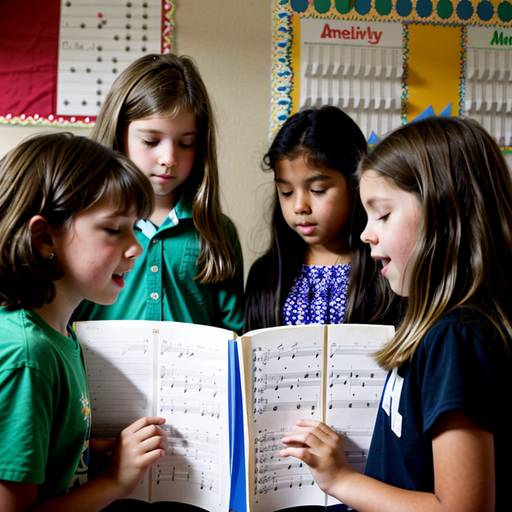
In this 4th-grade music lesson, students will explore the concepts of melody and harmony through engaging group activities and vocal exercises. The lesson begins with a discussion to introduce key terms, followed by vocal warm-ups to prepare their voices for singing. Students will be divided into three groups, each focusing on a different vocal part: melody or harmony. They will learn a simple song with these parts, practicing separately before coming together to perform as a cohesive unit. The class will reflect on their experiences to emphasize the importance of collaboration and listening in music. The lesson culminates in a shared performance, fostering teamwork and musical appreciation. Optional percussion instruments may be introduced to enhance the experience further. Observations during practice will serve as informal assessments of student engagement and harmony blending.
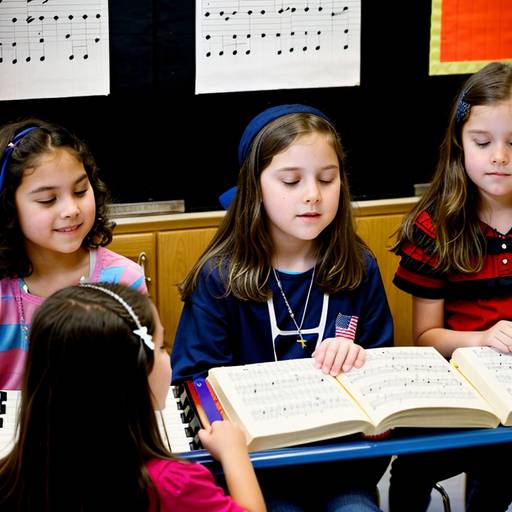
In this 4th-grade music appreciation lesson, students will explore a selection of iconic songs from various genres and time periods. The class begins with a warm-up discussion about music and its significance in their lives. Following this, students will listen to a curated list of famous songs, engaging in discussions that highlight their emotions and thoughts about each piece.
Afterward, students will be divided into small groups to research a specific song and create a visual presentation covering its background, artist, genre, and historical significance. Each group will share their findings with the class, fostering a collaborative learning environment. The lesson concludes with a reflection where students can express their favorite songs and the meanings behind them, further enhancing their understanding and appreciation of music.
Assessment will be based on participation, the quality of presentations, and the ability to articulate their thoughts. The lesson also includes extensions for students to create a class playlist and accommodations for diverse learning needs.