
Filters
Level
Grade
Subject
Subject Area
Subject Topic
Standard(s)
Audience
Keyword
DurationMinutes
Elementary School Lesson Plans

In this 4th-grade social studies lesson, students will explore various countries and their cultures through an engaging geography-focused activity. The lesson begins with an interactive discussion about different countries, prompting students to share what they know. A large world map will be used to introduce specific countries, highlighting important geographical features and cultural aspects.
Students will be divided into small groups, each assigned a country to research. They will use individual maps and fact sheets to gather information, which they will compile into a creative group poster including the country’s flag, capital, and interesting facts. Afterward, each group will present their findings to the class, fostering collaboration and communication skills.
The lesson concludes with a reflection activity where students share one new thing they learned, followed by an exit ticket to reinforce individual understanding. Assessments will focus on group participation, the quality of presentations, and reflections, with extensions for further learning suggested for students interested in deepening their understanding of global cultures. Adaptations will be made for differing student needs, ensuring inclusivity and support for all learners.

In this 5th-grade mathematics lesson, students will explore the concept of time and time zones. The session begins with a discussion about time zones and their significance, followed by an explanation of local time versus world time. Using a world map, students will learn about different time zones and how to calculate time differences between various locations, particularly comparing Eastern Standard Time with other zones.
During guided practice, students will complete worksheets that involve calculating the time in different cities based on specific scenarios. This will be followed by independent practice, where they will choose a city, determine its time zone, and create a visual representation of the time differences compared to their local time.
The lesson concludes with a recap of the key concepts, and students will share their findings about the chosen cities. Assessment will take place through the collection of worksheets and independent assignments to evaluate understanding. Extensions and modifications are provided to accommodate different learning needs and to encourage deeper exploration of related topics, such as Daylight Saving Time. Overall, students will gain a better grasp of global timekeeping and its relevance in today’s interconnected world.
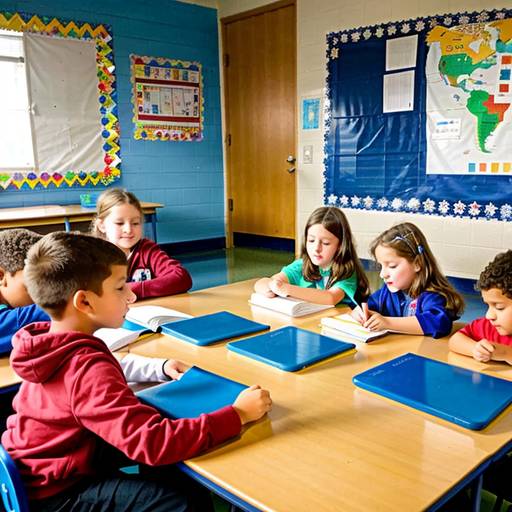
In this 2nd Grade social studies lesson, students will explore the concepts of geography and global cultures. The lesson begins with an introduction to geography, where students will identify countries on a world map. They will then be grouped and assigned different countries to research. Each group will examine cultural aspects of their assigned country through pictures and discussions, filling out a "Country Passport" with key information such as the country's name, capital city, traditional food, holiday, and clothing.
Following their research, students will present their findings to the class, allowing for interaction and questions to promote engagement. The lesson concludes with a review of the countries covered and a reflective discussion about students' favorite facts learned during the presentations. Assessment will be based on participation in group activities and the completion of the passports. Additionally, students may extend their learning through homework involving further research on another country, fostering a deeper understanding and appreciation of global diversity.
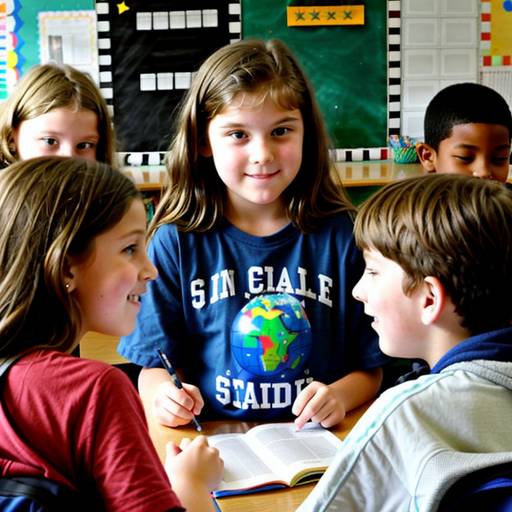
In this 5th-grade social studies lesson, students will explore the concept of community and the diversity present within it. The lesson begins with a class discussion to define community and discuss its various elements, emphasizing the importance of diversity. Students will then work in small groups to research cultures from different continents, creating informative posters that highlight aspects such as flags, traditional clothing, food, and cultural practices. Each group will present their findings to the class, fostering engagement and encouraging questions.
Next, the classroom transforms into a culture fair, where students can visit each group's station and fill out a "Culture Passport" with interesting facts learned from their peers. Optional guest speakers from local cultural communities may also be invited to enhance the learning experience. The lesson concludes with reflective writing and a class discussion on the importance of understanding and celebrating diversity in building a strong community. Assessments will focus on group participation, the quality of the posters, and insights shared in the cultural passports. Extensions and adaptations are provided to cater to the diverse needs of learners and to deepen their engagement with the topic.
In this 4th-grade math lesson, students will explore the concept of time and time zones, learning how to read both analog and digital clocks. The lesson begins with a discussion about the importance of time and how it varies across the globe. Students will examine a world map to understand the division of the Earth into different time zones and practice converting time between these zones through guided and independent activities. They will work on worksheets that present time conversion problems and create their own scenarios involving different cities' times. The class will come together to review the lesson, emphasizing the significance of understanding time zones in communication and travel. Assessment will be based on worksheet completion and participation, while extensions and adaptations support diverse learners and provide opportunities for deeper exploration of the topic.
In this 3rd-grade math lesson, students will explore the concepts of time and time zones through a combination of engaging activities and discussions. They will learn to read both analog and digital clocks and understand how time zones are established due to the Earth's rotation. Using a world map, students will identify various time zones and match them with major cities.
The lesson includes a matching game where small groups will collaborate to connect cities with their corresponding time zones. Students will also practice calculating time differences based on various scenarios provided in a worksheet, enhancing their problem-solving skills.
By the end of the lesson, students will have a better understanding of how time varies across different regions of the world and why this knowledge is important for communication and travel. The lesson concludes with a reflection on the significance of time zones and encourages students to consider connections they may have with people in different parts of the globe. Extensions may include research on a selected country or city’s local time. Overall, this lesson aims to foster both mathematical skills and global awareness.
This lesson plan focuses on teaching 3rd-grade students the concepts of multiplication and arrays. The objectives include helping students understand multiplication as repeated addition, creating and recognizing arrays as visual representations, and solving simple multiplication problems.
The lesson begins with an engaging question to prompt discussion about multiplication, followed by a definition and explanation of arrays. Students will then work in small groups to create their own arrays using counters for various multiplication problems. After sharing their creations with the class, students will complete a worksheet that requires them to draw and label arrays for specific multiplication problems.
The session concludes with a review of the key concepts and an exit ticket activity, where students write a multiplication problem and draw a corresponding array. Assessment will be based on student participation, the accuracy of their array drawings, and responses to the exit ticket. The lesson incorporates opportunities for differentiation and extensions to accommodate varying student needs and abilities.
In this 2nd-grade math lesson, students will explore multiplication through the use of arrays, helping them understand the concept as repeated addition. The lesson begins with a relatable problem involving bags of apples to introduce multiplication intuitively. Through guided instruction, students learn to visualize and create arrays, recognizing the relationship between rows, columns, and multiplication equations.
After a demonstration, students work in small groups to create their own arrays using counters and grid paper, writing corresponding multiplication sentences based on their arrangements. Each group shares their work with the class, fostering collaboration and peer learning.
Independent practice with a worksheet allows students to apply their understanding by drawing arrays for various multiplication problems. The lesson concludes with a review of key concepts and an exit ticket to assess individual comprehension. The overall aim is to solidify students' understanding of multiplication by using visual representations, encouraging both engagement and critical thinking.
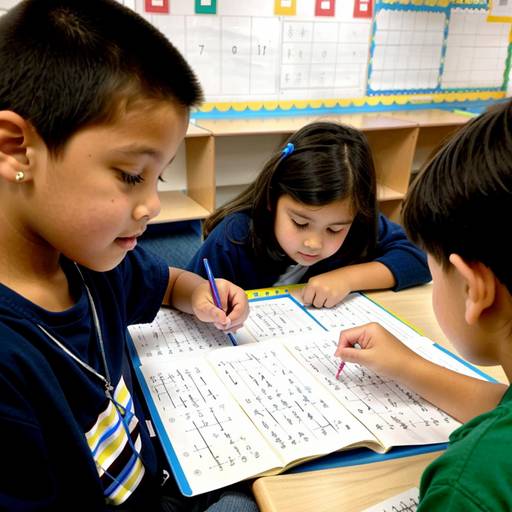
In this 60-minute math lesson, 2nd-grade students will explore the concept of multiplication through the use of arrays. The lesson begins with an engaging discussion about organizing objects in rows and columns, followed by a clear definition and demonstration of arrays on the whiteboard. Students will then participate in a guided group activity, where they will create their own arrays using counters to represent specific multiplication problems. Afterward, they will complete worksheets that require them to draw arrays and write corresponding multiplication sentences independently. The lesson concludes with students sharing their work and reflecting on their understanding of the relationship between arrays and multiplication. Throughout the lesson, teachers will assess student understanding through observation and review of completed worksheets, with adaptations available for varying skill levels. Extensions include opportunities for digital creation and exploring larger numbers.
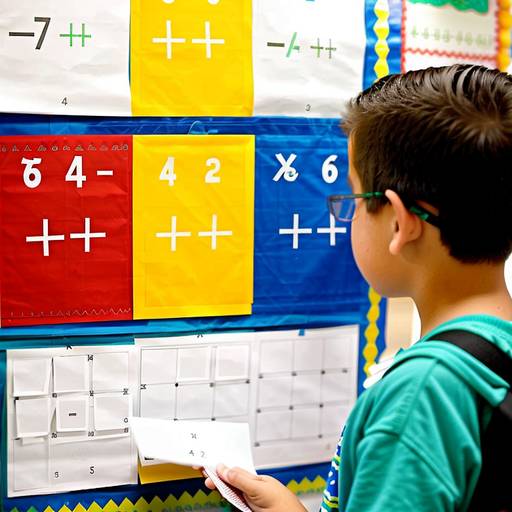
In this 3rd-grade math lesson, students will explore the concept of multiplication through the use of arrays. The session begins with a story highlighting themes of grouping and sharing, which serves as a foundation for understanding how arrays represent multiplication as repeated addition.
During direct instruction, the teacher will demonstrate creating arrays on the whiteboard, showing examples such as 2 x 4 and explaining the connection between arrays and their corresponding multiplication facts. Students will then participate in guided practice by creating their own arrays for specified multiplication problems on a worksheet, reinforcing their understanding of organizing objects in rows and columns.
Once they have had the opportunity to practice, students will independently draw arrays for selected multiplication facts and write the related equations. The lesson closes with students sharing their work with partners and presenting to the class, allowing for discussion and reinforcement of the concepts learned.
Assessment will be based on the accuracy of their worksheets and their engagement in discussions. Additional activities may include solving word problems that involve arrays, offering depth for advanced learners. This engaging lesson reinforces the foundational understanding of multiplication through visual and hands-on learning experiences.