
Filters
Level
Grade
Subject
Subject Area
Subject Topic
Standard(s)
Audience
Keyword
DurationMinutes
Lesson Plans

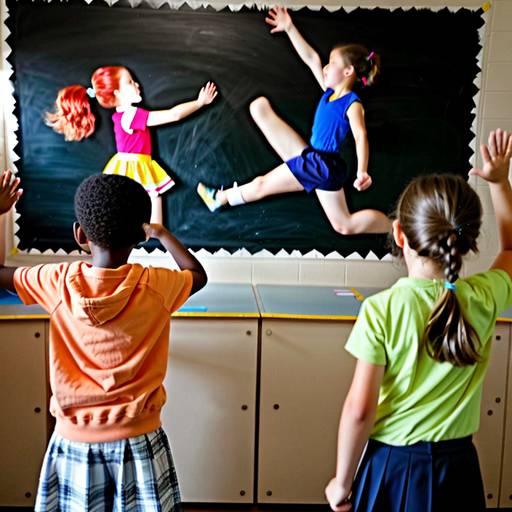
In this 3rd grade science lesson, students will explore the concepts of motion and the various forces that influence it. The lesson begins with an engaging introduction where students discuss their observations of how objects, like toy cars, move. Key terms such as motion, force, push, and pull are introduced and explained through real-life examples of different types of motion: straight, circular, and back-and-forth.
Following the introduction, students participate in hands-on activities that involve experiments with toy cars on ramps and balloon-powered cars. In small groups, they will test how different weights affect the distance that toy cars travel when released from a ramp, and observe the effects of balloon propulsion on their specially designed cars. Throughout the activities, students will record their observations and data on worksheets.
The lesson concludes with a group discussion where students share their findings, reflect on their learning experiences, and consider how forces like gravity and friction affect the motion of objects. Assessment includes the completion of worksheets and the quality of group presentations. Extensions encourage students to apply their understanding of motion to real-world examples and future projects. Overall, the lesson aims to foster a practical understanding of physical science concepts related to motion among young learners.

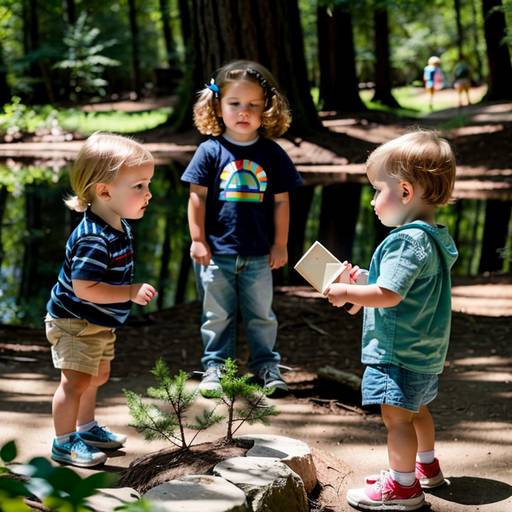
This lesson plan focuses on engaging toddlers in hands-on nature crafts that foster creativity and a love for the natural world. It begins with an interactive discussion about nature and its elements, followed by a nature walk where children collect various natural materials. Back in the classroom, they create unique collages using their findings and additional art supplies. Each child shares their creation with the group, helping to develop communication skills and foster a sense of community. The lesson includes opportunities for assessment based on participation and expression, and offers ideas for family engagement and extensions. Adaptations are suggested to accommodate different skill levels, ensuring an inclusive atmosphere for all learners.
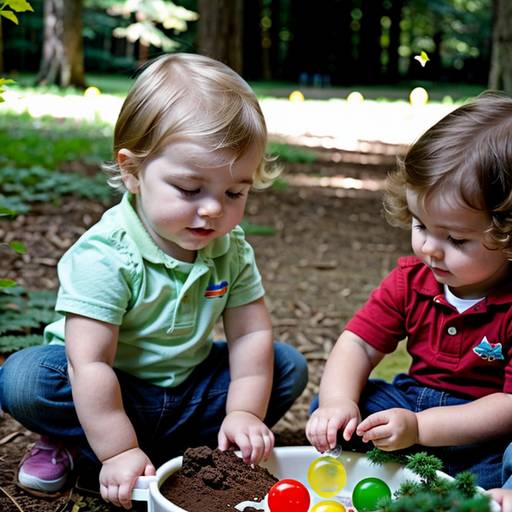
This lesson plan for toddlers focuses on sensory exploration of natural materials, providing a hands-on experience that enhances fine motor skills and vocabulary development. The session begins with an engaging introduction where children are introduced to various natural items, encouraging them to describe their textures, colors, and characteristics.
The main activities include rotating through several sensory play stations featuring a touch-and-feel bin with leaves, pine cones, and rocks; a water play area with safe items for pouring and scooping; a nature rubbing station using crayons and paper; and an observation area with magnifying glasses.
Following the exploration, children gather to share their findings, fostering communication skills. Cleanup involves counting items, making it a fun, integrated math moment. The lesson concludes with a recap of the day's activities and suggestions for further exploration of nature at home. Safety is emphasized throughout, ensuring all materials are non-toxic and monitoring during water play. Overall, this lesson aims to spark curiosity and joy in the natural world.

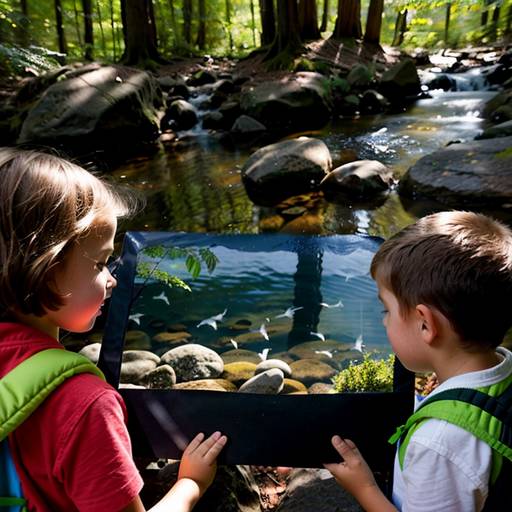
In this preschool science lesson, students will explore the components of ecosystems, focusing on plants, animals, and their habitats. The lesson begins with a circle time discussion that engages children by asking questions about what they see in nature and showcasing pictures of various ecosystems. Following this, students will participate in a nature walk, allowing them to collect small natural items, which helps enhance their observational skills and connection to the environment.
Back in the classroom, students will create collages using the items they've collected, adding drawings and paint to represent their understanding of the ecosystem. The activity encourages creativity and reinforces learning through hands-on experience. Finally, students will share their collages in a show-and-tell format, fostering communication skills and peer interaction.
The lesson wraps up with a discussion about the importance of caring for the environment, aiming to instill a sense of responsibility and appreciation for nature in young learners. Assessment will be based on students’ engagement and creativity during the activities. Opportunities for further exploration include gardening or inviting a guest speaker to discuss environmental conservation.
This lesson plan focuses on introducing 3rd-grade students to the major parts and systems of the human body through interactive activities and presentations. The lesson begins with a discussion to assess prior knowledge and introduces key body parts using a visual aid. Students are divided into groups, each assigned a specific body system—skeletal, muscular, circulatory, or respiratory—to research and present to the class. This collaborative learning encourages engagement as they share what they learn about the functions and importance of their designated systems.
Following the presentations, students participate in a hands-on activity where they create their own diagrams of the human body, labeling major parts and systems creatively. The lesson concludes with a discussion reflecting on key learnings and the significance of maintaining a healthy lifestyle to support bodily functions. Students are assessed through their diagrams and group presentations, and extension activities provide opportunities for further exploration. Accommodations are included to ensure all learners can engage meaningfully. Overall, the plan fosters a foundational understanding of human biology while promoting teamwork and creativity.
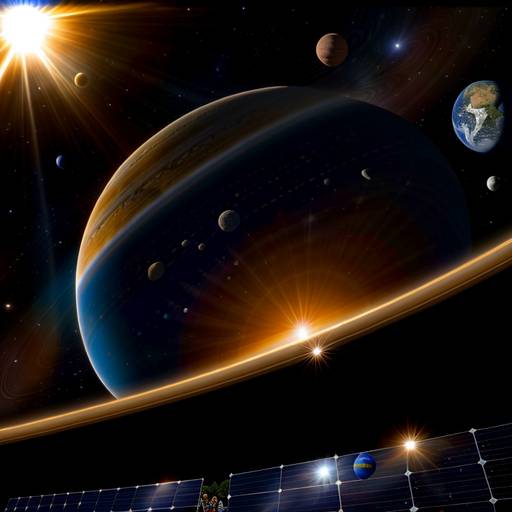
In this 5th-grade science lesson plan, students will explore the solar system and its celestial bodies through interactive and engaging activities. The goals of the lesson include helping students identify the planets in order from the Sun, describing key features of selected planets, understanding the concept of light years, and discussing the significance of space exploration missions.
The lesson begins with a video introduction to the solar system, followed by a discussion to gauge students’ prior knowledge. Educators will present key facts about the solar system, emphasizing the characteristics of the eight planets and other celestial objects.
Students will then work in small groups, each assigned a specific planet or celestial body. They will conduct research, create informative posters with visuals and interesting facts, and present their findings to the class. The lesson wraps up with a reflection on the importance of space exploration and the insights gained during the activities.
Assessment will focus on participation, creativity in the group posters, and understanding of the material as demonstrated through presentations and possible follow-up quizzes. Extensions to the lesson may include model building and star-gazing nights to further enhance student engagement with the topic.
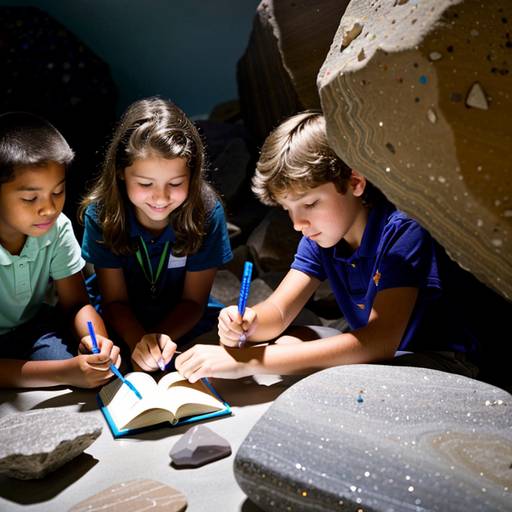
In this 4th-grade Earth Science lesson, students will explore the fascinating world of rocks and minerals. They will learn about the three main types of rocks—igneous, sedimentary, and metamorphic—and gain an understanding of the rock cycle, which explains how rocks transform from one type to another over time. The lesson begins with a class discussion to activate prior knowledge about rocks, followed by a direct instruction segment that introduces rock classifications and characteristics.
Students will engage in a hands-on activity where they work in small groups to observe various rock samples using hand lenses, classify them according to their properties, and create informative posters based on their findings. Each group will present their work to the class, fostering collaboration and discussion about the similarities and differences among the rocks. The lesson concludes with a recap of the key concepts and an assignment for students to find a rock at home and write about its type and characteristics. Assessment will incorporate the rock classification worksheets, group posters, and the take-home project, ensuring students demonstrate their understanding of the material. The lesson aims to cultivate curiosity about Earth science through active learning and exploration.
In this 5th-grade life science lesson, students will explore the major systems of the human body, including the skeletal, muscular, circulatory, respiratory, digestive, and nervous systems. The lesson begins with a brief introduction and engaging video to spark curiosity. Students will learn about each body's system and its functions using diagrams and, if available, a skeleton model for visual support.
After instruction, students will work in small groups, each assigned a specific body system. They will research, create a informative poster, and prepare a presentation that includes diagrams and interesting facts about their system. Each group will present their findings to the class, promoting peer learning and discussion.
The lesson concludes with a recap of the systems and their roles in maintaining homeostasis. Students will have a fun homework assignment involving a crossword puzzle that reinforces the concepts covered during the lesson. Assessment will be based on participation, group presentations, and homework completion. Modifications and extensions are available for different learning needs, including a potential field trip or guest speaker to enhance the educational experience. Overall, the lesson aims to deepen students' understanding of human anatomy and its relevance to health.

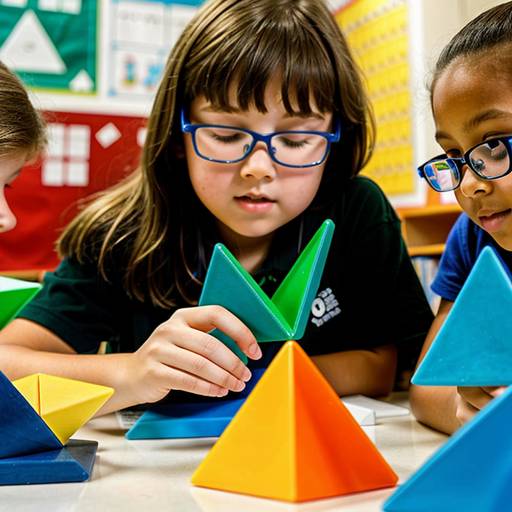
This 4th-grade math lesson focuses on introducing students to three-dimensional shapes and their properties. The lesson begins with a discussion on real-life examples of 3D shapes, followed by a presentation on various solids, including cubes, spheres, cylinders, cones, and pyramids. Students will engage in hands-on activities to examine and classify these shapes while counting their faces, edges, and vertices.
In small groups, they will work on worksheets to identify and classify different 3D shapes, reinforcing their understanding through collaboration. Students will then create their own 3D shapes on graph paper, labeling their properties. At the end of the lesson, there will be a review of key concepts and a homework assignment that encourages students to find and document examples of 3D shapes in their environment.
Assessment will be conducted through observation during activities and the evaluation of worksheets and homework for comprehension. Differentiation strategies will be employed to support all learners, including extensions for advanced students, and additional guidance for those needing extra help. Overall, the lesson aims to make learning about geometry engaging and relevant to students’ everyday lives.

In this 5th-grade Language Arts lesson, students will explore different reading genres to enhance their understanding and appreciation of literature. The lesson begins with a discussion about favorite books, followed by an introduction to various genres such as fiction, non-fiction, poetry, fantasy, mystery, and biography. In small groups, students will examine books from a specific genre, discussing their unique characteristics.
Next, they will engage in a genre sorting activity where they categorize book titles into the correct genres based on provided definitions. To reinforce their learning, students will create Book Recommendation Cards for a book they enjoyed, summarizing its genre and plot, and sharing their recommendations with peers. Assessment will focus on participation, completion of the sorting activity, and understanding demonstrated in the recommendation cards.
Extensions may include a visit to the school library for further exploration of genres and opportunities for advanced students to delve into sub-genres or create their own stories. Support will be provided for students needing extra assistance, ensuring an inclusive learning environment. This lesson aims to foster a love for reading and enhance genre recognition among students.