
Filters
Level
Grade
Subject
Subject Area
Subject Topic
Standard(s)
Audience
Keyword
DurationMinutes
Lesson Plans


In this 2nd-grade math lesson, students will explore addition through word problems, enhancing their understanding and problem-solving skills. The lesson begins with a review of basic addition using interactive manipulatives, leading to a discussion about what constitutes a word problem.
Students will collaboratively work through a sample word problem, identifying essential information and formulating a number sentence. The teacher will guide students through additional word problems in pairs, promoting discussion and teamwork. Afterward, students will have the opportunity to solve problems independently, allowing for personalized practice while the teacher provides support as needed.
The lesson concludes with a class review, where students share their answers and explanations, fostering peer learning. Each student will reflect on what they learned by writing a summary on a sticky note. Assessment will involve observation during activities and the collection of worksheets to gauge individual understanding. Extension activities will allow students to create their own word problems, reinforcing their skills. Differentiation strategies will ensure that all students, regardless of their skill level, can engage effectively with the content.


This 90-minute preschool physical education lesson focuses on outdoor play and movement, aimed at enhancing gross motor skills and encouraging social interaction. The session begins with a circle gathering where safety rules and activity outlines are discussed. Following a fun warm-up song, children participate in a nature scavenger hunt, exploring the outdoor area while collecting various natural items in pairs or small groups.
Next, participants rotate through movement stations, engaging in activities like hula hooping, ball skills, jump roping, and building with cardboard boxes to develop their physical abilities. A snack and hydration break allows for reflection and discussion about their outdoor experiences.
The lesson culminates in group games such as parachute play and Duck, Duck, Goose to foster collaboration and fun. The session concludes with a cool-down period and a group reflection, where children share their favorite activities and observations about nature. Overall, the lesson emphasizes physical fitness, cooperation, and a love for the outdoors while accommodating children’s varying skills and interests.


In this preschool lesson plan, children engage in a collaborative dramatic play activity centered around a magical adventure in a forest. The session begins with an introduction to the theme, where children brainstorm various characters and creatures they can portray, enhancing their creativity and communication skills.
Participants rotate through different play stations, including a costume corner, adventure station with props, treasure hideout, and animal play area, allowing for imaginative role-playing and interactions. After the playtime, children reconvene to share their experiences and story elements, fostering language development and social interaction. The lesson concludes with a reflection on their favorite moments from the adventure, and an optional art extension invites them to draw their interpretations of the experience. The overall objective is to promote creative expression, teamwork, and confidence in storytelling through dramatic play.


This 5th-grade Language Arts lesson focuses on enhancing reading comprehension through the exploration of key story elements, including setting, character, plot, conflict, and resolution. The lesson begins with a class discussion about engaging elements in stories, followed by a joint reading of a selected text where students identify and discuss these elements.
Students will then collaboratively work in pairs to fill out graphic organizers based on the first section of the text. Afterward, they will read the next chapter independently, completing a prediction chart that connects their expectations to evidence from the text. A set of comprehension questions will further help students summarize key ideas and details.
The lesson closes with students sharing their predictions and insights into the text, reinforcing the importance of evidence in comprehension. Assessment includes evaluating their graphic organizers, prediction charts, and comprehension responses. Extension opportunities for creative writing and differentiated activities are provided to meet diverse student needs. Overall, the lesson aims to promote critical thinking and deeper understanding of narrative structures in literature.

In this Kindergarten language arts lesson, students will embark on a creative writing adventure, focusing on storytelling skills. The lesson begins with a discussion of story components, including characters and plot structure. Students will then select prompts from a basket, leading to a brainstorming session where ideas are generated as a class. Following this, students will engage in prewriting, organizing their thoughts through illustrations and writing, before drafting their individual stories on provided paper. The lesson culminates in a sharing session, where students present their stories to peers, promoting confidence and collaboration. A reflection on the writing process wraps up the session, and activities are suggested for extending the learning experience. Throughout the lesson, students will develop their creative expression and storytelling abilities in a supportive and engaging environment.


This 5th-grade social studies lesson focuses on introducing students to various types of maps, including physical, political, and thematic maps. Students will learn about the purpose of each map type through group discussions and presentations. The lesson includes an exploration of map symbols and the importance of the compass rose for navigation.
As part of the hands-on activity, students will create their own maps of a familiar area, incorporating key features, symbols, and a compass rose. They will then share their maps with a partner to explain their choices. The lesson concludes with a class discussion, allowing students to highlight interesting aspects of their maps. Assessment will be based on participation and the quality of the completed maps. Extensions include exploring digital mapping tools and researching specific locations to create thematic maps, ensuring that the lesson caters to different learning levels.

In this 1-hour lesson for second graders focused on writing and creative thinking, students will explore storytelling by brainstorming their own story ideas. They will learn how to create a structured narrative with a beginning, middle, and end using story maps as a guide. The lesson includes an introduction to elements of storytelling, a brainstorming session, and hands-on time for writing their stories. Students will practice incorporating descriptive language while crafting narratives that reflect their unique ideas. As a class, they will share selected stories, fostering a supportive environment for feedback. The lesson will conclude with a discussion on the importance of creativity in writing. Assessment will be based on students' engagement and the quality of their story maps and written work. Extension activities may include illustrating scenes from their stories and creating a class book to celebrate their writing achievements.


This lesson plan is designed for toddlers aged 2 to 4 and focuses on introducing and reinforcing number sequencing from 1 to 10 through engaging and interactive activities. The session begins with a welcoming song to set a cheerful tone and includes a brief introduction to number recognition using large number cards.
The main activities involve a collaborative number line exercise where children help place number cards in the correct order, followed by a hands-on counting game using bears or soft blocks, encouraging children to group and count their items. A picture book featuring counting is then read aloud, with children invited to participate in counting along when prompted.
To add movement and fun, a counting song is played, encouraging children to dance and engage in actions related to the lyrics. The lesson concludes with a recap where children identify and sequence numbers, reinforcing what they have learned. The plan includes adaptations for diverse learning needs and methods of assessment based on observation and participation during activities, ensuring that all children are supported in their learning journey.
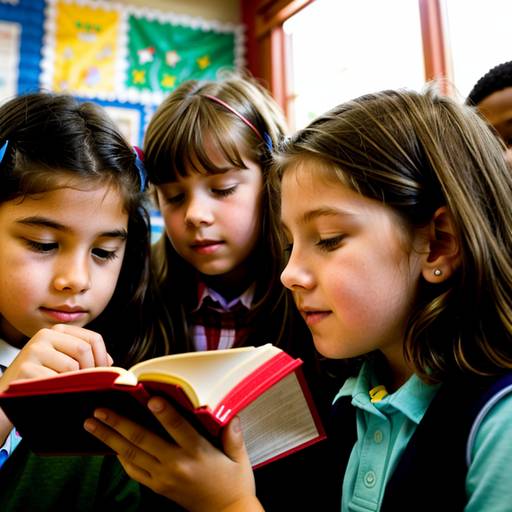
In this 3rd-grade language arts lesson, students will focus on reading comprehension by exploring characters in a selected storybook. The lesson begins with a discussion about their favorite characters, followed by a read-aloud of the chosen book where students will actively engage through questions about character emotions and actions. After reading, students will create a Character Trait Chart, identifying main characters, their traits, and how these traits influence their adventures. They will then independently complete the chart, illustrating their character and one of their adventures. The class will conclude with sharing sessions in pairs or small groups, fostering collaboration and reflection. Assessment will involve observing participation and collecting charts to evaluate understanding. Additionally, the lesson can accommodate different learning needs through support materials and extension activities that encourage further character exploration and engagement with literature.

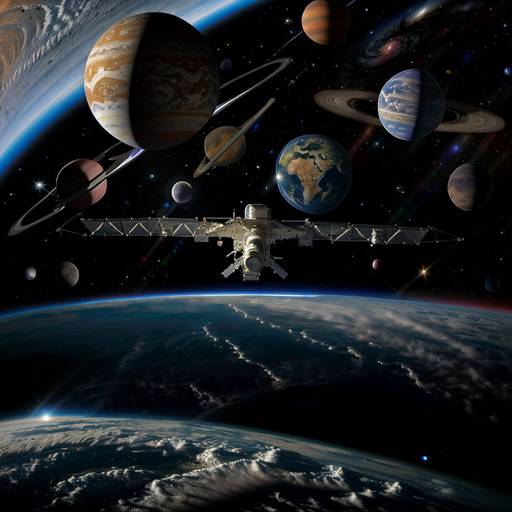
In this 3rd-grade science lesson, students will embark on an engaging exploration of the solar system, focusing on its eight planets and other celestial bodies. The class will begin with a discussion about prior knowledge, followed by a short video introduction and a fun interactive song about the solar system to capture students' interest.
Through direct instruction, students will learn about the characteristics of each planet using fact cards that highlight key information. In small groups, they will be assigned a planet to research and create a colorful poster that includes the planet's name, an interesting fact, a drawing or model representation, and its distance from the sun.
After creating their posters, each group will present their findings to the class, fostering teamwork and communication skills. The lesson will conclude with a recap of what was learned and a discussion about favorite planets. Assessment will focus on participation, collaboration, and creativity demonstrated in the poster project. Extensions may include further research on the planets and a simulated planetarium in the classroom to enhance the learning experience.