
Filters
Level
Grade
Subject
Subject Area
Subject Topic
Standard(s)
Audience
Keyword
DurationMinutes
5th Grade Math Lesson Plans

This lesson plan focuses on teaching 5th-grade students the concepts of length measurement and telling time. It begins with an introduction to the importance of measurement in everyday life and the introduction of key vocabulary. Students participate in direct instruction that covers the use of measurement tools and the differences between standard and metric units, as well as how to read analog and digital clocks.
During guided practice, students work in small groups to measure classroom objects using both metric and standard units and practice timing activities with a stopwatch. The lesson includes an outdoor measurement scavenger hunt where students measure various objects and time a simple obstacle course.
To conclude, students gather for a review and discuss real-life applications of their newly acquired measurement skills. They will also complete a reflection assignment at home to deepen their understanding. The lesson incorporates hands-on activities, teamwork, and practical applications, ensuring an engaging and effective learning experience in measurement and time. Assessment is based on the accuracy of measurements, participation in activities, and reflection on real-life situations involving measurement. Modifications are included to support diverse learners and challenge advanced students.
In this 5th-grade math lesson, students will explore the concepts of measurement and length through an engaging and hands-on approach. The activity begins with a storytelling element, introducing students to the significance of measurement in everyday life. Instruction will include demonstrations on how to accurately use rulers and measuring tapes, as well as discussions on standard units of measurement and unit conversions.
Students will then participate in a guided practice activity, where they will measure various classroom objects using both inches and centimeters, recording their findings on worksheets. They will apply what they have learned by converting measurements and solving related problems.
To reinforce their understanding, students will complete an independent practice worksheet that includes measurement problems and a word problem that requires them to apply their skills. The lesson will conclude with students sharing their measurement discoveries and reflecting on their learning experiences. Assessment will be based on the worksheets and participation in activities.
Overall, this lesson promotes hands-on learning, collaboration, and critical thinking through the exploration of measurement.
In this 5th-grade math lesson focused on measurement and length, students will learn to measure various objects using standard units like inches, feet, centimeters, and meters. The session begins with a discussion on the importance of measurement in everyday life and a demonstration of measurement tools. Students will engage in an estimation activity, predicting the lengths of classroom objects, followed by a hands-on measurement activity in small groups where they will measure the actual lengths and compare them to their estimates. A class discussion will allow students to reflect on their findings and understand the discrepancies between estimation and actual measurements. The lesson concludes with a summary of key concepts and an assignment for students to measure objects at home, further reinforcing their learning. Through observation and worksheet review, teachers will assess student understanding, while differentiation strategies will support varied learners and extend challenges for advanced students.
This 5th-grade math lesson focuses on teaching students how to read both analog and digital clocks, calculate elapsed time, and recognize patterns in time intervals. The lesson begins with a discussion about the importance of time management, followed by direct instruction on telling time and converting between clock formats. Guided practice involves working together to solve real-life time scenarios, while independent practice allows students to complete worksheets on time calculations and patterns. The lesson concludes with a review and a hands-on activity involving a timed event, reinforcing the concepts learned. Accommodations are provided for students who may need additional support, and homework encourages students to track their activities with a time diary to connect learning to real-life situations. Overall, the lesson aims to engage students and enhance their understanding of time-related concepts.
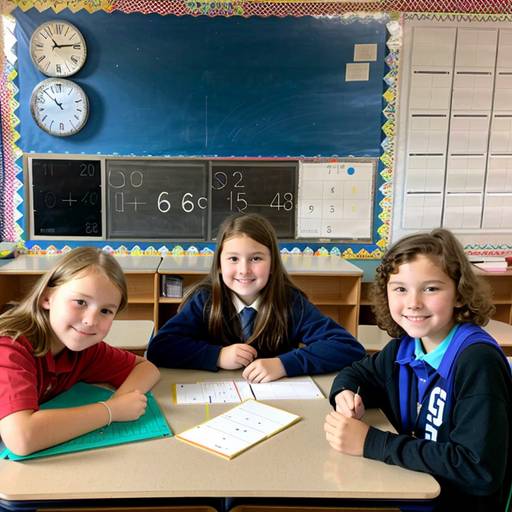
In this 5th-grade math lesson, students will learn about reading clocks, understanding time zones, and calculating time differences across the globe. The lesson begins with a discussion about the concept of time zones and their significance in daily life. Students will practice reading both analog and digital clocks, and they will learn to convert times between different time zones using a time zone chart.
In small groups, students will engage in a creative mapping activity where they will cut out and color different time zones on a world map, presenting their findings to the class. Additionally, they will complete worksheets with real-world math problems related to time zone calculations to deepen their comprehension. The lesson will conclude with a reflection on the practical implications of time zones in everyday situations, reinforced by an exit ticket activity that encourages individual thinking. Throughout the lesson, various assessment methods will be utilized to evaluate students' understanding, with adjustments made to accommodate different learning needs.
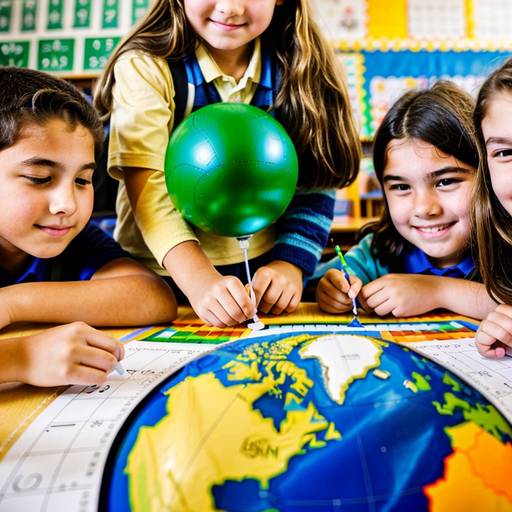
This 5th Grade math lesson focuses on measurement and area, aiming to help students understand the importance of these concepts in real life. Students will learn how to calculate the area and perimeter of shapes, especially rectangles, through guided practice and hands-on activities. They'll engage in measuring objects in the classroom and create unique polygons using graph paper, allowing them to apply their measurement skills in a creative way. The lesson encourages collaboration and discussion as students share their creations and calculations with classmates. Assessment will include worksheets and observation of student participation, with extensions offered for advanced learners. Differentiation strategies are provided to support all students in grasping the concepts effectively.
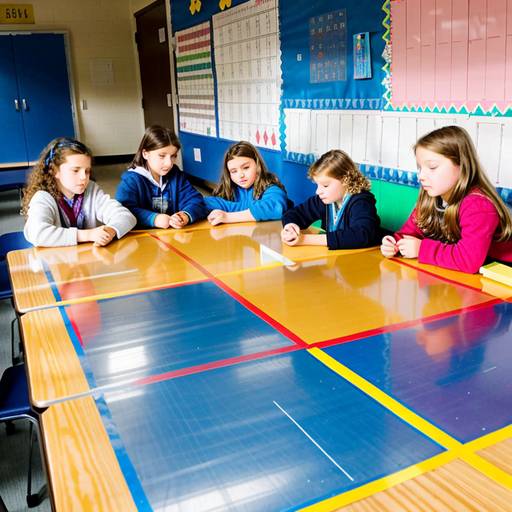
In this 5th-grade math lesson, students will explore the concepts of measurement, focusing on time and distance. The lesson begins with a discussion about the importance of measurement in daily life, followed by an introduction to key units for measuring time (seconds, minutes, hours) and distance (inches, feet, meters, kilometers), including how to convert between these units.
Students will engage in guided practice by measuring various classroom objects using rulers, measuring tapes, and string. They will then record their findings and practice conversions as a group activity. This will be followed by an independent practice session where students complete a worksheet with problems that require them to convert units of time and solve distance-related word problems.
The lesson concludes with a class discussion to review answers, address any questions, and reflect on the importance of measurement and time in everyday life. Assessment will occur through observation during activities and through evaluation of the completed worksheets. Differentiation options are provided to support varying skill levels, and an extension activity is available for early finishers, allowing for additional application of the concepts learned. This interactive and collaborative approach enhances student understanding and engagement with the topic.
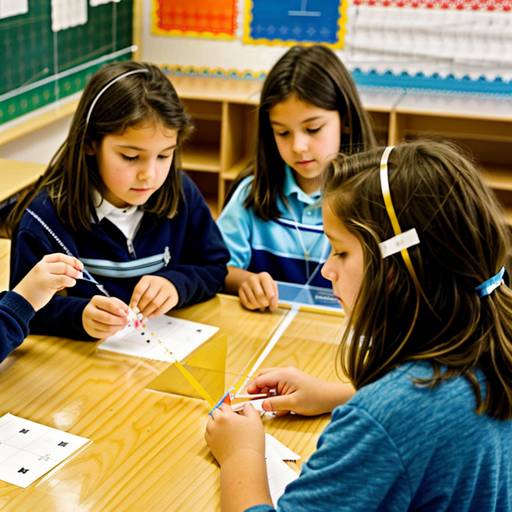
This 5th-grade math lesson focuses on measurement and length, guiding students to understand and apply the concepts of measuring using standard units like inches and centimeters. The lesson begins with an engaging discussion about the importance of measurement in daily life, followed by a demonstration on how to properly use rulers and tape measures. Students participate in group activities where they measure various objects, record their findings, and convert measurements between inches and centimeters. Throughout the lesson, they practice reading measurements, work collaboratively to create data charts, and ultimately generate line plots to display their measurements. The session concludes with a review of key learnings and an exit ticket exercise to assess understanding and address any questions. Differentiation strategies are included to support diverse learning needs, ensuring all students engage meaningfully with the concepts of measurement in a hands-on environment.
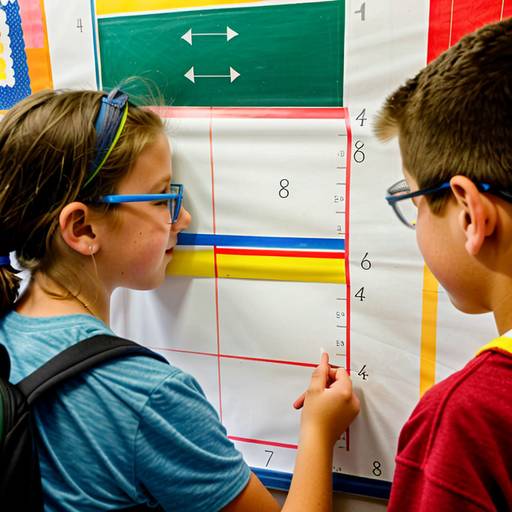
In this 5th-grade math lesson, students will explore the concept of area and measurement through a series of engaging activities. The lesson begins with a discussion to elicit students' prior knowledge about area, followed by an introduction to the formula for calculating the area of rectangles. During direct instruction, students will learn to measure lengths and widths using rulers.
Following this, students will be given graph paper to practice drawing rectangles and calculating their areas, guided by the teacher. In a hands-on group activity, students will measure the area of pre-cut cardboard rectangles using tape measures, allowing for practical application of the concepts learned.
The lesson concludes with a class discussion to reflect on findings and challenges faced during the activities. Students will be assessed through observation during group work and the collection of individual area worksheets. To differentiate instruction, support will be provided for students who need it, while advanced students will be encouraged to explore irregular shapes. Extension activities include measuring areas in their own homes and using technology for further exploration of the topic. Overall, the lesson aims to make the concept of area relatable and engaging for students through interactive learning and real-world applications.
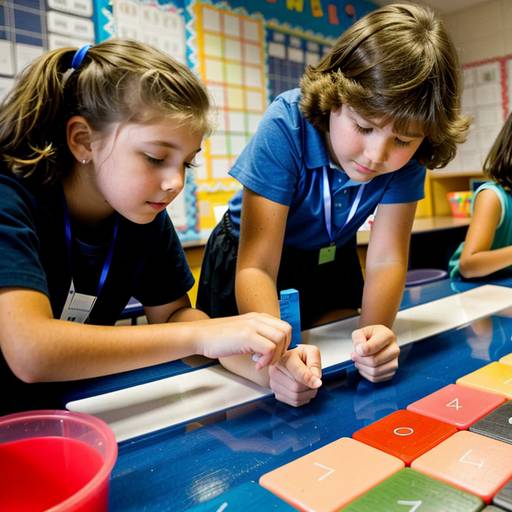
In this 5th-grade math lesson, students will explore the concept of volume through engaging discussions, direct instruction, and hands-on activities. The lesson begins with an introduction to volume and the formula for calculating it for rectangular prisms. Students will learn to measure dimensions using rulers and apply the formula to solve problems individually or in pairs.
Following guided practice, students will participate in a hands-on exploration where they work in small groups to measure and fill containers with rice or beans, as well as water, calculating and recording their findings. The groups will discuss their observations and any challenges they encountered during the activity. The lesson concludes with a review of key concepts and applications of volume in real life, while also incorporating a homework assignment for further practice. Differentiation strategies are included to support diverse learning needs, ensuring all students have the opportunity to understand and apply the concept of volume effectively.