
Filters
Level
Grade
Subject
Subject Area
Subject Topic
Standard(s)
Audience
Keyword
DurationMinutes
5th Grade Math Lesson Plans

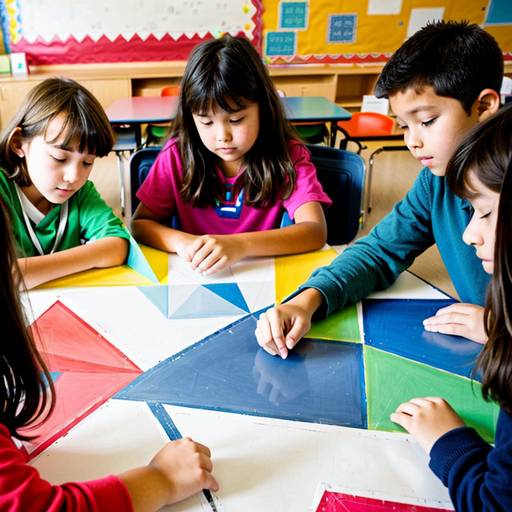
In this 5th-grade math lesson, students explore the concepts of geometry and area through the study of various polygons, including triangles, rectangles, parallelograms, and trapezoids. The lesson begins with a review of polygon types and the significance of area in real-life applications. Students learn and practice calculating the area of each polygon using the appropriate formulas, moving from direct instruction to guided and independent practice. Throughout the activities, they engage in drawing shapes on grid paper to reinforce their understanding and apply their knowledge to solve related word problems. The lesson concludes with a review and discussion of how area calculations are used in various fields, allowing students to connect mathematical concepts to everyday situations. Assessment is conducted through observation during paired activities and graded worksheets. Extension activities offer challenges for faster learners, while differentiation strategies support those needing additional help. Overall, the lesson encourages collaboration and hands-on engagement with geometry.
In this engaging fifth-grade mathematics lesson, students explore the concepts of money, budgeting, and financial decision-making. The lesson begins with a discussion about the purpose of money and the importance of budgeting, introducing key terms such as income, expenses, and savings.
Students collaborate in small groups to analyze different scenarios that provide them with specific income amounts and a variety of expenses. They create budgets based on these scenarios, making choices about needs versus wants and identifying potential savings. Each group shares their budget with the class, fostering discussion about different financial decisions.
Afterward, students work independently to create a personalized budget using a worksheet that outlines their hypothetical income and expenses, ensuring to include a savings plan. They reflect on their learning by writing about the importance of budgeting in their lives.
The lesson wraps up with a recap of the key concepts and an emphasis on the benefits of budgeting for achieving financial health and goals. Assessment includes evaluating students’ worksheets and their participation in activities, while extensions such as guest speakers and classroom stores provide additional opportunities to reinforce these vital skills. Adaptations are available for diverse learners to support their understanding.
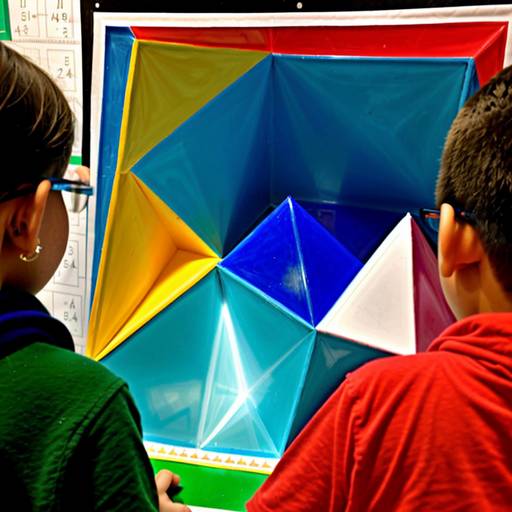
In this 5th-grade math lesson, students will explore essential concepts related to 3D geometry, focusing on identifying and describing common solid shapes, including cubes, spheres, cylinders, cones, and pyramids. The lesson begins with a discussion about geometry and its relevance in everyday life, followed by an introduction to the properties of these shapes. Through a shape hunt activity, students will find real-world objects that correspond to the identified 3D shapes and share their findings with classmates. They will then engage in a hands-on activity to create their own 3D models, labeling their properties. The lesson concludes with presentations of their creations, emphasizing the importance of recognizing shapes in their environment. Assessment will be based on participation, accuracy in labeling, and worksheet completion. Extension activities are suggested for students who excel, including lessons on volume and surface area, as well as research on notable structures. Overall, the lesson promotes active learning and fosters a deeper understanding of geometric concepts in a relatable manner.
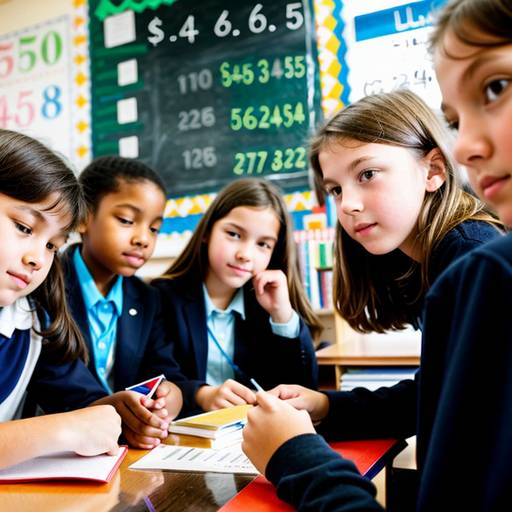
This 5th-grade math lesson focuses on teaching students the fundamentals of money management, specifically budgeting and smart spending practices. The lesson begins with a group discussion to define budgeting and its significance in financial decision-making. Students learn key concepts such as income, expenses, and savings, and follow a series of structured steps to create a simple budget.
Through guided practice, students work in small groups to tackle real-life scenarios that require them to allocate a set income across various expenses, reinforcing the distinction between needs and wants. They then engage in individual practice by completing a budgeting worksheet that encourages them to make thoughtful spending choices.
Throughout the lesson, students are encouraged to reflect on their budgeting decisions and share their experiences with peers. Assessment is based on their completed budgets and participation in discussions. Extensions are provided for both advanced and struggling students, ensuring that all learners can engage with the material effectively. Overall, the lesson equips students with valuable skills for managing their finances in the future.
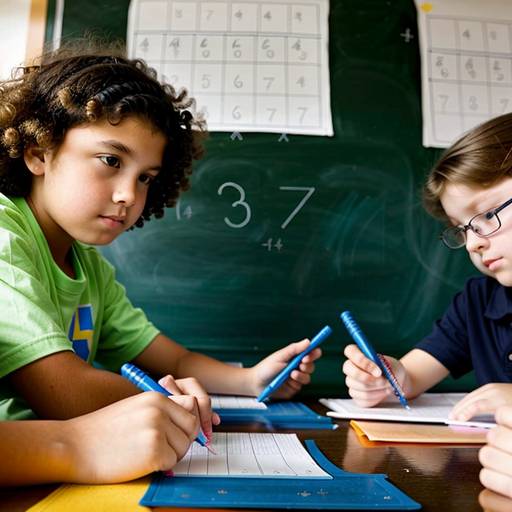
In this 5th-grade mathematics lesson, students will focus on understanding and mastering the process of subtraction. The objective is for them to grasp key concepts and apply various strategies to solve subtraction problems effectively. The lesson begins with a review of addition and its inverse relationship with subtraction, followed by discussions of real-life applications of subtraction.
The instructor will provide direct instruction, illustrating subtraction using a number line and manipulatives to reinforce learning. Students will engage in guided practice, working in pairs to solve problems and demonstrate their understanding. Independent practice will involve completing worksheets where students work on subtraction problems individually, showcasing their problem-solving processes.
Additionally, a fun interactive activity, specifically 'Subtraction Bingo,' will reinforce learning through collaboration and engagement. The lesson concludes with a review of key concepts, encouraging students to share their approaches and ensuring comprehension. Assessment will take place through observation, worksheet evaluations, and participation in the interactive activity. The overall goal is to create an engaging and supportive learning environment that fosters a solid understanding of subtraction.
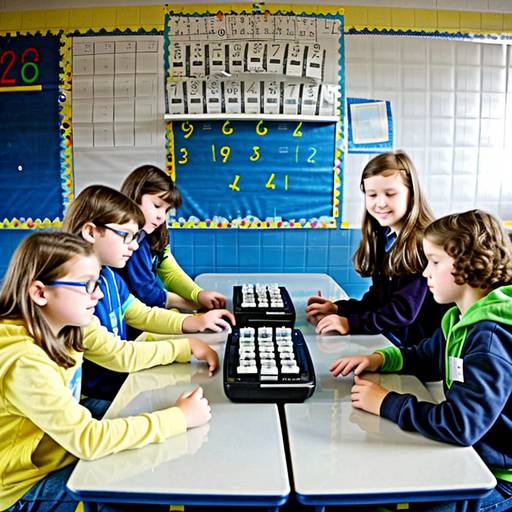
In this 5th-grade mathematics lesson, students will explore and apply subtraction strategies, including regrouping and the use of number lines, to solve two-digit and three-digit problems. The lesson begins with a review of key subtraction concepts and vocabulary. Through whole group instruction, students will receive demonstrations and participate in solving example problems on the board.
During guided practice, students will work in pairs on worksheets featuring a variety of subtraction problems, utilizing manipulatives and visual aids to enhance their understanding. Following this, students will engage in a fun group activity where they tackle subtraction challenges presented on quest cards, moving through a series of word problems within a set time limit.
The lesson concludes with a whole group reflection where students share strategies they found effective, reinforcing the concepts learned throughout the session. Assessment will involve observing student participation and reviewing their work to gauge understanding. To accommodate differing ability levels, differentiation strategies include providing additional support for those needing it and offering extensions to challenge more advanced learners. Overall, this lesson aims to foster a positive and interactive learning experience focused on mastering subtraction skills.
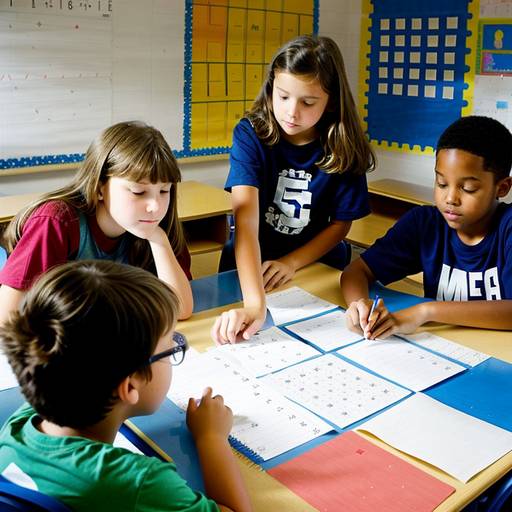
In this 5th-grade math lesson, students will explore the concepts of measurement and time through engaging activities. The lesson begins with a discussion on the significance of measuring time and distance in everyday life, followed by direct instruction on reading analog and digital clocks, as well as measuring lengths with rulers and measuring tapes.
Students will engage in guided practice by working with paper clocks to set times and measuring various classroom items in both inches and centimeters. They will then complete independent worksheets that include word problems related to elapsed time and distance calculations, allowing them to apply their newly acquired skills.
The lesson concludes with a review of key concepts through Q&A and encourages students to understand the importance of accuracy in both timekeeping and measurement. An optional extension activity allows for further exploration by calculating walking pace over a specific distance. The overall goal is to enhance students' confidence and competence in measurement and time, making these essential skills relevant and practical.
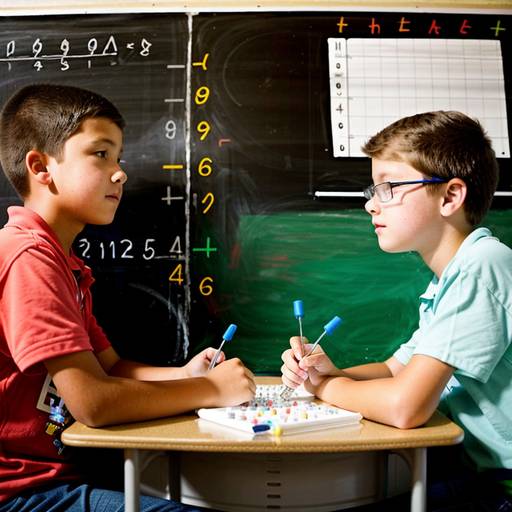
This 5th-grade math lesson focuses on measurement and temperature, helping students understand how to measure temperature and convert between Celsius and Fahrenheit. Beginning with an engaging introduction about the role of thermometers in everyday life, the lesson progresses to direct instruction on temperature units and conversion formulas. Through guided practice in small groups, students gain hands-on experience measuring different temperatures and applying conversion formulas to real-world scenarios. Independent practice involves completing a worksheet with temperature conversions and a mini temperature diary. The lesson concludes with a review of key concepts and an opportunity for questions. Assessment methods include evaluating completed worksheets and observing group collaboration. Extensions involving art and science are provided for further engagement, while modifications offer support for diverse learning needs. Overall, this lesson aims to foster a practical understanding of temperature in both mathematical and real-life contexts.
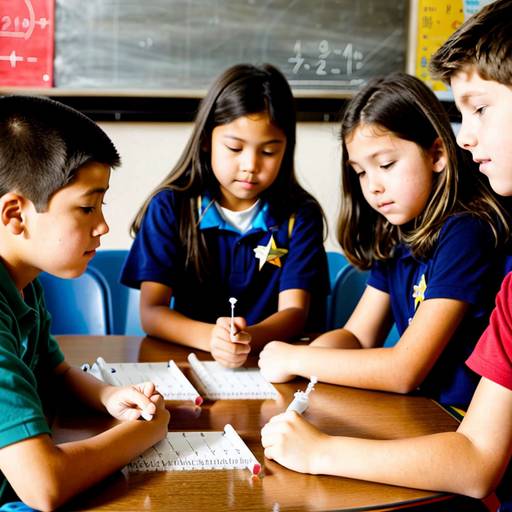
In this 5th-grade math lesson focused on measurement and temperature, students will learn how to measure temperature in both Celsius and Fahrenheit, as well as how to convert between the two units. The lesson begins with an interactive discussion about temperature and its importance in daily life, followed by direct instruction on reading thermometers and performing temperature conversions using established formulas.
Students will then engage in guided practice by working in pairs to complete a worksheet that reinforces their conversion skills. They will subsequently choose a city from around the world, research its current temperature in both measurement systems, and reflect on the differences in climate.
For a closing activity, students will create bar graphs to visually compare the temperatures of their chosen cities and discuss the broader applications of temperature measurement. Throughout the lesson, assessments will focus on students’ completion of the worksheet, participation in discussions, and the accuracy of their graphs. Extensions and adaptations are included to support diverse learners, ensuring that all students can engage meaningfully with the content.
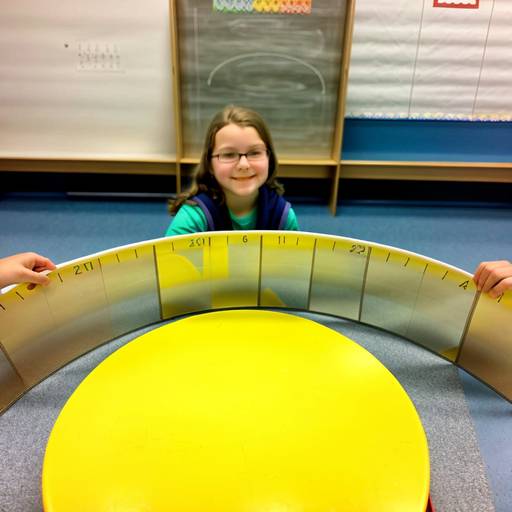
In this 5th-grade math lesson on measurement and weight, students will explore the concepts of length and weight using both standard and metric units. The class will begin by discussing the importance of measurement in everyday life, leading into direct instruction on how to accurately measure objects with rulers, measuring tapes, and digital scales.
Students will engage in guided practice by working in small groups to measure and weigh a variety of objects, recording their findings in both metric and standard units. Following this collaborative activity, they will complete a worksheet that includes conversion problems and word problems related to the measurements taken.
The lesson will conclude with a class discussion where groups share their findings, reinforcing the key concepts learned. Assessment will focus on group participation, individual worksheet completion, and engagement in discussions. Additionally, extension activities will provide opportunities for further exploration of measurement standards and creative presentations. This lesson emphasizes hands-on learning and real-world applications of measurement skills.