
Filters
Level
Grade
Subject
Subject Area
Subject Topic
Standard(s)
Audience
Keyword
DurationMinutes
5th Grade Math Lesson Plans

This lesson plan for 5th-grade students focuses on the concept of adding fractions, particularly targeting fractions with like denominators. The lesson begins with a review of fractions, where students share real-life examples and learn key vocabulary terms. Direct instruction follows, demonstrating how to add fractions using visual aids, such as fraction strips. Students then engage in guided practice where they solve problems collaboratively, reinforcing their understanding of the addition process.
For a hands-on activity, students create their own fraction strips using colored pencils, allowing them to visually represent and add fractions creatively. The lesson concludes with a review of key concepts and an exit ticket that assesses their understanding through practical application problems. Adaptations are included to support diverse learners, ensuring that advanced students are challenged with problems involving unlike denominators while additional support is provided for those who may struggle with the material. Overall, the plan emphasizes interactive learning and practical application to help students master the addition of fractions.

This 5th-grade math lesson focuses on understanding and subtracting fractions, specifically fractions with like denominators. The lesson begins with a review of fractions, including the roles of numerators and denominators, using visual aids like pizza slices for clarification. The instructor then introduces the concept of subtracting fractions with the same denominator, providing clear examples and demonstrating the simplification of results.
Students engage in guided practice using fraction manipulatives and complete worksheets with subtraction problems. They also tackle word problems that require them to apply their understanding of fraction subtraction independently. The lesson concludes with a review of key concepts, allowing for feedback and reinforcement.
Assessment is conducted through the collection of worksheets and observations during activities, ensuring that students grasp the content. Accommodations are in place for those needing extra support, while advanced learners can be challenged with problems involving unlike denominators. Overall, this lesson aims to build foundational skills in subtracting fractions through hands-on activities and collaborative learning.
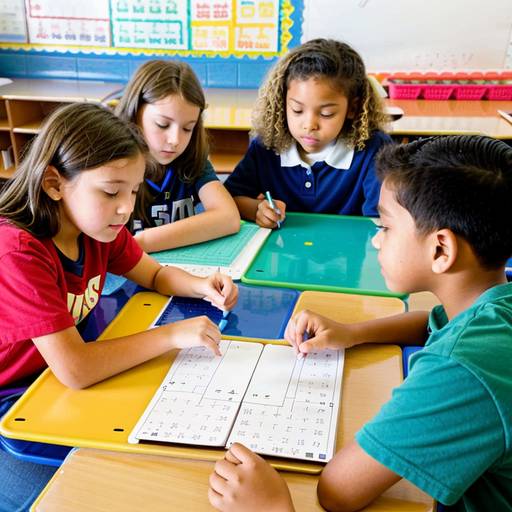
This lesson plan is designed for a 5th-grade math class focusing on fractions and solving word problems. The objectives include understanding fractions, representing them visually, and practicing addition and subtraction of fractions with like denominators. The lesson begins with a review of fractions using real-world examples to engage students. Direct instruction involves presenting various fraction word problems, explaining step-by-step solutions, and utilizing fraction models to aid comprehension.
During guided practice, students work in pairs to solve similar problems, fostering collaboration and discussion. They then complete independent practice with more challenging word problems. The lesson concludes with a review of answers as a class, encouraging students to share their strategies and reflections on the importance of fractions in everyday life. Assessment is conducted through collected worksheets and observations during group activities, with extensions available for advanced students. Overall, the plan emphasizes interactive learning and the practical application of mathematical concepts.
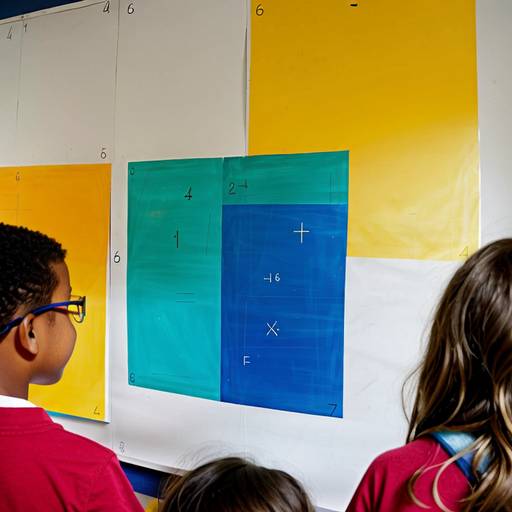
In this 5th-grade math lesson, students will explore the concept of dividing fractions through a combination of direct instruction, hands-on activities, and collaborative learning. The lesson begins with a review of fractions, followed by an explanation of the division of fractions, highlighting the process of multiplying by the reciprocal. Students will engage in guided practice using fraction circles and bars to visually represent and solve their own fraction division problems in pairs. They will then work independently on worksheets that feature various division problems involving fractions. The lesson concludes with a class discussion to clarify concepts and an exit ticket that assesses individual understanding. Throughout the lesson, the teacher will monitor student progress and provide support as needed, ensuring all learners grasp the material and feel confident in their skills. Extensions will be offered for advanced learners and additional support will be provided for those who need it. A reflection on the effectiveness of the lesson will inform future instruction.
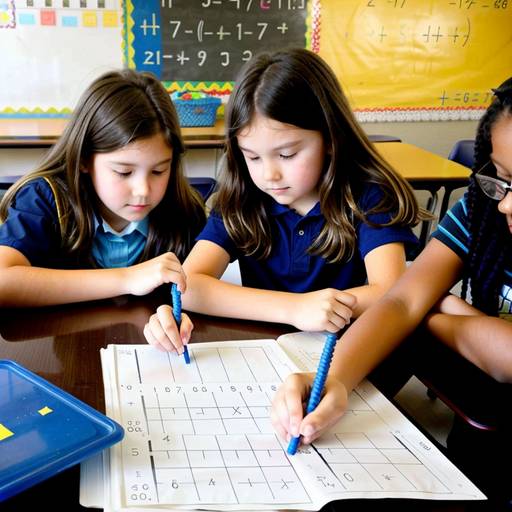
This 5th-grade math lesson focuses on introducing students to the concept of multiplying fractions. The lesson begins with a review of fractions, encouraging students to share real-life examples. Through visual aids, such as rubber fraction circles or DIY paper models, students learn to represent and visualize the multiplication of fractions. Guided practice involves solving a series of gradually more complex problems while illustrating their thinking.
Students then receive worksheets for independent practice, including problems based on real-world scenarios, such as cooking or measuring ingredients. After a group discussion on real-world applications, the class reconvenes to recap the key concepts learned. Assessment includes collecting the worksheets to gauge understanding and observing group interactions. Extensions and modifications are provided to accommodate diverse learner needs, ultimately reinforcing the connections between fraction multiplication and practical applications in everyday life.
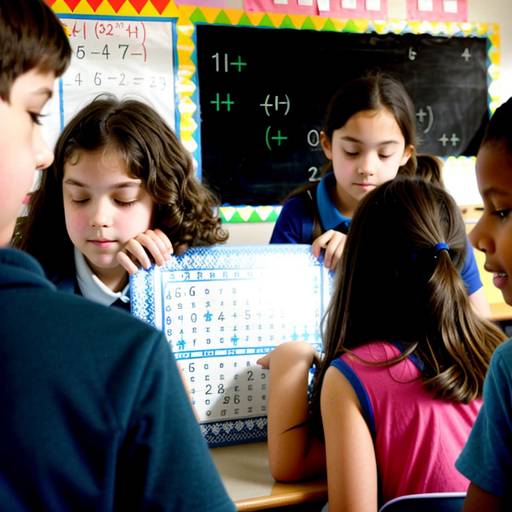
In this 5th-grade math lesson, students will explore the concept of dividing fractions through a variety of engaging activities. The lesson begins with a review of fractions, encouraging students to share real-life examples. The teacher will introduce the process of dividing fractions, emphasizing the rule of multiplying by the reciprocal, and will model this through simple examples on the whiteboard.
Students will then participate in a guided group activity where they will use fraction tiles or circles to solve division problems and visualize their answers. Afterward, they will complete a worksheet that includes both direct division problems and word problems related to real-life scenarios, fostering independent practice and collaborative discourse among peers.
The lesson will conclude with a recap of key concepts, followed by an exit ticket where students will reflect on what they learned and any lingering questions they may have. Extensions for further practice will be provided, including interactive games and a project involving adjusting recipes to apply their understanding of dividing fractions in a practical context. Assessment will be based on participation, worksheet accuracy, and reflections shared in exit tickets.

This lesson plan is designed for 5th-grade students to explore the concepts of geometry and area. The objectives are to help students define geometric shapes such as squares, rectangles, and triangles, and to teach them how to calculate the area of these shapes using specific formulas. The lesson begins with an engaging discussion about familiar shapes in their surroundings, followed by direct instruction that introduces the area formulas and demonstrates their application.
Students will participate in hands-on activities where they create their own geometric shapes on graph paper, using rulers and cutouts, enabling them to apply their understanding of area in a practical way. Peer review and collaboration are encouraged as students verify each other's calculations.
After guided practice, students will complete an independent worksheet that challenges them to calculate the area of various shapes. The lesson concludes with a class review of the worksheet answers and a discussion on the real-world applications of calculating area. As an assessment, students will submit an exit ticket that reflects their understanding of area in their own words, providing insight into their grasp of the concept. Accommodations are made for diverse learners, ensuring all students can engage with the material effectively.

In this 5th-grade math lesson, students will explore geometric shapes and learn how to calculate their perimeters. The lesson begins with an introduction to geometry and the concept of perimeter, including simple definitions and formulas for various polygons such as squares, rectangles, triangles, and pentagons. Students will then engage in creating their own geometric shapes on graph paper and calculating the perimeter for each shape they create.
Following this hands-on activity, students will work independently on worksheets that feature a variety of shapes, applying the formulas learned to calculate perimeter. The lesson also encourages real-world application by having students measure the perimeter of objects within the classroom.
To conclude, the class will review the key concepts and formulas, while students complete an exit ticket to reflect on their learning and pose any lingering questions. Assessment will include evaluating worksheets and observing participation during activities, with extensions available for advanced learners and adaptations provided for those needing extra support.
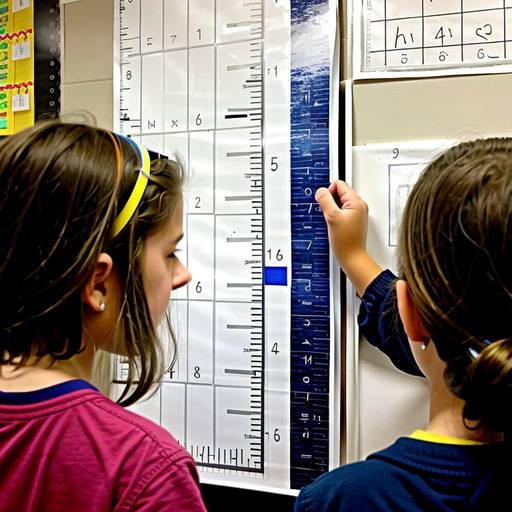
This 5th-grade math lesson focuses on the concept of measurement and length, emphasizing its real-world applications. Students will understand how to measure using standard units—specifically inches, feet, centimeters, and meters—and practice converting between these units. The lesson begins with a discussion on the importance of measurement in everyday life, followed by a demonstration of measuring techniques.
Students will engage in a hands-on activity where they work in small groups to measure various classroom objects and record their findings on a worksheet, including unit conversions. The class will then reconvene to discuss their measurements and any challenges they encountered. To conclude, a short quiz or exit ticket will assess their understanding of the material covered. This lesson aims to reinforce measurement skills while fostering collaboration and real-life connection to mathematics.
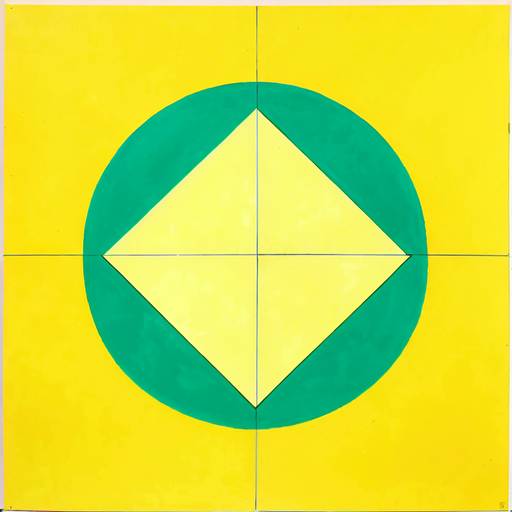
In this 5th-grade math lesson, students will explore the concept of angles and their classifications, focusing on acute, right, and obtuse angles. The lesson begins with an engaging discussion to activate prior knowledge, followed by direct instruction on identifying and measuring angles using a protractor.
During guided practice, students will work with worksheets to measure various angles, receiving support as needed. The interactive activity involves a scavenger hunt where students work in small groups to find and measure angles in their classroom environment, documenting their findings on chart paper. Each group will also create a poster displaying the shapes they discovered, labeling the angles accordingly.
The lesson concludes with group presentations, allowing students to share their discoveries and reinforce their understanding of angle types. Assessment will include observation during activities and a quiz to evaluate individual understanding. Modifications and extensions are provided to support diverse learning needs and explore additional geometric concepts. This lesson emphasizes hands-on learning and real-world application, fostering a comprehensive understanding of geometric angles.