
Filters
Level
Grade
Subject
Subject Area
Subject Topic
Standard(s)
Audience
Keyword
DurationMinutes
5th Grade Lesson Plans

In this 5th Grade Language Arts lesson, students will focus on enhancing their grammar and punctuation skills. The lesson begins with an engaging storytelling activity where students listen to a purposely mis-punctuated story, prompting discussions about the importance of clear writing. After reviewing essential grammar rules such as subject-verb agreement and the use of proper nouns, as well as the correct application of punctuation marks like periods, commas, question marks, and exclamation points, students participate in a group activity. They work collaboratively to identify and correct sentences on cards, reinforcing their understanding through teamwork.
Following guided practice, students complete a worksheet featuring a mix of exercises focused on grammar and punctuation, allowing for independent assessment of their understanding. The lesson concludes with a review of worksheet answers and reflections on new insights gained, ensuring students recognize the relevance of the skills learned.
To accommodate diverse learning needs, advanced learners are encouraged to engage in creative writing, while struggling learners receive targeted support. For homework, students will write a descriptive paragraph about their favorite hobby, applying proper grammar and punctuation techniques. Overall, the lesson promotes active participation and collaboration, fostering a deeper understanding of grammar and punctuation in writing.
In this 5th-grade language arts lesson, students will focus on improving their understanding of grammar and sentence structure. The session begins with a discussion about the importance of sentence construction, introducing key concepts such as fragments, run-on sentences, and types of sentences (simple, compound, and complex). Students will work in pairs to identify and correct errors in provided sentences on handouts.
Following guided practice, they will participate in a collaborative activity where they create posters using word cards to form a variety of complete sentences, showcasing both correct and incorrect structures. Groups will present their work, explaining their choices and thought processes. The lesson concludes with a brief class reflection on the concepts learned, and for homework, students will write a paragraph that includes different types of sentences, further solidifying their understanding. Adaptations will be provided for diverse learners, ensuring that all students can engage with and benefit from the material. The lesson emphasizes interactive learning and creative expression while reinforcing essential grammar skills.

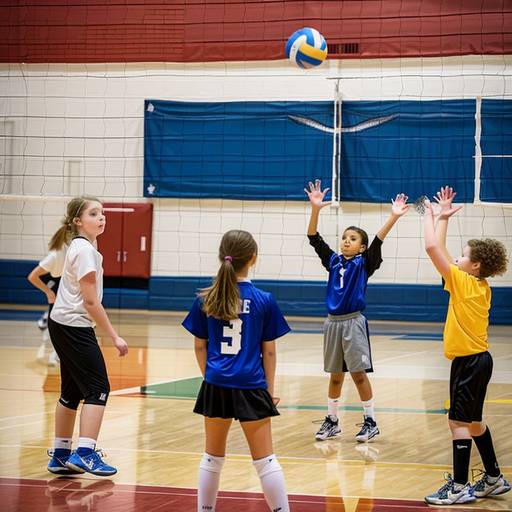
In this 60-minute physical education lesson for 5th graders, students will be introduced to the fundamental skills of volleyball, including serving, passing, and setting. The class will begin with dynamic stretching and a volleyball-focused warm-up to prepare students for activity. Students will then break into small groups to rotate through skill stations where they will practice each volleyball technique. This hands-on approach will reinforce proper form and body positioning.
Following the skill stations, students will participate in a mini-game, applying their skills in a team setting while learning the basic rules of volleyball. The lesson will conclude with a cool-down period that includes stretching and a reflective discussion about their experiences, emphasizing teamwork and sportsmanship. Throughout the lesson, the teacher will assess student engagement and technique, providing feedback and adaptations as necessary to cater to varying skill levels. Safety will be prioritized to ensure an enjoyable and productive experience for all participants.

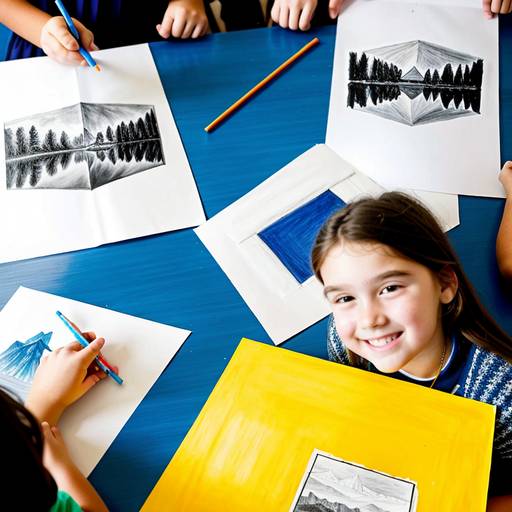
In this 5th-grade art lesson, students will explore the concepts of shape and shadow to create drawings that exhibit depth and dimension. The session begins with a discussion on different types of geometric and organic shapes, alongside an introduction to the concept of shadows and how light interacts with objects. A demonstration will guide students in drawing geometric shapes, determining the position of a light source, and applying shading techniques to create the illusion of depth.
During guided practice, students will select and draw their own shapes while applying the shading techniques they have learned, with ongoing support from the teacher. The lesson culminates in an independent practice session, where students can enhance their drawings using colored pencils or markers.
In the closing segment, students will participate in a gallery walk to display their artwork, discussing their creative choices and the relationship between shapes and shadows. Assessment will focus on the effectiveness of their use of shapes, shadows, and creativity in their artwork. This lesson fosters foundational drawing skills and encourages artistic expression through understanding light and form.

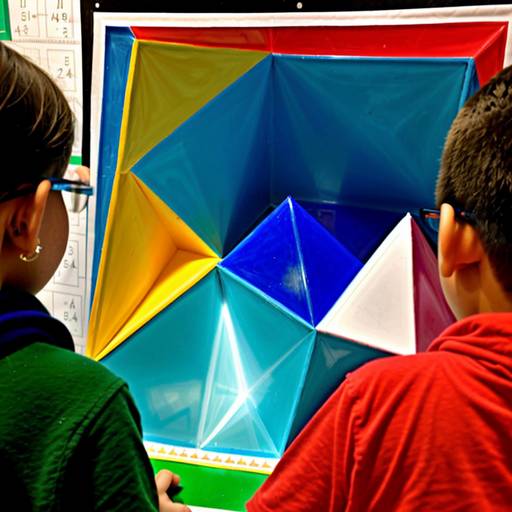
In this 5th-grade math lesson, students will explore essential concepts related to 3D geometry, focusing on identifying and describing common solid shapes, including cubes, spheres, cylinders, cones, and pyramids. The lesson begins with a discussion about geometry and its relevance in everyday life, followed by an introduction to the properties of these shapes. Through a shape hunt activity, students will find real-world objects that correspond to the identified 3D shapes and share their findings with classmates. They will then engage in a hands-on activity to create their own 3D models, labeling their properties. The lesson concludes with presentations of their creations, emphasizing the importance of recognizing shapes in their environment. Assessment will be based on participation, accuracy in labeling, and worksheet completion. Extension activities are suggested for students who excel, including lessons on volume and surface area, as well as research on notable structures. Overall, the lesson promotes active learning and fosters a deeper understanding of geometric concepts in a relatable manner.
In this 5th-grade art lesson, students will explore the world of sculpture through hands-on creation and design. The lesson spans two class periods, beginning with an introduction to the concept of three-dimensional art, discussing various forms of sculpture, key vocabulary, and showcasing examples of notable works. Students will watch a demonstration on using modeling clay and other materials to create stable and balanced sculptures.
During the first class, students will sketch their sculpture ideas, considering themes and forms, and share their plans with a partner. In the second class, they will bring their designs to life using the selected materials, focusing on techniques such as shaping and adding textures. Students will finalize their sculptures with paints and details, preparing to present their work to the class.
The lesson emphasizes creativity, critical thinking, and hands-on exploration, with assessments based on participation, the quality of the final sculpture, and written reflections on their process and learning experiences. Overall, this project encourages students to engage with art in a meaningful way while developing their sculptural skills.

In this 5th-grade music lesson, students will explore the concepts of melody and rhythm through engaging singing activities and performance. The lesson begins with vocal warm-ups to prepare their voices, followed by a discussion about the elements that make music enjoyable.
Students will learn a simple song by breaking it down into manageable sections, practicing both the melody and rhythm. They will then be divided into small groups, where they will focus on specific parts of the song, rehearse together, and provide peer feedback to each other.
After practicing, the entire class will come together to finalize the song and discuss performance staging and expression. The lesson culminates in a performance for an audience, allowing students to showcase their work and gain confidence in their abilities.
Finally, the class will reflect on their experience, discussing what they enjoyed and how they felt during the performance. Overall, this lesson emphasizes teamwork, vocal skills, and the joy of music-making.
In this 60-minute music lesson for 5th graders, students will explore the concept of harmony through interactive activities and group singing. The lesson begins with an introduction to harmony, prompting students to share examples of songs that feature harmonization. Following a vocal warm-up that includes practicing scales and intervals, students will listen to recordings of harmonious songs, discussing their feelings and observations about the different vocal parts.
Students will then be divided into two groups, with one group learning the melody and the other practicing the harmony of a simple, familiar song. Through collaborative practice, they will receive guidance on blending their voices and supporting each other musically. The lesson will culminate in a performance where the entire class sings together, with opportunities for students to take leadership roles in either the melody or harmony.
The session wraps up with a discussion on their experiences and insights regarding harmony, supported by an exit ticket assessment to reflect on what they learned and enjoyed. Extensions to the lesson encourage further exploration and sharing of harmonious songs at home, enriching their musical understanding and engagement.
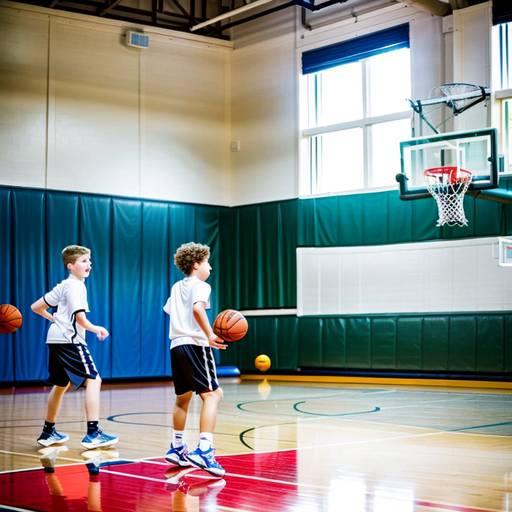
This 5th-grade physical education lesson focuses on developing fundamental basketball skills, including dribbling, passing, and shooting. The 60-minute class begins with a brief introduction to the sport, followed by a warm-up with dynamic stretches. Students then participate in a series of skill development drills, where they practice dribbling through cones, executing various types of passes with partners, and shooting from designated spots on the court.
After skill practice, students are divided into small teams to engage in mini basketball games, applying the rules they've learned while fostering teamwork. The lesson concludes with a cool down consisting of static stretches and a group discussion where students reflect on their experiences and what they learned.
Assessment is based on observation of skill execution and teamwork during activities. The lesson also includes adaptations for inclusivity and challenges for advanced students, ensuring all participants are engaged and able to improve their basketball skills.
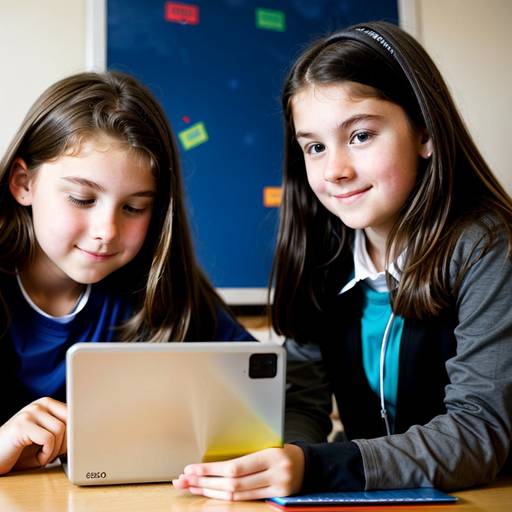
This 5th-grade technology lesson focuses on developing students' internet skills and ensuring their online safety. During the session, students will learn effective search strategies to find reliable information and understand the concept of digital footprints, discussing their long-term implications. Key internet safety tips will be introduced, covering the importance of keeping personal information private and recognizing suspicious online behavior.
The lesson includes a guided practice activity where small groups discuss real-life scenarios related to online safety and complete an Internet Safety Checklist. For independent practice, students will create a digital footprint chart to reflect on their online activities and their potential impacts. The lesson concludes with a review of key concepts and encourages students to share their insights on responsible internet use. Assessment will be based on participation and the completion of handouts, with opportunities for extension through poster creation and follow-up lessons on privacy settings. Overall, the lesson aims to equip students with vital skills for navigating the digital world safely.