
Filters
Level
Grade
Subject
Subject Area
Subject Topic
Standard(s)
Audience
Keyword
DurationMinutes
5th Grade Lesson Plans

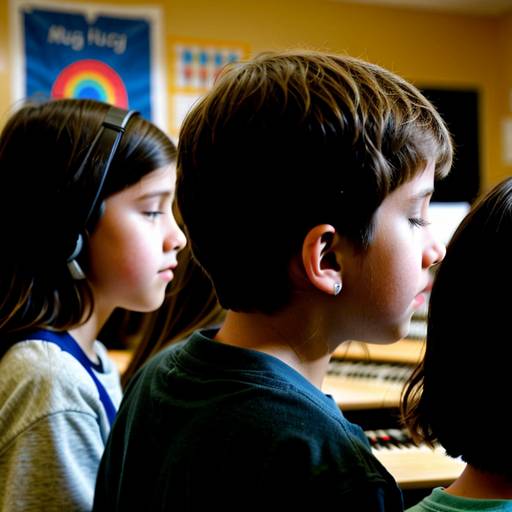
In this 5th-grade music appreciation lesson, students will explore various genres of music from around the world, enhancing their active listening skills and understanding of musical elements. The class will begin with a warm-up discussion about favorite music styles, leading into a listening activity where students hear short clips spanning classical, jazz, rock, folk, and world music. After each clip, students will engage in discussions to identify instruments, emotions, and imagery elicited by the music.
Next, students will work in small groups to focus on one specific genre, creating a brief presentation to share insights with the class. This collaborative effort will foster teamwork and deeper analysis of musical characteristics. Following the group activity, students will complete a guided reflection worksheet with prompts that encourage personal connections to the music they listened to, along with the option to express their thoughts artistically through drawing or collaging.
The lesson will conclude with a class share-out, where students can discuss their reflections and artistic work. Overall, the goal is to nurture an appreciation for music, develop listening skills, and encourage creative expression while connecting with different cultural backgrounds through sound. Assessment will involve observation of participation, review of worksheets, and evaluation of artistic expressions. Follow-up activities will further allow students to engage with music on a personal level, including creating playlists and sharing music from diverse cultures.
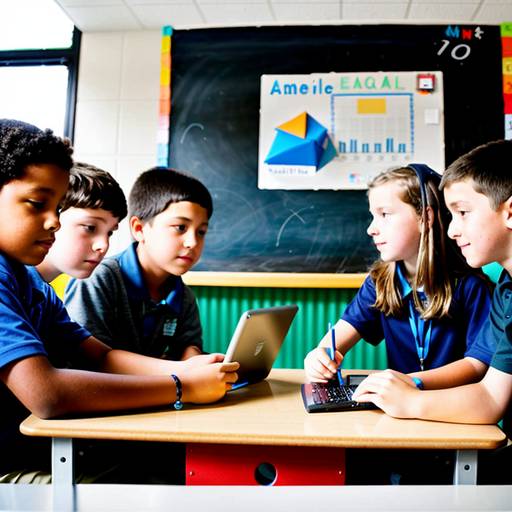
This lesson plan for 5th-grade students introduces the concept of technology and its significance in everyday life while emphasizing technological innovations and the inventors behind them. Students will begin by defining technology and exploring its various forms through a brief discussion and a short video presentation. They will then learn about key technological innovations, focusing on notable inventions and their impact on society.
Using a timeline, the class will discuss the evolution of specific technologies and how these advancements have altered daily activities. In groups, students will identify a real-world problem and brainstorm a simple technological solution, which they will present to the class. The lesson concludes with a recap and a homework assignment that encourages students to envision future innovations. Assessment will be based on participation, group presentations, and the quality of the homework assignment. Adaptations and extensions are included to address diverse learning needs and to encourage further exploration of current technological advancements.

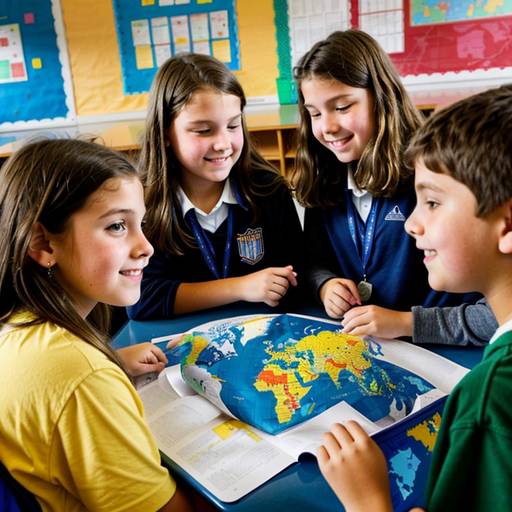
In this 5th-grade social studies lesson, students will explore the key elements and purposes of maps, including types such as political, physical, and thematic. The class will begin with a discussion about the importance of maps, followed by direct instruction on essential map features such as title, legend, scale, compass rose, and latitude and longitude. Students will then create their own simple maps of their local area using graph paper, incorporating all required elements. During guided practice, they will work in pairs to share their maps and explain their features. The lesson will conclude with presentations from a few students and a reinforcement of the role maps play in everyday life. Assessment will involve evaluating the maps based on creativity and inclusion of necessary elements, along with a quiz on the concepts covered. Extensions may include exploring digital mapping tools and further research on maps from different countries. Overall, the lesson aims to build students' understanding of geography through interactive and creative activities.
The first day involves introducing the elements of effective presentations through discussion, examples, and a group brainstorming activity where students outline their ideas on chosen topics. They work collaboratively to create mind maps and gain peer feedback on their concepts.
On the second day, students utilize computers to develop their presentations, incorporating various multimedia elements such as images, videos, and audio to enhance their messaging. They participate in a peer review session, providing constructive feedback to one another before finalizing their projects. The lesson concludes with students presenting their projects, followed by a reflection on their learning experience. Assessment focuses on the quality of the presentations, collaboration, and the effective use of multimedia, promoting creativity and communication skills. The plan includes extensions and differentiation strategies to cater to diverse learning needs.


In this 5th-grade art lesson plan, students will explore the world of fiber arts by learning about various techniques such as weaving, embroidery, and tapestry. The lesson begins with an engaging discussion about the cultural significance of fiber art and the impact of texture and color in artistic expression. Students will create inspiration sketches to plan their unique woven pieces and will construct their own cardboard looms.
Hands-on weaving will involve threading and interlacing different yarn colors and textures to create visually appealing designs. Students will have the opportunity to personalize their woven artworks by adding decorative elements, like fabric scraps or felt.
The lesson culminates in a mini-gallery walk where students can showcase their creations, share their artistic choices, and reflect on their experiences. Assessment will focus on participation, the creative process, and written reflections that demonstrate an understanding of fiber arts. Extensions may include inviting a local fiber artist for a demonstration and exploring eco-friendly art materials. This lesson promotes creativity, fine motor skills, and personal expression through the art of fiber.

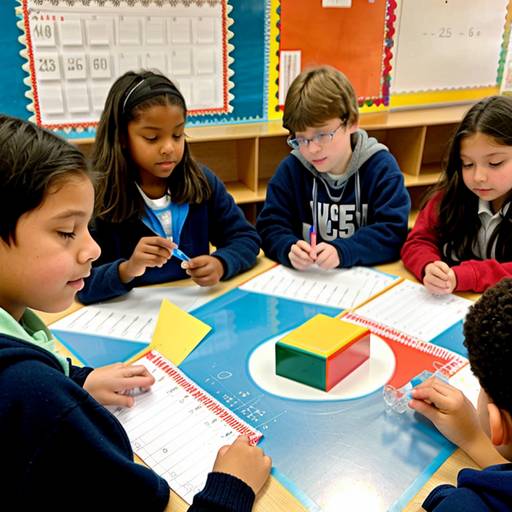
In this 5th-grade math lesson, students will explore the concepts of measurement and weight through engaging hands-on activities. They will learn to use various tools such as digital scales, rulers, and measuring tapes to accurately measure and weigh different objects. The lesson begins with a discussion on the importance of measurement in everyday life, followed by direct instruction on using measurement tools and converting between different units (grams, kilograms, ounces, and pounds).
Students will then work in small groups to measure and weigh assigned items, recording their findings on worksheets. After grouping activity, they will perform conversions and solve related word problems based on their measurements. The lesson concludes with group presentations where students share their observations and reflect on their learning experience. Assessment will be based on their worksheets and participation in group discussions, while extensions and adaptations are available for varying student needs. Overall, the lesson aims to deepen students’ understanding of measurement through collaboration and practical application.


In this 5th-grade physical education lesson plan, students will explore the importance of fitness and strength for overall health through engaging activities. The lesson begins with a warm-up that includes dynamic stretching and a fitness circle to prepare their bodies for exercise.
Students will be introduced to various strength-building exercises, including body-weight exercises like push-ups, squats, lunges, and planks, as well as resistance band exercises. Following the instructional component, students will participate in a series of activity stations, rotating every five minutes to practice different strength exercises in groups.
To conclude the lesson, students will engage in a cool-down with static stretching and a reflective discussion about their experiences and insights gained from the activities. Throughout the lesson, students will be observed for form and participation, and safety measures will be emphasized to prevent injuries. Extension activities will encourage students to set personal fitness goals and create their own workout routines to share with others.
In this 5th-grade physical education lesson, students will explore the importance of cardiovascular fitness through a variety of engaging activities designed to improve endurance and promote teamwork. The class begins with an introduction to cardiovascular health, followed by a dynamic warm-up to prepare the body for exercise.
Students will then participate in a series of activity stations, each lasting five minutes, where they will engage in jump rope challenges, hula hoop relays, a modified version of kickball, an obstacle course, and a fun dance party. After the activity stations, the lesson concludes with a cool-down period focusing on stretching and mindfulness breathing exercises.
Finally, students will reflect on their experiences and discuss the significance of maintaining cardiovascular fitness, while also assessing their participation and enjoyment throughout the session.
In this 60-minute physical education lesson for 5th graders, students will explore the importance of flexibility and engage in various stretching activities to enhance their overall fitness. The lesson begins with a dynamic warm-up set to upbeat music, followed by a discussion on the benefits of flexibility.
Students will then rotate through five stretching stations, each focusing on different muscle groups and types of stretches, allowing them to practice techniques safely and effectively. To further reinforce the concepts learned, an interactive game called “Stretch Tag” will be introduced, encouraging students to apply their stretching skills while having fun.
The lesson concludes with a guided cool-down session where students will relax their muscles and reflect on what they learned about flexibility. This engaging approach not only helps students understand the significance of stretching but also fosters a positive and inclusive environment for physical activity. Assessments will be made through observation of student participation and technique during activities, along with reflective discussion at the end. Overall, the lesson promotes healthy habits that students can incorporate into their daily routines.

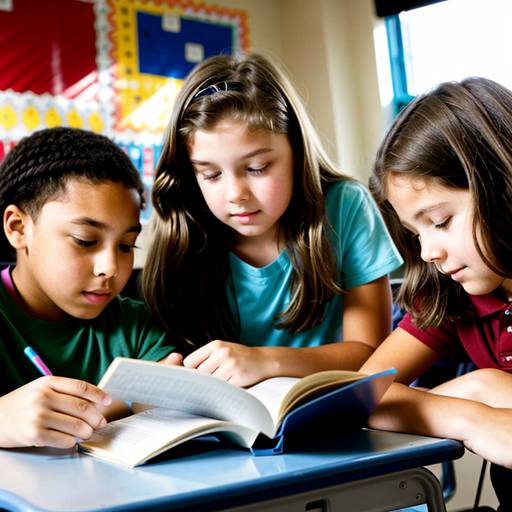
This 5th-grade Language Arts lesson focuses on improving reading fluency through interactive and engaging activities. Students will learn about the components of fluency, including speed, accuracy, and expression. The lesson begins with an introduction to reading fluency, followed by a guided practice session where students read short texts in pairs, emphasizing the role of punctuation. For independent practice, students work on fluency worksheets, reading selected passages multiple times to enhance their skills. Following this, they perform chosen passages for their classmates, using a rubric to provide and receive constructive feedback. The lesson concludes with a reflection on their learning experiences and strategies for continuing to improve fluency at home. Assessment includes evaluating worksheets, peer performances, and reflections, while accommodations are provided for diverse learners to ensure an inclusive environment. Overall, the activities are designed to foster both reading skills and a love for literature.