
Filters
Level
Grade
Subject
Subject Area
Subject Topic
Standard(s)
Audience
Keyword
DurationMinutes
4th Grade Technology Lesson Plans
In this 4th-grade technology lesson, students will explore the concepts of digital citizenship and online safety through interactive discussions and group activities. The lesson begins with an engaging introduction where students share their thoughts on digital citizenship, followed by a presentation covering key aspects of online safety, such as protecting personal information and recognizing online dangers.
Students will participate in a Think-Pair-Share activity to reflect on their online experiences before working collaboratively in small groups. Each group will analyze various scenarios depicting safe and unsafe online behavior, determining the best practices for online interactions. They will create short skits based on these scenarios to present to the class, facilitating further discussion.
The lesson concludes with a class reflection on learned strategies for staying safe online, as well as an exit ticket activity where students can express what they've learned and any remaining questions. The lesson emphasizes critical thinking, responsibility, and the importance of being informed digital citizens. An extension activity challenges students to create digital posters or slideshows about online safety to share with the wider school community.
This lesson plan is designed for 4th-grade students to explore the concepts of digital citizenship and cyberbullying awareness. Students will engage in discussions to define digital citizenship and identify various forms of cyberbullying, understanding their emotional impact on victims. Through an interactive video and group role-playing activities, students will practice responding to cyberbullying scenarios. The lesson emphasizes the importance of responsible and respectful online behavior, culminating in students signing a Digital Citizenship Pledge to commit to these principles. Assessment will be based on participation in discussions and role-plays. The plan also includes extension activities, such as creating informative posters and writing short stories related to the topics covered.
In this 4th-grade technology lesson, students engage in understanding the concepts of digital citizenship and privacy protection. The lesson begins with a class discussion about responsible technology use, followed by a short video that highlights the importance of keeping personal information private. Students then participate in a group activity where they analyze various online scenarios related to privacy, discussing appropriate responses and the rationale behind them. The session concludes with a reflection activity, where students express their learning and commit to actions that will help protect their privacy online. The lesson aims to empower students with the knowledge and skills to navigate the digital world safely and responsibly. Extension activities include creating a digital citizenship poster and hosting a parent night to reinforce safe online practices at home.
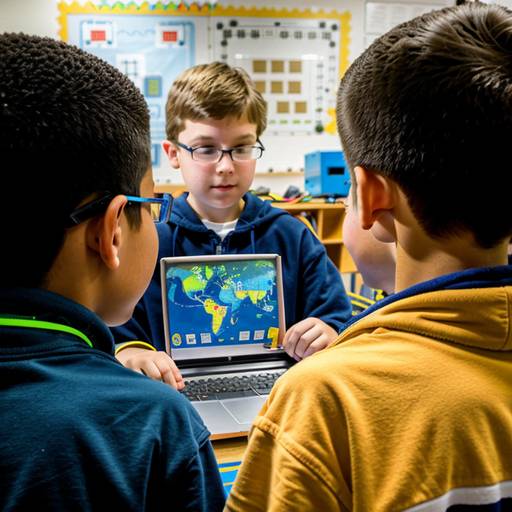
This lesson plan is designed for fourth-grade students to introduce them to the fundamentals of robotics and robot engineering over two class periods. The objectives include understanding basic robotic concepts, identifying robot components and their functions, assembling a simple robot using a robotics kit, programming the robot for basic movements, and collaborating in teams to tackle a robotics challenge.
During the first class, students are engaged in discussions about robots and their everyday applications, followed by a presentation on robot components. They work in groups to complete an activity matching parts to functions and receive an introduction to their robotics kits, learning how to assemble basic structures.
The second class focuses on the actual building and programming of the robots. Students work in their groups to construct their robots, experiment with programming software, and participate in a challenge where they navigate or manipulate objects. They present their creations to the class, discussing their design processes and the challenges they encountered.
Assessment will include observations of group dynamics, completion of worksheets, and evaluations based on presentations. Extensions for advanced students can introduce more complex programming or sensors, and a showcase can allow students to share their work with a broader audience. Safety and support will be ensured throughout the activities.
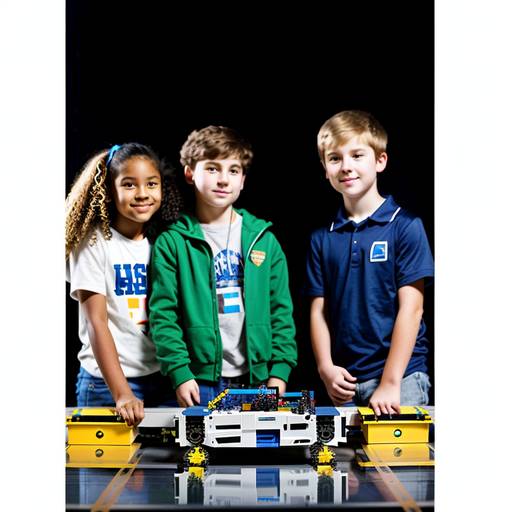
In this engaging 4th-grade technology lesson, students will explore the world of robotics by building and programming their own simple robots. The lesson begins with an introduction to the basic concepts of robotics and examples from everyday life. Students will work in small groups to design and construct their robots using LEGO robotics kits, encouraging creativity and collaboration.
Following the building phase, they will learn how to program their creations using appropriate software to execute specific tasks. Once the programming is complete, students will participate in a series of challenges, navigating their robots through an obstacle course. Reflection discussions will allow them to evaluate their strategies and make improvements.
Assessment will focus on participation, robot performance in the challenges, and group reflections on their experiences. Extensions to the lesson can include advanced robotics concepts or art integration, further enhancing their learning. The overall goal is to foster teamwork, problem-solving, and a deeper understanding of technology and engineering.
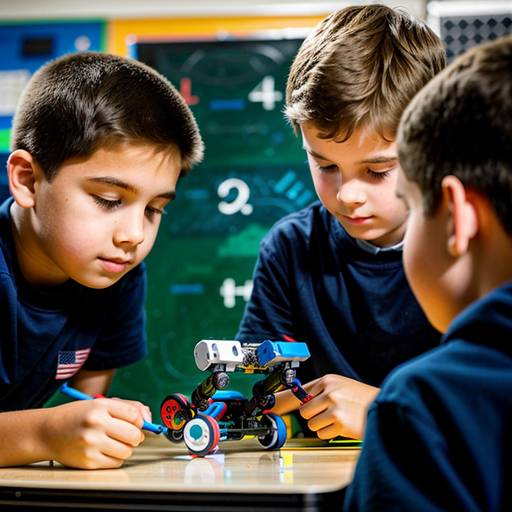
In this 4th Grade technology lesson, students will explore the fundamentals of robotics and programming through hands-on activities. They will start by discussing what robots are and identifying their components such as sensors and motors. Working in small groups, students will brainstorm, design, and build their own robots using provided kits and craft materials, focusing on a specific task their robot will perform.
Once their robots are constructed, students will learn to program their devices using basic coding commands to control movements and actions. The lesson culminates in a testing phase where students will demonstrate their robots' functionality, troubleshoot any issues, and reflect on their experiences. By the end of the lesson, students will have gained collaborative skills, problem-solving techniques, and foundational knowledge in robotics and programming.
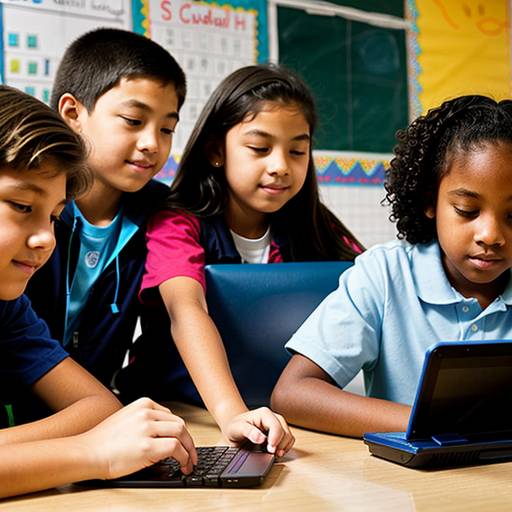
In this 4th-grade technology lesson plan, students will be introduced to the fundamentals of coding through the visual programming language Scratch. The lesson begins with a discussion about coding and its relevance in everyday technology, accompanied by an overview of the Scratch interface and its coding blocks. Students will engage in an exploration activity to familiarize themselves with Scratch, followed by a planning phase where they will design their own interactive games based on storyboards they create.
In the second part of the lesson, students will actively code their games, applying the concepts they learned about movement, objectives, and game mechanics. They will present their projects to the class, showcasing their creativity and the unique elements of their games. The lesson concludes with a reflection on their coding experience. Students will be assessed based on participation, planning documentation, and the complexity of their game creations, with opportunities for future extensions in coding concepts and collaboration.
In this 4th-grade technology lesson, students will explore the basics of multimedia creation and photo editing. They will learn to combine images, text, and sounds to tell a story effectively. The lesson begins with an introduction to multimedia and a demonstration of photo editing software and multimedia tools. Students will then participate in a hands-on activity, working in pairs to create a simple multimedia project based on a chosen theme. They will edit photos, add text, and optionally incorporate sound, resulting in a presentation that showcases their creativity. The session concludes with a sharing segment where selected groups will present their projects to the class. Assessment will focus on participation, effort, and the overall quality of the completed projects, with opportunities for extensions and adaptations to meet diverse learning needs.
This lesson plan focuses on introducing 4th-grade students to the basic concepts of coding, including sequences, loops, and conditionals. It begins with an engaging discussion to assess students' prior knowledge followed by a direct instruction segment where the teacher demonstrates how to use a coding platform, such as Scratch, to create a simple project.
Students then work in pairs to complete a guided coding challenge, applying their understanding of the foundational concepts. After guided practice, they are encouraged to create their own projects, fostering creativity and independent application of skills. The lesson concludes with students sharing their projects and participating in a reflective discussion about their learning experiences.
Assessment includes observing student participation and collecting exit tickets to evaluate understanding. The plan also includes extensions for advanced learners and adaptations for those who may need additional support, promoting an inclusive learning environment focused on collaboration and problem-solving.
In this 4th-grade technology lesson, students will explore fundamental coding concepts such as algorithms, commands, and debugging through hands-on activities using a block-based coding platform like Scratch or Code.org. The lesson begins with an engaging discussion to activate prior knowledge about coding and its applications. Following a demonstration on how to navigate the coding platform, students will create a simple program while following specific steps that emphasize algorithm development and execution.
During guided practice, students will log into their accounts and work on a designated coding project, using a coding challenge worksheet to document their algorithms, commands, and any debugging efforts. After individual work, students will collaborate in pairs to share their projects and learn from each other’s experiences. The lesson concludes with a few students presenting their work to the class and reflecting on their learning.
Assessment will be based on observation during practice, the completion of worksheets, and peer presentations. Extensions encourage further exploration of coding at home, while accommodations support students who may need additional help. Overall, this lesson aims to foster a foundational understanding of coding in an engaging, collaborative environment.