
Filters
Level
Grade
Subject
Subject Area
Subject Topic
Standard(s)
Audience
Keyword
DurationMinutes
4th Grade Music Lesson Plans

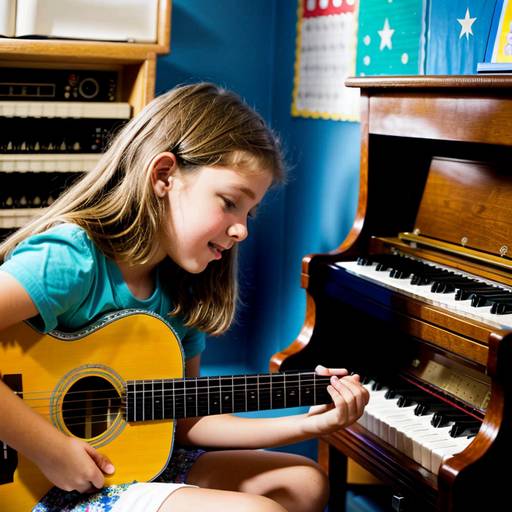
In this 4th-grade music appreciation lesson, students will explore famous songs and their cultural significance throughout history. The lesson begins with a discussion about what makes songs popular, followed by listening to audio clips of selected songs. After each clip, students will share their feelings and thoughts about the music.
Next, students will be divided into small groups, where they will either be assigned or choose a specific song to research. Each group will investigate the song’s background, its artist, and the impact it had on culture or society. They will then prepare a short presentation to share their findings, along with creating a visual representation, such as a poster, that reflects the themes and emotions of their song.
The lesson will conclude with group presentations, allowing students to showcase their work and insights. Overall, the objective is to enhance students' understanding of music's role in history, encourage creativity, and promote teamwork while deepening their appreciation for the art form. Assessment will focus on participation, presentation clarity, and the creativity of their posters. Extensions may include further exploration of artists or songs at home, fostering an enriched learning experience.
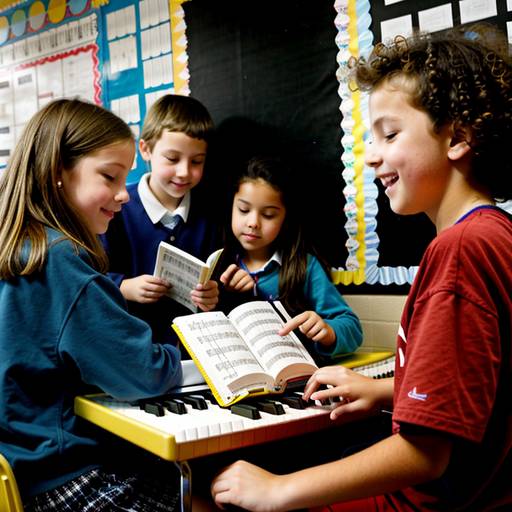
In this 4th-grade music theory lesson, students will explore the concept of musical note identification and the values associated with them. The session begins with a warm-up song, followed by a discussion about musical notes and the treble clef staff. Through direct instruction, students will learn the names of notes on the staff, using mnemonic devices to aid memory, and understand the different note values: whole notes, half notes, quarter notes, and eighth notes.
During guided practice, students will work in pairs to match note name flashcards to their corresponding positions on staff sheets and will engage in rhythmic clapping exercises to solidify their understanding of note durations. They will then complete individual worksheets that reinforce their knowledge of note identification and values.
The lesson concludes with a review of what they learned and a fun challenge where students can demonstrate their understanding by identifying specific notes from flashcards. Assessment will include observing participation, reviewing the completed worksheets, and evaluating performance during the challenge. Extensions of the lesson may involve simple composition activities or technology integration. The overall goal is to foster a positive learning environment and encourage student engagement in music theory.

In this engaging 4th-grade music lesson, students will explore the basics of music theory by learning to identify and name musical notes on the treble staff. The lesson begins with a discussion on the importance of note names and the treble clef. Students will then learn about the musical alphabet (A through G) and how it corresponds to the lines and spaces of the staff, using mnemonic devices for easy recall.
Through a fun note-naming game, students will work in groups to reinforce their understanding by identifying notes on flashcards. They will also engage in a creative activity where they draw notes on sticky squares and label them, encouraging artistic expression alongside musical learning. The lesson concludes with a review of key concepts, promoting a collaborative discussion on what students found easy or challenging. Assessment will be based on participation, accuracy in labeling, and creativity in the drawing activity.
Overall, this lesson provides an interactive and enjoyable way for students to build foundational skills in music theory.

In this 4th-grade music lesson, students will explore rhythm through engaging activities that emphasize understanding and identifying basic rhythmic patterns, specifically focusing on quarter notes, eighth notes, and rests. The lesson begins with a warm-up clapping exercise to establish a foundational understanding of rhythmic notation and sound.
Following direct instruction that includes demonstrating rhythms with flashcards and writing patterns on the whiteboard, students will be divided into small groups. Each group will create their own rhythmic sequences on large sheets of paper, incorporating various note types. This collaborative effort promotes teamwork and creativity.
After the groups have developed their rhythms, they will take turns performing their compositions using claps and percussion instruments, while the rest of the class maintains a steady beat. Constructive feedback will be provided after each performance to encourage growth and confidence.
The lesson concludes with a class discussion reflecting on the challenges and successes of creating and performing rhythms. Overall, students will gain a deeper understanding of rhythm's crucial role in music, while enhancing their collaboration, performance skills, and critical thinking abilities. Assessment will be based on participation, creativity, and collaboration, with potential extension activities to further explore rhythmic concepts.
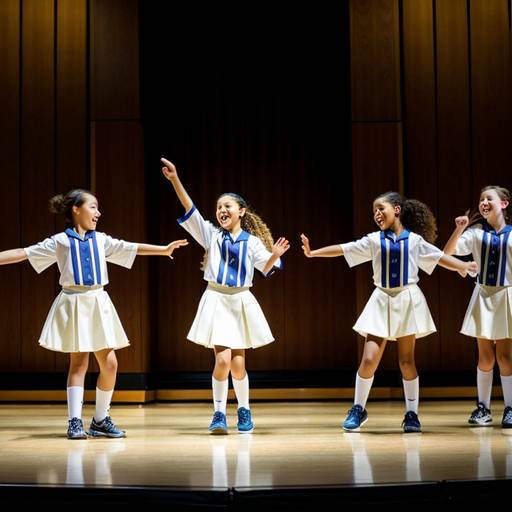
In this 60-minute music appreciation lesson for 4th graders, students will explore various musical genres from around the world. The session begins with a discussion about the importance of music in different cultures, encouraging students to share their experiences with global music. Students will listen to audio clips of diverse genres, identifying instruments, rhythms, and emotions evoked by each piece.
Following the listening activity, students will break into small groups to create simple body percussion rhythms inspired by their assigned genre, which they will present to the class. To enhance their creative expression, students will then draw scenes inspired by the music they heard or design an imaginary cultural festival that could feature the music.
The lesson concludes with a reflection on the day’s activities and an opportunity for students to share their artwork. Assessment focuses on participation, creativity, and the ability to articulate thoughts on the music. Extension ideas include inviting a local musician for a demonstration and organizing a "World Music Day" for students to share music from various cultures. This lesson fosters an appreciation for musical diversity and cultural significance through active engagement and creative expression.
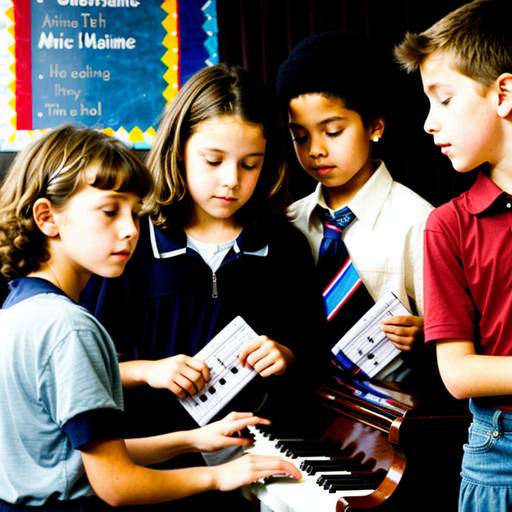
In this 4th-grade music lesson, students embark on an engaging exploration of various musical eras, specifically focusing on the Baroque, Classical, Romantic, and Contemporary periods. The objectives are to familiarize students with key characteristics and notable composers from each era, as well as to encourage them to create and perform rhythms inspired by these styles.
The lesson begins with a discussion on the role of music in reflecting culture and time. Students listen to selected audio clips representing each musical era, followed by a class discussion that highlights the emotions and characteristics evoked by the pieces.
Next, students are divided into small groups, where they compose simple rhythm patterns using rhythm instruments that reflect the essence of their assigned musical era. Each group then performs their rhythm for the class, encouraging participation and guessing about the era represented.
The lesson concludes with a creative expression activity, where students draw or write about their favorite musical era, reinforcing their learning through artistic means. Throughout, students are assessed on their participation, creativity, and completion of the worksheet, setting the stage for a deeper appreciation of music history and its ongoing influence on contemporary styles.
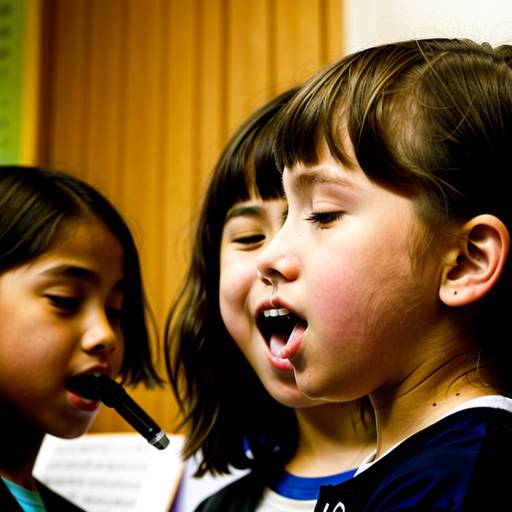
The lesson begins with a discussion about the significance of singing and performance in music, followed by the introduction of an age-appropriate song. Students engage in vocal techniques, focusing on breath control, posture, and warm-up exercises through call-and-response patterns. The lyrics are distributed, and the song is taught in sections, emphasizing dynamics and expression. During rehearsal, students practice singing together, with opportunities for individual feedback. The session culminates in a performance in front of classmates, promoting confidence and teamwork. The lesson concludes with a reflection on what students learned, reinforcing the value of practice and mutual support in music. Extensions include a mini-concert and opportunities to explore choreography or create original songs. Overall, the lesson aims to develop students' vocal skills and enhance their enjoyment of music through collaboration and performance.

In this 4th-grade music lesson plan, students will explore the concept of harmony through singing. The lesson begins with an introduction to harmony, explaining its significance in music as different notes combine to create a fuller sound. Students engage in vocal warm-ups and call-and-response exercises to develop their pitch and breath control.
They will learn a selected song by first singing the melody, then breaking into small groups to practice assigned harmony parts. A group rehearsal allows students to listen and adjust their singing to achieve a cohesive sound. The session concludes with a performance of the song, followed by a reflection where students share their experiences and insights gained from singing in harmony. The lesson emphasizes teamwork and collaboration while providing students with a foundational understanding of harmony in music. Extensions may include exploring music from various cultures and incorporating instruments to enhance their learning experience.
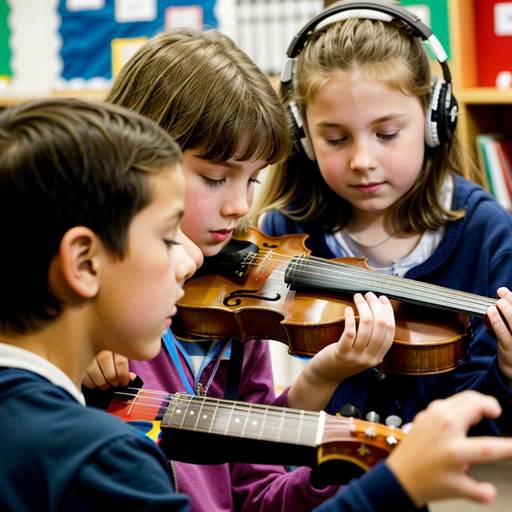
This lesson plan is designed for 4th-grade students to explore and understand the concept of dynamics in music, focusing on loudness and softness. The lesson begins with a discussion about dynamics, introducing essential terms and symbols such as piano (soft), forte (loud), crescendo (getting louder), and decrescendo (getting softer).
Students engage in active listening by analyzing a selection of musical pieces that showcase varied dynamics. Following this, they participate in a hands-on activity where they form small groups to create and perform their own short musical pieces, incorporating at least three different dynamics. Each group will present their work to the class, providing an opportunity for observation and feedback.
The lesson concludes with a class discussion on what students learned regarding dynamics and an individual worksheet activity that reinforces their understanding of the concepts. The lesson also includes extensions for homework, encouraging students to explore dynamics in their favorite songs, and accommodates different learning needs through tailored activities. Overall, this lesson encourages creativity, collaboration, and critical listening skills while fostering an appreciation for the nuances of musical expression.
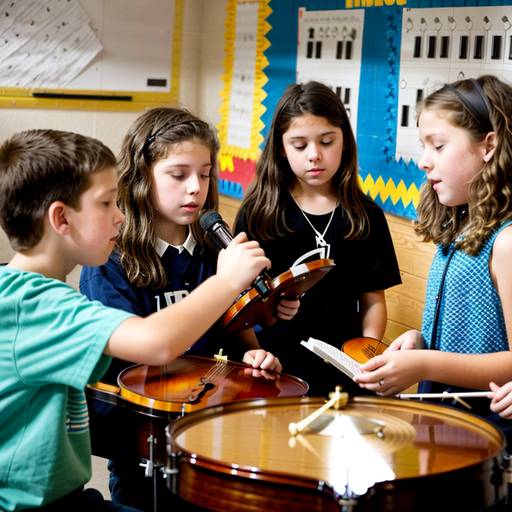
The lesson is designed for 4th-grade students to explore the evolution of music and its various styles throughout history. It begins with a warm-up discussion about students' favorite types of music, followed by a presentation detailing a timeline of music history. Students will listen to audio samples from different periods, including Baroque, Classical, Romantic, and 20th Century music, while learning about key composers and musicians associated with each style.
To deepen their understanding, students will participate in a group activity involving musical exploration stations where they will listen to audio clips, read artist biographies, and fill out worksheets to document their thoughts. If feasible, students may also experiment with percussion instruments to connect with the music physically.
The lesson concludes with a group sharing session, allowing students to present their findings and reflect on how music relates to culture and history. Assessment includes participation in discussions and completion of worksheets, ensuring that students engage thoughtfully with the material. Extensions for the lesson encourage further research and creative expression. Overall, the lesson aims to instill an appreciation for the diverse musical landscape and its historical significance.