
Filters
Level
Grade
Subject
Subject Area
Subject Topic
Standard(s)
Audience
Keyword
DurationMinutes
3rd Grade Science Lesson Plans

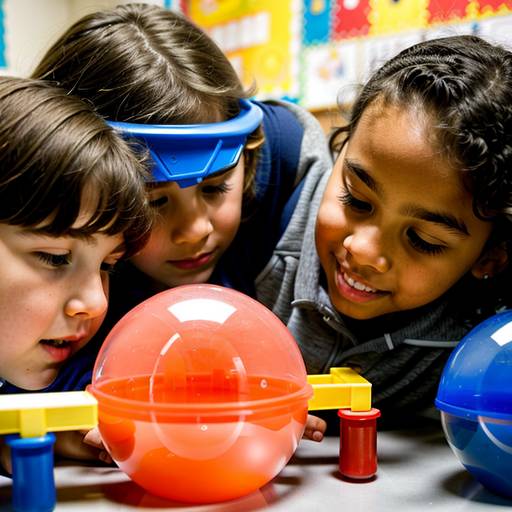
This 3rd-grade science lesson focuses on the concepts of pushes and pulls as fundamental forces. The lesson begins with an engaging introduction to the definitions of these forces and their roles in everyday life, prompting students to share their experiences. Following direct instruction that includes visuals highlighting different forces, students are divided into small groups to conduct a hands-on experiment with toy cars and ramps. They test the effects of pushing and pulling the cars, both with and without added weights, while recording their observations. The class then reconvenes to discuss each group's findings and insights about the ease of pushing versus pulling. To conclude the lesson, students complete a worksheet summarizing their learning, which serves as an assessment of their understanding. The lesson allows students to grasp the practical implications of forces in their daily lives, setting a solid foundation for future exploration in physical science.
This 3rd-grade Life Science lesson focuses on the concept of animal migration. Students will begin by discussing the meaning of migration and its significance for survival, exploring why certain animals undertake long journeys in search of food, breeding grounds, or warmer climates. The lesson includes a visual introduction to various migratory animals, such as monarch butterflies, wildebeests, salmon, and Arctic terns.
Working in small groups, students will research their assigned migratory animal, creating a map that outlines its migration route while noting important facts about its behavior and habitat. After group presentations, the class will engage in a reflective discussion on the challenges these animals face and the importance of protecting their migratory paths.
Assessment will be based on participation, group projects, and potentially a short quiz on the material covered. Extension activities are also suggested to further explore the topic, including individual research and creative writing. Overall, this lesson aims to cultivate students' understanding of migration and its relevance within life science.
In this 3rd-grade science lesson, students will delve into the fundamental systems of the human body, specifically the skeletal, muscular, and circulatory systems. The lesson begins with a discussion to assess prior knowledge, followed by direct instruction using models and diagrams to explain the role and function of each system.
Students will then work in small groups to create informative posters about their assigned body system, incorporating visual elements and key facts. This collaborative activity fosters teamwork and creativity while reinforcing their understanding of the material. Following the poster presentations, students will participate in a relay activity that reinforces vocabulary and concepts learned during the lesson.
The session will conclude with a recap of the key points and a reflective discussion, allowing students to share what they learned. To assess understanding, labeling worksheets will be assigned for homework, encouraging students to reinforce their knowledge. Overall, the lesson provides an interactive and engaging approach to exploring the complexities of the human body.

In this 3rd Grade science lesson, students will embark on an exploration of stars and constellations, aiming to enhance their understanding of astronomy. The lesson begins with a brief discussion and an engaging video showcasing starry night scenes and constellations. Students will learn about different types of stars, their characteristics, and cultural stories associated with various constellations.
Following the instruction, students will create their own star maps using black construction paper and star stickers, allowing them to apply their newly acquired knowledge creatively. They will present their maps to the class, sharing their chosen constellations and their significance. The lesson wraps up with a review of key concepts and reflective questions to assess understanding. Optional extension activities include maintaining a star journal for documenting observations at home and organizing a field trip to a local planetarium or observatory. Overall, this lesson aims to inspire curiosity about the night sky and foster a deeper appreciation for astronomy.
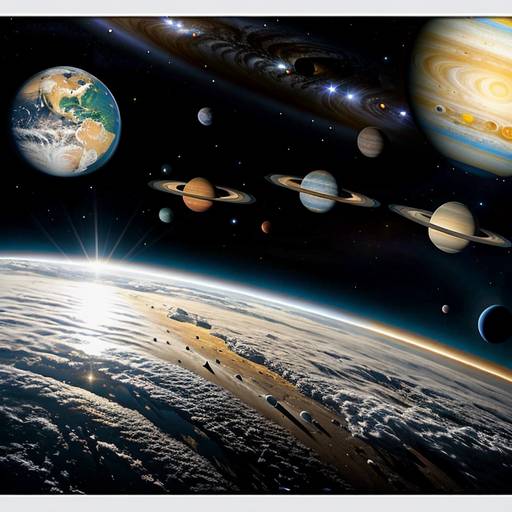
In this 3rd-grade science lesson, students will embark on an exploration of the solar system, focusing on the Sun and the eight planets, along with other celestial bodies. The lesson begins with an introduction that prompts students to share their existing knowledge about the solar system. Students will then work in small groups to research and present key facts about their assigned planet using fact cards.
Following the group discussions, students will participate in a hands-on activity where they create scale models of the planets using Styrofoam balls, which they will paint according to their planets' characteristics. These models will be used to construct a mobile or display that visually represents the solar system, emphasizing the order of the planets from the Sun.
The lesson concludes with a review of the information learned and a reflection session where students can share their favorite aspects of the solar system. Assessment will focus on participation, creativity in model-making, and the completion of worksheets. An extension activity encourages students to create digital presentations about their planets for future sharing. Overall, this lesson aims to engage students in learning about astronomy through interactive and collaborative activities.
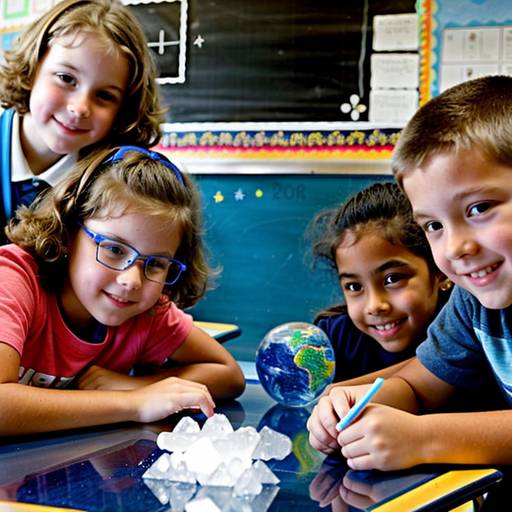
This 3rd-grade science lesson introduces students to the three primary states of matter: solid, liquid, and gas. The lesson begins with a class discussion to gauge prior knowledge and introduces the characteristics of each state using visual aids. Students participate in hands-on activities, exploring ice cubes, water, and balloons to observe and describe the properties of each state. They work in small groups to share their findings and complete drawings based on their observations. The lesson concludes with a recap of key concepts and a worksheet to reinforce learning through examples from everyday life. Informal assessments are conducted through group interactions and worksheet completion, while differentiation strategies ensure all students can engage with the material effectively. Extensions and additional explorations of matter changes provide opportunities for further investigation.
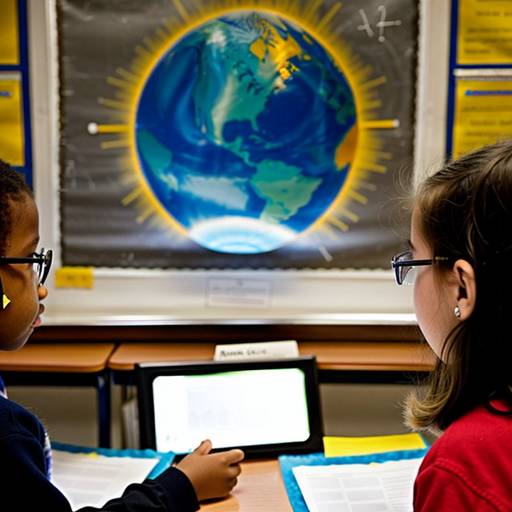
In this 3rd-grade science lesson on physical science and matter, students will explore the three states of matter: solid, liquid, and gas. The lesson begins with a discussion to define matter, followed by an explanation of its states and properties using visual aids.
Students will participate in hands-on experiments at three different stations where they engage with various materials representing each state. They will observe and compare the characteristics of solids, liquids, and gases, and complete worksheets to document their findings.
The lesson concludes with group presentations where students share interesting facts about what they learned, fostering a collaborative discussion about the relevance of matter in everyday life. Assessment will be based on worksheets and observations of group work. Extensions include a field trip for further exploration and home-based experiments to encourage ongoing learning. Adaptations are provided for diverse learners, ensuring comprehension and engagement throughout the lesson.
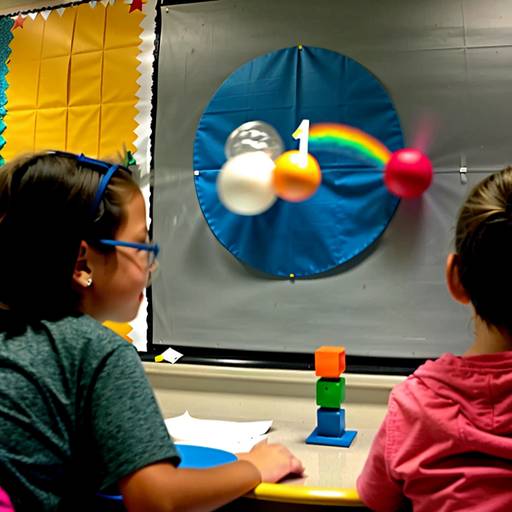
This third-grade science lesson focuses on the concepts of motion and the forces that influence an object's movement. Students will begin with a discussion about motion, exploring definitions and everyday examples. They will learn about different types of forces, including push, pull, gravity, and friction, through direct instruction supported by visuals and videos.
The lesson includes a hands-on experiment where students work in small groups to investigate how various forces affect the movement of toy cars on ramps. They will predict how far a car will roll with and without added weights, measuring the distances and recording their observations. After the experiment, students will regroup to discuss their findings and reflect on the relationship between forces and motion.
Assessment will occur through the collection of worksheets and through informal observations during group activities. Extension activities encourage students to further explore the principles of motion at home. Ultimately, this lesson aims to foster a foundational understanding of physical science while promoting inquiry, teamwork, and critical thinking skills.
In this 3rd-grade science lesson, students will explore the fundamental concepts of pushes and pulls as types of forces through engaging discussions and hands-on activities. The lesson begins with students sharing their ideas about what forces are, followed by explanations and demonstrations using toy cars to illustrate pushing and pulling.
In small groups, students will conduct experiments by building ramps and testing how far toy cars travel when pushed or pulled, while varying the weight of the cars to observe the effects of different forces. They will record their findings and engage in a class discussion to share observations and insights about their experiments.
Students will solidify their understanding of these concepts through presentations and will be assessed based on their participation and the accuracy of their findings. Extensions and challenges for further exploration will be provided, encouraging students to apply their learning to real-life situations. Safety will be emphasized throughout the activities to ensure a secure learning environment.
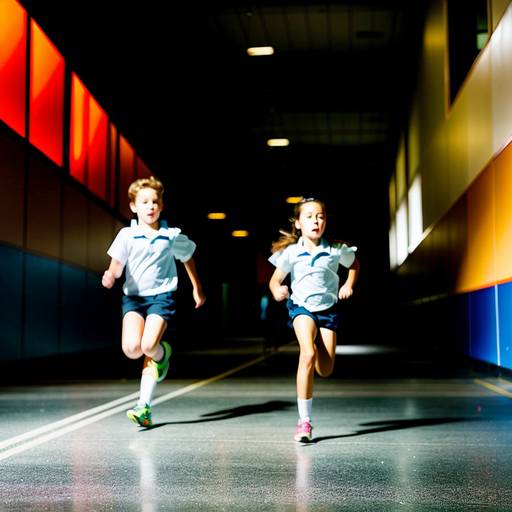
This lesson plan for 3rd-grade students focuses on the concepts of motion, speed, and forces within physical science. The lesson begins with an interactive discussion where students define motion and explore related vocabulary like "force," "push," and "pull." Demonstrations involving toy cars and ramps illustrate how gravity influences motion. Students then work in small groups to conduct a hands-on experiment, varying the angle of ramps to observe how it affects the speed of the cars. They record their observations and discuss their findings with the class, reinforcing their understanding of the relationship between force and motion. The lesson concludes with an evaluation of student participation and science journal entries, with an optional extension activity for those who finish early or seek further challenge. Overall, this plan emphasizes collaborative learning and critical thinking while exploring fundamental scientific principles.