
Filters
Level
Grade
Subject
Subject Area
Subject Topic
Standard(s)
Audience
Keyword
DurationMinutes
2nd Grade Science Lesson Plans

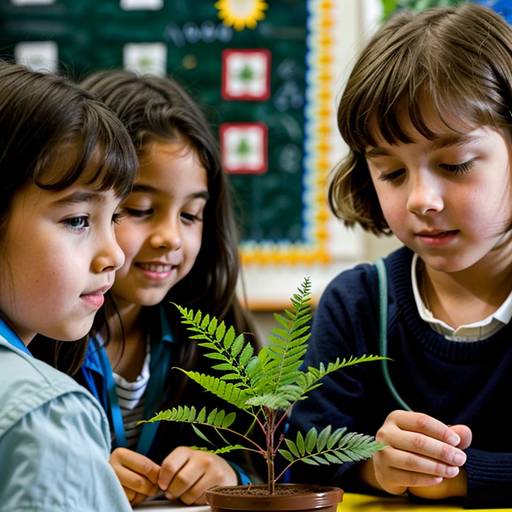
In this 2nd-grade life science lesson, students will investigate the essential needs of plants through hands-on activities and observation. The lesson begins with a multimedia introduction to various plants, prompting a discussion about what plants require to thrive.
Students will engage in a group experiment where they plant seeds in clear cups, placing one in sunlight and another in a darker environment, while recording their predictions and observations in journals. They will also examine different potted plants to learn about their characteristics and discuss the factors that contribute to plant growth.
The lesson concludes with a review of key concepts through a KWL chart, allowing students to reflect on what they have learned and share their remaining questions. Assessment is conducted through an exit ticket where students express one new insight about plants. Extensions encourage ongoing care for their plants and potential field trips to botanical gardens. Overall, the lesson promotes a sense of curiosity and understanding of the important role plants play in the ecosystem.
In this 2nd grade science lesson focused on astronomy, students will explore the fascinating world of stars and constellations. The lesson begins with an engaging video that showcases stunning images of celestial bodies, stimulating discussion about students' prior knowledge of stars. Direct instruction will introduce the characteristics of stars and highlight popular constellations, sharing their associated myths and stories.
Following the instructional component, students will participate in a hands-on activity where they create their own constellations using black construction paper, chalk or crayons, and star stickers. They will design a constellation and compose a short story about it, drawing inspiration from provided story cards. After completing their artwork and narratives, students will have the opportunity to share their creations with the class.
To conclude, the lesson will recap key concepts and encourage students to observe the night sky with their families. Assessment will focus on participation, creativity, and the clarity of each student's story. Extensions may include inviting a guest speaker to discuss astronomy or launching a "Star of the Week" program to foster further exploration of celestial topics.
In this 2nd-grade science lesson, students explore the concept of energy, specifically focusing on sound energy and how it is produced through vibrations. The lesson begins with a discussion to define energy, followed by an introduction to sound waves and their characteristics.
Students participate in hands-on activities where they experiment with rubber bands and containers to observe how vibrations create sound. They further explore sound production with various musical instruments and balloons, engaging with the concept of sound waves in a tangible way.
The lesson includes group discussions and individual drawings to reinforce their understanding of sound energy. To assess their learning, students share their observations and create artworks illustrating what they learned. Additionally, they are encouraged to explore sound concepts further at home. Overall, the lesson emphasizes inquiry-based learning and interaction with physical science principles through engaging activities.
In this 2nd-grade Earth Science lesson, students will explore various types of weather, including sunny, rainy, cloudy, and snowy. The lesson begins with engaging discussions about each weather type, allowing students to share their feelings and experiences related to them. Students will be introduced to basic weather instruments such as thermometers, rain gauges, and wind vanes, understanding their functions and importance.
During the activity, students will create weather journals, where they will draw their favorite type of weather and write a few sentences about how it makes them feel. The lesson concludes with a sharing session, allowing students to present their journal entries to the class, fostering a sense of community and reinforcing their understanding. Exit tickets will be collected to assess individual comprehension of the day's topics. Overall, this lesson aims to deepen students' understanding of weather and its impact on their daily lives while integrating art and writing skills.
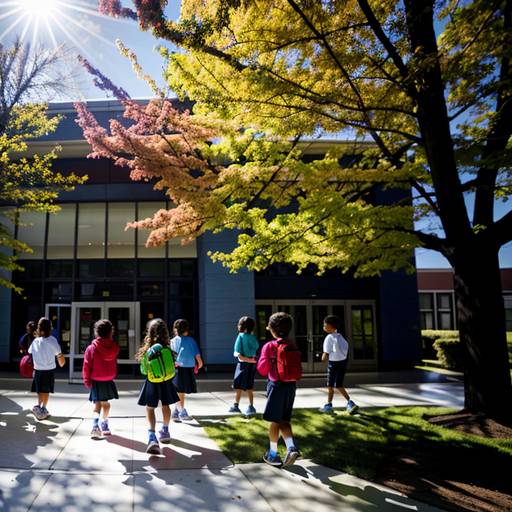
In this 60-minute Earth Science lesson for 2nd graders, students will explore the four seasons and the various types of weather associated with each one. The session begins with an engaging introduction that activates prior knowledge through discussion and visuals, including a read-aloud from a picture book about seasons.
Students will learn about the distinct characteristics of spring, summer, fall, and winter, and how temperature affects weather patterns. A demonstration of a thermometer will help illustrate these concepts.
In groups, students will complete a seasonal weather chart by drawing and writing about the weather associated with each season, encouraging creativity and collaboration. They will also create seasonal weather mobiles using craft supplies to reinforce what they've learned visually.
The lesson concludes with a review of key points and a discussion on personal preferences for seasons and weather. Assessment will involve observing student participation and reviewing their charts and mobiles. Follow-up activities include maintaining a class weather journal to further encourage observation and connection to real-world weather phenomena.
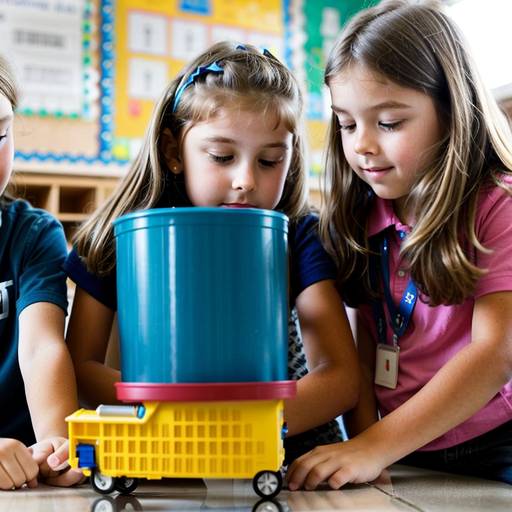
In this 2nd-grade science lesson, students will explore the concepts of motion and force through interactive activities. They will begin with a discussion about motion, sharing examples and learning key vocabulary such as push, pull, speed, and direction. The teacher will explain different types of motion, including linear and circular motion, using toy cars and spinning tops for demonstration.
Students will then engage in hands-on experiments at various stations, where they will roll toy cars down a ramp while timing their speed, push and pull different sized balls to compare the effort required, and create drawings to reflect their observations about motion. After rotating through the stations, the class will regroup to share their findings and insights.
The lesson focuses on fostering understanding of how forces affect motion while encouraging teamwork and discussion. Assessment will be based on student participation during activities and the reflection worksheets they complete.