
Filters
Level
Grade
Subject
Subject Area
Subject Topic
Standard(s)
Audience
Keyword
DurationMinutes
2nd Grade Lesson Plans

In this 60-minute Earth Science lesson for 2nd graders, students will explore the four seasons and the various types of weather associated with each one. The session begins with an engaging introduction that activates prior knowledge through discussion and visuals, including a read-aloud from a picture book about seasons.
Students will learn about the distinct characteristics of spring, summer, fall, and winter, and how temperature affects weather patterns. A demonstration of a thermometer will help illustrate these concepts.
In groups, students will complete a seasonal weather chart by drawing and writing about the weather associated with each season, encouraging creativity and collaboration. They will also create seasonal weather mobiles using craft supplies to reinforce what they've learned visually.
The lesson concludes with a review of key points and a discussion on personal preferences for seasons and weather. Assessment will involve observing student participation and reviewing their charts and mobiles. Follow-up activities include maintaining a class weather journal to further encourage observation and connection to real-world weather phenomena.

In this 2nd-grade math lesson, students will engage in hands-on activities to learn about measurement and temperature. The lesson begins with a discussion on the significance of weather and introduces the thermometer as a tool for measuring temperature. Students will work in small groups to measure the temperature of various water samples using thermometers and record their findings.
Next, they will explore length measurement using non-standard units such as paper clips or blocks to measure different classroom objects, fostering a practical understanding of size. The collected data will be compiled into a class chart, prompting discussion about the results and comparisons of temperatures and lengths.
To conclude, students will reflect on what they learned and complete a worksheet that reinforces the concepts of measuring temperature and length. Throughout the activities, differentiation strategies will be employed to support varying learning needs, and extensions will encourage students to monitor and report on temperature changes at home. Overall, this lesson aims to develop foundational skills in measurement and foster curiosity about the weather.
In this 2nd-grade math lesson, students will focus on understanding how to tell time and the concept of elapsed time. The lesson begins with a review of reading analog and digital clocks, followed by an engaging story that incorporates time references.
Students will learn about elapsed time through direct instruction and visual demonstrations, including practical examples of scenarios like reading time or engaging in play. They will then participate in a group activity where they solve elapsed time problems collaboratively, using timers to simulate real-life situations.
For independent practice, students will complete a worksheet that includes various elapsed time questions, reinforcing their understanding of the concept. The lesson concludes with a review of the answers, allowing for clarification of any confusions. Assessment will occur through observation during group activities and evaluation of the worksheets.
This interactive and comprehensive approach provides students with a solid foundation in telling time and understanding how time passes throughout the day, effectively preparing them for future mathematical concepts related to time.
In this 2nd-grade science lesson, students will explore the concepts of motion and force through interactive activities. They will begin with a discussion about motion, sharing examples and learning key vocabulary such as push, pull, speed, and direction. The teacher will explain different types of motion, including linear and circular motion, using toy cars and spinning tops for demonstration.
Students will then engage in hands-on experiments at various stations, where they will roll toy cars down a ramp while timing their speed, push and pull different sized balls to compare the effort required, and create drawings to reflect their observations about motion. After rotating through the stations, the class will regroup to share their findings and insights.
The lesson focuses on fostering understanding of how forces affect motion while encouraging teamwork and discussion. Assessment will be based on student participation during activities and the reflection worksheets they complete.

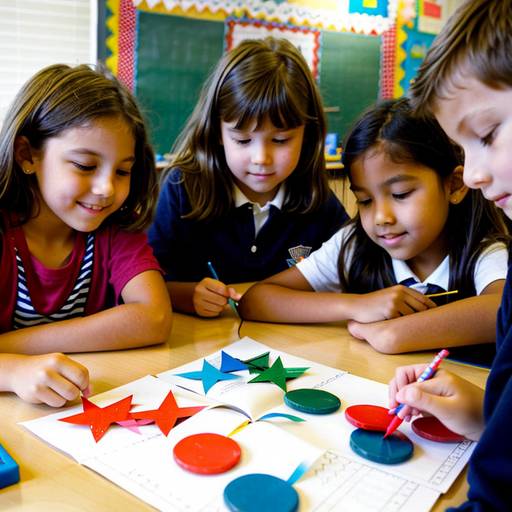
In this 2nd Grade Language Arts lesson, students will explore the fundamentals of storytelling through writing and creative expression. The lesson begins with a discussion about what elements make up a great story, prompting students to think about characters and settings. Working in small groups, students will brainstorm ideas using a selection of word bank cards, which will help inspire their unique narratives.
After collecting their ideas, students will fill out story templates to craft short narratives, incorporating descriptive language and at least one word from the provided banks. Once their stories are written, they will share them with partners or in small groups to practice their oral storytelling skills. The lesson concludes with a recap of key storytelling elements, reinforcing that everyone has the ability to be a storyteller. Assessment will focus on participation during activities, the content of written narratives, and engagement during sharing. Differentiation strategies will be provided to support varying levels of proficiency among students.

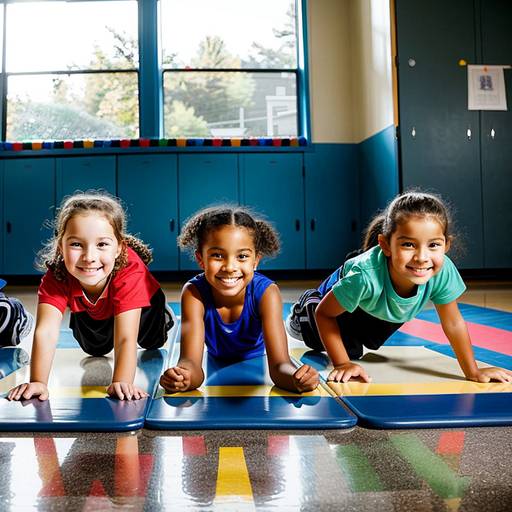
In this 2nd-grade physical education lesson plan, students will explore the concepts of fitness and flexibility through engaging activities designed to promote body awareness and overall health. The lesson begins with a brief introduction that explains the importance of fitness and flexibility, followed by a dynamic warm-up to get students moving. A variety of stretching exercises targeting major muscle groups will be introduced to help students understand proper techniques and the benefits of stretching.
The lesson includes four activity stations where students participate in fun, hands-on practices such as hula hooping, yoga poses, using stretch bands, and navigating an obstacle course with designated stretching points. Each station encourages movement and flexibility while fostering teamwork and enjoyment.
To conclude the lesson, students will engage in a cool-down session that incorporates deep breathing and gentle stretches. Reflective discussions will allow students to share their favorite parts of the lesson and enhance their understanding of fitness concepts. Finally, a take-home sheet with stretching illustrations and fitness tips will be provided to encourage continued practice at home, promoting an active and healthy lifestyle. Throughout the lesson, teachers will assess student participation and understanding, making adaptations as needed for varying abilities.
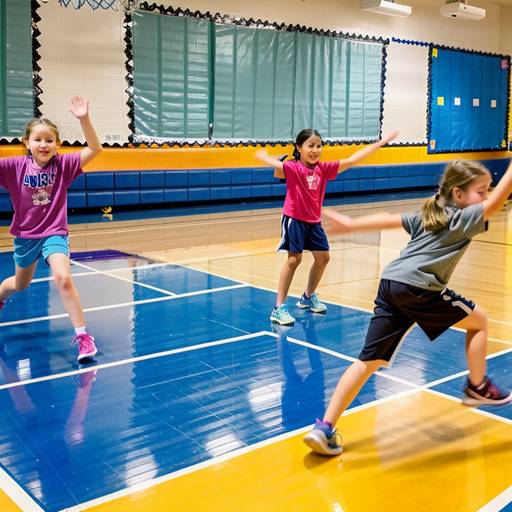
This second-grade physical education lesson focuses on improving coordination and balance through a series of engaging activities. The session begins with a warm-up that includes dynamic stretches and a movement game to prepare students for physical activity.
After a brief introduction explaining the importance of balance and coordination, students participate in four activity stations. Each station emphasizes different skills: walking inside hula hoops while balancing on one foot, weaving through cones, walking across a balance beam, and playing a musical balance game.
A group challenge encourages teamwork and creativity as students work together to transport a bean bag using unconventional methods. The lesson concludes with a cool-down featuring gentle stretches and a reflection session where students share their experiences, challenges, and favorite activities.
Assessment is based on students' participation and ability to perform balance and coordination tasks. Adaptations are provided to support students with varying abilities, ensuring that everyone can engage in the lesson. Overall, the lesson aims to enhance essential motor skills while keeping students active and entertained.
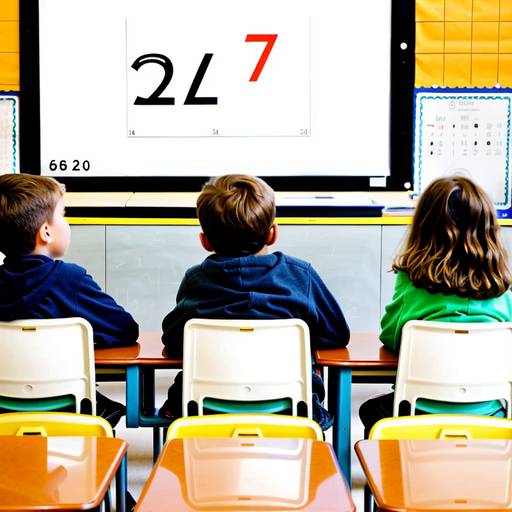
In this 2nd-grade math lesson, students will learn how to read both analog and digital clocks, focusing on telling time to the nearest hour and half-hour. The lesson begins with a discussion on the importance of time in daily life, followed by direct instruction on how to identify and interpret the hour and minute hands of an analog clock, as well as reading times on a digital clock.
During guided practice, students will work in pairs to match analog times with their digital counterparts using flashcards. For independent practice, they will draw clock hands on blank worksheets to represent specific times called out by the teacher. The lesson concludes with a sharing session where students present their clock drawings and discuss their favorite activities at different times of the day.
Assessment will be based on observations during activities and by reviewing the completed clock worksheets. Optional extensions and differentiation strategies will be incorporated to further engage students and support individual learning needs. Overall, the lesson aims to foster hands-on interaction and peer collaboration while building foundational skills in telling time.
In this 2nd Grade Language Arts lesson, students will explore vocabulary and antonyms through interactive and engaging activities. The lesson begins with an introduction to the concept of antonyms, highlighting pairs of opposites. Following this, students will participate in a read-aloud of a story that features antonyms, allowing them to identify examples in context.
During guided practice, students will work in small groups to match vocabulary words with their antonyms using index cards. This collaborative activity encourages teamwork and reinforces their understanding. Afterward, students will complete a Word Adventure worksheet independently, which includes fill-in-the-blank exercises, a drawing activity, and sentence writing using antonyms.
The lesson concludes with a sharing session where students present their illustrations and sentences to the class. Assessment will focus on participation and the accuracy of the completed worksheets. Differentiation strategies will support varying learning levels, and opportunities for extension will allow students to contribute to a class word wall and create a collective book on antonyms. Overall, this lesson aims to enhance vocabulary acquisition and deepen students' understanding of word meanings through the exploration of opposites.
In this 2nd-grade language arts lesson, students will explore the concept of antonyms—words with opposite meanings. The lesson begins with an engaging introduction where students share what they know about antonyms, followed by a clear definition and examples from the teacher.
During guided practice, students participate in an interactive flashcard game to identify antonyms and then work in small groups to match words with their opposites using provided flashcards. For independent practice, students complete an "Antonyms Word Wizard" worksheet that includes matching tasks, sentence creation, and illustrations of antonym pairs.
The lesson concludes with a sharing session, allowing students to present their worksheet findings, reinforcing the importance of antonyms in everyday language and understanding. Assessment will be based on students’ worksheets and participation during discussions. Differentiation strategies will be employed to cater to various learning needs, and extension activities, such as storytelling and creating a mural, enhance student engagement and application of the concept. The teacher will reflect on the effectiveness of the lesson and adjust future plans based on student understanding.