
Filters
Level
Grade
Subject
Subject Area
Subject Topic
Standard(s)
Audience
Keyword
DurationMinutes
2nd Grade Lesson Plans

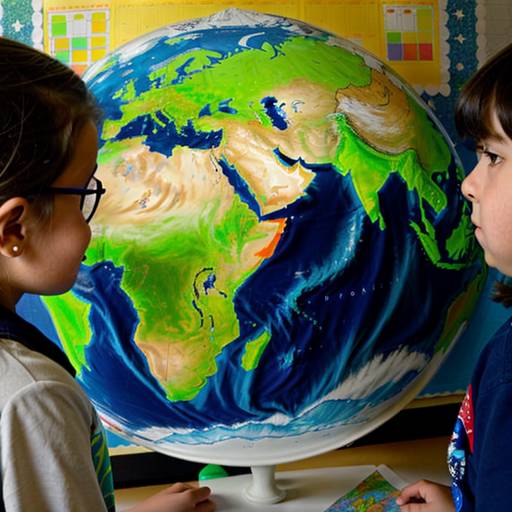
In this 2nd-grade social studies lesson, students will explore different types of landforms, including mountains, valleys, plains, hills, plateaus, rivers, and lakes. The lesson begins with an engaging introduction where students share their favorite outdoor places, leading to a discussion about the various shapes that make up our world. Using images, the teacher will guide students in describing the characteristics of each landform.
During the guided practice, students will collaborate with partners to share their thoughts on which landform they find most interesting. The main activity involves creating a colorful map where students can draw or paste images of landforms, allowing them to apply what they've learned creatively.
The lesson concludes with a gallery walk where students showcase their maps and participate in a reflective discussion to reinforce their understanding. Assessment will occur through observation during activities and the collection of maps to evaluate their identification and representation of landforms. Extension activities encourage further exploration and creativity, such as illustrating a landform book or virtual field trips to national parks.
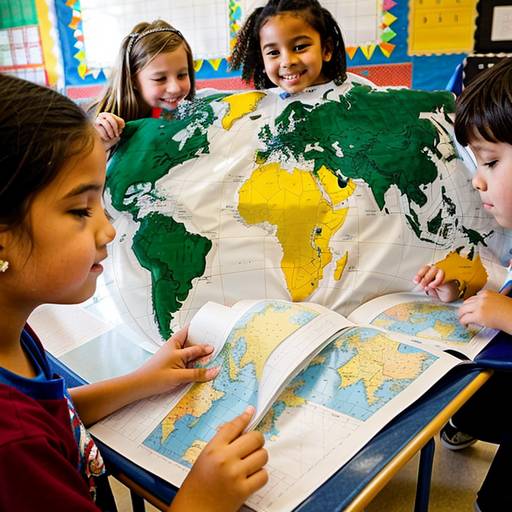
In this engaging social studies lesson for 2nd-grade students, learners will explore geography and different countries around the world. The session begins with an introduction to countries and continents using a world map, fostering an understanding of global diversity. Students will discuss various countries, discovering interesting cultural elements such as languages, foods, and traditions.
During a guided activity, students will locate and label selected countries on the map while participating in group discussions about personal connections to these places. For the independent activity, each student will research a specific country, creating a poster that highlights the country’s name, flag, and a unique cultural fact or element, thus encouraging creativity and personal expression.
The lesson concludes with students sharing their posters with the class, reinforcing their understanding of geography and cultural appreciation. Evaluation will focus on participation and the content of their posters, while extension activities may include a “Cultural Day” featuring food, games, or items from the represented countries. Overall, this lesson promotes awareness of the world’s diversity and the importance of understanding different cultures.

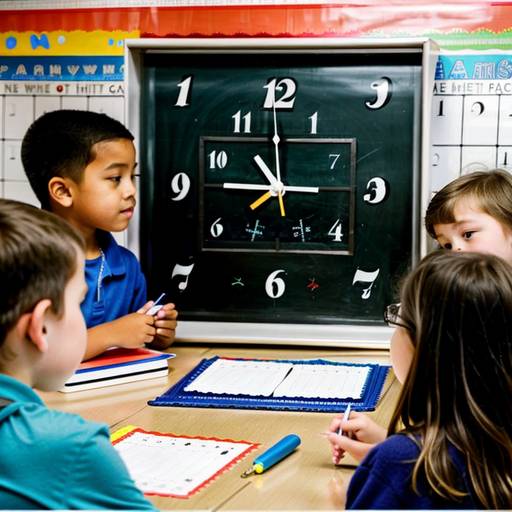
In this 1-hour math lesson for 2nd graders, students will learn to tell time using an analog clock. The lesson begins with an introduction to the components of the clock, including the hour and minute hands and the concepts of AM and PM. Following a demonstration on how to read time to the nearest hour and half-hour, students will practice using paper clocks to set the time as called out by the teacher. They will then work in pairs to quiz each other, reinforcing their understanding. Afterward, students will complete worksheets that include various time-telling exercises to assess their grasp of the material. The lesson concludes with a review of key concepts and a group discussion. Optional storytelling may be included to further illustrate the importance of time in daily life. Extensions such as creating personal paper clocks will allow for continued practice at home. Accommodations will be made for students who need additional support, ensuring an inclusive learning environment.

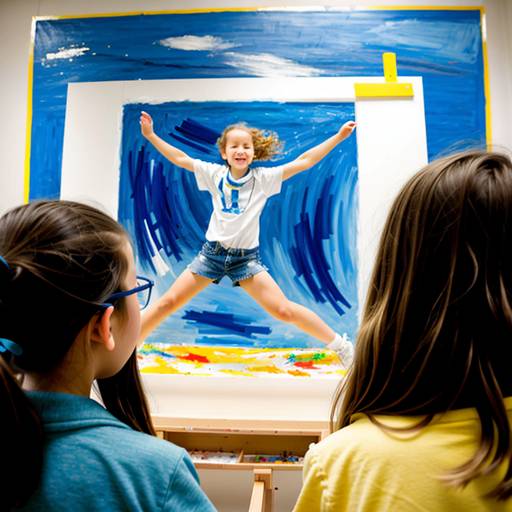
In this 60-minute art lesson for 2nd graders, students will explore the concept of movement in art through various painting techniques. The lesson begins with an introduction to images that depict movement, sparking discussion about how to visually represent motion in their own artwork.
Next, the teacher demonstrates different painting techniques, including long brush strokes, blowing paint through straws, sponge dabbing for texture, and using salt to create dynamic effects. After the demonstration, students will have the opportunity to create their own paintings using the techniques learned, selecting themes such as nature, animals, or dance.
Throughout the painting activity, the teacher will circulate to provide guidance and encouragement, fostering a creative environment. Once the paintings are complete, the students will participate in a gallery walk to share their work and reflect on the techniques they used and their artistic choices.
The lesson culminates in a discussion to reinforce the idea of movement in art, encouraging students to think about how to express emotions and actions in their future creations. Assessment will be based on observation during the activity and the completed artworks, focusing on creativity and technique application.
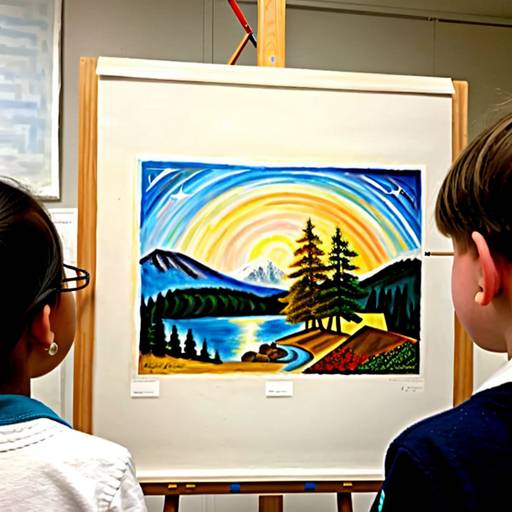
In this 2nd-grade art lesson, students will explore the lives and works of famous artists from different art movements. They will engage in discussions about how these artists expressed emotions and themes through their unique styles. Each group of students will be assigned an artist, such as Vincent van Gogh, Claude Monet, Frida Kahlo, or Piet Mondrian, and will create an original artwork inspired by the techniques and characteristics of their assigned artist. After completing their pieces, students will present their work to the class, explaining their artistic choices and the influence of the artist they studied. The lesson culminates with the establishment of a temporary "Art Gallery" to showcase their creations, allowing them to reflect on their learning and appreciate each other's artistic expressions. Adaptations and extensions are included to ensure all students can participate fully and continue exploring art at home.
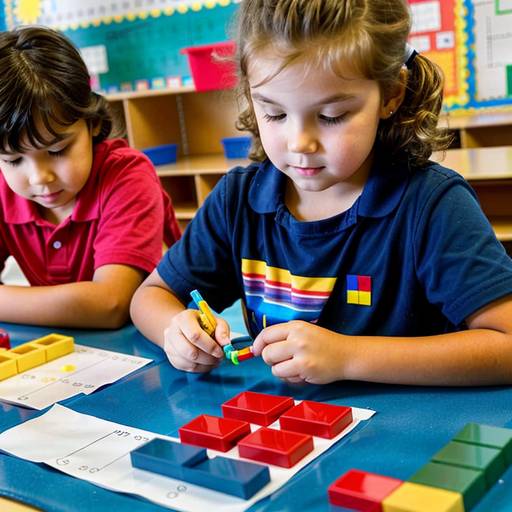
In this 1-hour math lesson for 2nd-grade students, the focus is on teaching addition through hands-on manipulatives. The session begins with an introduction to addition, emphasizing the benefits of using physical objects to visualize mathematical concepts. The teacher demonstrates a simple addition problem using counting cubes, allowing students to see how the numbers come together.
Students are then divided into small groups and given number cards featuring various addition problems. They work collaboratively to solve these problems by representing them with their manipulatives, counting the cubes, and recording their findings in their journals. Following this guided practice, students tackle an independent worksheet that includes visual aids and different addition problems, applying what they've learned.
The lesson concludes with a class discussion where students share their problem-solving experiences and reflect on the advantages of using manipulatives to understand addition better. Throughout the lesson, the teacher assesses student understanding through observations and reviews of completed worksheets and journal entries. Differentiation strategies are incorporated to ensure that all learners have the support they need to succeed.
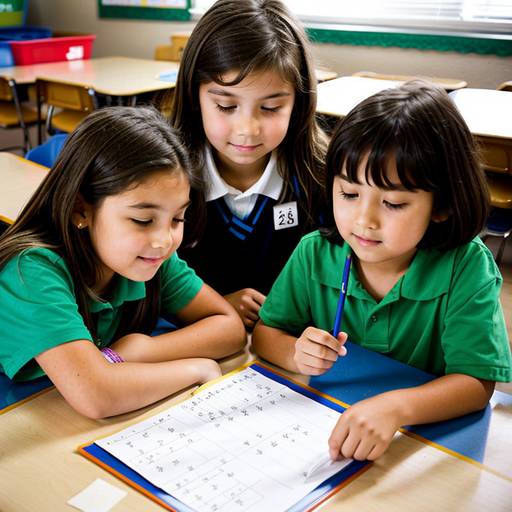
In this 2nd grade math lesson, students will explore multiplication through the context of word problems. The objective is to help students develop the ability to solve multiplication problems by understanding their real-life applications. The lesson begins with a brief review of multiplication basics, using flashcards to engage students and encourage them to work with partners.
The teacher will model how to approach word problems by breaking down a sample scenario, guiding students to identify key numbers, operations, and the steps needed to find the solution. This direct instruction phase includes several examples that students will solve together.
Next, students will participate in a team activity where they work in small groups to solve multiplication word problems presented in "Math Mystery" envelopes. They will document their answers and processes, fostering collaboration and communication.
For independent practice, students will complete a worksheet containing various multiplication word problems, applying the strategies discussed during the lesson. The class will conclude with a sharing session, allowing students to present their solutions and problem-solving methods, reinforcing the importance of understanding context in mathematics.
Assessment will be based on observational feedback during group activities and a review of the individual worksheets. The lesson will include extensions for advanced learners and modifications for those needing additional support, ensuring all students can engage meaningfully with the content. Reflection on the lesson's effectiveness will help guide future instruction.
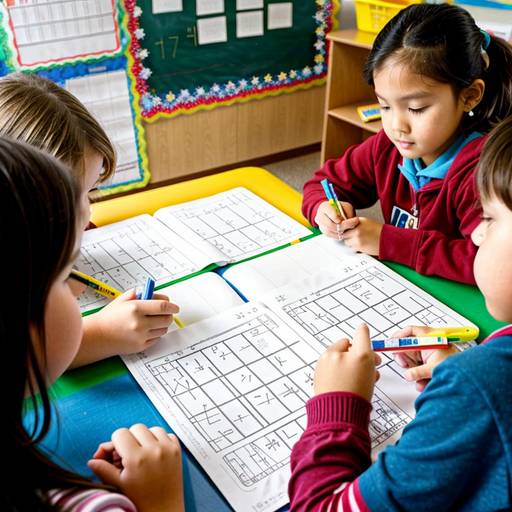
This lesson plan focuses on promoting understanding of multiplication through word problems for 2nd-grade students. The session begins with a review of addition and introduces multiplication as repeated addition, emphasizing its notation and meaning. Students engage in guided practice by solving a sample word problem collectively, followed by group activities where they work together to act out, draw, or use counters to solve different multiplication word problems. Independent practice is then provided through worksheets featuring various word problems, allowing students to demonstrate their understanding individually. The lesson concludes with a review of key concepts, encouraging students to share their strategies and solutions, while assessing their comprehension through observations and worksheet evaluations. Differentiation strategies are included to support varying levels of student understanding.

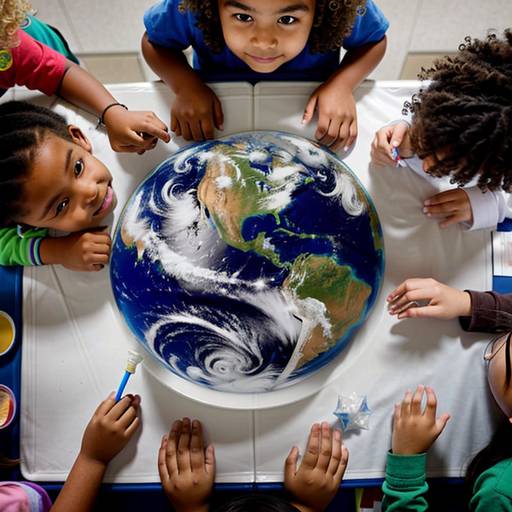
This lesson focuses on introducing 2nd-grade students to the concept of matter, specifically the three states: solid, liquid, and gas. Students will begin by defining matter and discussing its characteristics through a combination of direct instruction and visual aids. The lesson includes engaging demonstrations using ice, water, and air to illustrate the properties of each state.
In guided practice, students will classify various everyday objects as solids, liquids, or gases in small groups, fostering collaborative learning. The hands-on activity involves observing the melting of ice and the evaporation of water to illustrate state changes. Throughout the lesson, students will share their observations and engage in discussions to reinforce their understanding.
To assess learning, participation will be monitored, worksheets will be reviewed, and an informal quiz will help gauge comprehension. Extensions encourage students to explore real-life matter examples at home. Accommodations will be provided to ensure all students can engage effectively with the material. Overall, the lesson aims to make the concept of matter visually and practically accessible to young learners.
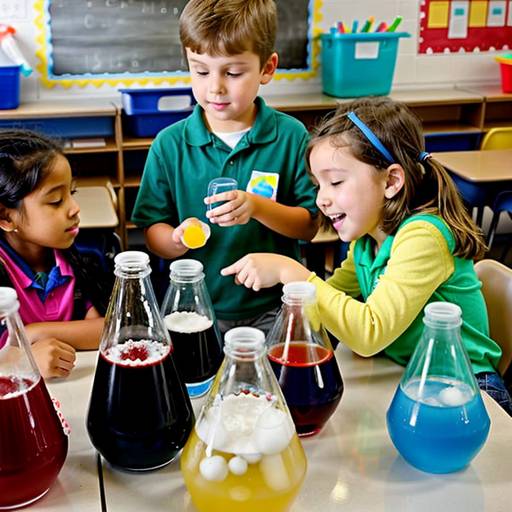
This lesson plan for 2nd-grade students focuses on the concept of matter, specifically exploring the three states: solids, liquids, and gases. The lesson begins with an engaging discussion where students share their favorite drinks, linking their experiences to the states of matter. Through direct instruction, students learn simple definitions and characteristics of solids, liquids, and gases, supported by visual aids.
Students then participate in hands-on experiments at designated stations, where they examine ice cubes, pour water into cups, and explore the properties of air in an inflated balloon. After rotating through the stations, the class comes together for a discussion to share their observations and consider how temperature can affect the states of matter.
The lesson concludes with a review of key concepts and an exit ticket activity where students draw and describe their favorite state of matter. Assessment is based on participation in discussions and experiments, as well as the reflections expressed in their exit tickets. Extension activities encourage students to connect what they’ve learned to their home environment. Overall, the lesson combines exploration, critical thinking, and creativity to foster a foundational understanding of matter.