
Filters
Level
Grade
Subject
Subject Area
Subject Topic
Standard(s)
Audience
Keyword
DurationMinutes
Toddler Gross Motor Skills Lesson Plans

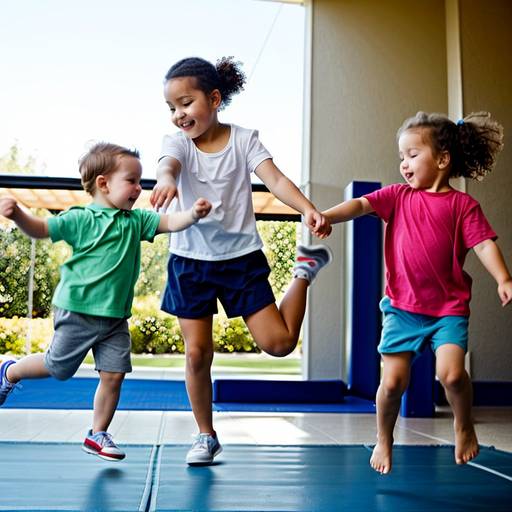
This lesson plan focuses on developing toddlers' gross motor skills through the joyful movement of skipping. Aimed at children ages 2-4, the session begins with an introduction to skipping, including a demonstration to engage the little ones at their level. A lively warm-up involving playful movements prepares them for physical activity.
The guided skipping activity helps children practice the mechanics of skipping in a structured environment, with opportunities to explore different speeds and patterns. A creative movement game, "Animal Skip," fosters imagination as children incorporate animal movements into their skipping.
An obstacle course reinforces the skipping technique while incorporating additional physical challenges, allowing children to navigate through a fun and engaging setup. The lesson concludes with a cool-down period where children can stretch and reflect on their experiences. Throughout the session, observation and encouragement are emphasized to support each child's development and boost their confidence in movement. Safety considerations ensure a secure environment for exploration and play.
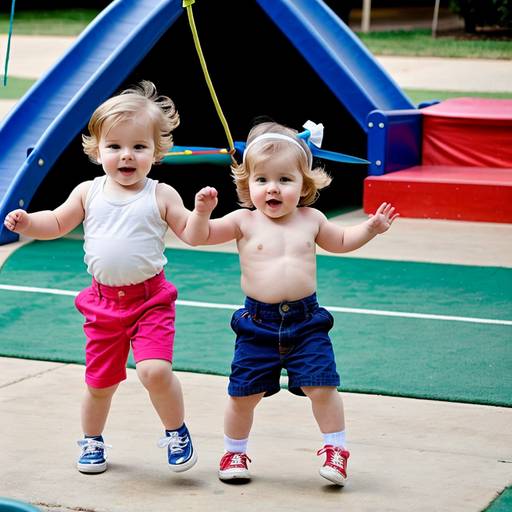
This lesson plan focuses on enhancing gross motor skills in toddlers through engaging jumping activities. Designed for children aged 2-4 years, it runs for 30-45 minutes and aims to improve coordination, balance, and body awareness while encouraging social interaction among peers. The session begins with a fun introduction and a jumping-themed song to get the children excited.
A warm-up includes simple stretches and animal-inspired movements to prepare their bodies for activity. The lesson features various stations, each emphasizing different jumping skills, such as jumping in and out of hula hoops, collecting bean bags, and jumping over cones. Children rotate through these stations in small groups, allowing for exploration and learning.
After the stations, a group jumping activity encourages cohesion and rhythm, followed by a cool-down period with stretches and deep breathing exercises to calm down after the energetic activities. The lesson concludes with a discussion about jumping experiences and a quiet song or story, reinforcing the day's learning and fostering a positive atmosphere. Evaluation is based on observation and positive reinforcement throughout the session, with suggestions for extending the learning experience at home.
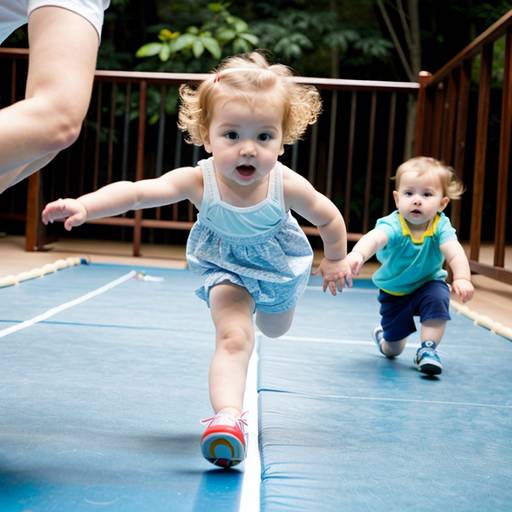
In this gross motor skills lesson plan designed for toddlers aged 2-4, students engage in fun activities that promote kicking as a means to enhance coordination and balance. The session begins with an energizing warm-up that includes an action song and simple stretches, followed by a demonstration of proper kicking techniques.
The main activities include a relay race where children practice kicking balls toward a target, which fosters teamwork and excitement. Students also participate in a playful "kick and roll" activity where they explore kicking balls in various directions and distances.
The lesson concludes with a cool-down period, providing an opportunity for students to reflect on their experiences and share their favorite parts while doing gentle stretches. Safety is prioritized throughout the session, ensuring a supportive environment for all participants. Observations during the activities help assess student engagement and skill development. Adaptations are made available for varying skill levels to ensure inclusivity.
This lesson plan focuses on enhancing toddlers' gross motor skills through engaging kicking activities. The session begins with a warm-up dance to prepare their bodies for movement. Children are introduced to kicking with a demonstration, after which they practice kicking soft foam balls at their own pace. The lesson progresses to a target kicking challenge where they aim to kick balls into hula hoops or markers, promoting both coordination and accuracy. An interactive kicking game allows children to collect colorful scarves while continuing to practice their skills. The session concludes with a calming cool-down that includes gentle stretches and sharing experiences to reinforce what they learned. Throughout the activities, safety measures are emphasized, ensuring a fun and supportive environment for all participants. Extension ideas encourage families to continue similar playful activities at home, fostering ongoing development and enjoyment of physical activity.
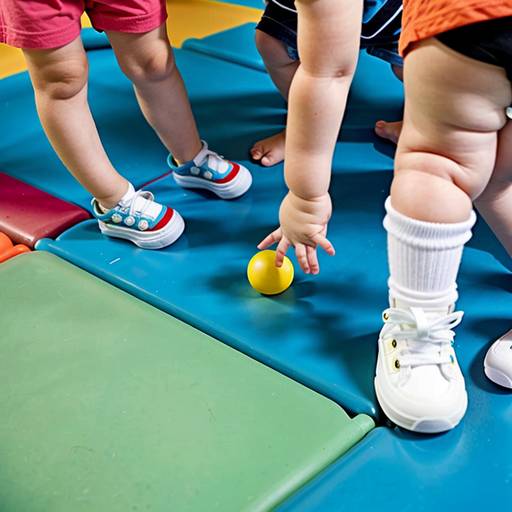
This lesson plan focuses on developing gross motor skills in toddlers through engaging kicking activities. Aimed at children aged 2-3 years old, the session lasts 30-45 minutes and includes various components to promote coordination, balance, and spatial awareness.
The lesson begins with a fun warm-up involving movement songs and gentle stretching, preparing the children for physical activity. Following this, an introduction to kicking demonstrates proper techniques in a supportive environment. The main activities include free kicking practice and a target game where toddlers aim to kick a ball towards designated targets.
To incorporate teamwork and active play, a group game challenges children to kick the ball to a goal while running back to their starting point. The lesson concludes with a cool-down period, where children reflect on their experiences and engage in stretching exercises. Throughout the lesson, instructors will observe each child's kicking abilities, adherence to instructions, and overall engagement, aiming to foster a positive and enjoyable atmosphere for skill development.
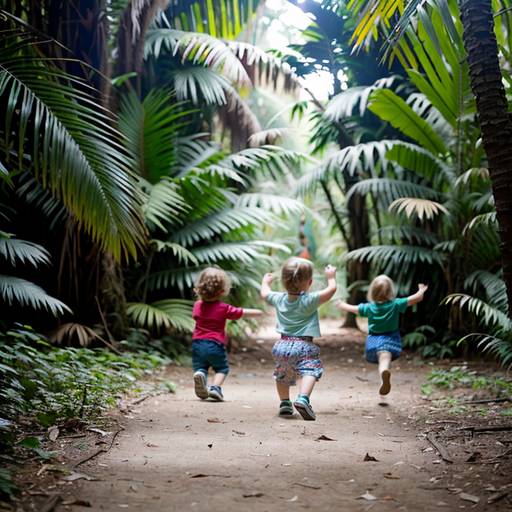
The lesson plan focuses on developing gross motor skills through engaging kicking activities that enhance coordination, balance, and strength in toddlers aged 2-3 years. Over the course of 30-45 minutes, children participate in a variety of activities set in a playful "jungle" environment.
The session begins with a warm-up that incorporates animal movements to encourage physical activity. Children then take part in several kicking exercises, including kicking balls into hoops, rescuing stuffed animals by kicking towards them, and participating in kicking races with their peers.
The lesson emphasizes teamwork and camaraderie while allowing children to explore their kicking abilities through imaginative play. A gentle cool-down follows, where children can relax and wind down by pretending to be various animals. The session concludes with a recap of the activities, reinforcing the skills learned and celebrating the children’s participation. The plan is designed to foster a fun, safe, and interactive environment for toddlers to enhance their gross motor skills while enjoying the experience of play.
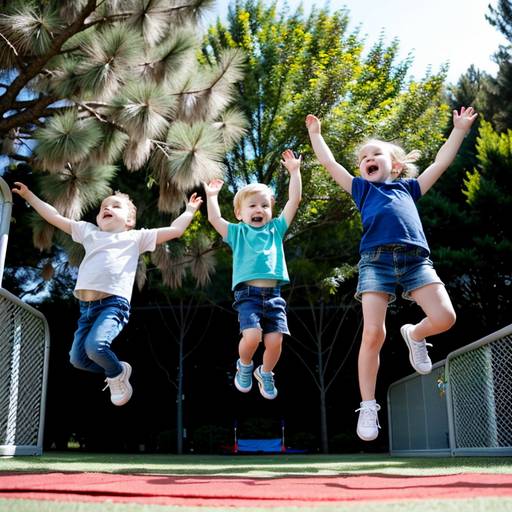
This lesson plan focuses on developing toddlers' gross motor skills through engaging jumping activities. The session begins with a warm-up where children imitate animal movements that involve jumping, preparing their muscles for physical activity. Following the warm-up, instructors introduce different types of jumps, demonstrating both two-foot and one-foot jumps for the children to practice.
- Hula Hoop Hop, where children jump between hoops;
- Ball Toss Jump, where they jump and toss balls into a target area; and
- Jumping Race, a course marked with cones that encourages hopping from one cone to the next.
After the stations, the group engages in a structured jumping dance to upbeat music, allowing children to express themselves and incorporate the jumping skills they have practiced. Finally, the session concludes with a cool down where children reflect on their favorite activities while gently stretching.
Throughout the lesson, instructors observe and provide adaptations as needed, ensuring all children can participate and enjoy the experience while enhancing their coordination, balance, and strength.
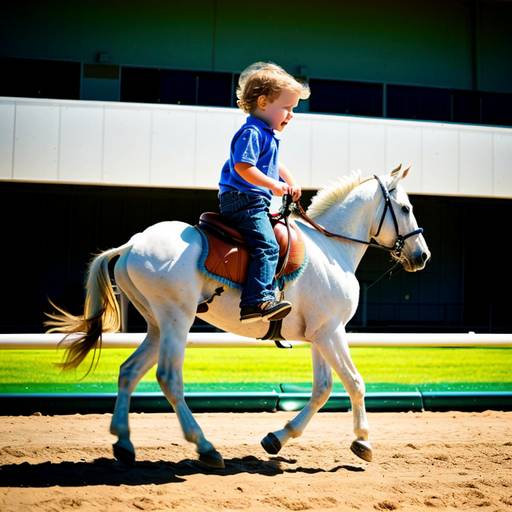
In this lesson plan designed for toddlers aged 2-4, the focus is on developing gross motor skills through the activity of galloping. The session begins with an introduction that explains the purpose and demonstrates the galloping movement. Following this, a warm-up routine featuring light stretches and a playful cheer prepares the children for physical activity.
The main practice involves galloping to various cones set up in a line, with variations such as forward, backward, and sideways movements to enhance coordination. An obstacle course is then introduced, incorporating soft toys and hula hoops to create engaging challenges.
To conclude, a cooldown routine with deep-breathing exercises and gentle stretches helps the children relax, and a reflection discussion encourages them to share their experiences. Throughout the lesson, positive reinforcement is used to support each child's progress while ensuring a fun and safe environment.
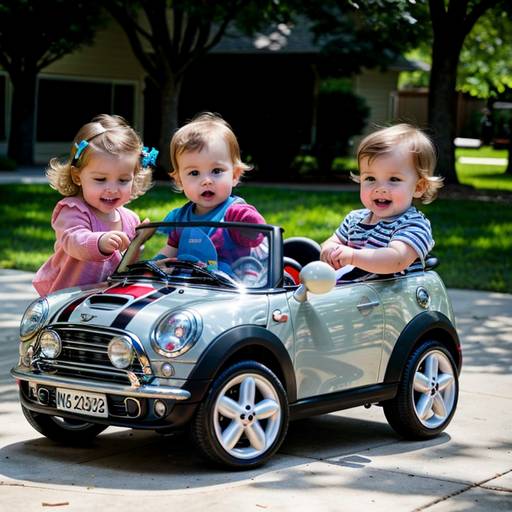
This lesson plan focuses on developing toddlers' gross motor coordination skills through a series of engaging activities. The session aims to enhance physical abilities while promoting social interaction and teamwork among peers.
The lesson begins with a brief introduction and a fun warm-up routine involving stretching and simple movements. Children participate in various movement activity stations designed to target different coordination skills. Activities include rolling soft balls, jumping in and out of hula hoops, tossing bean bags toward targets, and navigating an obstacle course.
A collaborative group game of "Follow the Leader" encourages creativity and allows children to mimic movements, reinforcing their coordination abilities. The session concludes with a calming cool-down activity, where children reflect on their experiences and share their favorite parts of the lesson.
Throughout, the instructor carefully observes the children's participation and engagement to assess their progress, adapting activities as needed to support all ability levels. This lesson plan not only fosters physical development but also cultivates a love for movement in a fun, supportive environment.
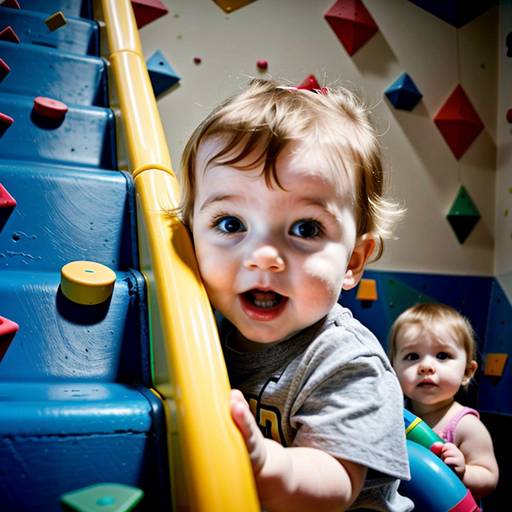
This engaging lesson plan focuses on enhancing gross motor skills through various climbing activities designed for toddlers aged 2-3 years old. The session begins with an introduction to the concept of climbing, followed by a warm-up that incorporates moving to music. Participants engage in a series of climbing stations, including a foam block mountain, tunnels for crawling, a slide zone, and an obstacle course, allowing them to explore different climbing challenges and develop spatial awareness.
A fun relay race encourages teamwork and social interaction as toddlers navigate through the course. The lesson concludes with a cool-down period where children reflect on their experiences and share their favorite climbing moments. Throughout the session, adult supervision is emphasized to ensure safety, and opportunities for parental involvement are provided. Overall, the plan promotes physical development, self-confidence, and cooperative play skills among young learners.