
Filters
Level
Grade
Subject
Subject Area
Subject Topic
Standard(s)
Audience
Keyword
DurationMinutes
Kindergarten Science Lesson Plans


In this Kindergarten science lesson, students will embark on an engaging exploration of the Solar System, focusing on the eight planets and the sun. The lesson starts with a discussion about what students think exists in the night sky, followed by a story that introduces the planets and their unique characteristics.
Students will then participate in a creative activity where they design their own planet, allowing them to express their imagination while reinforcing their understanding of the planets' attributes. After sharing their creations with the class, a brief recap will highlight the key concepts learned, promoting reflection on their favorite planets. To conclude, students will receive planet-themed stickers as a fun takeaway.
Throughout the lesson, students will be assessed on their participation and understanding of the material, and opportunities for extensions, such as setting up a "space corner" and planning a stargazing night, will enhance their learning experience. This multifaceted approach will foster curiosity about space and encourage creativity among young learners.

This Kindergarten science lesson focuses on life science and animals, allowing students to explore various types of animals, including mammals, birds, reptiles, amphibians, and fish. The lesson begins with a circle time discussion where students share their favorite animals, fostering engagement and excitement. Following this, the class participates in a shared reading of a children's story that highlights different animals, encouraging interaction and comprehension.
Students then engage in hands-on activities, including categorizing animal picture cards into appropriate groups, which helps develop their classification skills. Next, they create their own animal art using various craft supplies, promoting creativity and personal expression. The lesson culminates with a collaborative project where students contribute their artwork to a large mural, reinforcing the connection between art and the scientific concepts discussed.
Throughout the lesson, students are assessed based on their participation and understanding, with opportunities for follow-up activities to deepen their knowledge of animals and their habitats. This interactive approach fosters curiosity and a foundational understanding of life science in an engaging and age-appropriate manner.

This Kindergarten lesson plan focuses on introducing students to various types of animals within the realm of life science. Over the course of 60 minutes, students will explore different animal classifications—mammals, birds, reptiles, amphibians, and fish—by observing picture cards and engaging in discussions about their characteristics and habitats. The lesson includes a classification activity where students learn to identify animals by their traits, followed by a discussion on where different animals live.
Students will participate in a hands-on craft activity, creating models of their favorite animals, which reinforces their understanding of animal types. Additionally, they will collaboratively create a mural that illustrates various animal habitats, promoting teamwork and creativity. The lesson concludes with a recap and an interactive guessing game, enhancing their listening skills. Assessments include participation in discussions, craftsmanship, and contributions to group activities. Opportunities for extensions and feedback are also integrated to enrich the learning experience.

In this Kindergarten science lesson, students explore the concept of animal habitats and their importance in the lives of various animals. The lesson begins with a discussion about what habitats are and why they are essential for animals. After a read-aloud session featuring a picture book about animals and their homes, students engage in an interactive discussion that connects different animals to their respective habitats.
To reinforce their understanding, students then participate in a hands-on activity where they create dioramas representing a chosen habitat, incorporating at least two animals that belong there. This creative project allows them to express their knowledge visually while practicing fine motor skills. As a culmination of the lesson, students share their dioramas with the class and discuss their creations, facilitating peer interaction and reinforcing their learning. The lesson is designed to foster curiosity about the natural world while developing observation and communication skills. Adaptations and extensions are included to accommodate different learning styles and promote further exploration.
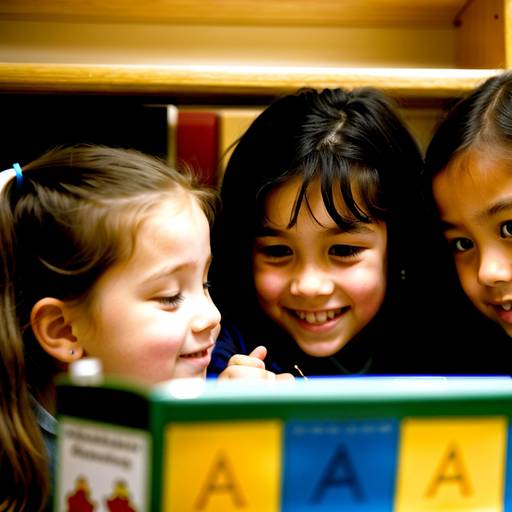
In this kindergarten science lesson, students will explore the basic needs of animals, focusing on how these needs vary across different species. The class will begin with an interactive discussion, where students identify animals and share their thoughts on what those animals require to survive, such as food, water, and shelter. Through a mini-lecture, they will learn about the specific needs of various animals while viewing images that depict these needs in their natural habitats.
Students will engage in a hands-on activity by completing an Animal Needs Worksheet to match animals with their necessities. Following this, they will express their creativity by crafting their own imaginary animal and its environment, highlighting how it meets its needs. The lesson will conclude with a group reflection on the importance of meeting these needs and a storytime session to reinforce the concepts learned. Teachers will assess understanding through observation and review of students' worksheets and craft projects. Extension activities may include a nature walk for real-world observations and showcasing student creations in the classroom.
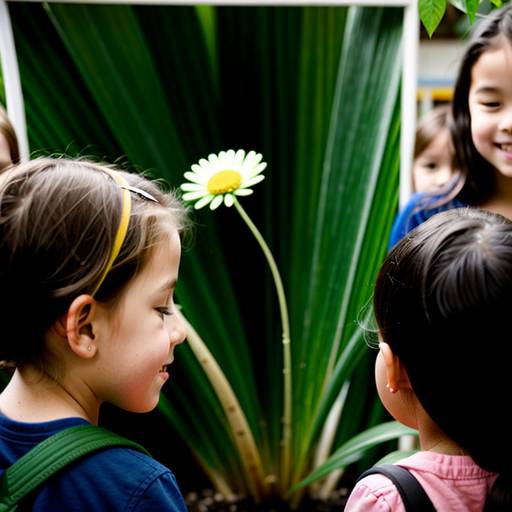
In this kindergarten life science lesson, students will explore the world of plants, focusing on their basic needs and parts. The lesson begins with a read-aloud of a picture book about plants, prompting discussion about what plants require to grow. Educators will teach students about the essential parts of a plant—roots, stems, leaves, flowers, and seeds—using visual aids to enhance understanding.
Following the introduction, students will participate in a hands-on activity where they plant seeds in pots, learning about soil, water, and sunlight requirements. Each group will decorate their pots and discuss what they planted and one fact they learned about plants. The lesson concludes with a classroom growth chart where students can track their plants' progress over the coming weeks.
Assessment will be based on student participation in discussions and their ability to identify plant parts and needs. To extend learning, students may keep science journals to document their plants’ growth. Overall, this lesson aims to foster curiosity about plants and their life cycles while encouraging hands-on interaction and teamwork.
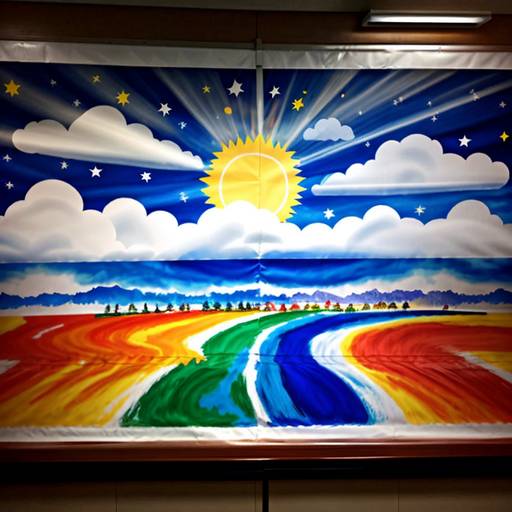
In this kindergarten Earth Science lesson, students will explore fundamental concepts of weather, including various types such as sunny, rainy, snowy, windy, and cloudy. The lesson begins with a captivating picture book that introduces weather and prompts discussion about students’ experiences with different weather conditions.
Students will then engage in a hands-on activity where they create weather-related artwork using cotton balls and crayons to depict their chosen weather scenes. Additionally, a simple mini-experiment will simulate rain, allowing students to observe how clouds hold water.
The lesson will culminate in filling out a class weather chart, helping students connect their observations to real-life activities and clothing choices based on weather conditions. Informal assessments will be conducted through participation in discussions and the creative activities. Extension ideas include a “Weather Journal” project, encouraging ongoing observation of daily weather. This lesson aims to enhance students' understanding of weather while fostering creativity and observational skills.
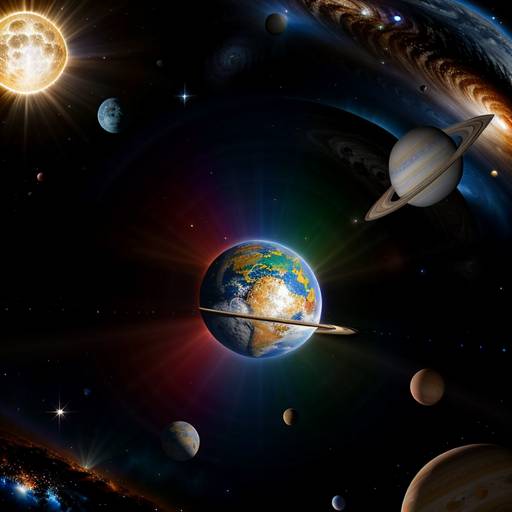
This Kindergarten lesson focuses on introducing students to the solar system, covering key components such as the sun, planets, and the moon. The session begins with a discussion about space, allowing students to share their existing knowledge, followed by a brief video clip that provides an engaging overview of the solar system. The teacher presents each planet using pictures and models, sharing interesting facts while employing flashcards for visual learning.
Following the presentation, students participate in a hands-on activity where they paint and decorate Styrofoam balls to represent different planets, reinforcing their understanding of each planet's characteristics. They then create their own galaxy on a large sheet of black paper, adding their planets and embellishing the scene with glitter to represent stars.
In the conclusion, students reflect on what they learned, sharing insights with peers. The lesson encourages creativity and curiosity about space while being assessed through observation of engagement and completed projects. Extensions for the lesson include creating a classroom display, planning a field trip, or inviting a speaker, ensuring an interactive and informative exploration of astronomy.
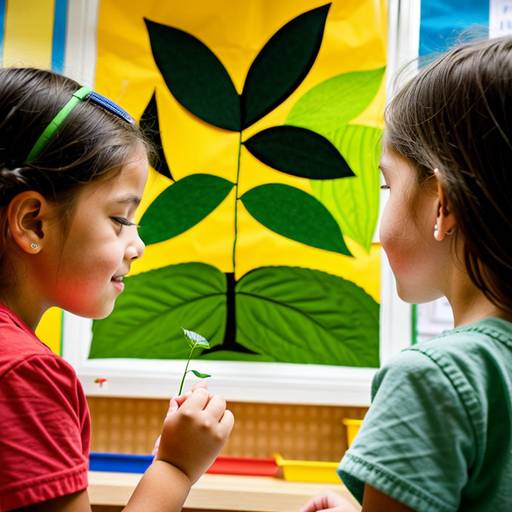
In this Kindergarten science lesson, students will explore the various parts of a plant, including roots, stems, leaves, and flowers, and learn about their functions. The lesson begins with an interactive discussion about the importance of plants in our environment, followed by direct instruction using diagrams to explain each plant part's role. Students will then engage in hands-on exploration with live plants, observing and identifying the different parts in small groups. To reinforce their learning, they will create drawings of a plant, labeling its components. Finally, students will share their observations and insights, enhancing their understanding of life science and the significance of plants in our ecosystem. Assessments will include observations during group activities and reviewing their drawings. Extensions may involve nature walks or starting a class garden to observe plant growth over time, while adaptations will cater to different learning styles to ensure all students are supported.
In this Kindergarten science lesson, students will engage with the fundamental concept of matter, specifically exploring its three states: solid, liquid, and gas. The lesson begins with a discussion to define matter, accompanied by visuals to illustrate the different states. Students are then organized into small groups to participate in a hands-on activity where they sort various objects into the three categories based on their properties.
Following this, the students conduct simple experiments to observe the characteristics of solids and liquids using water and rocks, and explore gases by inflating balloons. They create solid shapes with playdough, reinforcing their understanding of the distinctions between the different states of matter.
To conclude, students complete a worksheet that reinforces their ability to identify types of matter, followed by a reflection discussion to share their insights. The lesson incorporates hands-on activities, visual aids, and collaborative learning, fostering engagement and curiosity about the physical properties of the world around them. Extensions and modifications are also included to cater to diverse learning needs, ensuring all students have the opportunity to participate and learn effectively.