
Filters
Level
Grade
Subject
Subject Area
Subject Topic
Standard(s)
Audience
Keyword
DurationMinutes
Infant Social Skills Lesson Plans


This lesson plan focuses on enhancing social skills in infants aged 6 to 12 months through interactive social play activities. The session begins with a welcoming song and a demonstration of sharing a soft toy, prompting infants to pass toys to each other. Following this, infants engage in a ball game that encourages turn-taking as they roll and toss colorful, soft balls among themselves. Musical play is introduced next, where infants explore instruments and move rhythmically, promoting joint attention and cooperative engagement. The session continues with bubble play, allowing infants to chase bubbles and interact with peers in an exciting way. To conclude, infants engage with mirror play blocks, observing their reflections and those of their peers, while reinforcing social recognition. Throughout the activities, caregivers are encouraged to observe and support positive interactions, and suggestions for extending social play at home are provided. This plan fosters connection and social development through fun and age-appropriate activities.

This lesson plan is designed for infants aged 0-12 months and their caregivers, aiming to foster social bonding and attachment through various interactive activities. The session begins with a warm welcome and a gentle song to create a soothing atmosphere. Caregivers and infants engage in sensory play with soft toys, promoting visual tracking and tactile exploration.
Next, a movement and music segment encourages rhythmic interaction, allowing caregivers to bond physically with their infants through the use of musical instruments and gentle swaying. Following this, an interactive storytime introduces high-contrast picture books, where caregivers practice descriptive language and maintain eye contact, enhancing engagement and communication.
The lesson concludes with a closing circle for reflection, where caregivers share their bonding experiences from the session. Overall, the plan emphasizes nurturing interactions and provides caregivers with strategies to continue fostering their infant's development at home, promoting emotional security and healthy attachment.
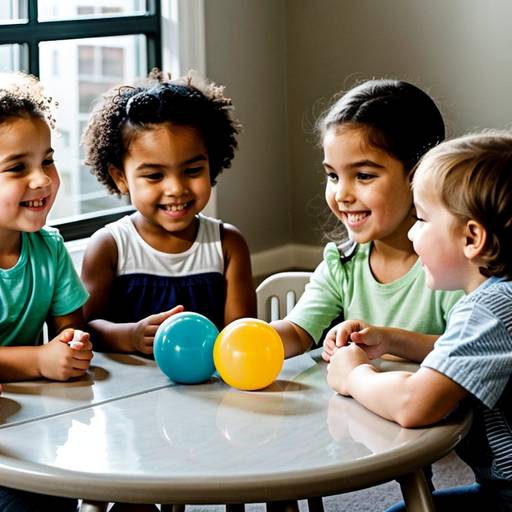
This lesson plan aims to teach infants aged 12-24 months the essential social skill of turn-taking through a series of interactive activities. The session begins with a welcome circle where the concept of sharing and taking turns is introduced, complemented by visual aids.
The first activity involves passing a soft ball around the circle, encouraging patience and participation as each child waits for their turn. This is followed by a musical instruments segment where infants take turns playing different instruments, reinforced by visual markers.
The next activity utilizes stacking blocks, emphasizing cooperative play as children add one block at a time in a turn-taking fashion. The lesson culminates in an interactive storytime, allowing each child to contribute by naming fruits, integrating both language skills and turn-taking.
Throughout the session, educators are advised to provide positive reinforcement, celebrating each child's participation and efforts while observing their social interactions. The goal is to foster communication, cooperation, and patience in a fun and engaging environment.
This lesson plan focuses on developing social skills in infants through engaging and interactive play activities. The primary goal is to encourage social interaction, communication, and collaboration among peers.
The session begins with a welcoming introduction to set a joyful tone and involve caregivers in the experience. Activities include exploring soft toys to promote sharing, a sensory ball toss that fosters turn-taking, and a fabric waving activity designed to inspire movement and cooperative play. Infants then engage in a block-building task, working together to create a tower while practicing communication and teamwork.
The lesson concludes with a reflection circle where caregivers can share observations of their infants’ interactions, emphasizing the significance of social play in forming friendships and enhancing social expression. The structure allows for adaptations to accommodate different developmental needs, ensuring an inclusive environment where all infants can thrive socially.
This lesson plan focuses on enhancing bonding between infants and their caregivers through interactive play and communication. Designed for infants aged 0-12 months, the session lasts 30 minutes and accommodates small groups.
The objectives include promoting secure attachment, encouraging non-verbal communication like eye contact and smiles, and fostering a sense of trust and safety. The environment is set up with soft mats and various play stations featuring colorful toys, musical instruments, and engaging picture books.
The lesson begins with gentle touch activities where caregivers can massage their infants while maintaining eye contact. This is followed by a rotation through three interactive play stations, each designed to encourage tactile exploration, musical interaction, and story engagement.
After the play activities, a group reflection allows caregivers to share observations and insights about their infants' responses, reinforcing the importance of these bonding experiences. The session concludes with a calming activity where caregivers cuddle their infants to soothing music, providing comfort and a sense of security.
Assessment occurs through observation of caregiver-infant interactions, and caregivers receive feedback to enhance their engagement. Recommendations for follow-up activities include creating a daily routine that incorporates cuddling, singing, and reading, as well as suggesting local playgroups to further support socialization and bonding. Overall, this plan creates a nurturing environment that fosters the development of foundational social skills through meaningful interactions.
This lesson plan focuses on developing infants' social skills through the practice of eye contact. Designed for a group of infants aged 6 to 12 months, the 30-minute session includes a variety of engaging activities aimed at encouraging eye contact between infants and caregivers as well as among peers.
The lesson begins with a welcoming circle song that incorporates the infants' names, fostering a sense of connection. Participants then engage in an interactive puppet show where caregivers and infants are prompted to maintain eye contact with the puppets. Soft mirrors are introduced, allowing infants to explore their reflections while maintaining eye contact with their caregivers.
Brightly colored toys with faces are utilized to capture the infants' attention, promoting engagement and interaction. The session also includes a relaxation period accompanied by gentle music, encouraging bonding moments between infants and caregivers through direct gaze.
Finally, the lesson concludes with a group reflection on the activities, emphasizing the continuation of eye contact practices at home. Overall, the plan aims to enhance the infants' social interactions and foster early communication skills through the important skill of eye contact.
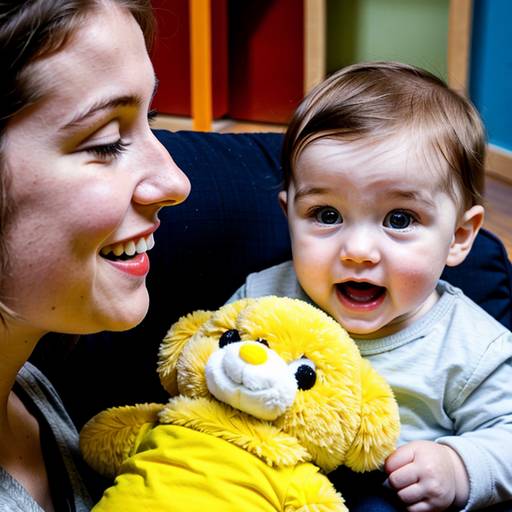
This lesson plan is designed for infants aged 0-24 months and focuses on recognizing and expressing basic emotions through interactive activities. It begins with an introduction to the importance of emotional understanding for social development, followed by a warm-up activity where infants engage with their reflection in a mirror to explore various facial expressions.
Next, caregivers and infants participate in a game using emotion flashcards, helping infants mimic and understand different emotional cues. A circle activity introduces soft toys representing various feelings, allowing for storytelling and tactile interaction to reinforce emotional concepts.
The program includes a movement segment where caregivers and infants dance with colorful scarves, creatively expressing emotions through movement. Finally, the session concludes with a closing circle for shared reflections and tips for caregivers to incorporate emotional recognition into daily routines.
The assessment involves observing infant engagement and caregiver participation, while follow-up resources are provided to encourage ongoing emotional exploration at home. Overall, the lesson aims to foster early emotional literacy and develop social skills in a playful and supportive environment.

The lesson plan is designed for infants aged 6 months to 1 year and focuses on helping them recognize and respond to basic emotions through interactive, engaging activities. The session begins with an introduction to emotions, encouraging caregivers to participate and engage with their infants.
Activities include showing emotion flashcards, allowing caregivers to demonstrate facial expressions, and using soft mirror toys to promote self-recognition. An emotion movement game follows, where infants respond to upbeat music that corresponds to different emotional expressions while being held by their caregivers.
The lesson culminates in storytime with emotion-themed picture books, encouraging caregivers to discuss characters' feelings with their infants. The session concludes with a closing circle for sharing insights and reinforcing the importance of emotional expression. Caregivers receive a handout with home activities to continue fostering emotional understanding. Overall, the plan aims to enhance social skills and emotional recognition in a nurturing environment.

This lesson plan focuses on enhancing social skills among infants through engaging and interactive play activities. It begins with a welcoming circle where caregivers and infants gather, followed by sensory exploration using colorful bins to facilitate sharing and interaction. Partner games with mirrors encourage imitation and turn-taking, fostering social connections. Cooperative play with soft blocks and plush toys allows infants to explore together while caregivers support their interactions. A group movement activity involving a parachute promotes fun and teamwork. The session concludes with reflective circle time where caregivers share observations and a short story is read to reinforce concepts of social play. Overall, the plan emphasizes the importance of play in developing foundational social skills, offering caregivers insights and follow-up activities to continue nurturing these skills at home.

This lesson plan aims to help infants learn about basic emotions (happy, sad, angry, surprised) through interactive play and social engagement. The session begins with an introduction that sets a positive atmosphere, followed by activities using emotion flashcards to visually and vocally express various feelings. Infants participate in a mirror play activity, where they observe and imitate facial expressions, enhancing self-recognition and emotional understanding.
Role-playing with stuffed animals allows infants to explore emotions in a playful context while encouraging social interactions. A music and movement segment invites infants to dance and express emotions through rhythmic movement, using colorful scarves to represent different feelings visually.
The lesson concludes with a group reflection, allowing caregivers to share their experiences and observations. Handouts are provided to guide caregivers in recognizing and responding to their infants' emotional expressions at home. Overall, the plan fosters emotional awareness and social skills in a fun and engaging environment.