
Filters
Level
Grade
Subject
Subject Area
Subject Topic
Standard(s)
Audience
Keyword
DurationMinutes
Infant Social Skills Lesson Plans

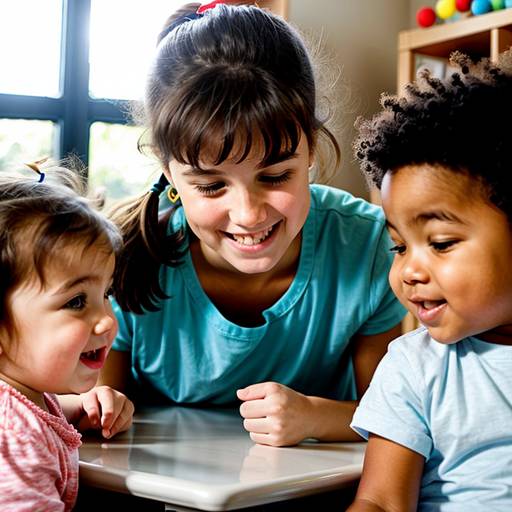
This lesson plan focuses on helping infants recognize and express basic emotions through interactive activities that encourage socialization and emotional understanding. It begins with a welcoming circle time where caregivers and infants gather to introduce the day's theme. The session includes presenting emotion flashcards, allowing infants to observe and mimic various facial expressions with their caregivers.
Next, plush toys representing different emotions are introduced for playful interactions, fostering connection among peers. A mirror activity encourages infants to explore their reflections and express emotions visually. Storytime engages children with narratives that highlight emotional experiences, prompting discussions about feelings.
The lesson incorporates movement and music, where infants dance with colorful scarves to reinforce emotional expressions through play. It concludes with a reflective wrap-up where caregivers share their feelings about the activities, supported by a simple song about emotions. Throughout the lesson, observation of infants' responses and interactions serves as a means of assessment, and follow-up ideas are provided for continued emotional exploration at home.
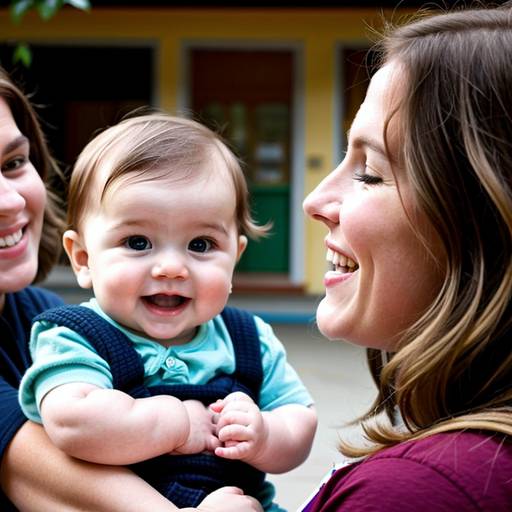
This lesson plan is designed for a group of infants and their caregivers, focusing on fostering bonding through interactive and engaging activities. The session begins with a warm welcome, followed by a tummy time activity that promotes motor skills while encouraging proximity and support from parents.
Caregivers and infants will then participate in playful games such as Peek-a-Boo and "Where’s Baby?" to enhance social interaction and create positive emotional responses. Sensory exploration stations featuring varied textures and sounds will further strengthen communication and bonding, allowing infants to engage with their surroundings in a safe environment.
A music and movement segment encourages parents to sway with their babies while enjoying soft tunes, reinforcing the nurturing connection between them. The session concludes with a group reflection, where parents can share their experiences and insights about the activities. Handouts with additional bonding techniques will be provided for continued practice at home. Overall, this lesson aims to enhance emotional connections and develop essential social skills during early infant development.
This lesson plan focuses on fostering social skills in infants through the practice of eye contact. Aimed at caregivers and their infants aged 6-12 months, the session lasts for 30 minutes and includes a variety of interactive activities designed to promote engagement and connection.
The session starts with an introduction to the importance of eye contact in communication. Caregivers are then guided through activities, including the use of soft toys to encourage direct eye contact, exploring reflections in mirrors, engaging in a colorful scarf dance, and sharing stories with expressive faces. Each activity is designed to encourage infants to look at their caregivers and express themselves through gaze while building emotional bonds.
The lesson concludes with a group reflection on the experiences shared during the activities, providing caregivers with feedback and suggestions for continuing to practice eye contact at home. Extensions to the lesson include weekly challenges for caregivers and recommendations for joining community groups to further enhance social interactions. Overall, the session aims to nurture social connections and communication skills in a warm and supportive environment.
This lesson plan focuses on teaching infants and their caregivers the importance of eye contact in developing social skills. Designed for infants aged 6-12 months, the 30-minute session includes engaging activities that help promote connection and communication between caregivers and their babies.
The lesson begins with a warm welcome and an introduction to the concept of eye contact. It then features a "Meet the Faces" activity, where caregivers read picture books with various facial expressions, encouraging infants to look at the faces and make corresponding eye contact while discussing emotions.
Following this, a "Mirror, Mirror" session allows infants to explore their own reflections alongside their caregivers, fostering self-recognition and emotional awareness. The plan includes interactive games where caregivers and infants play peek-a-boo with colorful scarves and participate in a fun music session, reinforcing eye contact through play.
The lesson concludes with a wrap-up discussion, where caregivers reflect on the activities and learn how to integrate eye contact into everyday interactions at home. The take-home activity encourages further practice, with a checklist of ways to incorporate eye contact into daily routines. Observations throughout the lesson focus on infants' engagement and connection with caregivers, emphasizing positive reinforcement and the building of social skills.
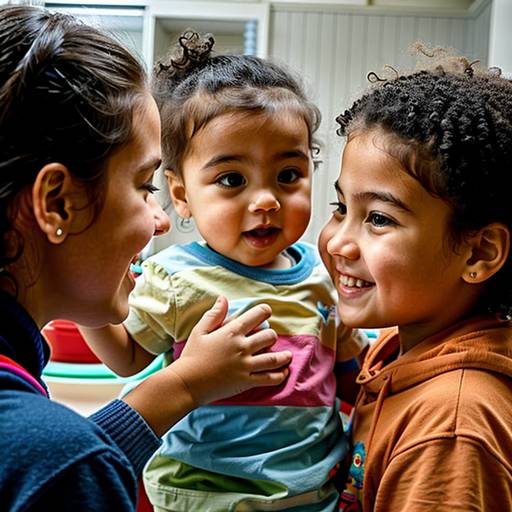
The lesson plan focuses on nurturing social skills in infants aged 12-24 months through engaging activities centered around social play. It aims to promote cooperation, turn-taking, and communication among peers in a supportive environment. The session begins with a welcoming circle time that sets a warm tone and introduces simple social concepts.
Infants will enjoy a group snack where sharing is encouraged, followed by rotating through interactive play stations featuring soft blocks, balls, and puppets. This setup facilitates joint engagement and play among the children. A storytime segment allows caregivers to discuss emotions and actions of the characters, further enhancing social understanding.
The lesson concludes with a fun music and movement activity that encourages imitation and expressive play. The final circle time wraps up the session with a goodbye song, reinforcing community ties. Throughout the lesson, caregivers receive observations and suggestions to continue fostering social interactions at home, ensuring continued development of these essential skills.
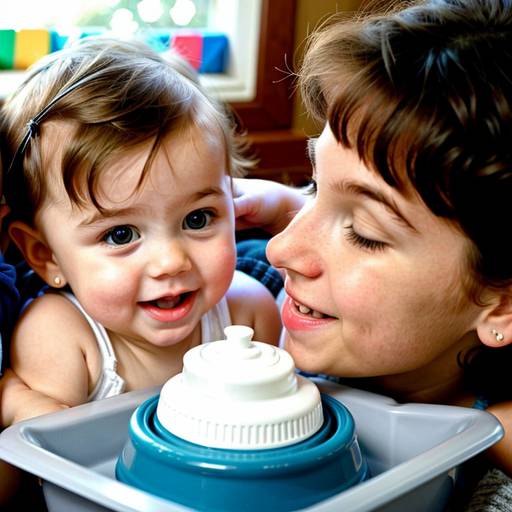
This lesson plan focuses on enhancing bonding experiences for infants and their caregivers through engaging play and interactive activities. The session begins with a warm welcome, followed by a lively circle time featuring movement-based songs that promote eye contact and connection.
Participants then rotate through several play stations, including sensory exploration with various toys, musical instrument experiences, bubble play for tracking skills, and storytime with picture books. Each activity encourages caregivers to engage with their infants, fostering emotional connections.
The session concludes with a group reflection where caregivers share their insights and observations about their infants' reactions, reinforcing the importance of interaction. Finally, caregivers receive take-home suggestions for continuing bonding activities, creating a supportive environment for nurturing early social skills. The overall aim is to strengthen the emotional ties between infants and their caregivers through joyful, shared experiences.
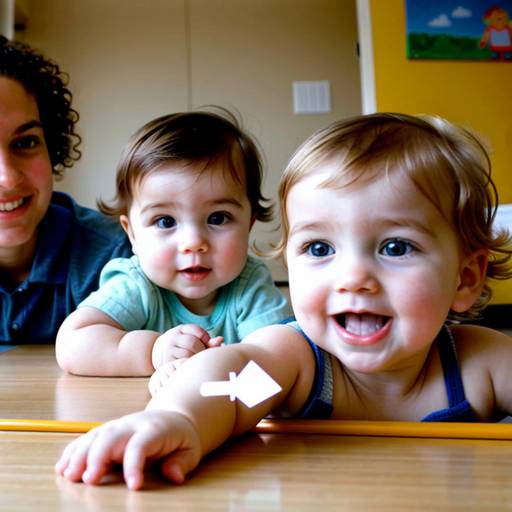
This lesson plan focuses on teaching infants the essential social skill of turn taking through a series of engaging activities. The objectives include fostering patience and cooperation among the children. The session begins with an introduction to the concept using a plush toy as a visual aid, followed by interactive circle time where visual aids depicting sharing are shown.
The main activity involves a structured toy time where infants take turns playing with various toys, utilizing a timer to regulate turns. A movement break with dance and music reinforces the joy of shared activities. The session concludes with a reflective circle where children discuss their favorite parts, followed by a short story that reinforces the theme of taking turns.
To support ongoing development, follow-up activities are suggested, allowing children to practice turn taking in a variety of contexts. Throughout the lesson, opportunities for assessment and positive reinforcement are given to help encourage successful interactions.
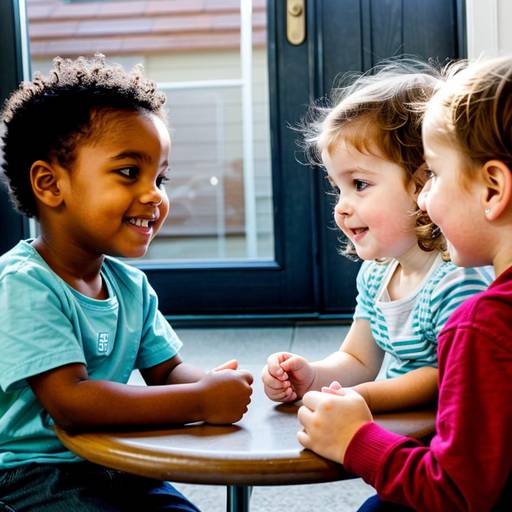
The lesson plan aims to teach infants the concept of turn taking through engaging activities and interactive play. It begins with a lively introduction that includes a song to gather the group and a simple explanation of sharing. A storytelling session using colorful picture cards illustrates characters taking turns, fostering comprehension.
Two main activities follow: the first involves small groups of infants engaging with toys, learning to play and wait for their turn with guidance. The second activity incorporates music and movement, where infants dance and practice stopping to take turns. An optional snack-sharing segment encourages further practice of turn taking and encourages communication through verbal prompts.
The session concludes with a closing circle, where infants can share their favorite moments, reinforcing their learning. Throughout the lesson, caregivers are encouraged to observe and continue practicing turn taking at home, ensuring the development of these important social skills in everyday situations.

This lesson plan focuses on helping infants develop fundamental social skills related to turn-taking through interactive play. It is designed for a group of infants aged 6 to 18 months and spans 30-45 minutes. The session begins with a brief introduction that includes modeling turn-taking using a soft toy to illustrate the concept.
The main activity involves distributing soft toys or balls to each child, where they practice passing the items around while using a timer to facilitate sharing. This encourages both patience and cooperation. Additionally, simple turn-taking games using picture cards are incorporated to visually reinforce the skill in various contexts.
A transition activity features gentle music to promote movement and joy, while the conclusion features a discussion with caregivers about the importance of turn-taking, followed by a closing song or rhyme. Observations during the activities help assess children’s participation and reactions. The lesson encourages caregivers to reinforce the skill at home through playful interactions, promoting ongoing development of social skills. Overall, the plan creates a fun, engaging environment for infants to learn and practice sharing and cooperation with their peers.
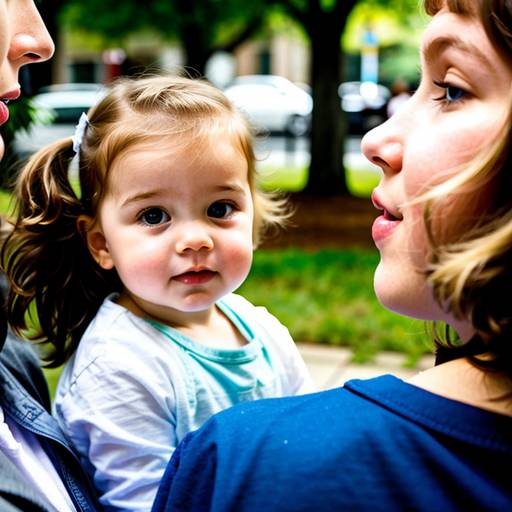
This lesson plan focuses on helping infants understand and practice making eye contact as a fundamental aspect of social interaction and connection. The session begins with an introduction to the importance of eye contact, using simple language and demonstrations involving caregivers.
Engaging activities include a colorful card game to recognize emotions, a mirroring exercise with a safe mirror to encourage self-recognition and expression, and a storytime segment featuring characters who interact through eye contact. The lesson concludes with a closing circle where children are prompted to practice eye contact with peers, fostering a sense of friendship and community through shared visual engagement.
Throughout the lesson, caregivers are encouraged to model eye contact and provide supportive feedback, which reinforces the skill in different settings, both during the session and at home. The overall goal is to promote comfort and familiarity with eye contact as a tool for communication and emotional connection among infants.