
Filters
Level
Grade
Subject
Subject Area
Subject Topic
Standard(s)
Audience
Keyword
DurationMinutes
Elementary School Lesson Plans

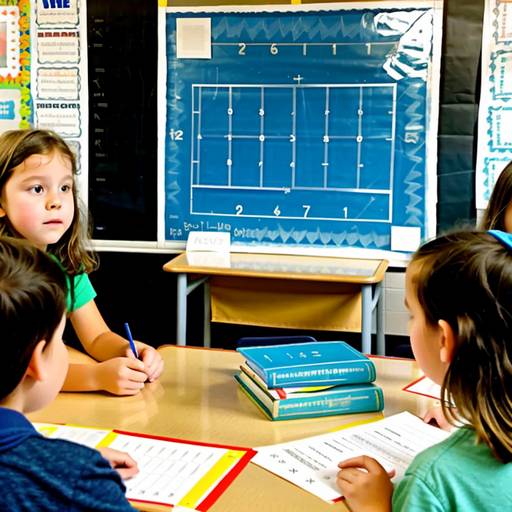
In this 60-minute math lesson for 3rd graders, students will explore the concept of time and learn how to calculate elapsed time. The lesson begins with a discussion about the importance of time and real-life examples of when certain activities occur. Through direct instruction, students will learn to read time on a clock and understand how to determine the duration between two events.
During guided practice, they will work in pairs with scenario cards to find the elapsed time, reinforcing their understanding with hands-on activities. Afterward, students will complete independent worksheets with various problems related to elapsed time, including clock drawings and word problems.
The lesson wraps up with a review of student answers and a discussion on how knowing about elapsed time is beneficial in their daily lives. Optional extension activities include creating original time-related story problems and using timers to track classroom activities. Assessment will be conducted through observation during practice and through the evaluation of independent worksheets. Overall, the lesson aims to engage students and provide practical applications of time concepts in their everyday experiences.

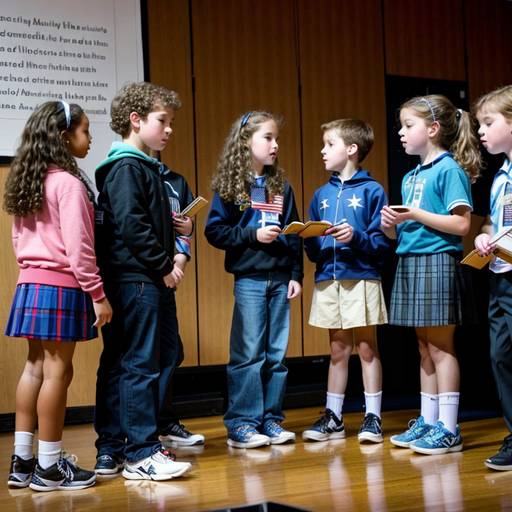
In this music lesson for 3rd graders, students explore the evolution of music through three key historical periods: Baroque, Classical, and Romantic. The lesson begins with a discussion on the significance of music and different styles. Students listen to audio clips from each period, learning about notable composers, unique characteristics, and common instruments associated with each era. They then engage in a group activity, where they create presentations that include illustrations and key facts about their assigned music period. Following the presentations, the class wraps up with a recap and a fun call-and-response rhythm activity. Assessment focuses on students' participation, collaboration in groups, and their ability to identify important elements of the music periods discussed. Additional modifications and extensions are provided to accommodate different learning needs and deepen students’ engagement with music history.

This lesson plan focuses on teaching 3rd-grade students the fundamental elements of storytelling, including characters, setting, and plot. The lesson begins with a group discussion to engage students in thinking about what makes a story compelling. The teacher then models the story creation process by collaboratively filling out a graphic organizer with students, demonstrating how to develop their own characters, settings, and plots.
Following this guided instruction, students complete their own graphic organizers in pairs, sharing their ideas and providing feedback to each other. Next, they independently write their own short stories using their developed concepts, encouraged to be imaginative and descriptive.
The lesson concludes with students sharing their stories aloud with the class, promoting oral presentation skills and positive peer feedback. Assessment consists of monitoring student participation, reviewing their graphic organizers and stories, and providing constructive feedback focused on creativity and storytelling skills. The plan also includes suggested extensions to further enhance student engagement and creativity through art integration.

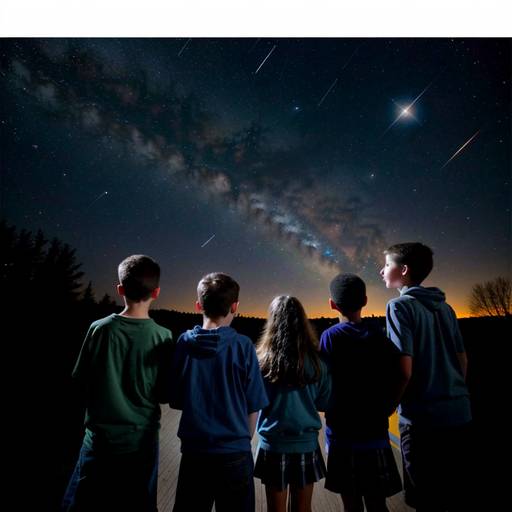
In this 5th-grade science lesson, students will embark on an engaging exploration of stars and constellations. The lesson begins with a discussion to gauge prior knowledge, followed by a presentation that covers the formation, types, and life cycles of stars, as well as the significance of constellations in history.
Students will then participate in an interactive activity where they use star charts or apps to locate and learn about various constellations, sharing interesting facts in small groups. The lesson continues with a creative component, where each student designs their own constellation and invents a story or myth to explain it.
In the conclusion, students share their creations with the class, fostering a reflective discussion about what they learned. For homework, they are encouraged to stargaze with family and report on their observations of constellations. The lesson assesses participation, creativity, and understanding through observations and presentation of their work, catering to diverse learning styles and promoting collaboration.

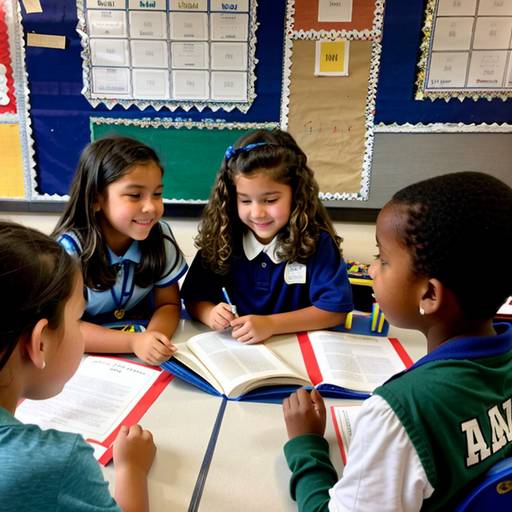
In this 2nd-grade social studies lesson, students will explore significant historical figures and their contributions to society, enhancing their understanding of history's impact on the present. The lesson begins with a class discussion about the importance of history, followed by a read-aloud of a biography about a notable figure. Students will then work in small groups to research their assigned historical figure using provided worksheets, which guide them in noting key information about the individual's life and contributions.
After conducting their research, each group will create a visual timeline illustrating important events related to their figure. Once complete, they will present their findings to the class, fostering skills in summarization and peer interaction. The lesson concludes with a reflective discussion where students share insights gained from each other's presentations and consider how these historical figures influence our lives today. Assessment will include observation of group work and the collection of worksheets to evaluate comprehension. Extensions to the lesson include creative writing activities and the creation of a class display. The lesson aims to promote inclusivity by featuring a diverse range of historical figures.
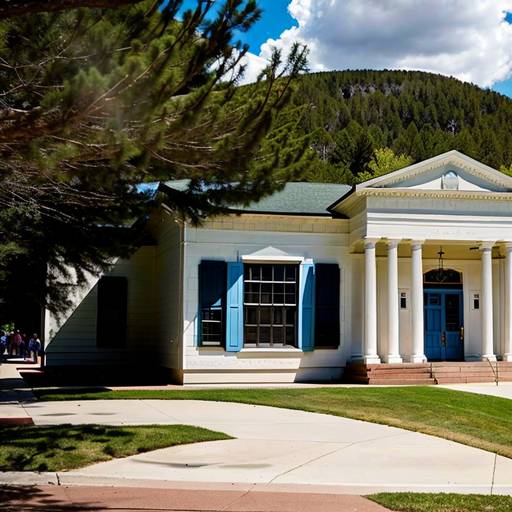
In this 3rd-grade social studies lesson, students will explore significant historical landmarks in the United States and understand their importance in American history. The lesson begins with a discussion of students' experiences at historical sites, followed by a presentation that introduces various landmarks. Students will be divided into small groups, each assigned a specific landmark to research and present to the class. After the presentations, students will engage in a creative project where they will build a simple model or artifact representing their assigned landmark. The lesson concludes with a discussion about the importance of preserving history. Assessment will focus on group participation, creativity in projects, and the effectiveness of their presentations. Extensions include a reflective writing assignment and the possibility of organizing a field trip to a local historical site.

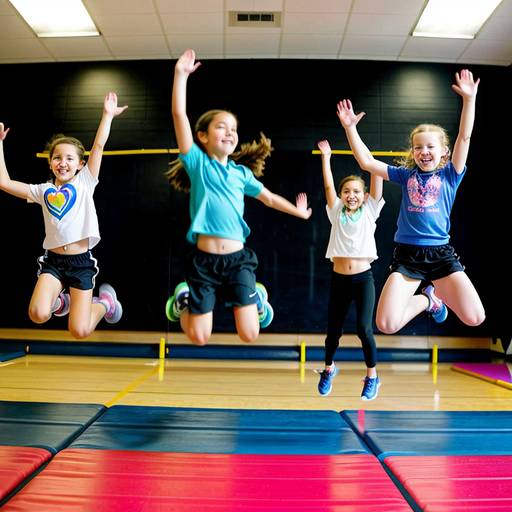
In this 1st-grade physical education lesson plan, students will engage in a 30-minute session focused on fitness and cardio through a series of fun and interactive activities. The lesson begins with a warm-up involving dynamic movements led by the teacher. Students will then learn about cardio exercise and its importance for heart health and physical activity.
The main part of the lesson includes two engaging activities: a jump rope challenge where pairs of students compete to see how many jumps they can accomplish together, and hula hoop fun, where students rotate through different hoops performing various cardio exercises. The class concludes with a cool-down session involving gentle stretches, allowing students to relax and discuss their heart rates after the activities.
Throughout the lesson, the teacher will monitor participation and engagement, providing positive reinforcement and adapting activities for varying skill levels. The session aims to promote teamwork, understanding of fitness, and the importance of staying active. Students will walk away with practical ways to incorporate movement into their daily lives.
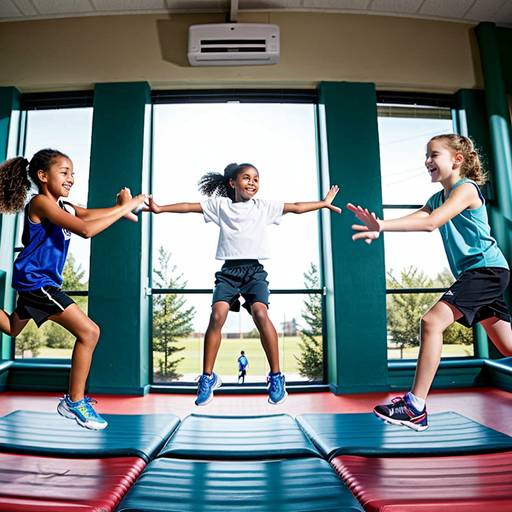
In this 45-minute physical education lesson designed for 3rd graders, students are introduced to the concept of cardiovascular fitness and its importance for overall health. The session begins with a warm-up that includes dynamic stretches and a fun rhythm-based dance to help students connect with their heart rates.
Students then participate in a series of five cardio activity stations, where they engage in jump roping, hula hooping, a relay race, a dance routine, and a freeze tag game. Each station lasts for five minutes, allowing students to experience various forms of aerobic exercise while developing teamwork and cooperation skills.
Following the main activities, a cool-down period includes static stretching and deep breathing to help lower heart rates. The lesson concludes with a group discussion, encouraging students to reflect on their experiences and the benefits of physical activity. Throughout the lesson, students are observed for engagement and understanding, while adaptations are provided to ensure all learners can participate effectively. Additionally, students are encouraged to set personal fitness goals and track their physical activities in the days following the lesson.
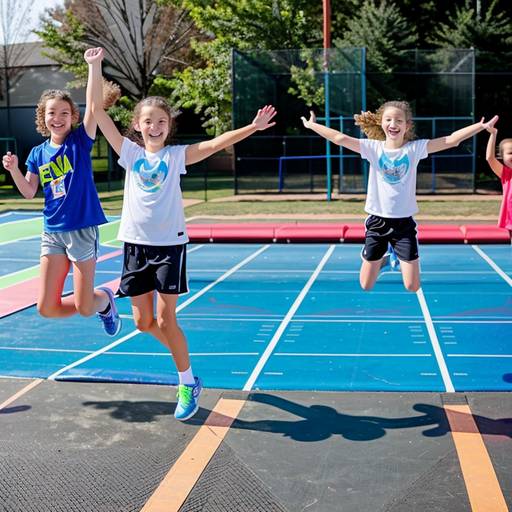
This lesson plan focuses on teaching 4th-grade students the importance of cardiovascular fitness through engaging activities designed to promote heart health. The session begins with a discussion about cardiovascular fitness, followed by a warm-up that includes jogging and dynamic stretches. Students then rotate through several activity stations, including a jump rope relay, a hula hoop challenge, a cardio dance party, and agility cone drills, all aimed at elevating their heart rates while having fun. The lesson concludes with a cool-down and reflection period, where students share their experiences and learn how to incorporate physical activity into their daily lives. The plan encourages participation and fosters a positive attitude toward fitness and health.
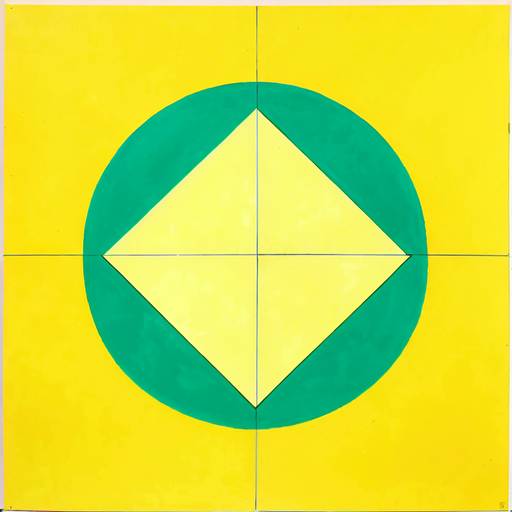
In this 5th-grade math lesson, students will explore the concept of angles and their classifications, focusing on acute, right, and obtuse angles. The lesson begins with an engaging discussion to activate prior knowledge, followed by direct instruction on identifying and measuring angles using a protractor.
During guided practice, students will work with worksheets to measure various angles, receiving support as needed. The interactive activity involves a scavenger hunt where students work in small groups to find and measure angles in their classroom environment, documenting their findings on chart paper. Each group will also create a poster displaying the shapes they discovered, labeling the angles accordingly.
The lesson concludes with group presentations, allowing students to share their discoveries and reinforce their understanding of angle types. Assessment will include observation during activities and a quiz to evaluate individual understanding. Modifications and extensions are provided to support diverse learning needs and explore additional geometric concepts. This lesson emphasizes hands-on learning and real-world application, fostering a comprehensive understanding of geometric angles.