
Filters
Level
Grade
Subject
Subject Area
Subject Topic
Standard(s)
Audience
Keyword
DurationMinutes
Elementary School Lesson Plans

This 4th-grade Language Arts lesson focuses on enhancing students' reading comprehension by exploring the key elements of characters and setting in a story. The lesson begins with a discussion about the significance of these elements, setting clear objectives for student understanding.
Following an introduction to essential concepts, the teacher models effective reading strategies, such as annotating text with highlights and notes. In guided practice, students read a selected short story as a class, engaging in discussions and practicing their annotation skills. They then complete a Character and Setting Graphic Organizer independently, documenting their insights into the main character and setting of the story.
The lesson closes with student sharing sessions to reinforce understanding and encourage collaboration. Assessment is conducted through the collection of graphic organizers, with extensions offered for students to further develop their skills. The lesson emphasizes interactive learning and strategy application to improve overall reading comprehension.
This lesson plan focuses on teaching 4th-grade students the fundamentals of expository writing. It aims to help students understand the purpose and structure of this writing style, which is used to inform or explain topics. The lesson begins with a discussion introducing expository writing, followed by an explanation of its key elements, including the topic sentence, supporting details, examples or facts, conclusion, and transition words.
Students will engage in a graphic organizer activity where they select a topic of interest and outline their paragraphs. After this planning stage, they will compose a complete expository paragraph, utilizing clear language and maintaining organization. The lesson culminates in a sharing session, where students present their work in pairs or small groups, reinforcing their skills in articulating information effectively.
Assessment includes reviewing the graphic organizers and written paragraphs to ensure comprehension of the structure and clarity of writing. The plan also includes extensions for advanced learners and differentiated support for those needing additional assistance, ensuring all students can succeed in developing their expository writing skills.


In this 5th-grade science lesson, students will explore the solar system and the significance of space exploration. They will begin with a discussion to share their prior knowledge, followed by an introduction to the features of each planet and important space missions. Students will then work in groups to research specific planets or space exploration tools, culminating in a quick presentation to the class. Following this, they will create a visual representation of their chosen subject, such as a drawing or poster, showcasing facts and creative elements. The lesson promotes collaboration, creativity, and communication skills as students share their projects and engage with their classmates' presentations. Assessment will be based on participation, group work, and individual projects, fostering a deeper understanding of astronomy and encouraging curiosity about the universe. Extension activities include organizing a Space Day and potentially planning a field trip to enhance learning experiences.

In this 3rd Grade art lesson, students will explore the basic elements of art, focusing on colors and shapes. They will learn about primary and secondary colors, as well as the distinction between warm and cool colors, using a color wheel for reference. The lesson begins with an introduction to these concepts, followed by a demonstration on mixing colors and incorporating shapes into artwork.
Students will then participate in a hands-on creative activity where they will trace and color various shapes on drawing paper, select a color scheme, and enhance their pieces with collage elements cut from magazines. They will be encouraged to express their creativity through color and form.
To conclude, students will engage in a group discussion to share their artwork and reflect on what they learned about color theory and the elements of art. Their understanding will be assessed through observation and a review of their completed projects. Extension activities include creating a "Color Journal" for practice and a color mixing station for further experimentation. This lesson fosters creativity while reinforcing essential art concepts.
In this Kindergarten art lesson, students will explore fundamental elements of art, including line, shape, and color, while gaining a basic understanding of color theory. The session begins with a discussion that encourages students to identify their favorite colors and observe their use in nature and art. Following an introduction to the color wheel and the relationship between primary and secondary colors, students engage in a hands-on activity that involves mixing watercolors to create new hues.
After mastering color mixing, students will use their newly created colors, along with crayons and other materials, to create original artworks that incorporate various lines and shapes. The lesson concludes with a gallery walk where students can showcase their work and reflect on their learning experience. Throughout the lesson, students are encouraged to express their creativity while gaining foundational knowledge of art elements and color theory. The lesson promotes a supportive and enjoyable environment that allows for artistic exploration and discovery.
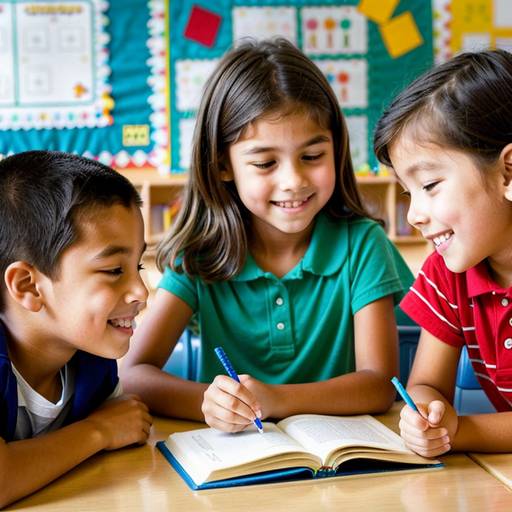
In this Kindergarten Language Arts lesson, students embark on an engaging journey to explore new vocabulary related to a thematic story, such as animals. The lesson begins with an interactive introduction where target vocabulary words are presented through flashcards and discussions. Students listen to a story that incorporates these words, allowing them to hear and understand their meanings in context.
Following the story, students break into small groups to match picture cards with the corresponding vocabulary words, fostering collaboration. Each group then creates a mini poster that illustrates these words through drawings and sentences, promoting creativity and comprehension. Students share their posters with the class, using their vocabulary words in conversation. The lesson concludes with a class review of the vocabulary, encouraging students to use the new words in their own sentences.
Assessment is based on student participation, the accuracy of vocabulary usage, and understanding as demonstrated in their group work and presentations. Extension activities include creating a personal "Word Journal" for further vocabulary exploration and using word chants or songs for reinforcement. This lesson effectively combines storytelling, hands-on activities, and collaborative work to enhance vocabulary skills in a fun and supportive environment.
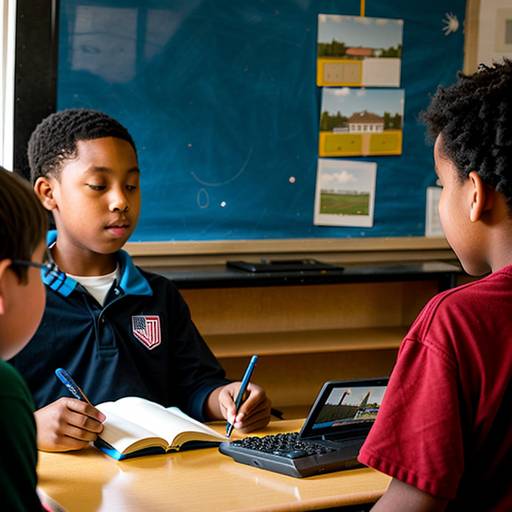
In this comprehensive 5th-grade technology lesson plan, students embark on a hands-on project focused on multimedia creation and video editing. Over the course of five sessions, they will learn the fundamental concepts of multimedia and storytelling, working collaboratively in small groups.
The project kicks off with brainstorming story ideas and creating a storyboard, which will serve as a visual guide for their video. Students will then investigate filming techniques, plan their shoots, and film their segments using digital cameras or tablets.
As they progress into editing, they will gain valuable skills in using video editing software, learning how to import media, cut clips, and enhance their narratives with music, transitions, and voiceovers. Throughout this process, peer feedback plays a critical role, allowing groups to refine their work.
Finally, students will present their completed video projects to the class, highlighting what they learned during the experience. They will also engage in reflective activities to consider their teamwork, technical skills, and the creative process. This lesson fosters multimedia skills, collaboration, and effective communication, equipping students with important tools for digital literacy.
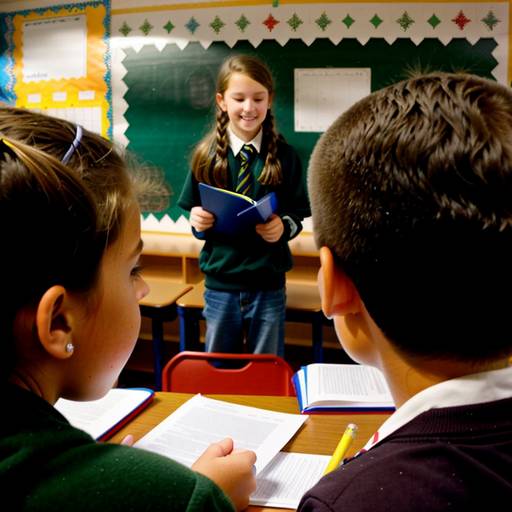
In this 5th-grade Language Arts lesson, students will embark on an engaging exploration of vocabulary by discovering new words and their meanings. The lesson begins with a discussion on recently learned words, fostering an interactive environment. A set of 5-7 new vocabulary words will be introduced, along with their definitions and example sentences, emphasizing the use of context.
Students will then work in pairs to create sentences using the vocabulary words, encouraging collaboration and creativity. After sharing their sentences with the class, each student will independently choose three words to visually represent on chart paper, contributing to a collective vocabulary mural displayed in the classroom.
The lesson concludes with a reflective discussion about the vocabulary learned, where students will write a sentence using one of the new words on a sticky note to add to the mural. Assessment will be informal through observations during activities, with a follow-up quiz to evaluate students' retention of the vocabulary. The lesson incorporates extensions for ongoing vocabulary development and differentiation strategies to support diverse learners.
This 4th-grade Language Arts lesson focuses on enhancing students' vocabulary through engaging activities and collaborative learning. The class begins with an interactive word game to capture students' interest, followed by the introduction of 10 target vocabulary words. In small groups, students explore assigned words by brainstorming definitions, synonyms, antonyms, and creating sentences, which encourages teamwork and critical thinking.
After a read-aloud of a short story that incorporates the vocabulary words, students discuss context clues and share sentences from the text. Each student then records the vocabulary words in their personal journals, detailing definitions, illustrations, and sentences, reinforcing their understanding.
The lesson includes interactive games, such as charades or Pictionary, to provide a dynamic way for students to practice the vocabulary. Students reflect on their learning by sharing their favorite new word and its significance. To promote continuous vocabulary development, they are encouraged to seek and document new words throughout the week for a shared "Vocabulary Treasure Chest." Assessment is based on participation, journal entries, and engagement in activities. Adaptations are provided for different learning needs, ensuring all students can participate meaningfully.
In this 4th-grade Language Arts lesson, students will engage in a vocabulary exploration activity designed to enhance their understanding and application of new words. The lesson begins with a discussion about the significance of vocabulary, followed by an introduction of ten new words. Students will work in small groups to investigate the meanings of assigned vocabulary words, creating visual aids that include definitions, example sentences, and illustrations.
Next, students will complete individual "treasure maps," where they will creatively respond to prompts related to each vocabulary word, reinforcing their learning through drawing and writing. The lesson culminates with students sharing their maps and favorite words with partners and the class. Overall, the lesson encourages collaboration, creativity, and contextual word usage, while providing opportunities for assessment through observation and review of student work. Extensions include keeping a vocabulary journal and planning a scavenger hunt to further reinforce vocabulary skills.