
Filters
Level
Grade
Subject
Subject Area
Subject Topic
Standard(s)
Audience
Keyword
DurationMinutes
Elementary School Lesson Plans

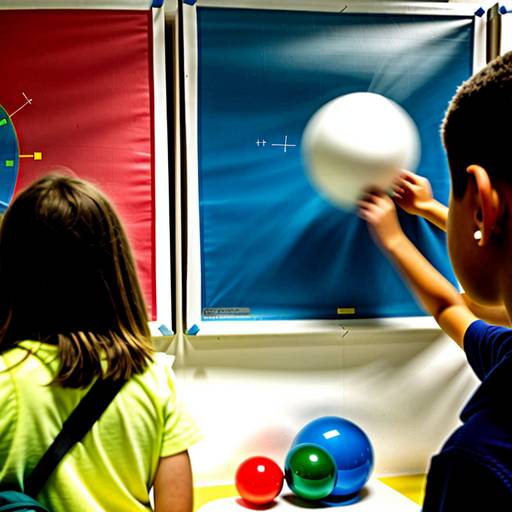
In this 5th-grade science lesson focused on physical science and motion, students will explore essential concepts such as speed, direction, force, and gravity through hands-on activities. The lesson begins with a discussion to engage students and introduce key terminology. In the first activity, small groups will conduct experiments with toy cars or balls on a ramp, measuring their speed and distance. They will perform multiple trials to gather data, fostering observation and discussion about how various factors influence motion.
The second activity will involve adding weights to the cars or balls, allowing students to investigate how additional force impacts movement, speed, and distance. After completing both activities, groups will present their findings, followed by a reflective writing exercise in their science journals to cement their understanding. The lesson will include assessments based on group discussions, data collection, and reflective writing. Extensions may include research on notable scientists related to motion or a day dedicated to testing different movements. Ultimately, students will gain a fundamental understanding of how forces affect motion through active engagement and experimentation.
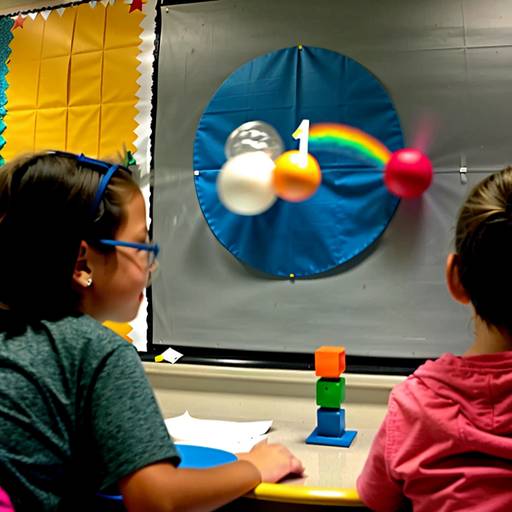
This third-grade science lesson focuses on the concepts of motion and the forces that influence an object's movement. Students will begin with a discussion about motion, exploring definitions and everyday examples. They will learn about different types of forces, including push, pull, gravity, and friction, through direct instruction supported by visuals and videos.
The lesson includes a hands-on experiment where students work in small groups to investigate how various forces affect the movement of toy cars on ramps. They will predict how far a car will roll with and without added weights, measuring the distances and recording their observations. After the experiment, students will regroup to discuss their findings and reflect on the relationship between forces and motion.
Assessment will occur through the collection of worksheets and through informal observations during group activities. Extension activities encourage students to further explore the principles of motion at home. Ultimately, this lesson aims to foster a foundational understanding of physical science while promoting inquiry, teamwork, and critical thinking skills.

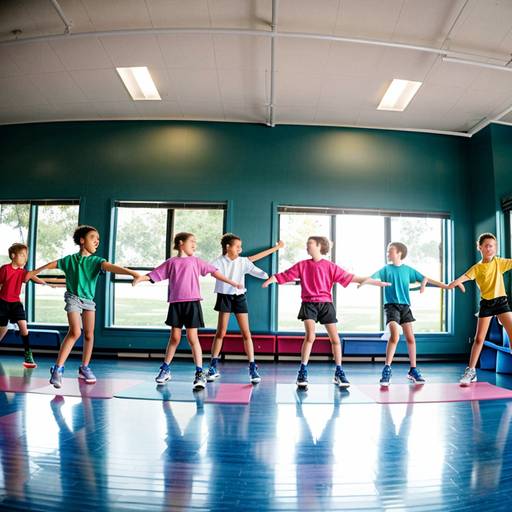
This 5th-grade physical education lesson focuses on fitness and flexibility through engaging activities and exercises. The lesson begins with a warm-up to increase heart rates, followed by a discussion highlighting the importance of fitness and flexibility in maintaining a healthy lifestyle. Students then participate in a series of guided stretching routines, where they learn and practice proper techniques for various stretches.
The primary component of the lesson consists of circuit stations that provide hands-on experience with resistance band stretches, balance challenges, yoga poses, agility drills, and a cool-down area focusing on relaxation and deeper stretches. A team activity encourages cooperation and demonstrates a fun approach to stretching.
Finally, the lesson concludes with a cool-down period and reflective discussion, allowing students to express what they enjoyed and learned. Through observation and feedback during the activities, the teacher assesses students' engagement and understanding, while also suggesting extensions for continued flexibility practice at home. Overall, the lesson aims to promote physical health and develop a positive attitude towards fitness among students.
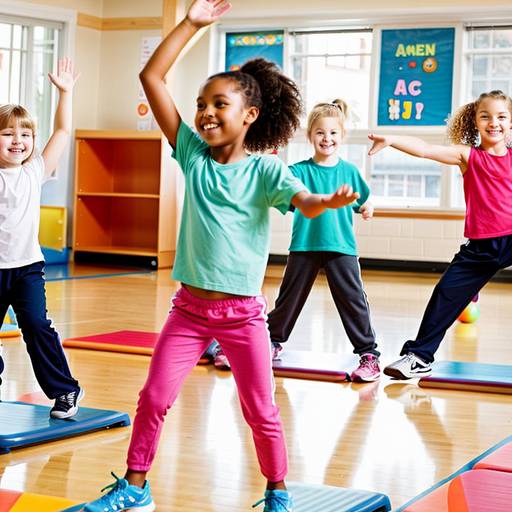
In this Kindergarten Physical Education lesson, students will engage in various activities designed to promote fitness and flexibility. The lesson begins with a warm-up session featuring dynamic movements like jumping jacks and high knees to energize the children. Following the warm-up, students will rotate through several stretching stations, each focusing on different stretches, such as the toe touch and butterfly stretch, allowing them to practice and hold each position while concentrating on their breathing.
Next, students participate in a fun movement game, "Freeze Dance," which combines dancing with stretching prompts, reinforcing the day's theme in an interactive way. To conclude the lesson, children will cool down by lying on mats for a calming body scan and reflection on their experiences, discussing the importance of movement and stretching.
Assessment will be based on observation of the students' participation and ability to follow instructions during stretches and activities. To accommodate diverse abilities, modifications will be offered to ensure inclusivity. The lesson aims to instill an understanding of the significance of fitness and flexibility, encouraging students to continue these practices at home.
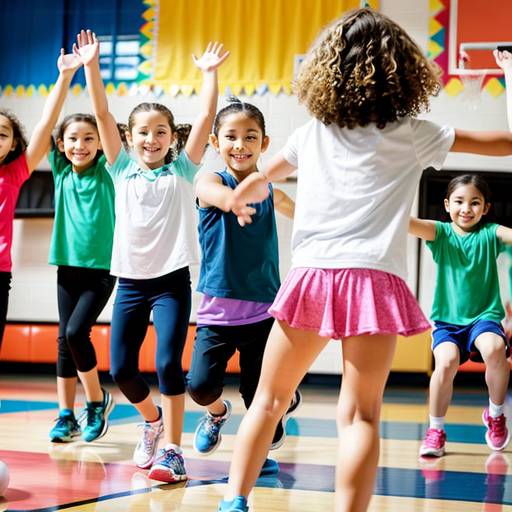
This lesson plan is designed for 1st-grade students to introduce them to the concepts of fitness and cardiovascular health through engaging physical activities. The session begins with an interactive discussion about the importance of fitness, followed by a warm-up routine to prepare their bodies for movement.
Students participate in four different activity stations that promote heart rate elevation and teamwork. Activities include jump rope challenges, hula hooping, a ball toss relay, and a freeze dance game, encouraging collaboration and physical skill development. After the stations, a cool-down period is incorporated, where students engage in gentle stretching and deep breathing exercises.
To conclude the lesson, students gather to reflect on their experiences, sharing their favorite activities and how they felt after exercising. The plan includes assessments based on participation and engagement, as well as adaptations for diverse learners. Additionally, it encourages students to continue physical activity at home by involving their families, reinforcing the importance of staying active.
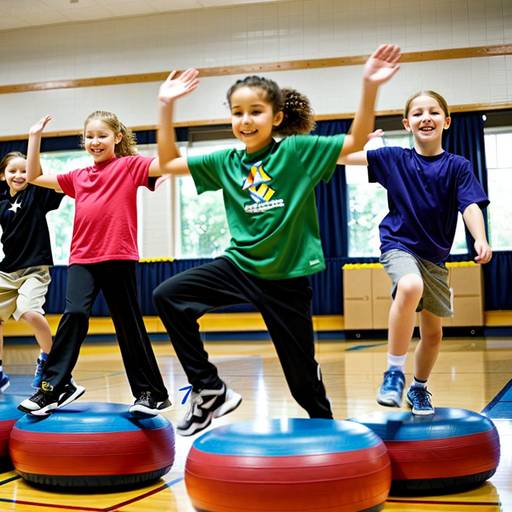
This 3rd-grade physical education lesson focuses on enhancing students' coordination and balance through a series of engaging activities. The session begins with a warm-up that includes dynamic stretching and balance challenges, encouraging students to develop body awareness. The main part of the lesson consists of an obstacle course featuring various stations where students navigate hula hoops, balance beams, toss bean bags, and weave through cones, fostering both coordination and balance. Additionally, a musical balancing game encourages students to move freely and freeze in balancing positions when the music stops. The lesson concludes with a cool-down that includes breathing exercises and discussions about the skills learned. Student performance is assessed through observation, with emphasis on providing positive feedback. Overall, the plan aims to create an enjoyable learning environment while promoting essential physical skills.
In this 60-minute physical education lesson for 5th graders, students will enhance their coordination and balance through a series of engaging activities. The session begins with a dynamic warm-up that includes jogging and movement drills to prepare the body for exercise.
Students will participate in three main activities: walking on balance beams, where they will focus on maintaining stability while incorporating various challenges; jumping in and out of hula hoops to improve coordination through different jumping techniques; and exploring a relay race with beanbags balanced on their heads, promoting balance while fostering teamwork.
The lesson concludes with a cool-down period featuring static stretching and a reflection session where students share their experiences and challenges. Throughout the lesson, the instructor will assess student participation and provide feedback to encourage further development of their skills, while also suggesting practice opportunities at home. Safety and adaptability will be emphasized to ensure an inclusive environment for all students.
In this kindergarten physical education lesson, students will engage in a series of fun activities designed to enhance their gross motor skills while exploring the fundamentals of sports and gymnastics. The session will begin with a warm-up, including stretching and movement to prepare the students for physical activity.
Following the warm-up, students will rotate through four engaging activity stations: balance beam walking to develop balance, hula hoop games for coordination, soft ball tossing to practice aiming and teamwork, and jump rope challenges to promote jumping skills. These activities will encourage social interaction and cooperation among peers.
After the stations, a cool-down period will allow students to relax through deep breathing and gentle stretches, coupled with a reflection on their favorite activities from the lesson. Throughout the session, instructors will assess participation and teamwork while providing encouragement and feedback. The lesson aims to foster an appreciation for physical activity in a playful and supportive environment, with opportunities for extension and adaptations based on individual needs.
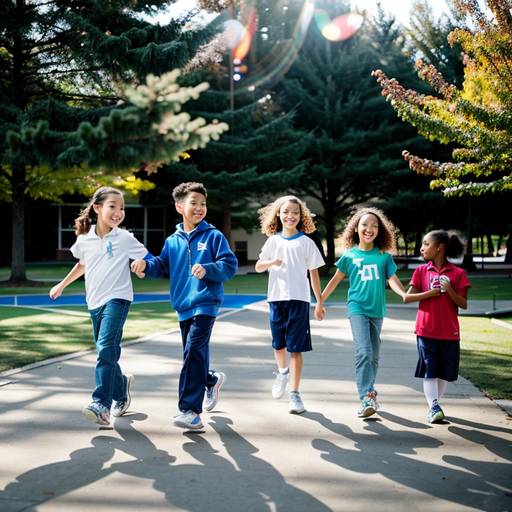
This lesson plan is designed for 1st grade students to enhance their coordination and balance through a series of engaging activities. It begins with a warm-up game that promotes movement and teamwork, followed by a brief introduction to the concepts of coordination and balance. Students participate in skill development stations that include balance beam walking, ball toss and catch, cone weaving, and various animal walks, allowing them to practice and improve their motor skills in a supportive environment.
The lesson includes a group activity in the form of a balancing relay, fostering collaboration and enthusiasm among peers. It concludes with a cool down where students reflect on their experiences and share their favorite activities, reinforcing their learning. Throughout the session, students are observed for their ability to balance and coordinate movements, with modifications available for those who need additional support. This lesson not only promotes physical fitness but also encourages teamwork and communication among young learners.
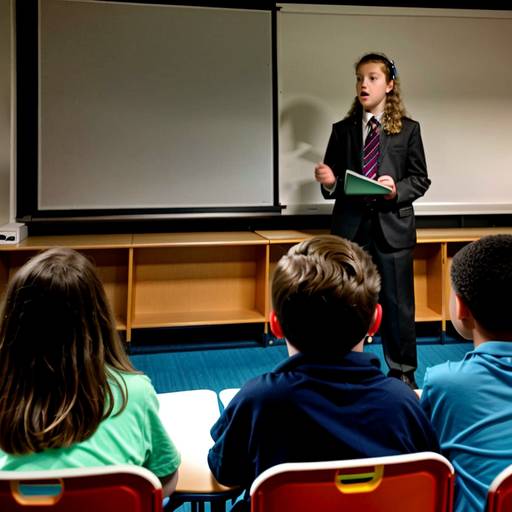
In this 5th-grade technology lesson plan, students will explore multimedia creation through the development of engaging presentations. Over two class periods, they will learn the principles of effective presentation design and how to incorporate various multimedia elements, such as images, audio, and video, into their work.
The first day involves discussions about multimedia and its importance, followed by the group brainstorming of topics relevant to their curriculum. Students will outline their presentations, setting the stage for their projects.
On the second day, students will use presentation software to create their projects, ensuring they include specific multimedia components. They will practice presenting their work within their groups, providing constructive feedback to one another. Selected groups will share their presentations with the entire class, allowing for questions and discussions afterward.
Assessment will be based on a rubric that evaluates criteria such as clarity, creativity, and media integration, along with peer feedback. The lesson also encourages reflection on the learning process and offers extension opportunities to present their work to family members, promoting further engagement with the material. Overall, the lesson fosters creativity, collaboration, and technology skills, making the learning experience interactive and enjoyable for the students.