
Filters
Level
Grade
Subject
Subject Area
Subject Topic
Standard(s)
Audience
Keyword
DurationMinutes
Elementary School Lesson Plans

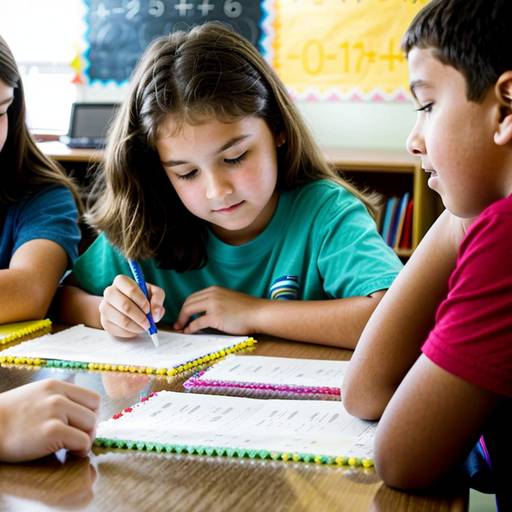
This lesson plan focuses on teaching 5th-grade students the concept of multiplication and its various properties, including associative, distributive, and commutative properties. The lesson begins with a review of multiplication as repeated addition, followed by direct instruction on different multiplication methods such as the area model, standard algorithm, and lattice method.
Students engage in guided practice in small groups, where they solve multi-digit multiplication problems using these various strategies and present their solutions to the class. A hands-on activity allows them to create and solve their own multiplication problems using counters or blocks. The lesson also emphasizes real-world applications of multiplication, such as calculating costs and areas, with a fun scenario involving price calculations.
At the end of the lesson, a quick exit ticket is used to assess students' understanding of the concepts covered. For homework, students receive a worksheet with multiplication practice and word problems related to everyday situations. Differentiation strategies are included to support students who need extra help and to challenge those who excel. Overall, the lesson promotes collaboration, critical thinking, and practical application of multiplication skills.
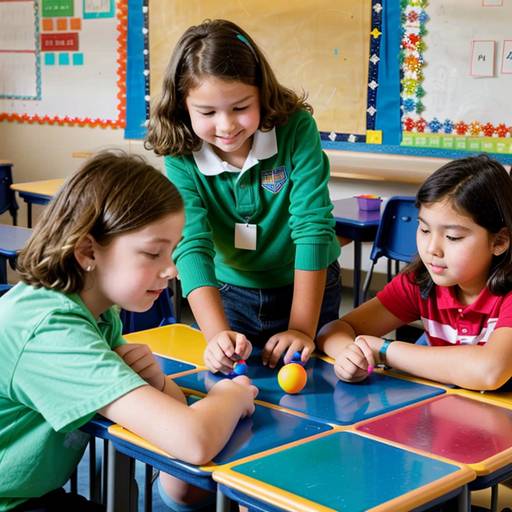
In this 4th-grade math lesson, students will explore multiplication and its key properties, specifically the commutative, associative, and distributive properties. The lesson begins with a review of multiplication concepts, followed by direct instruction where students engage with examples on the whiteboard.
Next, students work in small groups to create posters that illustrate one of the properties, promoting collaboration and creativity while reinforcing their understanding. The class then participates in a fun bingo game, where they solve multiplication problems and match their answers on bingo cards, enhancing engagement through friendly competition.
To solidify their learning, students will complete worksheets independently, applying the properties in various multiplication scenarios. The lesson concludes with a review of the concepts and an exit ticket activity to assess individual understanding. With differentiation strategies in place, the lesson accommodates various learning styles and paces, ensuring all students can grasp the essential principles of multiplication.
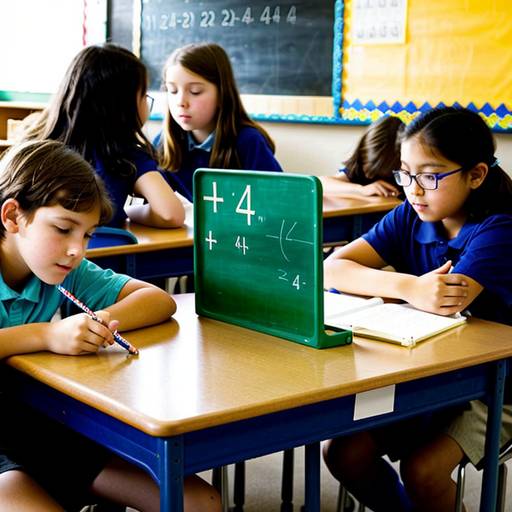
This lesson plan is designed for 4th-grade students to enhance their understanding of multiplication and times tables. The objectives focus on helping students grasp multiplication as repeated addition, learn and recite multiplication facts for numbers 1 through 12, and demonstrate their mastery through engaging activities.
The lesson begins with an interactive introduction featuring a chant or song about multiplication, followed by a discussion that illustrates the concept using real-life examples. Direct instruction involves demonstrating a multiplication table and explaining how it works through visual aids like array models.
Students then engage in guided practice by using multiplication charts and working in pairs with flashcards to quiz each other. For independent practice, they participate in a multiplication bingo game, reinforcing their skills in a fun and interactive way.
To conclude, the lesson involves a brief review where students share their confidence in specific multiplication facts, followed by an exit ticket assessment to evaluate individual understanding. The plan includes provisions for both advanced and struggling learners, ensuring that all students can build their multiplication skills effectively.
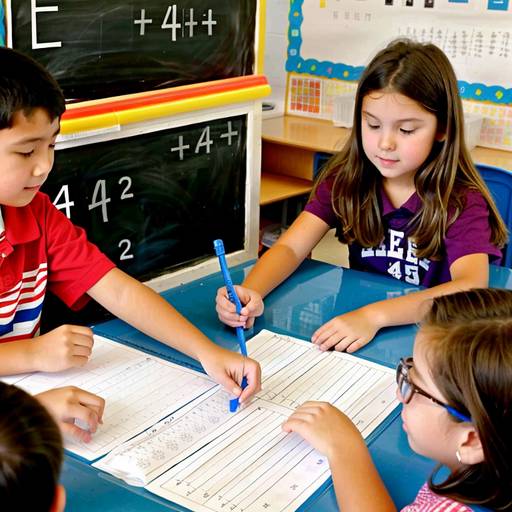
This lesson plan aims to teach 4th-grade students about multiplication and factors through engaging activities and collaborative learning. The lesson begins with an interactive warm-up that reinforces the concept of multiplication as repeated addition, followed by a mini-lesson where students learn to identify factors of numbers using visual aids like factor trees. Guided practice allows students to work in pairs to create their own factor trees for specific numbers, promoting discussion and peer support. Next, students engage in independent practice by designing a multiplication-focused board game that incorporates finding factors, enhancing their understanding through play. The lesson concludes with a class discussion and an exit ticket assessment where students identify factors of a given number. Throughout the lesson, opportunities for extension and support are provided to cater to diverse learning needs. The plan emphasizes observation and reflection to adapt future lessons based on student understanding.
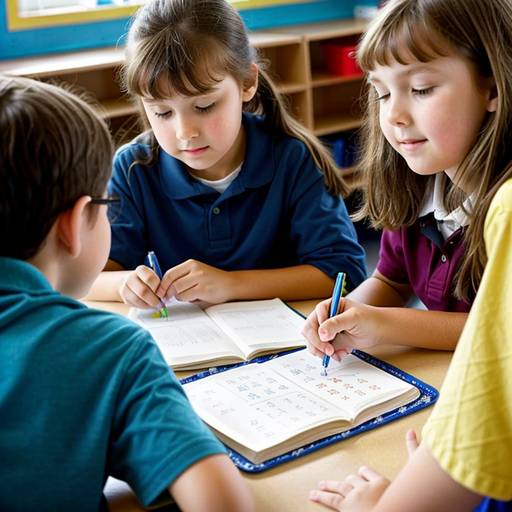
In this engaging 3rd-grade math lesson, students will explore the concept of multiplication as repeated addition, focusing specifically on the 2s, 5s, and 10s times tables. The lesson begins with a warm-up activity that reviews addition and introduces multiplication, highlighting their relationship. Students will participate in guided instruction where they learn and chant the times tables, followed by group activities to fill out times table charts together.
During independent practice, students will create their own multiplication fact cards and complete worksheets with multiplication problems, reinforcing their skills. The lesson concludes with a review session where students can share their fact cards, ensuring they grasp the key concepts learned. Assessment will take place through observation during activities and review of completed worksheets and cards. Extensions will be available for students who master the material quickly, promoting further exploration of multiplication skills. Overall, this plan incorporates a variety of teaching methods to keep students engaged while developing their understanding of multiplication.
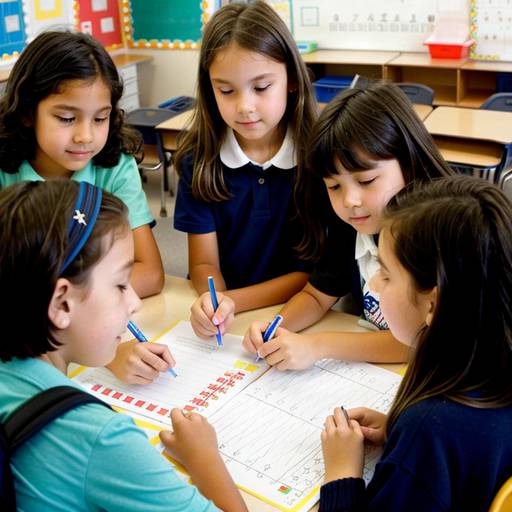
In this engaging 3rd-grade math lesson, students will explore the concepts of multiplication and factors through a variety of interactive activities. The lesson begins with a warm-up discussion to introduce multiplication as repeated addition and to explain the concept of factors. Visual demonstrations using counting blocks will help students understand multiplication in terms of groups, while also teaching them how to find factor pairs.
Students will work collaboratively in pairs to find factors for given numbers using manipulatives, reinforcing their understanding through hands-on experience. A number line activity will further illustrate the relationship between multiplication and factors, allowing students to visualize their findings.
Independent practice will involve completing a worksheet that requires identifying factors and writing multiplication sentences, encouraging individual reflection on the day's learning. The lesson concludes with a review of key concepts, a brief homework assignment to reinforce skills at home, and recognition for participation through small prizes or stickers. This lesson provides a comprehensive approach to understanding multiplication and factors, tailored to accommodate diverse learning needs.

This 3rd-grade math lesson plan focuses on helping students understand multiplication through the context of word problems. The lesson begins with a review of multiplication as repeated addition, transitioning into direct instruction on identifying key phrases and information in word problems. Students participate in guided practice where they work in pairs to solve word problems, using manipulatives and drawings for better visualization. They then move on to independent practice, solving additional problems on their own.
The lesson concludes with a class discussion where students share their solutions and thought processes, reinforcing their understanding of multiplication's application in real life. Homework may be assigned for further practice. Assessment is conducted through observation and the collection of worksheets to evaluate student understanding. Differentiation strategies are included to support diverse learners, ensuring that all students can engage with the material effectively. Overall, the lesson promotes collaboration, critical thinking, and practical application of math skills.
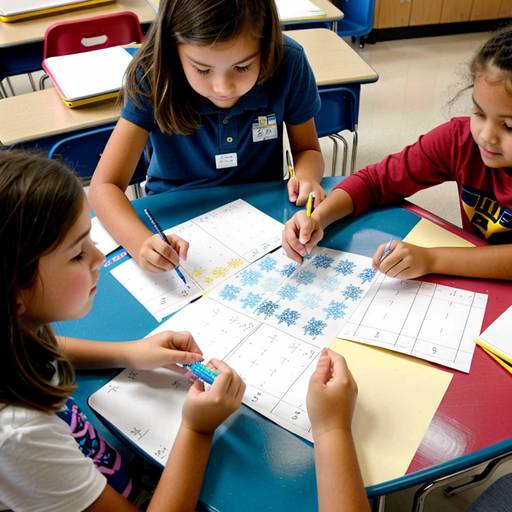
This lesson plan aims to help 3rd-grade students understand multiplication and identify patterns within multiplication tables. The lesson begins with an introduction to multiplication, relating it to addition and highlighting how multiplication functions as a quicker method for adding equal groups.
Students will participate in a guided practice where they collectively fill out part of a multiplication chart on the whiteboard, identifying patterns as they go. Following this, they will work in small groups using pattern blocks or colored counters to create their own multiplication tables, encouraging collaboration and discussion of the patterns they observe.
For independent practice, students will complete worksheets featuring a multiplication chart and exercises focused on recognizing patterns in numbers. The lesson concludes with a review of their discoveries and a discussion on the excitement of uncovering numerical patterns. Assessment will be conducted through observation and evaluation of students' worksheets. Differentiation strategies are in place to support various learning levels, and the lesson includes extensions, such as a multiplication game, to reinforce skills further. Overall, the lesson fosters a fun and interactive environment for enhancing students' multiplication skills and understanding of patterns.
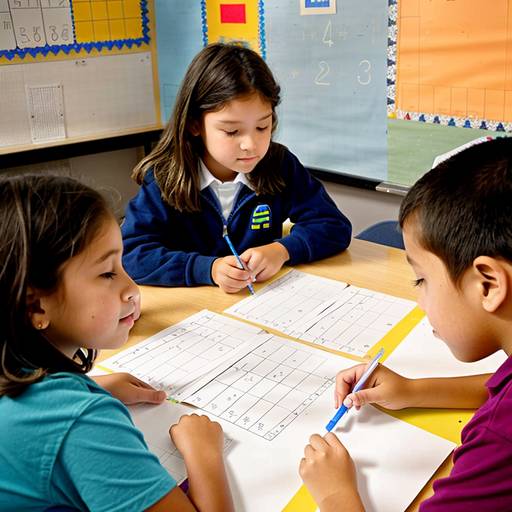
This lesson plan focuses on teaching 3rd-grade students the concept of multiplication and its associated properties, specifically the Commutative, Associative, and Identity properties. The lesson begins with an engaging discussion about the real-life applications of multiplication, followed by a mini-lesson where these properties are introduced with clear definitions and visual demonstrations using counters.
Students then participate in guided practice, identifying properties in examples and solving simple multiplication problems. For independent practice, they complete a worksheet that reinforces their understanding and engage in a partner activity where they create their own multiplication problems that utilize these properties.
To foster collaboration and creativity, students work in small groups to create colorful posters illustrating one of the properties and present their work to the class. The lesson concludes with a review and an exit ticket where students write examples of each property. Throughout the lesson, assessment occurs through observation, worksheet completion, and group presentations, ensuring that students not only grasp the concept of multiplication but also understand how to apply its properties effectively. Extensions and support are offered to cater to varying student needs.
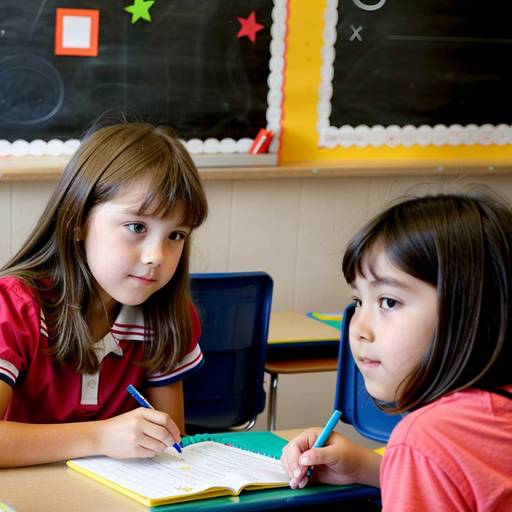
This 60-minute math lesson for 2nd graders focuses on teaching multiplication through the exploration of patterns. Students will begin by reviewing multiplication as repeated addition and will identify patterns in multiplication tables. The lesson will include hands-on activities, where students will work in groups to create and present their own multiplication patterns using manipulatives like pattern blocks or colored paper shapes. Guided practice will reinforce their understanding through worksheets that combine multiplication problems with pattern recognition tasks. The lesson concludes with a review of key concepts and encourages students to share their discoveries. Assessment will include observing student participation and evaluating their worksheets and presentations. Accommodations and extensions will be available to support diverse learners and deepen understanding of the topic.