
Filters
Level
Grade
Subject
Subject Area
Subject Topic
Standard(s)
Audience
Keyword
DurationMinutes
5th Grade Social Studies Lesson Plans


In this 5th-grade social studies lesson, students will explore the concept of timelines and their significance in organizing historical events. The lesson begins with a discussion on the importance of history and a simple introduction to timelines, including key terms such as chronological order, BC, and AD.
Students will work in pairs to arrange selected historical events in chronological order, promoting collaboration and analytical thinking. Following this, individuals will conduct research on a historical period of their choice, creating a personal timeline that highlights at least five significant events, including dates and descriptions.
The lesson culminates in student presentations of their timelines to the class, fostering communication skills and reinforcing their understanding of how events connect through time. Assessment will focus on the accuracy and creativity of the timelines created. Extensions for advanced learners and support for those needing additional help are provided to enhance the learning experience. Reflection on the lesson’s effectiveness will guide future teaching strategies.

This 5th-grade social studies lesson focuses on introducing students to various types of maps, including physical, political, and thematic maps. Students will learn about the purpose of each map type through group discussions and presentations. The lesson includes an exploration of map symbols and the importance of the compass rose for navigation.
As part of the hands-on activity, students will create their own maps of a familiar area, incorporating key features, symbols, and a compass rose. They will then share their maps with a partner to explain their choices. The lesson concludes with a class discussion, allowing students to highlight interesting aspects of their maps. Assessment will be based on participation and the quality of the completed maps. Extensions include exploring digital mapping tools and researching specific locations to create thematic maps, ensuring that the lesson caters to different learning levels.
In this 5th-grade social studies lesson, students will explore the concept of community and the diversity present within it. The lesson begins with a class discussion to define community and discuss its various elements, emphasizing the importance of diversity. Students will then work in small groups to research cultures from different continents, creating informative posters that highlight aspects such as flags, traditional clothing, food, and cultural practices. Each group will present their findings to the class, fostering engagement and encouraging questions.
Next, the classroom transforms into a culture fair, where students can visit each group's station and fill out a "Culture Passport" with interesting facts learned from their peers. Optional guest speakers from local cultural communities may also be invited to enhance the learning experience. The lesson concludes with reflective writing and a class discussion on the importance of understanding and celebrating diversity in building a strong community. Assessments will focus on group participation, the quality of the posters, and insights shared in the cultural passports. Extensions and adaptations are provided to cater to the diverse needs of learners and to deepen their engagement with the topic.
In this 5th-grade social studies lesson, students will explore key historical events that have shaped the United States and their significance in contemporary society. The lesson begins with group activities where students select and discuss various historical events, emphasizing their importance. This is followed by class presentations to share insights and a collective discussion on the connections between past and present.
For the second class period, students will research a chosen event in depth and create a visual timeline in collaborative groups. They will organize the events either chronologically or thematically while incorporating creative elements. The lesson culminates in group presentations of the timelines, fostering collaborative learning and reinforcing their understanding of how historical events continue to influence society today. The assessment will focus on participation, group collaboration, and the accuracy and creativity of the final timelines. Modifications and extensions are included to cater to diverse learning needs and enhance student engagement.
In this fifth-grade social studies lesson, students will explore the concept of community and the various roles individuals play within it. The lesson begins with a class discussion about what defines a community, followed by small group activities where students examine specific roles, such as police officers, teachers, and firefighters, and discuss their responsibilities and contributions. Each group will present their findings to the class, fostering collaboration and communication skills.
Students will then create a visual community collage that highlights the different roles, promoting creativity and teamwork. The lesson concludes with a reflective discussion, encouraging students to share their insights on the importance of community roles and how they can contribute positively to their own communities. Assessment will include observing group participation, reviewing the collages, and collecting exit tickets that capture students' reflections. Extension activities, such as field trips and service projects, will further enhance their understanding and engagement with the community.
In this 5th-grade social studies lesson, students will explore the concept of community and the importance of rules and responsibilities within it. The lesson begins with a warm-up discussion to define what a community is, followed by a group brainstorm on community rules that promote safety and organization. The teacher will introduce the various types of rules, including local laws, school regulations, and household expectations, while emphasizing the responsibilities that come with following these rules.
Students will engage in a guided group activity to create a list of essential community rules on sticky notes, which they will then share with the class. Following this collaborative effort, each student will work individually or in pairs to design a "Community Rules" poster that illustrates key rules and their importance.
As the lesson concludes, students will reflect on the significance of rules and the feelings associated with following or breaking them. For homework, they will write a paragraph about a rule they adhere to at home and its impact on their family. Assessment will be based on participation, the creativity of the poster, and the written assignment. This lesson aims to foster teamwork, creativity, and public speaking skills in a supportive environment, while deepening students' understanding of community dynamics.
This lesson plan for 5th-grade social studies focuses on exploring the concepts of community and diversity. Students will start by discussing what constitutes a community and the unique characteristics that make theirs special. They will learn about diversity, encompassing various cultures, ethnicities, and traditions, through small group activities. Each group will research and create a mini-poster representing a specific aspect of diversity within their community, such as language, religion, or traditions. Following the creation of their posters, students will engage in a gallery walk to share their findings and learn from one another.
The lesson culminates in a class discussion, allowing students to reflect on the significance of diversity and how it enriches their community. Assessment will take place through participation, the content of their group work, and a written reflection on what they learned about diversity. Extensions of the lesson include planning a “Diversity Day” for students to share cultural artifacts and experiences, as well as creating a class mural to visually represent their collective cultural backgrounds. This approach aims to foster inclusivity and cultural awareness among students, highlighting the value of diversity in their lives.
In this 5th-grade social studies lesson, students will explore the concept of timelines and their importance in organizing historical events. Beginning with a discussion on the significance of understanding the chronological order of events, the teacher will present examples of historical timelines, highlighting key moments in history.
During guided practice, students will collaboratively create a timeline on the board that includes major events, fostering a better comprehension of historical context. For their independent activity, students will develop their own personal timelines by selecting three significant events from their lives, which they will place in chronological order. They will have the opportunity to share these timelines in small groups, discussing the importance of each event.
The lesson will conclude with some students presenting their timelines to the class, reinforcing the connections between personal experiences and historical narratives. Assessment will be through observation during group sharing and evaluation of personal timelines for creativity and organization. An extension activity invites students to research a historical figure or event to create a themed timeline for display. This engaging lesson allows students to appreciate the interconnectedness of history and their own lives.
In this 5th-grade social studies lesson, students will explore the concept of community by identifying various roles and responsibilities within it. The lesson begins with a discussion on what constitutes a community and the roles individuals play, followed by a collaborative brainstorming session where students work in small groups to list community roles. After sharing their ideas with the class, students will engage in a discussion highlighting the responsibilities associated with each role.
To reinforce their learning, students will create a visual mural that represents selected community roles, complete with illustrations and descriptions. Groups will present their murals, fostering teamwork and communication skills. The lesson concludes with an assessment of participation and creativity, and opportunities for further engagement through guest speakers or community service projects. This lesson aims to deepen students' understanding of the importance of various roles in the functioning of their community.
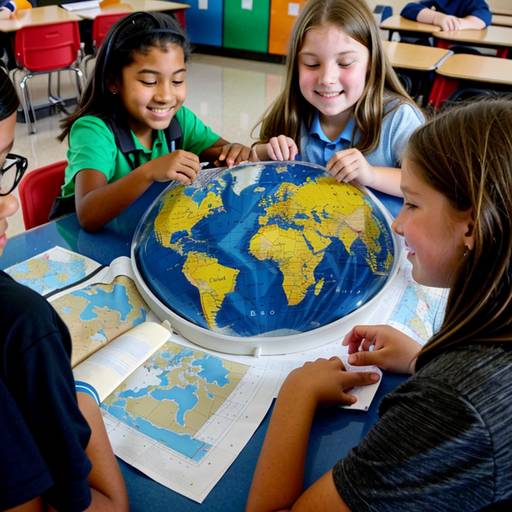
This lesson plan is designed for 5th-grade students to explore the concepts of geography and maps over two class periods. The first day focuses on introducing essential map components, including legends, scales, and compass roses. Students engage in discussions and group activities to analyze different types of maps, helping them to understand how to read and interpret them effectively.
On the second day, students apply their knowledge by creating their own fictional island maps, incorporating the elements they've learned. This hands-on activity encourages creativity while reinforcing the importance of map features. Students then share their maps with the class, promoting discussion and collaboration. Assessment is conducted through both formative and summative methods, ensuring students grasp map concepts while enjoying the creative process. Additionally, opportunities for technology integration and cross-curricular connections enhance the learning experience.