
Filters
Level
Grade
Subject
Subject Area
Subject Topic
Standard(s)
Audience
Keyword
DurationMinutes
5th Grade Physical Science Lesson Plans


This 5th-grade science lesson focuses on teaching students about the three states of matter: solids, liquids, and gases. The objective is for students to understand the properties of each state and categorize various materials accordingly. The lesson begins with an engaging video that illustrates everyday examples of the different states of matter, followed by a discussion to elicit students' prior knowledge.
Direct instruction covers the definitions and properties that distinguish solids, liquids, and gases. Students then participate in hands-on experiments where they observe the melting of ice into water and the boiling of water into steam, documenting their observations and measurements. Additionally, they classify a variety of materials as solids, liquids, or gases, reinforcing their learning through practical application.
The class discussion at the end encourages students to share their findings and summarize what they have learned. Assessment includes monitoring participation during activities and reviewing completed worksheets. Differentiation strategies are included to support diverse learners, and extensions are provided for those needing additional challenges. Overall, the lesson aims to foster a deeper understanding of matter and its transformative properties through interactive and engaging methods.
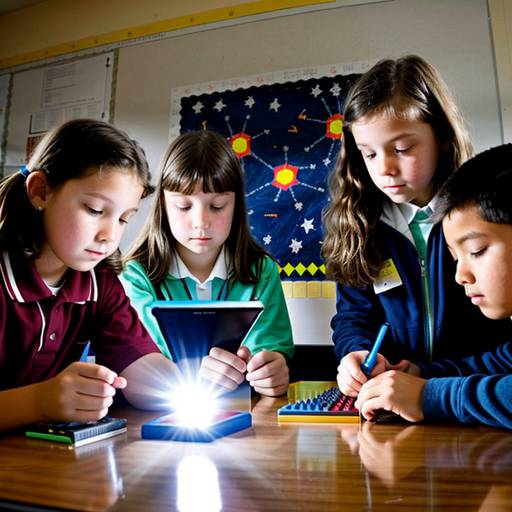
In this 5th grade physical science lesson, students will explore various forms of energy, including kinetic, potential, thermal, and electrical energy, while understanding the concept of energy transformation. The lesson begins with a discussion on the importance of energy in daily life, followed by an overview of different energy types.
Students will engage in hands-on experiments that allow them to witness energy transformation. First, they will use balloons and ramps to observe how potential energy converts to kinetic energy. Then, they will create a simple electrical circuit with light bulbs to explore how electrical energy can be transformed into thermal and light energy.
Following the experiments, the class will engage in a group discussion, sharing their observations and summarizing key points about energy transformation. Students will also be tasked with identifying examples of energy transformation in their own lives for further reflection in their science journals.
Assessment will involve observation of student participation in discussions and experiments, along with reviewing worksheets and homework assignments to gauge understanding. Extension activities will encourage creativity and exploration in energy applications. The lesson concludes with a reflection on student engagement and understanding to inform future instruction.
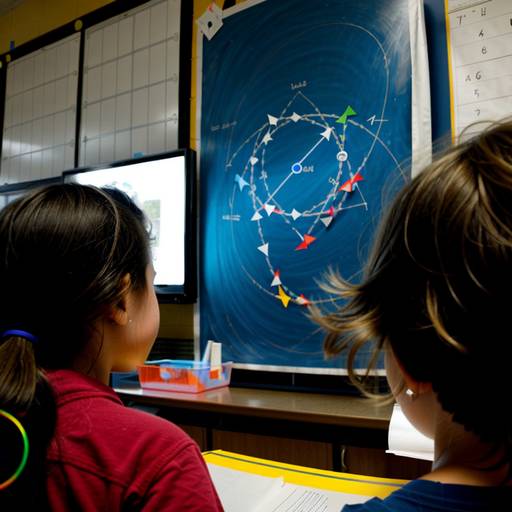
In this 5th grade science lesson, students will explore the concepts of energy, force, and motion. They will learn about potential and kinetic energy through discussions and demonstrations, reinforcing how energy is transformed and transferred. Students will work in small groups to conduct a hands-on experiment involving ramps and toy cars. They will measure the height of the ramp, launch the toy cars using rubber bands, and record data on the distance traveled and time taken. This activity encourages collaboration and critical thinking as students analyze their findings and discuss the relationships between height, energy, and speed. The lesson wraps up with a review of the data and concepts learned, alongside an assessment that includes worksheets and an exit ticket to gauge individual understanding. Extensions and additional resources are provided to reinforce learning for all students.
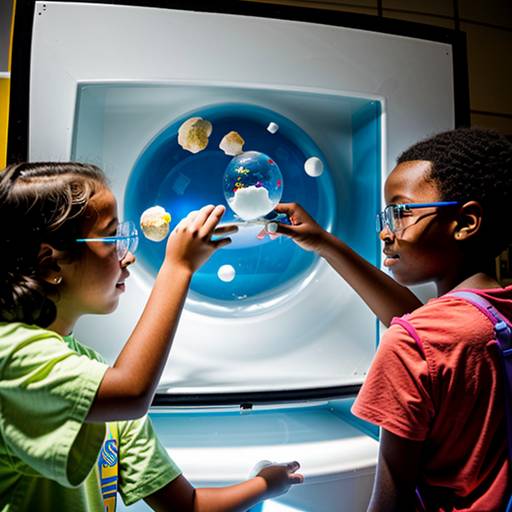
In this 5th-grade science lesson plan, students will explore the fundamental concepts of matter, focusing on the three primary states: solid, liquid, and gas. The lesson is divided into two class periods, beginning with an introduction to matter and a hands-on classification activity where students categorize various objects based on their state. They will conduct an experiment to observe ice melting into water, measuring temperature changes and recording their observations.
On the second day, students will review what they learned, including a demonstration of how gases behave, using an inflated balloon as an example. They will perform an experiment that involves heating water to observe the transition from liquid to gas through boiling and steam production. Throughout the lessons, students will engage in discussions about molecular changes during state transitions and document their findings in science journals.
Assessment will be based on class participation, group activities, and a short quiz covering key concepts. Extensions for the lesson include research presentations on additional states of matter and optional at-home experiments to further personal exploration. Overall, the lesson encourages active participation and fosters a deeper understanding of physical science.
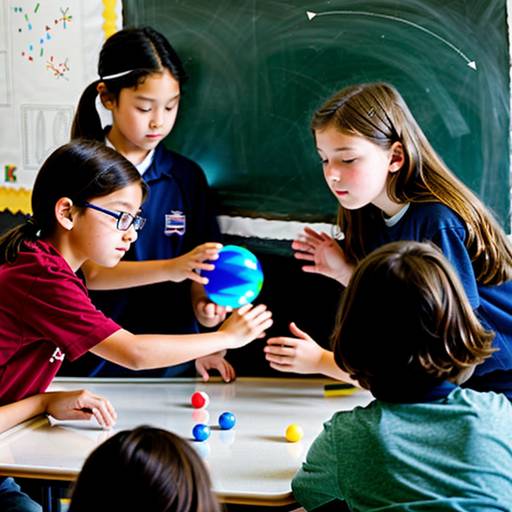
In this physical science lesson for 5th graders, students will explore the concepts of motion and the forces that influence it. The lesson begins with an engaging discussion about motion, during which students will share their prior knowledge and learn key vocabulary such as force, gravity, friction, and acceleration. Following direct instruction that includes visual aids and diagrams, the class will break into small groups to conduct a hands-on experiment. Each group will use toy cars, ramps, and weights to investigate how different weights affect the speed and distance traveled by the cars. Students will record their observations in journals and participate in a class discussion to share their findings and insights.
The lesson aims to provide students with a foundational understanding of how forces interact with motion, emphasizing the relationship between weight, friction, and movement. Assessment will focus on student engagement during the activities and their journal entries, with opportunities for further exploration or reinforcement based on individual student needs. Through this interactive approach, students will gain a deeper appreciation of the principles of physics in their everyday lives.
In this 5th-grade science lesson, students will explore fundamental concepts of physical science, focusing on forces and motion. The lesson begins with an engaging video showcasing various forces in everyday life, followed by a class discussion where students share their observations of forces in action. Key concepts such as gravity, friction, and the distinction between push and pull are introduced with visual aids.
Students will then participate in a hands-on experiment where they work in small groups to investigate how adding weight affects the distance a toy car travels down a ramp. They will set up their ramps, conduct trials, record data, and analyze their results. Afterward, groups will share their findings with the class, discussing the implications of their experiments and how different forces impacted their outcomes.
The lesson encourages collaboration and critical thinking, as students reflect in their science journals on their experiments and learn how understanding forces influences their daily lives. Extensions for advanced learners are included to deepen their understanding of balanced and unbalanced forces, along with a homework assignment that reinforces real-world applications of the concepts learned. Overall, this lesson fosters a hands-on, inquiry-based approach to learning about forces in physical science.
This 5th Grade Physical Science lesson focuses on understanding the concepts of forces and motion, specifically exploring push and pull through engaging activities. Students begin by discussing everyday examples of forces before learning about contact and non-contact forces, as well as the concepts of balanced and unbalanced forces. In small groups, they conduct hands-on experiments using various objects and a ramp to observe how distance traveled is influenced by factors like weight and the incline of the ramp. Each group records their findings and shares insights with the class, promoting collaborative learning and discussion. The lesson concludes with a summary of key concepts and encourages students to reflect on what they learned. Assessment includes monitoring participation and reviewing group presentations, with extensions available for further exploration through virtual simulations or individual projects. Modifications are provided to support diverse learners, ensuring an inclusive and interactive educational experience.
In this 5th-grade science lesson, students will explore the concept of matter, focusing on the three states: solids, liquids, and gases. The lesson begins with a discussion about the importance of matter in everyday life, followed by direct instruction that defines and describes the properties of each state. Using hands-on activities, students observe ice as a solid, water as a liquid, and air in inflated balloons. They record their observations in science journals.
On the second day, students recap their findings and learn about phase changes, such as melting and evaporation. They conduct an experiment to observe the melting of ice on a hot plate, measuring temperature changes and documenting their observations. The lesson concludes with a class discussion where students share their insights and reflect on the conservation of mass during state changes. Assessments will be based on participation, journal entries, and students' ability to explain the properties and transitions of matter. Extension activities may include exploring additional states of matter or conducting simple home experiments related to liquids.
In this 5th-grade science lesson focused on physical science and motion, students will explore essential concepts such as speed, direction, force, and gravity through hands-on activities. The lesson begins with a discussion to engage students and introduce key terminology. In the first activity, small groups will conduct experiments with toy cars or balls on a ramp, measuring their speed and distance. They will perform multiple trials to gather data, fostering observation and discussion about how various factors influence motion.
The second activity will involve adding weights to the cars or balls, allowing students to investigate how additional force impacts movement, speed, and distance. After completing both activities, groups will present their findings, followed by a reflective writing exercise in their science journals to cement their understanding. The lesson will include assessments based on group discussions, data collection, and reflective writing. Extensions may include research on notable scientists related to motion or a day dedicated to testing different movements. Ultimately, students will gain a fundamental understanding of how forces affect motion through active engagement and experimentation.
In this 5th-grade science lesson, students will explore the properties and changes of matter, focusing on the three states: solid, liquid, and gas. The lesson begins with a discussion to define matter and its different states, followed by group activities where students observe various materials' physical properties. They will then engage in hands-on experiments to witness changes in states of matter through the melting of ice in warm water and the expansion and contraction of air in balloons. Through these activities, students will learn to identify characteristics of matter and understand how temperature affects state changes. The lesson concludes with a recap of key concepts and a homework assignment where students will find real-life examples of matter changing states at home. Assessment will be based on observations during group work and the quality of the homework assignment. Safety precautions will be emphasized throughout the activities.