

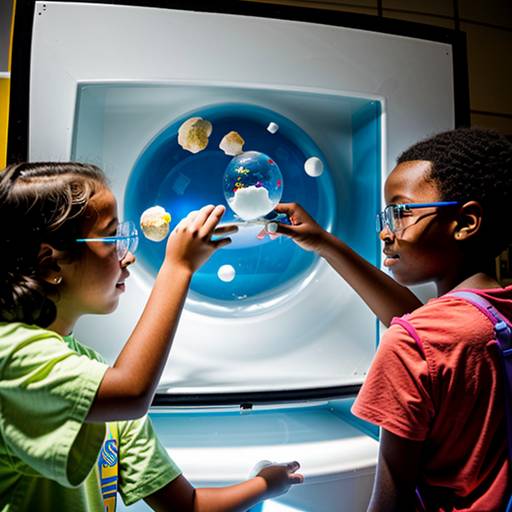
In this 5th-grade science lesson plan, students will explore the fundamental concepts of matter, focusing on the three primary states: solid, liquid, and gas. The lesson is divided into two class periods, beginning with an introduction to matter and a hands-on classification activity where students categorize various objects based on their state. They will conduct an experiment to observe ice melting into water, measuring temperature changes and recording their observations.
On the second day, students will review what they learned, including a demonstration of how gases behave, using an inflated balloon as an example. They will perform an experiment that involves heating water to observe the transition from liquid to gas through boiling and steam production. Throughout the lessons, students will engage in discussions about molecular changes during state transitions and document their findings in science journals.
Assessment will be based on class participation, group activities, and a short quiz covering key concepts. Extensions for the lesson include research presentations on additional states of matter and optional at-home experiments to further personal exploration. Overall, the lesson encourages active participation and fosters a deeper understanding of physical science.
| Level | Elementary School |
| Grade | 5th Grade |
| Subject | Science |
| Subject Area | Physical Science |
| Subject Topic | Matter |
| Age Range | 10 to 11 |
| Audience | Group |
| Language | English |
| Duration | 240 mins |