
Filters
Level
Grade
Subject
Subject Area
Subject Topic
Standard(s)
Audience
Keyword
DurationMinutes
5th Grade Matter Lesson Plans


This 5th-grade science lesson focuses on teaching students about the three states of matter: solids, liquids, and gases. The objective is for students to understand the properties of each state and categorize various materials accordingly. The lesson begins with an engaging video that illustrates everyday examples of the different states of matter, followed by a discussion to elicit students' prior knowledge.
Direct instruction covers the definitions and properties that distinguish solids, liquids, and gases. Students then participate in hands-on experiments where they observe the melting of ice into water and the boiling of water into steam, documenting their observations and measurements. Additionally, they classify a variety of materials as solids, liquids, or gases, reinforcing their learning through practical application.
The class discussion at the end encourages students to share their findings and summarize what they have learned. Assessment includes monitoring participation during activities and reviewing completed worksheets. Differentiation strategies are included to support diverse learners, and extensions are provided for those needing additional challenges. Overall, the lesson aims to foster a deeper understanding of matter and its transformative properties through interactive and engaging methods.
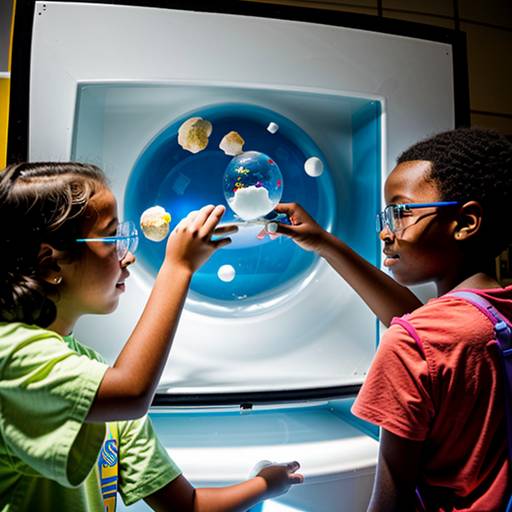
In this 5th-grade science lesson plan, students will explore the fundamental concepts of matter, focusing on the three primary states: solid, liquid, and gas. The lesson is divided into two class periods, beginning with an introduction to matter and a hands-on classification activity where students categorize various objects based on their state. They will conduct an experiment to observe ice melting into water, measuring temperature changes and recording their observations.
On the second day, students will review what they learned, including a demonstration of how gases behave, using an inflated balloon as an example. They will perform an experiment that involves heating water to observe the transition from liquid to gas through boiling and steam production. Throughout the lessons, students will engage in discussions about molecular changes during state transitions and document their findings in science journals.
Assessment will be based on class participation, group activities, and a short quiz covering key concepts. Extensions for the lesson include research presentations on additional states of matter and optional at-home experiments to further personal exploration. Overall, the lesson encourages active participation and fosters a deeper understanding of physical science.
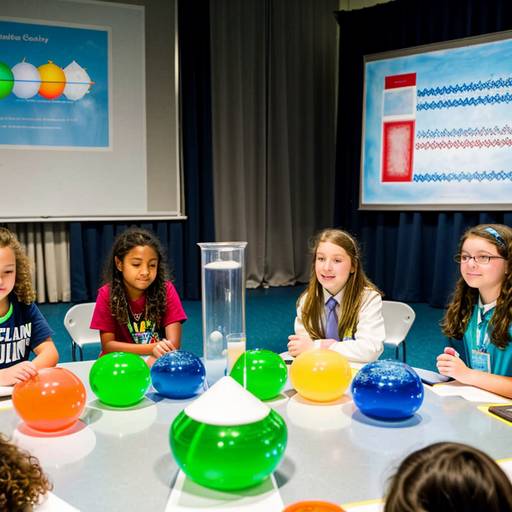
In this 5th-grade science lesson, students will explore the concept of matter, focusing on the three states: solids, liquids, and gases. The lesson begins with a discussion about the importance of matter in everyday life, followed by direct instruction that defines and describes the properties of each state. Using hands-on activities, students observe ice as a solid, water as a liquid, and air in inflated balloons. They record their observations in science journals.
On the second day, students recap their findings and learn about phase changes, such as melting and evaporation. They conduct an experiment to observe the melting of ice on a hot plate, measuring temperature changes and documenting their observations. The lesson concludes with a class discussion where students share their insights and reflect on the conservation of mass during state changes. Assessments will be based on participation, journal entries, and students' ability to explain the properties and transitions of matter. Extension activities may include exploring additional states of matter or conducting simple home experiments related to liquids.
In this 5th-grade science lesson, students will explore the properties and changes of matter, focusing on the three states: solid, liquid, and gas. The lesson begins with a discussion to define matter and its different states, followed by group activities where students observe various materials' physical properties. They will then engage in hands-on experiments to witness changes in states of matter through the melting of ice in warm water and the expansion and contraction of air in balloons. Through these activities, students will learn to identify characteristics of matter and understand how temperature affects state changes. The lesson concludes with a recap of key concepts and a homework assignment where students will find real-life examples of matter changing states at home. Assessment will be based on observations during group work and the quality of the homework assignment. Safety precautions will be emphasized throughout the activities.