
Filters
Level
Grade
Subject
Subject Area
Subject Topic
Standard(s)
Audience
Keyword
DurationMinutes
5th Grade Science Lesson Plans

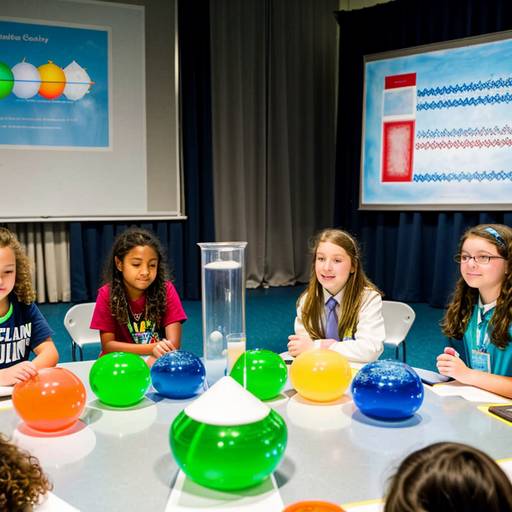
In this 5th-grade science lesson, students will explore the concept of matter, focusing on the three states: solids, liquids, and gases. The lesson begins with a discussion about the importance of matter in everyday life, followed by direct instruction that defines and describes the properties of each state. Using hands-on activities, students observe ice as a solid, water as a liquid, and air in inflated balloons. They record their observations in science journals.
On the second day, students recap their findings and learn about phase changes, such as melting and evaporation. They conduct an experiment to observe the melting of ice on a hot plate, measuring temperature changes and documenting their observations. The lesson concludes with a class discussion where students share their insights and reflect on the conservation of mass during state changes. Assessments will be based on participation, journal entries, and students' ability to explain the properties and transitions of matter. Extension activities may include exploring additional states of matter or conducting simple home experiments related to liquids.
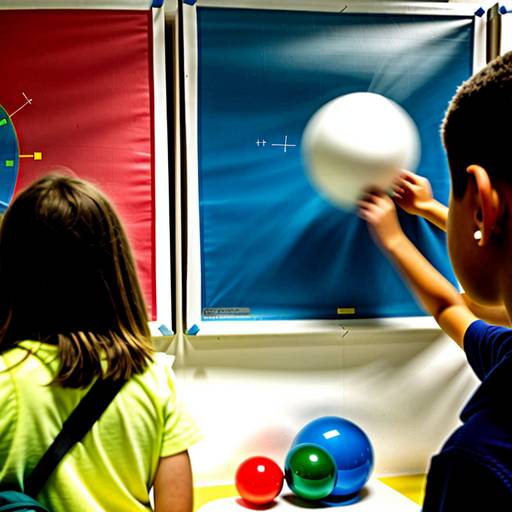
In this 5th-grade science lesson focused on physical science and motion, students will explore essential concepts such as speed, direction, force, and gravity through hands-on activities. The lesson begins with a discussion to engage students and introduce key terminology. In the first activity, small groups will conduct experiments with toy cars or balls on a ramp, measuring their speed and distance. They will perform multiple trials to gather data, fostering observation and discussion about how various factors influence motion.
The second activity will involve adding weights to the cars or balls, allowing students to investigate how additional force impacts movement, speed, and distance. After completing both activities, groups will present their findings, followed by a reflective writing exercise in their science journals to cement their understanding. The lesson will include assessments based on group discussions, data collection, and reflective writing. Extensions may include research on notable scientists related to motion or a day dedicated to testing different movements. Ultimately, students will gain a fundamental understanding of how forces affect motion through active engagement and experimentation.
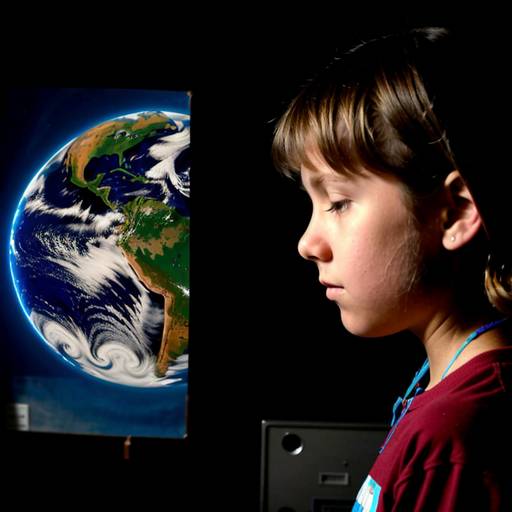
In this 5th-grade science lesson, students will explore the properties and changes of matter, focusing on the three states: solid, liquid, and gas. The lesson begins with a discussion to define matter and its different states, followed by group activities where students observe various materials' physical properties. They will then engage in hands-on experiments to witness changes in states of matter through the melting of ice in warm water and the expansion and contraction of air in balloons. Through these activities, students will learn to identify characteristics of matter and understand how temperature affects state changes. The lesson concludes with a recap of key concepts and a homework assignment where students will find real-life examples of matter changing states at home. Assessment will be based on observations during group work and the quality of the homework assignment. Safety precautions will be emphasized throughout the activities.
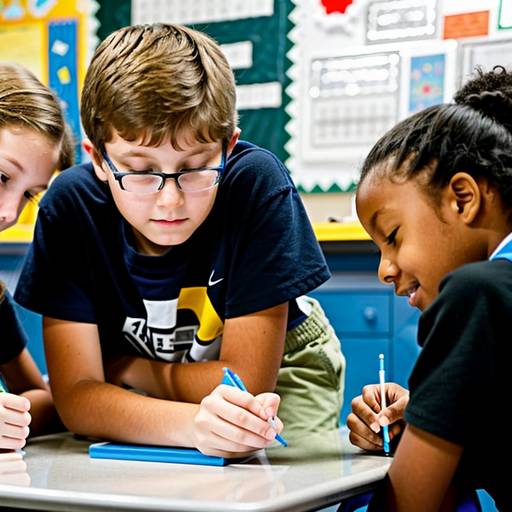
In this 5th-grade physical science lesson, students will explore the concepts of forces, focusing on push and pull, and how these forces affect the motion of objects. The lesson begins with a discussion to assess prior knowledge, followed by a mini-lecture that introduces key vocabulary and principles, including balanced and unbalanced forces.
Students will engage in hands-on activities where they experiment with toy cars on different surfaces using ramps to observe the impact of friction on motion. They will also measure the force required to pull various objects across surfaces using spring scales. After conducting their experiments, students will regroup to discuss their findings, reinforcing the understanding of friction's role as an opposing force.
The lesson concludes with a recap of the key concepts and an assessment through a short quiz. Extensions encourage students to further observe forces in their environment at home. The lesson emphasizes collaboration and hands-on learning while allowing for differentiation based on individual student needs.
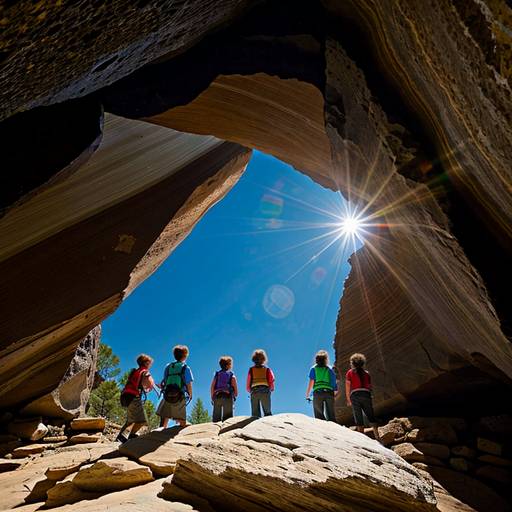
This lesson plan focuses on teaching 5th-grade students about different types of rocks and the rock cycle. The objectives include helping students identify and classify igneous, sedimentary, and metamorphic rocks, as well as understanding the processes involved in the rock cycle.
The lesson begins with an engaging discussion to activate prior knowledge about rocks, followed by a brief video introduction (if time permits). Students then work in small groups to observe and classify rock samples using magnifying glasses and worksheets. Afterward, they create posters illustrating the rock cycle, incorporating their categorized rocks and explaining the formation processes for each type.
Each group presents their poster to the class, fostering collaborative learning and discussion. The lesson concludes with a class summary, where students reflect on what they learned through an exit ticket. The assessment includes observing group participation, evaluating worksheets, and reviewing exit tickets for comprehension.
Extensions may involve field trips to geological sites or creating a classroom rock collection. Differentiation strategies are included to support diverse learners and encourage advanced students to explore local geology further. Overall, the lesson aims to engage students and foster a deeper understanding of Earth Science and the nature of rocks.
In this 60-minute Earth Science lesson for 5th graders, students will explore the fascinating world of rocks by learning about the three main types: igneous, sedimentary, and metamorphic. The lesson begins with a class discussion to gauge prior knowledge and spark interest. Students will be introduced to the rock cycle through a visual diagram, which illustrates how rocks transform from one type to another.
Following the instruction, students will engage in a hands-on activity where they will work in small groups to observe and classify a variety of rock samples using magnifying glasses and worksheets. They will analyze the characteristics of each rock, identify its type, and present their findings to the class.
The session will conclude with a discussion about the significance of rocks in everyday life and the natural environment. Students will then complete a short quiz to assess their understanding of the material. To reinforce learning, they will have a homework assignment to find and bring in a rock from their surroundings for further exploration in the next class. Differentiation strategies are included to support all learners.

This 5th-grade science lesson focuses on teaching students about stars and their characteristics within the field of astronomy. The session begins with an engaging introduction featuring stunning visuals of stars to spark curiosity and elicit prior knowledge from students.
Through direct instruction, students learn about different types of stars, their life cycles, and the concept of light years as a measure of distance in space. In a hands-on group activity, students create models of various types of stars using Styrofoam balls and craft supplies, while also preparing to present their findings to the class.
The lesson concludes with a reflective discussion that reinforces key concepts, and students complete an exit ticket to express one new fact learned and one lingering question about astronomy. Assessment includes evaluating group models and presentations, with opportunities for extensions through individual projects or field trips to enhance learning. Overall, this lesson not only builds knowledge but also fosters curiosity and teamwork among students.
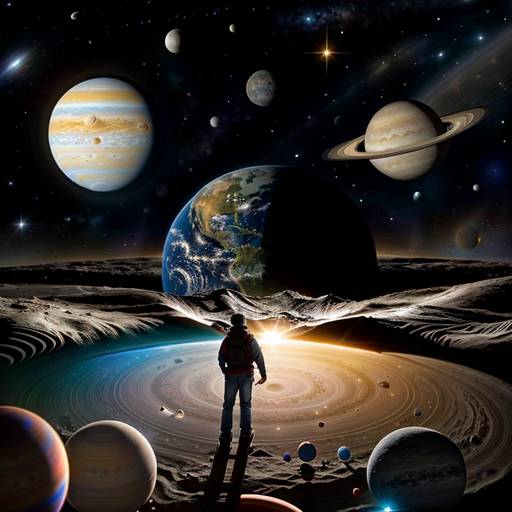
In this 5th-grade science lesson, students will explore the solar system, gaining insights into the Sun, eight planets, and various celestial bodies. The lesson begins with engaging multimedia resources to spark interest, followed by a presentation that covers the characteristics of each planet. Students will work in small groups to research a specific planet and present their findings to the class, promoting collaboration and communication skills. They will then create a scale model of the solar system, using materials like Styrofoam balls or clay to represent the planets and their distances from the Sun. The lesson concludes with a class discussion to reflect on their learning and an optional writing assignment where students can express their interest in visiting a particular planet. Assessment will focus on participation, presentation accuracy, and the creativity of the models. Extensions include virtual field trips and discussions about space exploration to further enhance their understanding of astronomy.
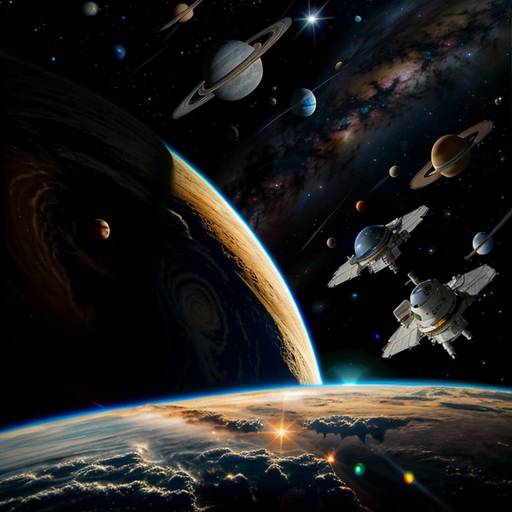
This 5th-grade science lesson focuses on astronomy and space exploration, aiming to enrich students' understanding of celestial bodies within our solar system. The session begins with an engaging discussion that invites students to share their thoughts about space, followed by a presentation highlighting key concepts through visual aids, including images of planets and stars.
Students are then divided into small groups, each assigned a specific planet or star to research. They gather facts about their assigned celestial body and prepare both a short presentation and a creative 3D model using various art supplies. This hands-on activity encourages teamwork, creativity, and critical thinking.
After completing their models, each group presents their findings to the class, fostering interactive learning through questions and discussions. The lesson concludes with a reflection on the importance of space exploration, paired with an exit ticket where students share one new insight and one lingering question about space.
Assessment focuses on student participation, the quality of presentations and models, and individual reflections. Additional homework and possible field trip extensions are suggested to further enhance students' learning experiences in the fascinating realm of space.
This 5th-grade physical science lesson focuses on the concepts of motion and forces. Students begin by discussing their observations of movement in everyday life and learn key terms such as motion, force, and friction. The lesson includes direct instruction on how motion is defined and measured and how different forces influence an object's speed and direction.
In small groups, students conduct hands-on experiments using toy cars, ramps, and weights to explore how various factors, such as mass and height, affect motion. They measure the distance and time taken for cars to travel down ramps, recording their findings.
After the experiments, students engage in a guided class discussion to share their observations and analyze the impact of forces on motion, encouraging critical thinking about real-world applications. The lesson concludes with a reflection assignment, prompting students to connect the concepts of motion and forces to their own experiences. Overall, this interactive lesson provides an engaging way for students to grasp fundamental physical science principles.