
Filters
Level
Grade
Subject
Subject Area
Subject Topic
Standard(s)
Audience
Keyword
DurationMinutes
5th Grade Science Lesson Plans

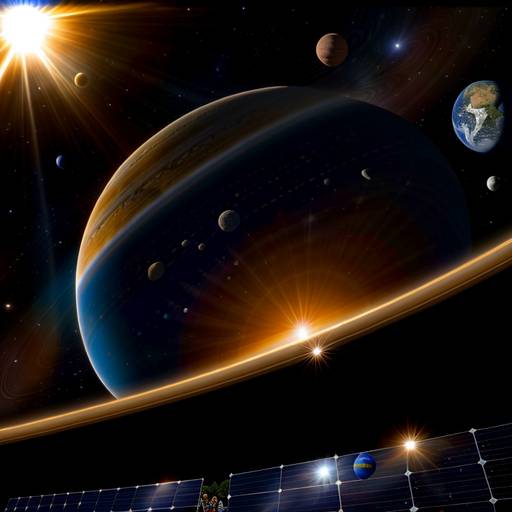
In this 5th-grade science lesson plan, students will explore the solar system and its celestial bodies through interactive and engaging activities. The goals of the lesson include helping students identify the planets in order from the Sun, describing key features of selected planets, understanding the concept of light years, and discussing the significance of space exploration missions.
The lesson begins with a video introduction to the solar system, followed by a discussion to gauge students’ prior knowledge. Educators will present key facts about the solar system, emphasizing the characteristics of the eight planets and other celestial objects.
Students will then work in small groups, each assigned a specific planet or celestial body. They will conduct research, create informative posters with visuals and interesting facts, and present their findings to the class. The lesson wraps up with a reflection on the importance of space exploration and the insights gained during the activities.
Assessment will focus on participation, creativity in the group posters, and understanding of the material as demonstrated through presentations and possible follow-up quizzes. Extensions to the lesson may include model building and star-gazing nights to further enhance student engagement with the topic.
In this 5th-grade life science lesson, students will explore the major systems of the human body, including the skeletal, muscular, circulatory, respiratory, digestive, and nervous systems. The lesson begins with a brief introduction and engaging video to spark curiosity. Students will learn about each body's system and its functions using diagrams and, if available, a skeleton model for visual support.
After instruction, students will work in small groups, each assigned a specific body system. They will research, create a informative poster, and prepare a presentation that includes diagrams and interesting facts about their system. Each group will present their findings to the class, promoting peer learning and discussion.
The lesson concludes with a recap of the systems and their roles in maintaining homeostasis. Students will have a fun homework assignment involving a crossword puzzle that reinforces the concepts covered during the lesson. Assessment will be based on participation, group presentations, and homework completion. Modifications and extensions are available for different learning needs, including a potential field trip or guest speaker to enhance the educational experience. Overall, the lesson aims to deepen students' understanding of human anatomy and its relevance to health.
In this 5th-grade science lesson, students will explore fundamental concepts of physical science, focusing on forces and motion. The lesson begins with an engaging video showcasing various forces in everyday life, followed by a class discussion where students share their observations of forces in action. Key concepts such as gravity, friction, and the distinction between push and pull are introduced with visual aids.
Students will then participate in a hands-on experiment where they work in small groups to investigate how adding weight affects the distance a toy car travels down a ramp. They will set up their ramps, conduct trials, record data, and analyze their results. Afterward, groups will share their findings with the class, discussing the implications of their experiments and how different forces impacted their outcomes.
The lesson encourages collaboration and critical thinking, as students reflect in their science journals on their experiments and learn how understanding forces influences their daily lives. Extensions for advanced learners are included to deepen their understanding of balanced and unbalanced forces, along with a homework assignment that reinforces real-world applications of the concepts learned. Overall, this lesson fosters a hands-on, inquiry-based approach to learning about forces in physical science.
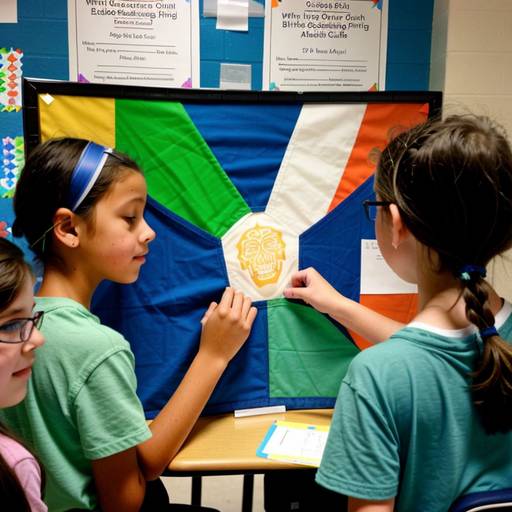
The lesson plan focuses on introducing 5th-grade students to the major systems of the human body, specifically the circulatory, respiratory, muscular, and skeletal systems. Over the course of 60 minutes, students will engage in a variety of activities aimed at understanding how these systems function and work together to maintain health and homeostasis.
The lesson begins with a video introduction followed by a class discussion to activate prior knowledge. Direct instruction includes an overview of each system, illustrated with diagrams to enhance comprehension. Students then break into small groups to create posters highlighting the functions, parts, and interesting aspects of their assigned body system.
Hands-on activities enable students to experience the systems in action, such as using balloons to represent lungs in the respiratory system or straws to simulate blood flow in the circulatory system. The class concludes with group presentations and a discussion summarizing key concepts learned.
Assessment methods include evaluating group posters, reviewing individual handouts, and observing student participation during discussions and activities. Extensions of the lesson encourage further research on diseases related to body systems, while accommodations ensure that all students can effectively participate and learn. The overall goal is to foster engagement with life science and provide a foundational understanding of human biology.
In this 5th-grade science lesson, students will explore the solar system and the significance of space exploration through an engaging and interactive approach. The lesson begins with a discussion to spark curiosity about space, followed by a multimedia presentation that covers the eight planets, their characteristics, and the concepts of orbits and gravity. Students will also learn about important space missions and their contributions to our understanding of the universe.
The hands-on activity involves students working in small groups to create scale models of their assigned planet or celestial body, allowing them to apply what they have learned in a creative way. Each group will present their model and share interesting facts they discovered during their research. A concluding discussion will help reinforce key concepts, and students will complete a worksheet as a follow-up assignment to share their newfound knowledge.
This lesson fosters collaboration, critical thinking, and a passion for astronomy, while encouraging students to appreciate the wonders of space and the importance of ongoing exploration. Extensions such as field trips or guest speakers can further enhance their learning experience.
In this 5th-grade Earth science lesson, students will explore the rock cycle and the three main types of rocks: igneous, sedimentary, and metamorphic. The lesson begins with an engaging video introduction, followed by a discussion about different rock types and their characteristics. Students will then participate in a hands-on activity where they investigate rock samples, using magnifying glasses to observe their features and classify them. A creative project follows, in which students work in groups to create a mobile depicting the rock cycle, illustrating the processes that transform rocks. The lesson concludes with group presentations and reflections, along with an exit ticket to assess individual learning. Throughout the lesson, students are encouraged to collaborate and engage with the material, fostering a deeper understanding of geological processes. Extension opportunities include bringing in personal rock samples, planning field trips, and conducting research projects on geology.

This 5th-grade science lesson plan introduces students to the Solar System, focusing on the planets, their unique characteristics, and key concepts such as orbit, rotation, and revolution. The lesson begins with an engaging animated video and a class discussion to gauge prior knowledge. A PowerPoint presentation follows, providing essential information about each planet and other celestial bodies.
Students then work in groups to conduct research and create presentations about their assigned planet. In the second class period, they will create a scaled model of the Solar System using Styrofoam balls, painting and decorating their planets while understanding their position and distance from the Sun.
The lesson concludes with a gallery walk where students showcase their models and findings, encouraging questions and discussions. Assessment will be based on group presentations, participation, and the creativity of their models. Extensions include opportunities for storytelling or a virtual field trip, enhancing their learning experience and interest in astronomy.
In this 5th-grade science lesson, students will embark on an engaging exploration of stars and constellations. The lesson begins with a discussion to gauge prior knowledge, followed by a presentation that covers the formation, types, and life cycles of stars, as well as the significance of constellations in history.
Students will then participate in an interactive activity where they use star charts or apps to locate and learn about various constellations, sharing interesting facts in small groups. The lesson continues with a creative component, where each student designs their own constellation and invents a story or myth to explain it.
In the conclusion, students share their creations with the class, fostering a reflective discussion about what they learned. For homework, they are encouraged to stargaze with family and report on their observations of constellations. The lesson assesses participation, creativity, and understanding through observations and presentation of their work, catering to diverse learning styles and promoting collaboration.
This 5th Grade Physical Science lesson focuses on understanding the concepts of forces and motion, specifically exploring push and pull through engaging activities. Students begin by discussing everyday examples of forces before learning about contact and non-contact forces, as well as the concepts of balanced and unbalanced forces. In small groups, they conduct hands-on experiments using various objects and a ramp to observe how distance traveled is influenced by factors like weight and the incline of the ramp. Each group records their findings and shares insights with the class, promoting collaborative learning and discussion. The lesson concludes with a summary of key concepts and encourages students to reflect on what they learned. Assessment includes monitoring participation and reviewing group presentations, with extensions available for further exploration through virtual simulations or individual projects. Modifications are provided to support diverse learners, ensuring an inclusive and interactive educational experience.
This 5th-grade life science lesson focuses on the major systems of the human body, including the circulatory, respiratory, digestive, and skeletal systems. Students will begin by engaging in a discussion about what they already know, followed by direct instruction using an interactive poster to introduce each system and its key functions. They will then work in small groups to create informative posters highlighting the organs and functions of their assigned body system, incorporating creativity and collaboration. Each group will present their findings to the class, fostering discussion and questions to enhance understanding. The lesson concludes with a reflection on the interconnectedness of the body systems and the opportunity for students to share new facts they learned. Assessment will include evaluating group participation and poster content, along with an exit ticket to gauge individual understanding. Accommodations will be made to support diverse learning needs, ensuring accessibility for all students while promoting curiosity and comprehension of the human body.