
Filters
Level
Grade
Subject
Subject Area
Subject Topic
Standard(s)
Audience
Keyword
DurationMinutes
5th Grade Music Lesson Plans


In this 5th Grade music lesson, students will explore the evolution of music through key historical periods: Baroque, Classical, Romantic, and Contemporary. The class will begin with an introductory discussion on music and its development over time. Students will receive a brief overview of each period, focusing on defining characteristics, notable composers, and their distinct styles.
Following this, students will engage in guided listening activities with audio examples from each period, filling out a listening guide that prompts them to analyze emotions, instrumentation, and connections to other music they know.
In the latter part of the lesson, students will have the opportunity to create their own musical phrase or composition inspired by one of the styles studied, using classroom instruments or composition software. The lesson will conclude with students sharing their compositions and reflecting on the influence of different musical styles.
Assessment will involve participation in discussions, completion of the listening guide, and creativity displayed in the composition activity. The lesson also offers extensions such as creating a timeline of musical periods and researching a composer to present to the class. This engaging lesson blends historical context, critical listening, and creative expression, fostering a deeper appreciation for music's rich history.
In this engaging 5th-grade music lesson, students will explore the concept of music dynamics, focusing on terminology such as *piano* (soft), *forte* (loud), *mezzo piano* (moderately soft), *mezzo forte* (moderately loud), *crescendo*, and *decrescendo*. The lesson begins with an introduction to dynamics, featuring audio examples to illustrate each term. Students will then be divided into groups, where they will create and perform short musical pieces that highlight their assigned dynamic term, fostering teamwork and creativity. Following the performances, a dynamic movement activity will allow students to embody the different dynamics through physical movement in response to music. The lesson concludes with a discussion that encourages reflection on the emotional impact of dynamics in music. Students will receive handouts summarizing key terms, and homework will involve listening to a favorite song to identify dynamics, reinforcing their learning experience. Assessment will focus on group performances, participation, and understanding of the concepts shared during the lesson.
In this engaging 5th-grade music lesson, students will delve into various musical styles and their historical significance. They will explore genres such as Classical, Jazz, Rock, and Folk through listening activities that highlight key instruments, emotions, and influential composers.
After an introduction to the concept of musical styles, students will work in small groups to research their assigned genre, focusing on its characteristics, notable artists, and historical context. Each group will prepare a brief presentation to share their discoveries with the class.
Additionally, students will create a visual representation of their musical style, such as a poster or a song, to enhance their understanding and creativity. The lesson concludes with group presentations, fostering discussion about music's role in reflecting society and its evolution over time. Students will be assessed on participation, collaboration, and the quality of their presentations. Extensions and adaptations are provided to cater to diverse learning needs, ensuring an inclusive and enriching experience.
In this 5th-grade music appreciation lesson, students explore a variety of music genres, enhancing their understanding and appreciation of different musical styles and cultural diversity. The lesson begins with a warm-up discussion about personal music preferences, followed by listening stations where students rotate through different genres, taking notes on their characteristics and what they enjoy about each. After the listening activity, students engage in a group discussion to share their findings and insights.
Next, they work in small groups to create presentations about a chosen music genre, focusing on its description, notable artists, characteristics, cultural significance, and history. The lesson concludes with group presentations, fostering collaboration and creativity. Throughout the activities, students participate in discussions, reinforcing their learning and encouraging an appreciation for the diverse world of music. Assessment involves evaluating participation and the quality of group presentations. Extensions encourage further exploration of music through playlists and themed days, promoting ongoing engagement with music appreciation.

In this 5th-grade music appreciation lesson, students will explore various genres of music from around the world, enhancing their active listening skills and understanding of musical elements. The class will begin with a warm-up discussion about favorite music styles, leading into a listening activity where students hear short clips spanning classical, jazz, rock, folk, and world music. After each clip, students will engage in discussions to identify instruments, emotions, and imagery elicited by the music.
Next, students will work in small groups to focus on one specific genre, creating a brief presentation to share insights with the class. This collaborative effort will foster teamwork and deeper analysis of musical characteristics. Following the group activity, students will complete a guided reflection worksheet with prompts that encourage personal connections to the music they listened to, along with the option to express their thoughts artistically through drawing or collaging.
The lesson will conclude with a class share-out, where students can discuss their reflections and artistic work. Overall, the goal is to nurture an appreciation for music, develop listening skills, and encourage creative expression while connecting with different cultural backgrounds through sound. Assessment will involve observation of participation, review of worksheets, and evaluation of artistic expressions. Follow-up activities will further allow students to engage with music on a personal level, including creating playlists and sharing music from diverse cultures.
In this 5th-grade music lesson, students will explore the concept of rhythm through a combination of clapping, movement, and percussion instruments. The session will begin with a clapping exercise to warm up and introduce the idea of rhythm, followed by a discussion on its importance in music and daily life. Students will learn to read basic rhythmic notations including quarter notes, eighth notes, half notes, and rests through guided practice.
The lesson includes interactive stations where students engage in body percussion, play percussion instruments, create movement sequences, and compose their own rhythmic patterns in small groups. After rotating through the stations, students will have the opportunity to share their creations with the class, promoting collaboration and creativity.
The lesson concludes with a reflection on what they learned and how they can incorporate rhythm into their everyday lives. Assessment will be based on observation during activities and evaluation of group presentations. Additionally, there are suggestions for extensions to further develop students' understanding of rhythm, including more complex patterns.

In this 5th-grade music appreciation lesson, students will explore music from various cultures around the world. The session begins with a discussion on the significance of music in different societies, encouraging students to share their experiences with global music. Students will then engage in a listening activity featuring audio clips of African drumming, Indian classical music, and Brazilian samba, where they will learn about the unique instruments and styles associated with each culture.
Following the listening segments, a class discussion will allow students to express their preferences and feelings about the music, fostering an understanding of how music reflects emotions and cultural stories. To conclude the lesson, students will create drawings that represent their chosen musical style and share their artwork with the class. Overall, the lesson aims to promote cultural appreciation through music while enhancing students' listening skills and creative expression.
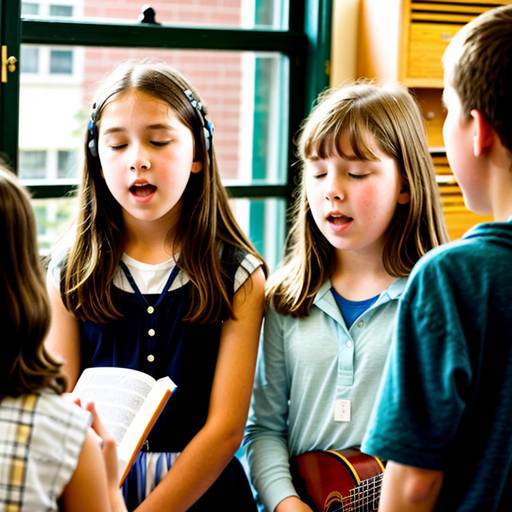
In this 5th-grade music lesson, students will explore the concepts of singing and harmony. The session begins with an introduction to the importance of singing and a basic explanation of harmony and unison. After a vocal warm-up, students will learn a simple song, “Twinkle, Twinkle, Little Star,” focusing on singing it in unison. Once comfortable, they will be introduced to basic harmony parts and practice singing in both unison and harmony in groups.
Students will then break into small groups to create their own harmonies for a familiar melody, fostering creativity and collaboration. Each group will present their unique harmonized versions to the class, allowing for positive feedback and reflection on the experience. The lesson emphasizes teamwork, musical development, and appreciation for the role of harmony in music, culminating in an engaging and interactive atmosphere. Optional extensions encourage further exploration of harmony in well-known songs and the use of recording technology.
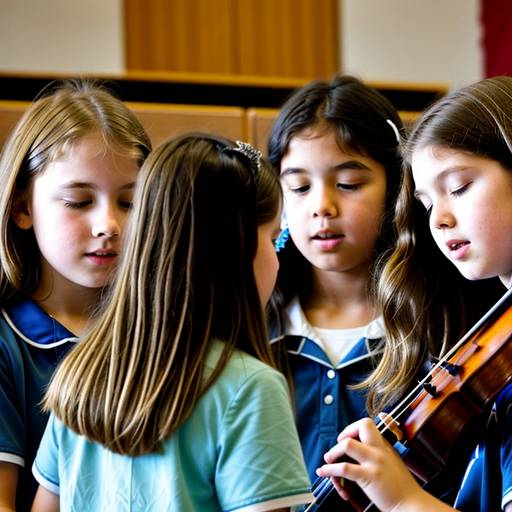
This 5th-grade music lesson focuses on enhancing students' singing and performance skills through a combination of vocal techniques and movement. The session begins with warm-up exercises to improve breathing and posture, followed by a discussion on dynamics and expression in music. Students will learn a designated age-appropriate song, practicing it line by line while emphasizing vocal techniques and group cohesion.
Incorporating simple movements that align with the song's lyrics and mood, students will deepen their understanding of rhythm and expression. The lesson includes small group rehearsals to foster teamwork and allow for personalized guidance. The class culminates in a full-group performance, where students will showcase their learned skills, integrating movement and vocal expression.
Reflection is an essential part of the lesson, encouraging students to share their experiences and provide positive feedback to one another. Assessment will involve observing participation and technique during rehearsals and the final performance. Extension activities may involve rewriting song lyrics or incorporating simple instruments. Differentiation strategies will be used to accommodate varied musical backgrounds and abilities. Overall, students will develop confidence in their performance abilities while enjoying the collaborative process of making music together.
In this engaging 5th-grade music lesson, students will explore the evolution of music through various historical periods, including Baroque, Classical, Romantic, and 20th Century. The lesson begins with a discussion on the significance of music and a visual overview of the different eras. Students will listen to audio clips representative of each period and participate in group discussions to identify key characteristics and notable composers.
Following the listening activity, students will work in small groups to create collaborative timelines that outline the distinctive features of each music period, highlighting important composers and representative musical works. Each group will then present their timeline to the class, fostering a collaborative learning environment.
The lesson concludes with a recap of the key concepts learned and an exit ticket activity, allowing students to reflect on one new fact and any remaining questions about music history. Assessment will be based on group participation, creativity in the timeline presentations, and understanding demonstrated through the exit tickets. Optional extensions encourage further exploration of specific composers and contemporary connections to classical music.