
Filters
Level
Grade
Subject
Subject Area
Subject Topic
Standard(s)
Audience
Keyword
DurationMinutes
5th Grade Language Arts Lesson Plans


This 5th-grade language arts lesson focuses on enhancing reading fluency through engaging activities and group discussions. Students begin by discussing their experiences with enjoyable reading and what fluency entails. They listen to a fluent reading sample and participate in a choral reading of a selected passage to understand rhythm and expression.
During guided practice, the teacher models fluent reading, followed by a group discussion to assess comprehension of the text. In independent practice, students pair up to read the text aloud to one another, tracking their words per minute and focusing on accuracy and expression during multiple readings.
The lesson concludes with a group reflection where students discuss their reading experiences and strategies for tackling difficult words. An exit ticket activity reinforces learning, as each student notes one new insight about reading fluency. Assessment includes observing student interactions during reading, reviewing progress charts, and evaluating exit ticket responses. Differentiation strategies ensure that all students, regardless of their reading levels, receive appropriate support and challenge.
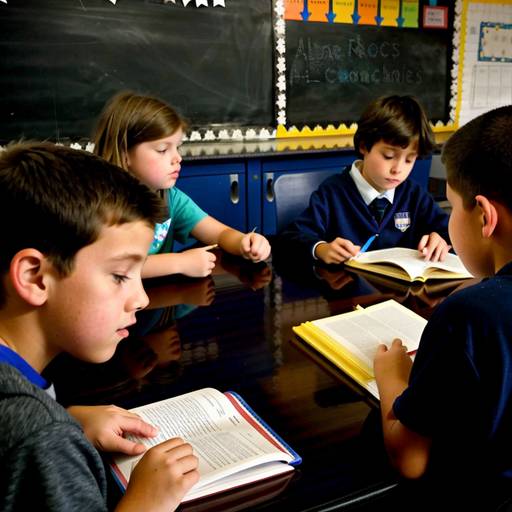
This 5th-grade language arts lesson focuses on enhancing reading fluency through various engaging activities. Students begin by exploring the concept of reading fluency, including its components of rate, accuracy, and prosody. The teacher models fluent reading and introduces strategies such as re-reading, partner reading, and reading aloud with expression.
During guided practice, students pair up to read selected texts while providing feedback to each other, and they track their reading times to monitor progress. The lesson then shifts to independent practice through reader’s theater, where students rehearse and perform scripts in small groups, focusing on expression and fluency.
The lesson concludes with group performances, allowing students to showcase their skills while receiving positive feedback from their peers. Reflection on the benefits of fluency practice reinforces the importance of ongoing reading at home. Differentiation strategies are included to support diverse learners, ensuring that all students can improve their reading fluency in a collaborative and creative environment.
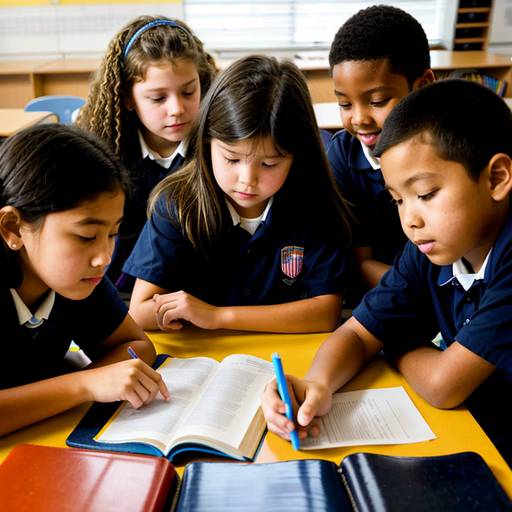
The lesson plan focuses on helping 5th-grade students understand the fundamental components of sentence structure, including subjects, predicates, and objects. It begins with an engaging class discussion about what constitutes a good sentence, followed by direct instruction where the teacher explains and illustrates the parts of a sentence on chart paper.
Students then work in small groups to construct sentences using provided materials, presenting their creations to the class while identifying each part of the sentence. Following the group activity, students engage in independent practice through worksheets that focus on identifying components, correcting run-on sentences, and composing their own sentences.
The lesson wraps up with a summary discussion where students share their learning experiences. Assessment occurs through observation of group participation and the evaluation of completed worksheets. The plan also includes provisions for extensions and differentiation to accommodate varying student abilities, ensuring all learners can engage with the material. Finally, the teacher reflects on the lesson's effectiveness and areas for improvement based on student engagement and understanding.

In this 5th Grade Language Arts lesson, students will focus on enhancing their grammar and punctuation skills. The lesson begins with an engaging storytelling activity where students listen to a purposely mis-punctuated story, prompting discussions about the importance of clear writing. After reviewing essential grammar rules such as subject-verb agreement and the use of proper nouns, as well as the correct application of punctuation marks like periods, commas, question marks, and exclamation points, students participate in a group activity. They work collaboratively to identify and correct sentences on cards, reinforcing their understanding through teamwork.
Following guided practice, students complete a worksheet featuring a mix of exercises focused on grammar and punctuation, allowing for independent assessment of their understanding. The lesson concludes with a review of worksheet answers and reflections on new insights gained, ensuring students recognize the relevance of the skills learned.
To accommodate diverse learning needs, advanced learners are encouraged to engage in creative writing, while struggling learners receive targeted support. For homework, students will write a descriptive paragraph about their favorite hobby, applying proper grammar and punctuation techniques. Overall, the lesson promotes active participation and collaboration, fostering a deeper understanding of grammar and punctuation in writing.

In this 5th-grade language arts lesson, students will focus on improving their understanding of grammar and sentence structure. The session begins with a discussion about the importance of sentence construction, introducing key concepts such as fragments, run-on sentences, and types of sentences (simple, compound, and complex). Students will work in pairs to identify and correct errors in provided sentences on handouts.
Following guided practice, they will participate in a collaborative activity where they create posters using word cards to form a variety of complete sentences, showcasing both correct and incorrect structures. Groups will present their work, explaining their choices and thought processes. The lesson concludes with a brief class reflection on the concepts learned, and for homework, students will write a paragraph that includes different types of sentences, further solidifying their understanding. Adaptations will be provided for diverse learners, ensuring that all students can engage with and benefit from the material. The lesson emphasizes interactive learning and creative expression while reinforcing essential grammar skills.
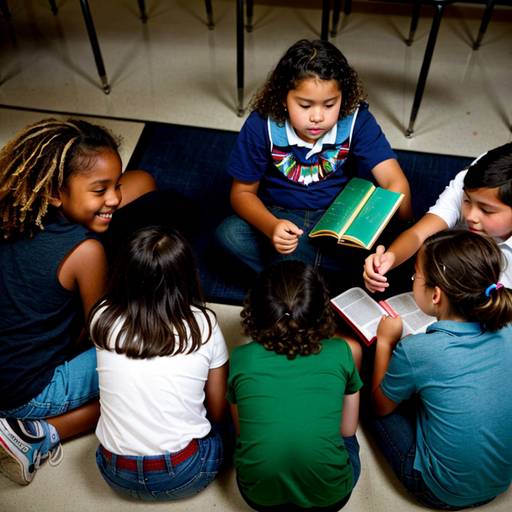
This lesson plan focuses on enhancing 5th-grade students' writing and creative expression through personal narratives. The two-class session begins with an introduction to storytelling and the value of personal experiences. Students engage in brainstorming activities using graphic organizers to outline their memories, identifying key elements such as setting, characters, emotions, and events. They then write their narratives, incorporating descriptive language to enrich their storytelling.
In the following class, the emphasis shifts to revising their work through peer review, where students provide and receive constructive feedback. They create illustrations to complement their narratives and prepare for sharing their stories with the class, practicing public speaking skills in a supportive environment. The lesson culminates with students presenting their narratives, fostering connections and engagement among peers. Overall, the plan emphasizes writing development, creativity, and collaboration while encouraging students to reflect on the significance of their personal experiences.

In this 5th-grade language arts lesson, students will explore the elements of storytelling as they create their own imaginative stories. The lesson begins with a discussion on the components of a good story, followed by a read-aloud of an engaging excerpt. Students will participate in brainstorming and outline activities, developing characters, settings, and plotlines using a structured template. After collaborating with a partner to refine their ideas, each student will independently draft their story in their journals, focusing on using descriptive language. The lesson concludes with a sharing session where students can present their ideas and favorite excerpts to the class. Assessment will involve reviewing the story templates and drafts to provide feedback on creativity and storytelling elements. Extension activities will involve illustrating scenes from their stories, and differentiation will accommodate varying skill levels among students.

In this 5th-grade Language Arts lesson, students explore the essential rules of capitalization and their significance in writing. The lesson begins with a discussion on why capitalization matters, followed by direct instruction on key rules, such as capitalizing the first word in a sentence, proper nouns, days, months, and the pronoun "I." Students then engage in guided practice by correcting capitalization errors in a provided short story excerpt, promoting teamwork and collaborative learning. For independent practice, they complete a worksheet with fill-in-the-blank and multiple-choice questions on capitalization rules. The lesson concludes with a review of the key concepts, allowing students to share examples of their writing. Assessment is conducted through observation of participation and evaluation of the worksheets, while an extension activity encourages students to write a paragraph about their favorite holiday, applying their capitalization skills.
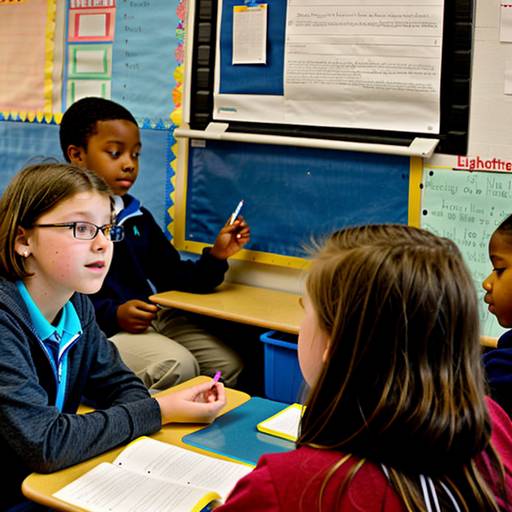
In this 5th grade Language Arts lesson, students will learn about expository writing, focusing on its purpose and structure. The session begins with a group discussion to gauge students’ prior knowledge, followed by direct instruction on the key components: main idea, supporting details, and conclusion. Students will participate in guided practice by filling out graphic organizers for a chosen topic, then move on to independent practice to write their own expository paragraphs. The lesson concludes with student presentations, where classmates receive constructive feedback. Assessment will be based on the clarity and coherence of their writing. Differentiation strategies are included to support varying skill levels, and extension activities encourage further exploration of research tools for future writing assignments.
This 5th-grade language arts lesson focuses on enhancing students’ reading comprehension skills through the exploration of key story elements, including characters, setting, plot, conflict, and resolution. The lesson begins with an engaging discussion about favorite stories to spark interest, followed by direct instruction on identifying story elements using a selected short story.
Students participate in guided reading, filling out graphic organizers as the class discusses each story element. Afterward, they work independently to answer comprehension questions while referencing the text. The lesson concludes with a review of answers and a reflective exit ticket activity, allowing students to express new insights gained from the lesson. Differentiation strategies are included to support varying skill levels, and follow-up activities encourage creativity through writing and performance. Overall, the lesson aims to build foundational reading skills and foster a deeper understanding of literature.