
Filters
Level
Grade
Subject
Subject Area
Subject Topic
Standard(s)
Audience
Keyword
DurationMinutes
4th Grade Physical Science Lesson Plans

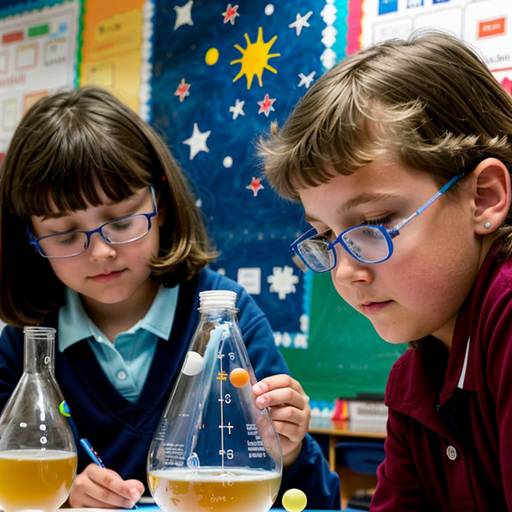
In this 4th-grade science lesson, students will explore the three states of matter: solids, liquids, and gases. They will engage in hands-on activities at various stations that allow them to observe and categorize different materials based on their properties. At the solid station, students will examine various objects to identify characteristics such as hardness and shape. At the liquid station, they will measure and pour liquids to observe how they take the shape of their containers. The gas station will include an activity with a balloon filled with air, helping students understand the concept of gas filling space.
The lesson will also include a demonstration where students observe water changing from a liquid to a gas when heated, facilitating a discussion on how states can change due to temperature. Through participation in group activities and class discussions, students will enhance their understanding of matter and its properties. They will conclude the lesson by writing an exit ticket that summarizes their learning and any remaining questions. Extensions, such as finding examples of each state of matter at home and engaging in interactive games, provide opportunities for further exploration and reinforcement of the concepts. Adaptations will be made to ensure all students can engage with the material effectively.
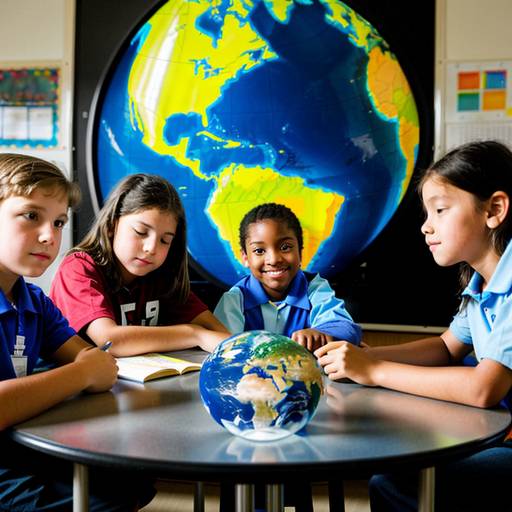
This 4th-grade lesson plan focuses on understanding forces and energy in the context of physical science. The objectives include introducing students to kinetic and potential energy, allowing them to investigate how energy transfers through objects. The lesson begins with an engaging demonstration of a toy car on a ramp, followed by a class discussion that connects these concepts to real-world examples.
Students break into small groups to conduct experiments with toy cars, measuring ramp heights, distances traveled, and time taken to analyze the relationship between potential energy and kinetic energy. They document their findings and create charts to visualize the data.
The lesson concludes with group presentations, where students share their observations and discuss trends in their results. Reflective discussions emphasize the importance of energy in everyday life. Assessment includes evaluating group presentations and a follow-up quiz to gauge individual understanding. Extensions encourage students to observe and report examples of energy in their surroundings. Overall, the lesson fosters active learning through hands-on activities and collaborative exploration of key physical science concepts.

This 4th-grade physical science lesson focuses on the concepts of motion, force, speed, and the effects of different surfaces on the movement of objects. The class begins with an engaging discussion about transportation and the factors that influence speed, followed by definitions of key terms. Students are then divided into small groups to conduct a hands-on experiment using toy cars and ramps set up on various surface materials. They will roll the cars down the ramps, measure the distances traveled, and time how long it takes for each car to reach the bottom. After conducting multiple trials and recording their data, groups will create bar graphs to analyze their findings and identify patterns in how different surfaces affect motion. The lesson concludes with group presentations and a reflective writing activity, allowing students to summarize their understanding of the relationship between forces and motion. Assessment includes observation of engagement, evaluation of data collection, and review of exit tickets. Extension activities may involve creating reports on real-life applications of motion and planning a field trip to a science museum.
This lesson focuses on introducing 4th-grade students to the concept of matter and its three states: solid, liquid, and gas. Students will begin by discussing their existing knowledge of matter and learn about the characteristics that define each state. The lesson incorporates hands-on activities, where students observe a melting ice cube to witness the transition from solid to liquid, a teacher-led demonstration of boiling water to illustrate the change from liquid to gas, and an experiment with an inflated balloon to understand how gas occupies space.
Through these experiments, students will engage in active observation and reflection, encouraging them to articulate what they have learned about the properties of matter. They will complete worksheets to reinforce their understanding and share findings in group discussions. The lesson aims to help students grasp fundamental scientific concepts while promoting inquiry and critical thinking through exploration and experimentation.
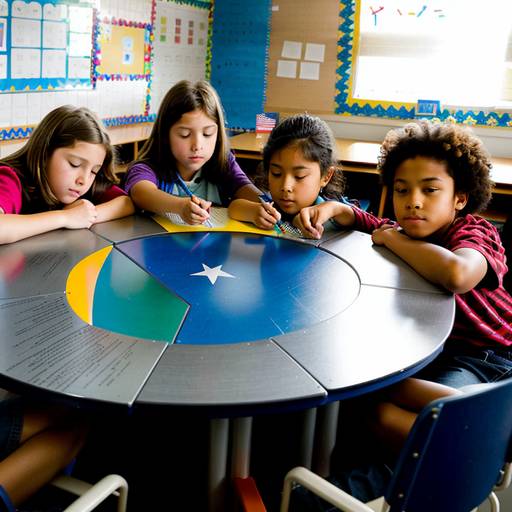
This 4th-grade science lesson focuses on helping students understand the fundamental concepts of forces and energy, specifically kinetic and potential energy, and their relation to motion. The lesson begins with an engaging discussion to elicit student ideas about how objects move. Through direct instruction, students learn about the definitions and real-life examples of kinetic and potential energy, as well as the role of forces like gravity.
Students participate in a hands-on experimentation activity in small groups, where they use toy cars, wooden ramps, and weights to explore how varying ramp heights and added weights affect motion and energy. They record their observations on worksheets to reinforce their understanding. The class reconvenes to share findings and discuss important concepts, solidifying their comprehension through collaborative learning.
The lesson concludes with a recap of the key concepts, encouraging students to identify examples of potential and kinetic energy in their everyday lives, as well as discussing the impact of forces on those energies. Assessment is based on worksheet completion and participation in discussions and activities, with extensions available for advanced learners to explore further connections to energy transformations and simple machines. This lesson aligns with Next Generation Science Standards and fosters an engaging and interactive learning environment.

This lesson plan is designed for 4th-grade students to explore the concept of forces, specifically focusing on pushes and pulls. Over the course of 60 minutes, students engage in discussions to identify everyday examples of forces, learn relevant vocabulary, and conduct hands-on experiments using toy cars and ramps. They will work in pairs to observe how different forces affect the motion of objects and measure their outcomes as they construct ramps at various angles.
Following this guided experimentation, students create visual charts to represent their findings and share their observations with the class, reinforcing their understanding of how forces impact motion. The lesson concludes with a review of key concepts and an exit ticket activity that allows students to reflect on what they have learned. Assessment involves evaluating student participation, group presentations, and individual comprehension through exit tickets. The plan also includes extensions that encourage students to connect forces to real-world applications, such as sports, and provides opportunities for further exploration. Overall, this lesson promotes active learning and scientific thinking through collaborative activities and experimentation.