
Filters
Level
Grade
Subject
Subject Area
Subject Topic
Standard(s)
Audience
Keyword
DurationMinutes
4th Grade Music Theory Lesson Plans


In this 4th-grade music lesson, students will explore rhythm through engaging activities that emphasize understanding and identifying basic rhythmic patterns, specifically focusing on quarter notes, eighth notes, and rests. The lesson begins with a warm-up clapping exercise to establish a foundational understanding of rhythmic notation and sound.
Following direct instruction that includes demonstrating rhythms with flashcards and writing patterns on the whiteboard, students will be divided into small groups. Each group will create their own rhythmic sequences on large sheets of paper, incorporating various note types. This collaborative effort promotes teamwork and creativity.
After the groups have developed their rhythms, they will take turns performing their compositions using claps and percussion instruments, while the rest of the class maintains a steady beat. Constructive feedback will be provided after each performance to encourage growth and confidence.
The lesson concludes with a class discussion reflecting on the challenges and successes of creating and performing rhythms. Overall, students will gain a deeper understanding of rhythm's crucial role in music, while enhancing their collaboration, performance skills, and critical thinking abilities. Assessment will be based on participation, creativity, and collaboration, with potential extension activities to further explore rhythmic concepts.
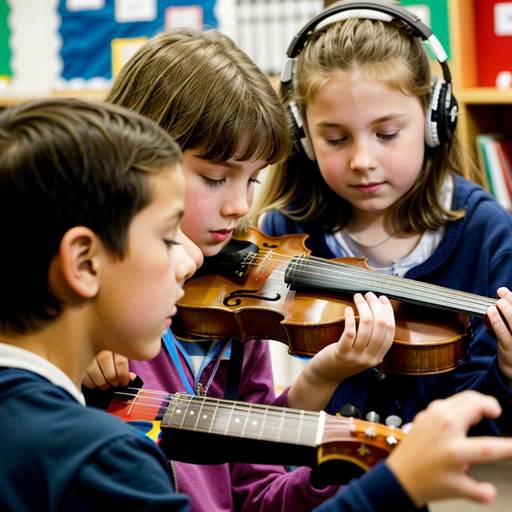
This lesson plan is designed for 4th-grade students to explore and understand the concept of dynamics in music, focusing on loudness and softness. The lesson begins with a discussion about dynamics, introducing essential terms and symbols such as piano (soft), forte (loud), crescendo (getting louder), and decrescendo (getting softer).
Students engage in active listening by analyzing a selection of musical pieces that showcase varied dynamics. Following this, they participate in a hands-on activity where they form small groups to create and perform their own short musical pieces, incorporating at least three different dynamics. Each group will present their work to the class, providing an opportunity for observation and feedback.
The lesson concludes with a class discussion on what students learned regarding dynamics and an individual worksheet activity that reinforces their understanding of the concepts. The lesson also includes extensions for homework, encouraging students to explore dynamics in their favorite songs, and accommodates different learning needs through tailored activities. Overall, this lesson encourages creativity, collaboration, and critical listening skills while fostering an appreciation for the nuances of musical expression.