
Filters
Level
Grade
Subject
Subject Area
Subject Topic
Standard(s)
Audience
Keyword
DurationMinutes
4th Grade Music Lesson Plans


In this 4th-grade music history lesson, students will embark on an exploration of significant composers throughout history, delving into their contributions and influence on music. The lesson begins with an engaging listening activity where students share their emotional responses to various musical excerpts from different composers, fostering a connection to the music.
Students will then work in small groups, each assigned a specific composer such as Beethoven, Bach, Mozart, or Tchaikovsky. They will research and present their findings, including key facts and notable works, while also incorporating a short audio clip of their composer’s music.
Following the presentations, students will engage in a creative composition activity, using percussion instruments to create short original pieces inspired by their assigned composer’s style. Each group will perform their creations, allowing the class to discuss and identify elements that reflect the influence of their specific composer.
The lesson concludes with a reflective discussion on the impact of these composers and how their music resonates today. Students will be evaluated based on their participation, creativity, and collaborative efforts, along with an opportunity for extension activities that encourage further exploration of music history.

In this 4th-grade music appreciation lesson, students will explore famous songs from various genres and eras while developing their critical listening and discussion skills. The lesson begins with an engaging conversation about favorite songs, leading into an analysis of selected tracks that evoke different emotions and convey meaningful messages. After listening to each song, the class will discuss their observations, including instrumentation and historical significance, fostering a deeper understanding of music's cultural impact.
Students will then create a poster featuring a song of their choice, encouraging them to express their personal connections and illustrate the song's themes. The lesson will culminate in presentations where students share their posters and insights with the class. Assessment will focus on participation in discussions and the creativity and thoughtfulness of their poster projects. An optional follow-up activity could involve a "Famous Songs Day," where students showcase their chosen songs through performance.
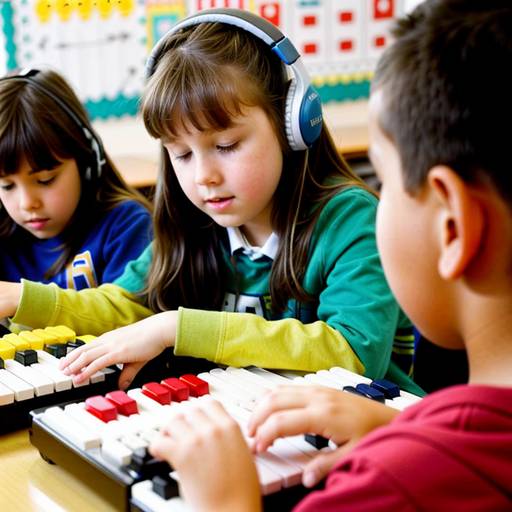
In this 4th-grade music lesson, students will explore the foundations of rhythm and music theory through engaging activities. The lesson begins with a warm-up call-and-response clapping exercise to build rhythmic awareness. Students will learn about key rhythmic notations—quarter notes, eighth notes, and half notes—while discussing their importance in music and daily life.
Following the introduction, learners will practice clapping exercises and then transition to using rhythm instruments in small groups. Each group will create an original 4-beat rhythm pattern, incorporating the learned notation. After practicing their compositions, groups will perform their rhythms for the class, showcasing their understanding of rhythm.
The lesson not only emphasizes collaboration and creativity but also encourages students to identify rhythms in their everyday lives, making the learning experience relevant and applicable. Assessment will be based on participation, rhythm accuracy, and creativity in group performances. Extension activities will provide further opportunities for exploration and complexity in rhythm.
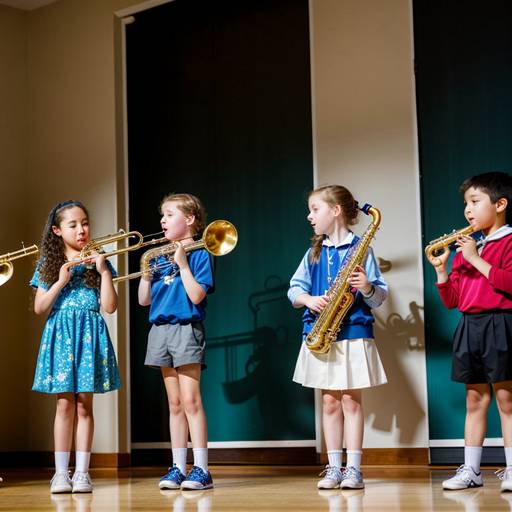
In this 4th-grade music lesson, students will explore wind instruments by engaging in a variety of activities designed to enhance their understanding and appreciation of these instruments. The lesson begins with a discussion on different wind instruments, followed by listening to audio clips that showcase their unique sounds.
Students will then break into small groups, each focusing on a specific wind instrument, where they will research its characteristics, sound production methods, and notable pieces of music. Each group will present their findings to the class, fostering collaboration and communication skills.
After presentations, students will have the opportunity to practice playing wind instruments, such as recorders, learning a simple melody together as an ensemble. The lesson concludes with a reflective discussion on what students learned about wind instruments and their experiences in the class. Through this engaging approach, students will develop a deeper understanding of wind instruments and improve their musical skills in a collaborative environment.
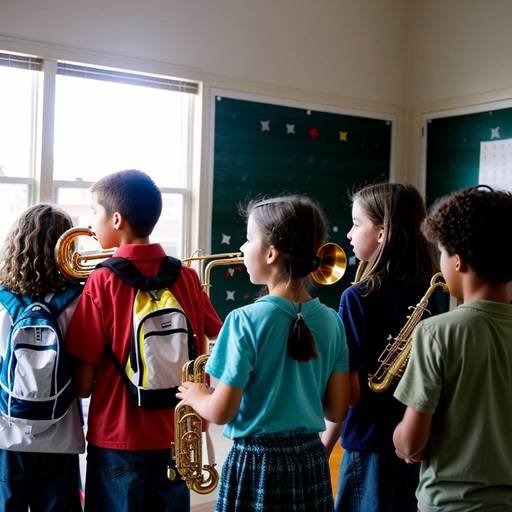
This 4th-grade music lesson focuses on introducing students to wind instruments and how they produce sound. The lesson begins with an interactive discussion, where students explore various wind instruments through pictures and share their prior knowledge. They then participate in a listening activity, where they hear audio clips of different instruments and articulate their impressions. The teacher demonstrates a wind instrument, explaining the technique for sound production, and if available, students can practice playing simple notes on recorders. A creative component allows students to illustrate their favorite wind instrument and identify various instruments discussed in class. The lesson concludes with a sharing session and a recap of key concepts. Assessment is based on student participation, completion of the worksheet, and ability to engage in sound production activities. Extensions include inviting a guest musician and organizing a "show and tell" day for further engagement with wind instruments. Overall, the lesson fosters appreciation and understanding of wind instruments in a fun and interactive manner.
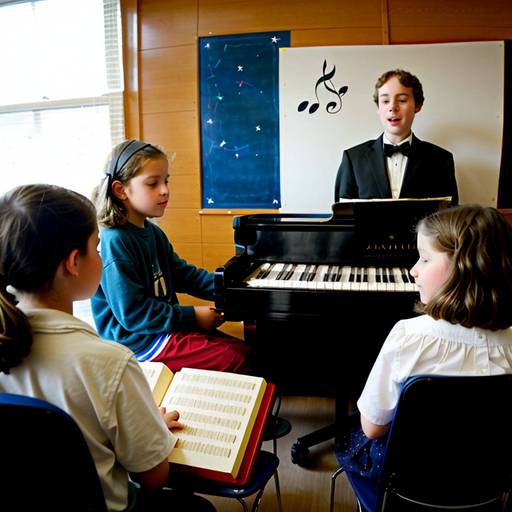
In this music history lesson for 4th-grade students, the focus is on exploring key composers from different musical periods. Students will engage in group activities to learn about composers like Johann Sebastian Bach, Ludwig van Beethoven, Wolfgang Amadeus Mozart, and Igor Stravinsky, listening to their music and discussing their unique styles and contributions to the field. Each group will then create a short musical piece inspired by the techniques of their chosen composer, using instruments or classroom supplies. After presenting their creations to the class, students will reflect on what they learned about music history. The lesson concludes with a recap and a preview of future topics, encouraging students to think critically about the impact of these composers on music. Accommodations will be made to support diverse learners, and extensions are offered for those interested in further research. Overall, the lesson aims to foster appreciation for music and enhance creative expression in a collaborative environment.
In this 4th-grade music lesson, students will explore the significance of composers throughout history and their influence on various musical styles. The lesson begins with an introduction to the role of composers and a discussion of different music eras, such as Classical and Jazz. Students will work in small groups to research specific composers, listen to their music, and share interesting facts with the class, creating a collaborative timeline of composers on a whiteboard. Following this, learners will listen to audio clips representing various musical styles and engage in discussions about the emotions and instruments associated with each piece. Finally, students will create their own short musical compositions using notation worksheets, inspired by the styles they have learned about. The session concludes with a sharing of their original pieces and a recap of the key concepts. Participation in discussions, completion of worksheets, and creativity in compositions will serve as assessment criteria. Extensions include a themed dress-up day and classroom displays to further enhance engagement and learning related to music history.
In this engaging 4th-grade music appreciation lesson, students explore various music genres from around the world. The lesson begins with a thoughtful discussion on the meaning of music and the different genres students enjoy. Through a hands-on guided listening activity, students visit genre stations, where they listen to audio clips and read fact sheets that highlight the characteristics, origins, and notable artists associated with each genre.
Following the listening activity, students engage in a group discussion to share their impressions and insights, deepening their understanding of the cultural significance of the different genres. In small groups, they then create visual posters that represent their assigned genre, showcasing key instruments, famous artists, and unique aspects of the music style. The lesson concludes with presentations from each group, allowing students to share their findings and fostering a sense of collective appreciation for the diverse landscape of music.
Assessment is based on group participation, the quality of the visual posters, and reflections on favorite genres. Extension activities encourage students to further explore their musical interests outside the classroom. This lesson effectively integrates music, cultural studies, art, and language skills, providing a comprehensive understanding of the richness of music from various cultures.
In this engaging 4th-grade music lesson, students will explore the concept of dynamics in music, focusing on the principles of loudness and softness. The lesson begins with an introduction to dynamic markings such as forte, piano, mezzo piano, mezzo forte, crescendo, and decrescendo, using discussions and interactive call-and-response exercises to reinforce understanding.
Students will then be divided into small groups, each assigned a specific dynamic marking. They will create short musical phrases using instruments or body percussion, incorporating the dynamics they’ve learned. After rehearsal, each group will present their compositions to the class, allowing for constructive feedback and reflection on their performances.
The lesson concludes with a recap of the key concepts and encourages students to listen for dynamics in their favorite music, promoting active engagement with music outside the classroom. Assessment will be based on participation, group performance, and optional written reflections on the dynamic elements found in music they encounter. This lesson provides a hands-on approach to understanding musical dynamics while fostering teamwork and creativity.
In this 4th-grade music appreciation lesson, students will explore various musical cultures from around the world through listening activities and discussions. The lesson begins with an introduction to the idea that music reflects cultural identity, followed by a series of listening stations where small groups will engage with diverse musical pieces. At each station, students will fill out a “Music Culture Passport” highlighting key details about the music, including instruments and emotional impact. After experiencing all the stations, the class will come together to discuss their findings, focusing on the similarities and differences in the music. Finally, students will reflect creatively by illustrating a scene related to their favorite cultural music. Assessment will be based on participation in discussions, completion of the passport handouts, and the creativity demonstrated in their illustrations. Optionally, students can further engage with music outside the classroom by sharing a favorite international song in future sessions. This lesson aims to cultivate an appreciation for global music and its cultural significance.