
Filters
Level
Grade
Subject
Subject Area
Subject Topic
Standard(s)
Audience
Keyword
DurationMinutes
3rd Grade Social Studies Lesson Plans

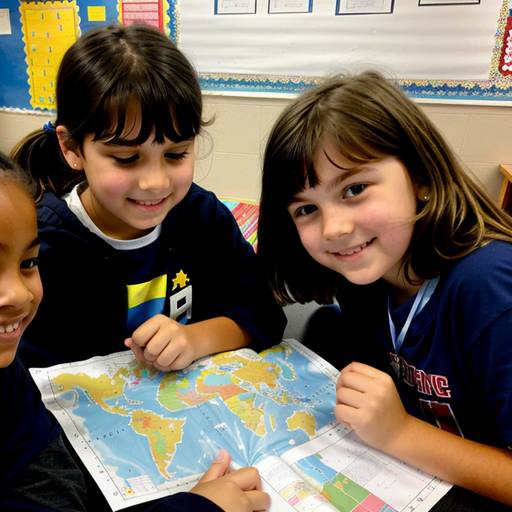
In this 3rd-grade social studies lesson focused on geography and maps, students will explore the essential components of maps, such as the legend, title, compass rose, and scale. The lesson begins with an engaging discussion about maps, where students share their experiences and observations. Using printed examples, the teacher demonstrates key map features and symbols.
During guided practice, students work in small groups to create a map of their classroom or playground, incorporating the components learned. Each group presents their map to the class, explaining their symbols and choices. Following this, students independently design their personal map of a familiar location, including essential map elements and writing a reflective paragraph about the importance of maps in daily life.
The lesson concludes with a review of key concepts and an exit ticket for each student to share their newfound knowledge. Assessment is conducted through group presentations and individual map evaluations. Extension activities may be provided for advanced learners, while additional support is available for those needing assistance. Overall, students will gain a foundational understanding of maps and their significance in navigating our world.
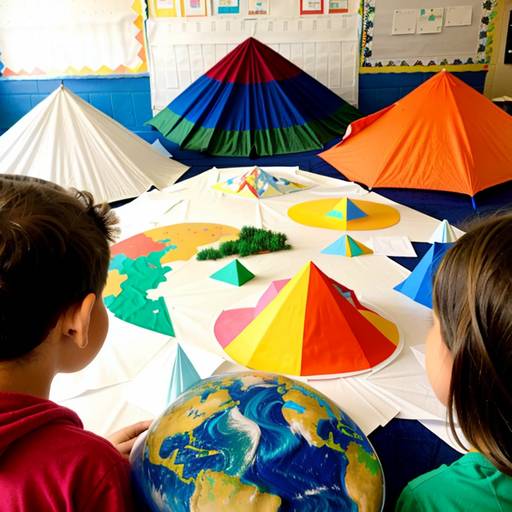
This lesson plan for 3rd graders focuses on geography and landforms, aiming to help students identify and understand various types of landforms, including mountains, valleys, plains, and rivers. The lesson begins with an interactive discussion about geography, where students share what they know about landforms. It then includes a presentation that defines each landform and discusses its importance to the environment and human life.
Students engage in a hands-on activity where they create their own maps using colored pencils to illustrate different landforms creatively. They work in small groups matching flashcards with definitions and pictures, reinforcing their learning through collaboration. The lesson concludes with a fun game of “Landform Bingo,” allowing students to test their knowledge in an engaging way.
Assessment is conducted through observation during activities and the evaluation of completed maps. To extend learning beyond the classroom, students are assigned a homework task to find pictures of landforms to share with their peers in the next session. Overall, the lesson promotes active participation, teamwork, and creativity while deepening students' understanding of landforms and their significance.
In this 3rd-grade social studies lesson, students explore the concept of timelines and their significance in both personal and historical contexts. The lesson begins with a discussion about timelines, accompanied by examples that highlight key events. Students learn about the components of a timeline and how to represent events chronologically.
Through guided practice, they identify and organize 3-5 significant events in their lives, using sticky notes to create a personal timeline. After illustrating their events, students have the opportunity to share their timelines with peers, fostering discussion about their unique histories. The lesson emphasizes creativity and individual expression while reinforcing important concepts about chronology. Assessment is conducted through observation and review of students' completed timelines. Extensions and adaptations are included to cater to diverse learners, promoting engagement and understanding for all students.
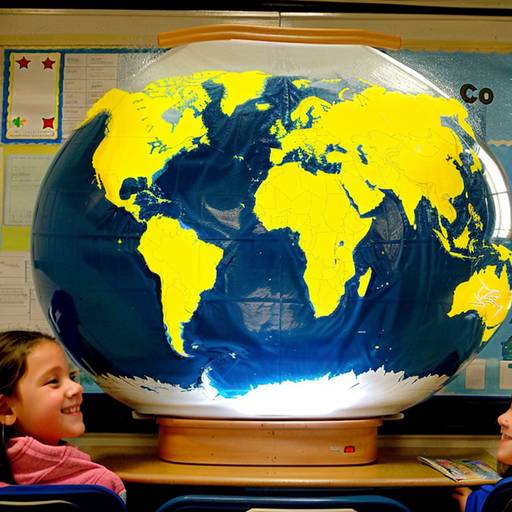
This lesson plan for 3rd-grade students focuses on introducing basic geography concepts and cultural awareness through the exploration of various countries. Over the course of an hour, students will learn to identify and locate different countries on a world map and discover key cultural aspects such as language, food, and traditions associated with selected countries. The lesson begins with a discussion about geography, followed by direct instruction featuring 3-5 specific countries. Students will then engage in guided and independent practice by coloring country outlines and creating cultural fact cards that include essential information about their chosen country. The lesson concludes with opportunities for students to share their work with peers, promoting collaboration and communication. Assessment is based on participation and the completion of the fact cards. Extensions for the lesson encourage further exploration of cultures, such as pen pal exchanges and a cultural day event. Overall, the lesson aims to foster curiosity and respect for diversity while developing foundational geography skills.
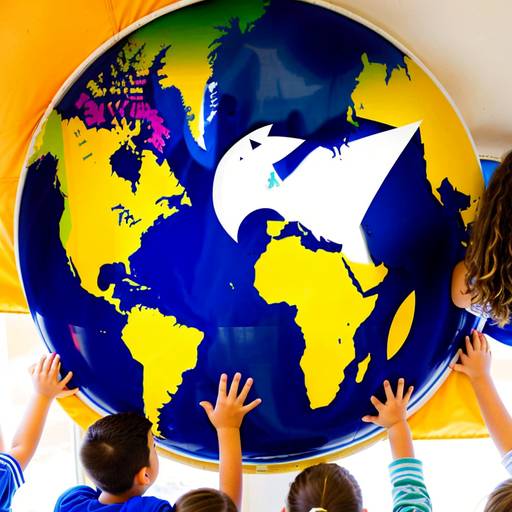
In this third-grade social studies lesson, students will explore geography and cultures from around the world. They will start by discussing the concept of geography and identifying various countries on a world map. The teacher will introduce a few selected countries, sharing interesting facts about their geographical features and cultural highlights. Students will then work in small groups, each assigned a different country, to complete a country profile worksheet that includes location, flag, geography, and cultural aspects. This promotes research skills and teamwork. Each group will present their findings to the class, fostering communication and engagement. The lesson concludes with a recap of the significance of geography and culture in connecting people globally. Optional extension activities and differentiation strategies are included to meet diverse learning needs, ensuring all students can participate meaningfully.
In this 3rd-grade social studies lesson, students explore the contributions of significant historical figures who influenced society. The lesson begins with a discussion about what makes someone a hero, followed by a mini-lecture introducing a selection of inspiring historical figures, such as Martin Luther King Jr. and Rosa Parks. Students are then divided into small groups to choose a figure and create a poster that highlights their achievements and legacy. Throughout the activity, students engage in teamwork and creativity while using resources for research. The lesson concludes with group presentations, where students share their posters with the class, reinforcing their understanding of the figures' importance and encouraging them to think about how they can contribute positively to their community. Ultimately, this engaging lesson fosters a deeper appreciation for history and inspires students to consider their own roles in making a difference.
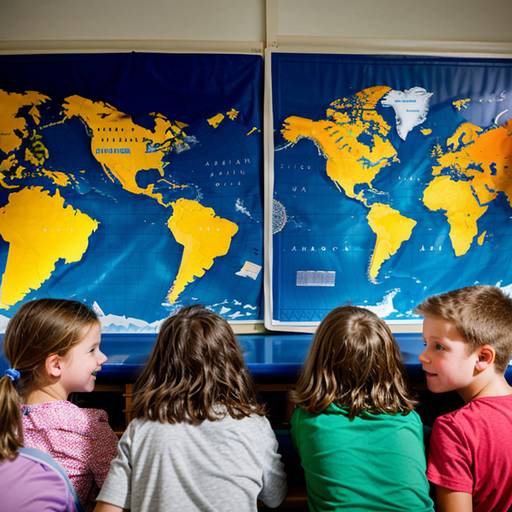
In this 3rd-grade social studies lesson plan, students will explore the concepts of geography and maps through interactive discussions and hands-on activities. The objectives include identifying key components of maps, understanding different types of maps, and creating their own simple maps. The lesson begins with an engaging introduction to maps, followed by group activities where students examine various map types and present their findings. For the independent activity, students will draw a map of their classroom or school, incorporating essential elements such as the title, legend, scale, and compass rose. The lesson concludes with a gallery walk, allowing students to showcase their work and provide feedback to peers. Assessment will focus on participation, the completeness and creativity of the maps, and a reflection quiz to reinforce learning. Differentiation strategies are included to support diverse learning needs, and extension activities are suggested for further exploration of geography and mapping skills.
In this 3rd-grade social studies lesson, students will explore significant historical landmarks in the United States and understand their importance in American history. The lesson begins with a discussion of students' experiences at historical sites, followed by a presentation that introduces various landmarks. Students will be divided into small groups, each assigned a specific landmark to research and present to the class. After the presentations, students will engage in a creative project where they will build a simple model or artifact representing their assigned landmark. The lesson concludes with a discussion about the importance of preserving history. Assessment will focus on group participation, creativity in projects, and the effectiveness of their presentations. Extensions include a reflective writing assignment and the possibility of organizing a field trip to a local historical site.
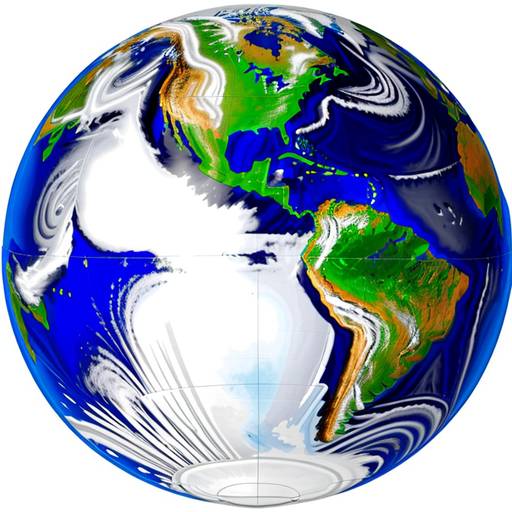
In this 3rd-grade social studies lesson, students will explore various landforms, including mountains, valleys, hills, plateaus, and plains. The lesson begins with an engaging discussion that prompts students to share their prior knowledge about these geographic features. Throughout the lesson, the teacher will introduce each landform through images and descriptions, encouraging students to relate them to local examples.
Students will then participate in a hands-on project where they work in small groups to create models of assigned landforms using clay or playdough. This activity not only promotes teamwork but also allows students to physically represent the characteristics of each landform. After completing their models, groups will present their creations to the class, detailing their landform’s features and significance.
The lesson concludes with a review of the key concepts learned, followed by a reflective discussion about the importance of landforms in shaping human life and the environment. Students will complete an exit ticket activity that reinforces their understanding by matching landforms with pictures and writing down a fact they learned. Assessment will be based on participation, creativity in the project, and comprehension demonstrated in the exit ticket. Opportunities for extension are provided for those who want to delve deeper into famous landforms around the world.
In this engaging social studies lesson for 3rd graders, students will explore key historical figures who have significantly shaped American history. The lesson begins with a discussion about personal role models to introduce the concept of influential leaders. Students will learn about important figures such as George Washington, Harriet Tubman, Martin Luther King Jr., and Susan B. Anthony through biographies and presentations.
In small groups, they will create visual posters highlighting the contributions and significance of their assigned historical figure, fostering collaboration and critical thinking. As individuals, students will complete worksheets to summarize their learning and creatively express their understanding through drawings.
The class will conclude with presentations of the group posters and a reflective discussion on the lessons learned from these historical figures that can be applied to their own lives. Assessment will be based on group posters and worksheets, while extension activities will encourage further exploration of other historical figures. This lesson aims to inspire students to connect with history and develop an appreciation for the impact of leadership and social change.