
Filters
Level
Grade
Subject
Subject Area
Subject Topic
Standard(s)
Audience
Keyword
DurationMinutes
3rd Grade Science Lesson Plans

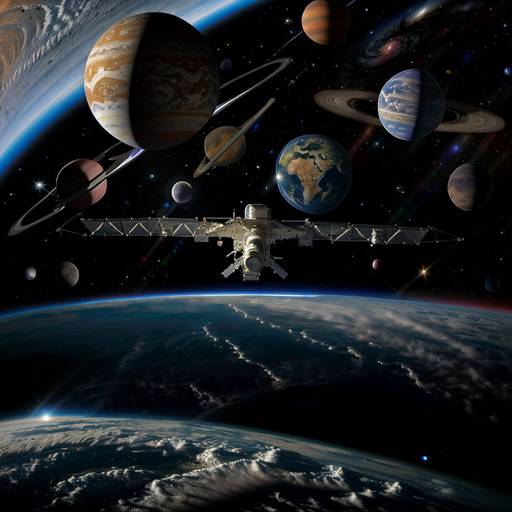
In this 3rd-grade science lesson, students will embark on an engaging exploration of the solar system, focusing on its eight planets and other celestial bodies. The class will begin with a discussion about prior knowledge, followed by a short video introduction and a fun interactive song about the solar system to capture students' interest.
Through direct instruction, students will learn about the characteristics of each planet using fact cards that highlight key information. In small groups, they will be assigned a planet to research and create a colorful poster that includes the planet's name, an interesting fact, a drawing or model representation, and its distance from the sun.
After creating their posters, each group will present their findings to the class, fostering teamwork and communication skills. The lesson will conclude with a recap of what was learned and a discussion about favorite planets. Assessment will focus on participation, collaboration, and creativity demonstrated in the poster project. Extensions may include further research on the planets and a simulated planetarium in the classroom to enhance the learning experience.
This 3rd-grade lesson focuses on understanding how animals adapt to their environments and the significance of these adaptations for survival. The lesson begins with an engaging introduction where students discuss the meaning of adaptation and watch a video showcasing various animal adaptations. Direct instruction follows, highlighting physical and behavioral adaptations with examples.
Students then work in small groups to examine animal picture cards, matching each animal to its habitat while discussing how its adaptations aid survival. Following this, they participate in a hands-on activity where they create their own fictional animals designed for specific habitats, incorporating unique adaptations.
The lesson concludes with students presenting their creations to the class, fostering communication skills and reinforcing their understanding. Participation in discussions, the quality of their artwork, and the explanations provided during presentations serve as assessments for understanding the key concepts. Additional resources and extension activities are suggested for further exploration of animal adaptations. Overall, this interactive lesson promotes collaboration, creativity, and critical thinking in the field of life science.
After a brief introduction to specific animals and their habitats, small groups will research assigned animals, identifying key adaptations and their significance. Each group will then create a poster illustrating their animal and its adaptations, fostering teamwork and creativity.
Students will present their findings to the class, sharing insights about the diverse ways animals thrive in their habitats. The lesson wraps up with a review of the importance of understanding these adaptations to support wildlife conservation efforts. Assessment will include observation of group participation, review of worksheets, and evaluation of poster presentations. Optional extensions encourage further exploration and engagement with local wildlife experts.
In this 3rd-grade science lesson focused on life science and the human body, students will explore the major systems that keep our bodies functioning. They will learn about the skeletal, muscular, circulatory, and respiratory systems, including their primary functions and how they interact with one another. The lesson begins with a discussion to engage students and gauge their prior knowledge.
Following a direct instruction segment where each body system is presented with diagrams, students will work in small groups to create models representing their assigned body systems using construction paper and other materials. This hands-on activity promotes collaboration and creativity, allowing students to label parts and explain the functions of their system in group presentations.
The lesson concludes with a recap of the importance of body systems in maintaining health, encouraging students to consider how they take care of their bodies. Assessment will occur through observation of group work, presentations, and optional follow-up activities that reinforce the concepts learned.
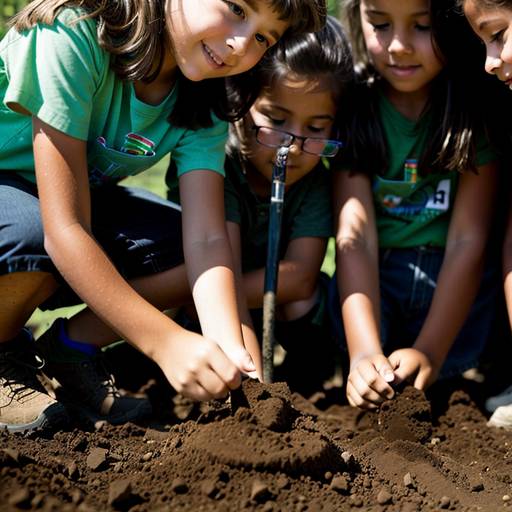
In this engaging Earth Science lesson for 3rd graders, students will explore the fascinating world of soil. The lesson begins with a discussion about soil and its importance, introducing students to the different layers of soil, including their characteristics and functions. Students will then participate in a hands-on investigation where they will examine various soil samples in small groups. Using clear cups or jars, they will observe the color, texture, and behavior of different soil types when mixed with water, recording their findings on a worksheet. The lesson concludes with students sharing their observations and discussing the significance of soil in the ecosystem, including its role in supporting plant life and maintaining environmental health. Optional extensions allow students to further investigate soil samples from home. This lesson promotes teamwork, critical thinking, and hands-on learning, fostering a deeper understanding of this essential natural resource.
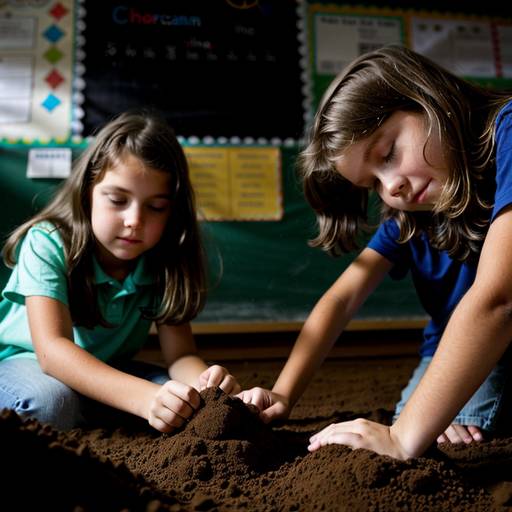
This lesson plan for 3rd-grade students focuses on exploring the concept of soil within the Earth Science curriculum. The objectives include helping students identify the components of soil, understand its importance for plant growth and the ecosystem, and conduct a simple soil test to observe different soil properties.
The lesson begins with an engaging discussion and a short video to introduce key vocabulary and concepts. Students then engage in hands-on activities where they examine various soil samples, observe their properties, and note differences in texture and behavior when water is added.
Following the group experiments, there is a class discussion where students present their findings and reflect on the role of soil in the environment. The lesson concludes with an assessment of student worksheets and opportunities for further exploration, such as collecting soil samples from their surroundings or creating informative posters about soil layers. The overall aim is to foster a deeper understanding of soil and its critical role in sustaining life on Earth.
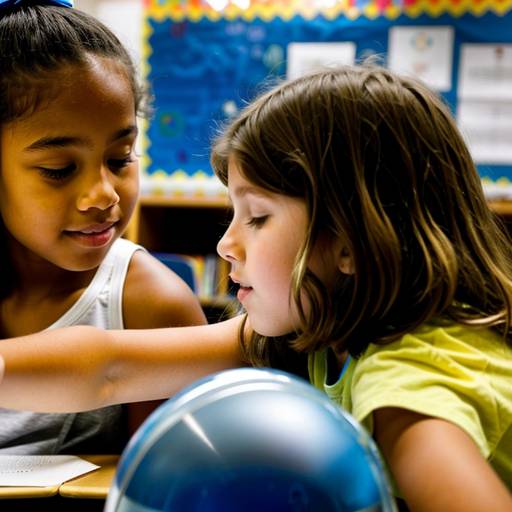
In this 3rd-grade life science lesson, students will explore the basic parts of the human body and their functions. The lesson begins with an engaging introduction using a video or interesting facts to spark curiosity. Students will learn about major organs, including the heart, brain, lungs, stomach, and muscles, alongside their roles in various systems.
After a direct instruction segment where they will see a visual representation of the body, students will participate in guided and group activities. They will label and color an outline of the human body, then work in small groups to match body parts with flashcard labels, showcasing their knowledge to the class.
The lesson wraps up with a review of the organs and a discussion about healthy habits to promote well-being. Assessment will take place through the collected outlines and group presentations, ensuring students understand organ functions. Optional extensions, such as inviting a health professional or creating a class book, can provide further learning opportunities. Differentiation strategies will be implemented to support diverse learners, ensuring all students engage meaningfully with the material.
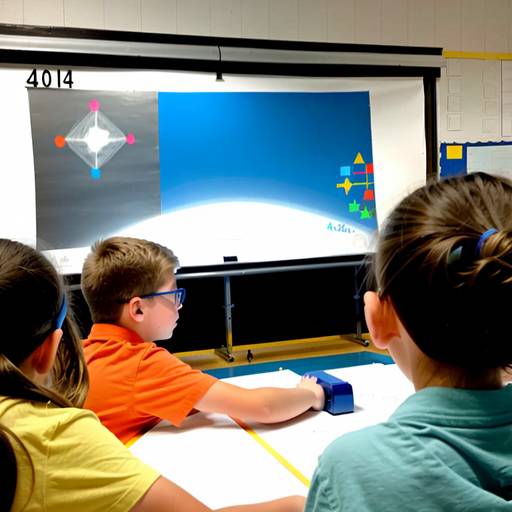
In this 3rd-grade science lesson, students will explore the concepts of motion and the effects of forces on movement through hands-on activities. The lesson begins with a discussion to engage students and introduce key concepts such as force, speed, and direction. An interactive demonstration using toy cars helps illustrate how different forces can affect motion.
Students will then be divided into small groups to conduct experiments using ramps of various angles and toy cars. They will measure the distance traveled and time taken for the cars to roll down the ramps, recording their observations. This hands-on activity allows them to directly observe how changes in ramp angle impact speed and distance.
Following the experiments, the class will come together to discuss their findings, encouraging critical thinking about the results and the forces at play. Students will reflect on their experiences through drawing and written descriptions.
Assessment will be based on participation, group data discussions, and reflections in their science journals. Extensions of the lesson may include research on inventors related to motion or an introduction to simple machines, with modifications available for diverse learning needs. Overall, the lesson fosters understanding of physical science concepts while promoting teamwork and inquiry-based learning.
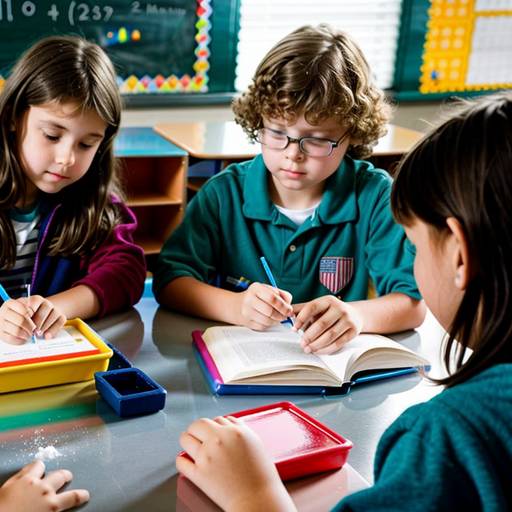
In this 3rd-grade science lesson, students will explore the concept of matter, defined as anything that has mass and takes up space. They will learn to classify objects into three states of matter: solid, liquid, and gas, by examining various materials through hands-on activities.
The lesson begins with a discussion about what matter is, followed by a group activity where students observe and record the properties of different objects. They will then conduct a simple experiment involving ice and water to observe changes in state, fostering an understanding of how matter can transition between solid and liquid forms.
Students will also engage with balloons to see how gases occupy space. A class discussion will follow to reinforce their learning and allow for sharing insights. To assess understanding, students will complete worksheets summarizing the properties and states of matter. The lesson emphasizes participation, observation, and teamwork, making the scientific concepts accessible and engaging for young learners. Additional extension activities will be offered for those interested in delving deeper into the topic. Safety will be prioritized throughout the activities.
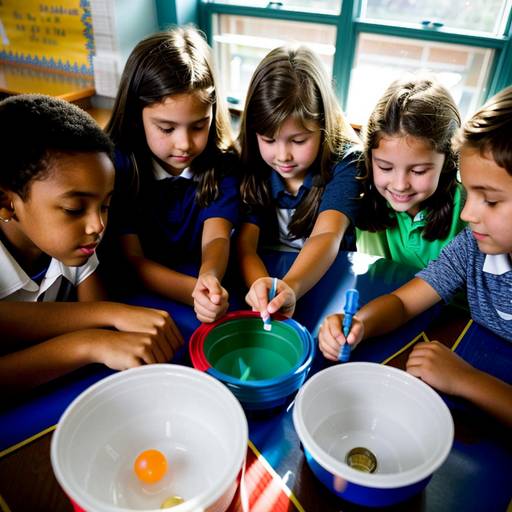
In this engaging 3rd-grade science lesson, students will explore the concept of energy and its various forms, focusing on how energy can transform from one type to another. The lesson will begin with a discussion to pique students' interest and gather their initial thoughts about energy in everyday life. Following this introduction, students will learn about different forms of energy, such as kinetic, potential, thermal, and electrical, through direct instruction.
The main part of the lesson will involve hands-on activities at various stations. Students will participate in experiments that demonstrate energy transformations, including a balloon rocket, a solar-powered toy car, and a flashlight. This interactive approach will help them observe and understand the principles of energy transformation in real-time. After the activities, students will regroup for a class discussion to share their observations and insights.
To reinforce learning, each student will complete a worksheet where they can illustrate or describe an energy transformation they witnessed during the session. The lesson concludes with a review of the key concepts, encouraging students to articulate their understanding of energy and its transformations. Through this lesson, students will develop a foundational comprehension of energy, its types, and transformations in a fun and interactive manner.