
Filters
Level
Grade
Subject
Subject Area
Subject Topic
Standard(s)
Audience
Keyword
DurationMinutes
3rd Grade Time Lesson Plans

In this 3rd-grade math lesson, students will focus on understanding how to read both analog and digital clocks, as well as calculating elapsed time. The lesson begins with a discussion on the importance of time in daily life, followed by direct instruction that introduces the concept of elapsed time through illustrative examples and the use of a number line. Students will participate in guided practice, working in pairs to solve problems related to elapsed time and honing their skills on worksheets.
For independent practice, students will complete elapsed time story problems individually, applying what they have learned. To conclude the lesson, students will engage in a creative group activity where they create "Time Wheels" that depict various times and associated activities, which they will present to the class. Assessment will be conducted through observation, worksheet reviews, and group presentations. Extensions to the lesson will include connections to literature and real-life scenarios, reinforcing the practical application of time concepts learned. Additional resources and support will be available for students who may need extra assistance.
In this 3rd-grade math lesson, students will explore the concepts of measuring time and length using inches and minutes. The session begins with an introduction to telling time on both analog and digital clocks, allowing students to practice reading time in pairs. Next, they will learn how to use rulers to measure various classroom objects in inches, engaging in hands-on activities. Students will work in small groups to measure items and time activities, such as counting how many jumping jacks they can perform in one minute. The lesson concludes with individual worksheets to assess their understanding of time and measurement. The instructor will provide adaptations for diverse learning needs and end the lesson with a review to reinforce the concepts learned. Through interactive approaches, students will gain practical skills applicable to everyday situations.
In this engaging 60-minute math lesson designed for 3rd graders, students will learn how to tell time using both analog and digital clocks, and develop an understanding of elapsed time. The lesson begins with a discussion about the importance of time, followed by demonstrations on how to read both types of clocks. Students will actively participate in an interactive activity that reinforces their clock-reading skills.
As the lesson progresses, the concept of elapsed time is introduced through examples using timelines, allowing students to see practical applications of how time is measured. Through guided practice, they will solve problems involving elapsed time, enhancing their problem-solving abilities. Students will then work independently on worksheets to further solidify their understanding.
The lesson concludes with a review and recap session where students can share their answers and thought processes. Assessment will be done through collected worksheets and observation of student engagement during the lesson. Follow-up activities encourage ongoing practice and application of their new time-telling skills at home. This lesson promotes comprehension of essential time-related concepts that are applicable in daily life.
In this 60-minute math lesson for 3rd graders, students will explore the concepts of time and time zones through engaging activities and discussions. The lesson will begin with an introduction to measuring time and understanding the distinction between AM and PM. Following this, students will learn about time zones, using a world map to visualize how different regions experience time differently.
In small groups, students will participate in a trivia game where they share fun facts about various countries and their time zones. This will be complemented by a time conversion exercise, where students will practice calculating time differences through worksheets and interactive digital tools. The lesson will conclude with a review of key concepts, allowing students to share their learnings and ask questions.
Assessment will include the collection of worksheets and exit tickets, which will provide insight into students' understanding and areas for further exploration. Extensions may cover advanced topics such as daylight saving time, and adaptations will be available for students who require additional support. Overall, the lesson aims to provide a comprehensive understanding of time and foster problem-solving skills related to time calculations.
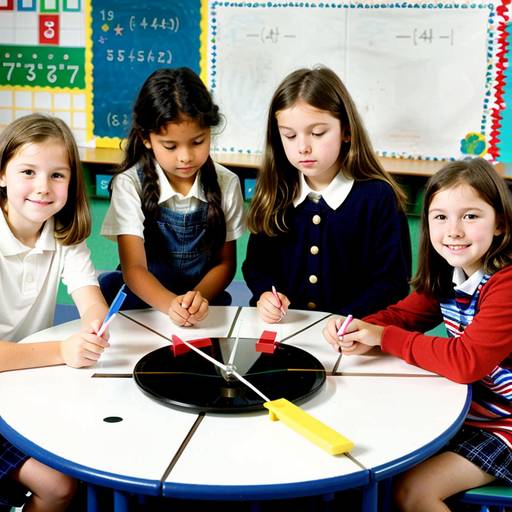
In this 3rd-grade math lesson, students will explore the concepts of telling time and recognizing time patterns. The lesson begins with an engaging story that highlights the importance of time in daily life, followed by a direct instruction phase where students learn to read analog clocks and identify time patterns related to hours and half-hours.
During guided practice, students will set their paper plate clocks to various times and discuss observed patterns in small groups. Independent practice will involve completing worksheets that include telling time and answering questions about time patterns. The lesson concludes with a review and an exit ticket activity, allowing students to express what they learned.
Assessment will be based on observations, worksheet accuracy, and exit ticket responses. Extensions for the lesson may include tracking daily activities in a "Time Journal" or introducing more complex concepts like elapsed time. Modifications will be provided for students who need additional support, ensuring that all learners engage with the material effectively.
This 3rd-grade math lesson focuses on teaching students how to tell time using both analog and digital clocks while also exploring patterns related to time. The lesson begins with an engaging discussion about time and familiar daily activities, followed by direct instruction on how to read clocks and understand concepts of AM and PM. Students participate in guided activities where they practice showing different times on clocks and create their own time patterns based on their routines. Independent practice involves worksheets that reinforce their skills in telling time and recognizing time patterns. The lesson concludes with a review of key concepts, allowing students to reflect on what they have learned. Assessment is achieved through observation, worksheet completion, and exit tickets, ensuring that students grasp essential time-telling skills and the role of time in their daily lives. Extensions and support are provided to meet varying student needs, enhancing their understanding of elapsed time and encouraging collaborative learning.