
Filters
Level
Grade
Subject
Subject Area
Subject Topic
Standard(s)
Audience
Keyword
DurationMinutes
3rd Grade Lesson Plans

In this 3rd-grade math lesson, students will explore the concept of volume through hands-on activities and measurement. The lesson begins with a discussion about volume, encouraging students to share their thoughts and predictions about the capacity of various containers. After introducing key concepts related to measuring volume using standard units, students will engage in guided practice by estimating and measuring the volume of different containers using measuring cups filled with water or rice.
Following the group activity, students will work independently on a worksheet that presents various volume scenarios. The lesson concludes with students sharing their findings and discussing real-life applications of volume measurement. Assessment will be based on observation during group interactions and the review of completed worksheets. Extension activities are available for advanced learners, and adaptations are provided to support those who may need extra help. Overall, the lesson emphasizes interactive learning and practical application of volume concepts.

In this 3rd-grade art lesson, students will explore various painting techniques, including dry brush, wet-on-wet blending, and layering, through the creation of landscape artworks. The lesson begins with a discussion about different brush techniques and visual examples of landscapes, followed by a demonstration of each technique. Students will practice these techniques on scrap paper before applying them to their landscape paintings, focusing on elements such as the sky, land, and water. Throughout the process, they will be encouraged to experiment and use a combination of techniques.
At the end of the lesson, students will participate in a gallery walk to display their completed artworks, share their experiences, and reflect on what they learned about painting techniques. Assessment will be based on participation, the completion of their landscape paintings using multiple techniques, and engagement during reflections. Extensions will be available for early finishers, promoting further creativity. The lesson concludes with clean-up activities to encourage responsibility and collaboration.

In this 3rd-grade science lesson, students will explore sound as a form of energy that is created by vibrations. The lesson begins with a discussion to gauge prior knowledge about sound, followed by a demonstration using a tuning fork to illustrate how sound travels through vibrations.
Students will then participate in group activities that include experimenting with rubber bands to observe how tension affects pitch, using slinky toys to visualize sound waves, and exploring the production of sound by inflating and releasing balloons. After these hands-on activities, the class will regroup to discuss their findings, focusing on the characteristics of sound and vibrations.
To conclude, students will reflect on what they learned by drawing a picture of a sound they enjoy and describing how it is made. Assessment will include collecting their drawings and conducting a quick verbal quiz on the concepts covered. This engaging lesson emphasizes active learning and critical thinking, allowing students to better understand the relationship between sound, vibration, and energy.
In this 1-hour Earth Science lesson for 3rd graders, students will explore fundamental concepts related to weather and the atmosphere. The lesson begins with a discussion about the types of weather students experienced recently, followed by an introduction to key vocabulary such as weather, atmosphere, precipitation, forecast, and climate. Using a simple water cycle diagram, the teacher will explain the processes of evaporation, condensation, and precipitation, and discuss various weather conditions with the help of flashcards.
Students will then work in small groups to create their own fictional weather forecasts on construction paper, including drawings of weather symbols and descriptions. They will also consider how different weather affects people, animals, and plants. Each group will present their forecasts to the class, facilitating peer learning and reinforcing understanding.
The lesson concludes with a review of key concepts, as students answer questions that assess their grasp of weather phenomena and the water cycle. Assessment will be based on group participation, the accuracy of weather symbols and descriptions, and individual understanding demonstrated during the conclusion. Extensions include maintaining a weather journal and conducting simple experiments, while adaptations will be made for varying student needs and abilities. Reflections after the lesson will focus on engagement and understanding.
This 3rd-grade technology lesson focuses on teaching students essential internet skills and online research techniques. The session begins with an introduction to the internet and emphasizes the importance of online safety and smart browsing practices. Students will learn how to use kid-friendly search engines and the art of crafting effective keywords for searches.
The lesson includes a demonstration on identifying safe and reliable websites, highlighting the key indicators to look for. After the demonstration, students will work in small groups on a specific research topic, filling out a Web Exploration Worksheet to document their findings, the websites they accessed, and how they assessed the credibility of their sources.
Following the group research, students will present their discoveries to the class, fostering collaboration and communication skills. The lesson wraps up with a recap of the key concepts discussed, and an engaging activity reinforces their understanding of safe internet usage and research strategies. Assessment will be based on participation, collaboration, and the quality of their worksheets. Extensions include creating a poster or digital presentation of their research findings to further enhance their learning experience.
This lesson plan focuses on teaching 3rd-grade students essential internet skills and online research techniques. The objectives are to help students understand the internet, navigate it safely, identify reliable sources, and conduct basic online research. Throughout the lesson, students engage in a mix of discussion, demonstration, and hands-on group activities. They learn to use kid-friendly search engines, develop effective search strategies, and evaluate the credibility of online information.
During the group activity, students work collaboratively to research a specific topic, using a checklist to ensure they find accurate information and cite credible sources. After their research, each group presents their findings to the class, fostering communication skills and peer learning. The lesson concludes with a recap of internet safety and research skills, encouraging students to apply what they've learned in a responsible manner both in and out of the classroom. Extensions include a homework task where students further practice their research skills at home. The lesson emphasizes the importance of using technology responsibly and respectfully while enhancing students' confidence in navigating the digital world.
This lesson plan for a 3rd-grade math class focuses on measurement and weight, guiding students to explore these concepts through hands-on activities. The primary objectives include understanding weight, measuring with standard units (grams, kilograms, ounces, and pounds), and using balance scales for comparisons.
Students begin by discussing weight and then engage in an estimation activity, where they guess the weight of various classroom objects. Working in small groups, they measure the actual weights of these objects, record their findings, and compare them to their estimates. Each group then presents their results to the class, highlighting their heaviest and lightest objects.
The lesson concludes with a summary of learned concepts and a homework assignment that continues the exploration at home. Assessment is based on participation, accuracy of measurements, and completion of assigned tasks. The plan encourages hands-on learning and supports the development of practical measurement skills in a collaborative setting.
This lesson plan is designed for 3rd-grade students to explore the concepts of digital citizenship and privacy protection. The objective is to help students understand the importance of safeguarding their personal information online. The lesson begins with a class discussion to define digital citizenship, followed by a kid-friendly video that highlights essential online safety practices. Students engage in small group discussions where they analyze various scenarios related to online privacy and share their strategies for responding to those situations.
An interactive activity involves creating a personalized "Privacy Protection Checklist" that students can take home as a reminder of the safety practices they learned. The lesson concludes with a recap of key takeaways, encouraging students to share one action they will implement to protect their privacy online. Participation in discussions and the completion of the checklist serve as assessment tools to ensure understanding. Extensions of the lesson encourage family involvement and reinforce the importance of responsible online behavior within the broader school community. Overall, the lesson equips students with practical strategies to navigate the digital world safely and responsibly.
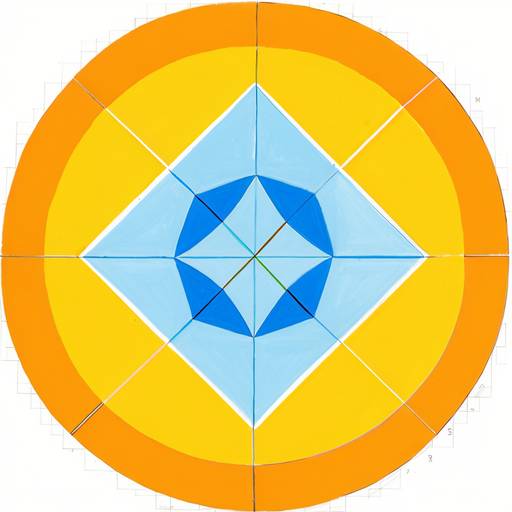
This 3rd-grade math lesson focuses on exploring geometric shapes and the concept of symmetry. The session begins with an introduction to various geometric shapes, followed by a clear explanation of symmetry through visual examples and a demonstration using a mirror. Students engage in guided practice by identifying symmetrical and asymmetrical shapes with provided materials, testing their hypotheses through folding.
During the independent activity, students create their own symmetrical designs using colored paper and markers, incorporating at least one line of symmetry. They then present their creations to the class, explaining the concept of symmetry in their designs. The lesson concludes with a review of key concepts and a discussion about the presence of symmetry in everyday life. Assessment occurs through observation during activities and evaluation of the students' designs. Extension activities provide opportunities for further exploration, including a symmetry scavenger hunt and challenges on rotational symmetry, fostering both understanding and creativity in geometry.

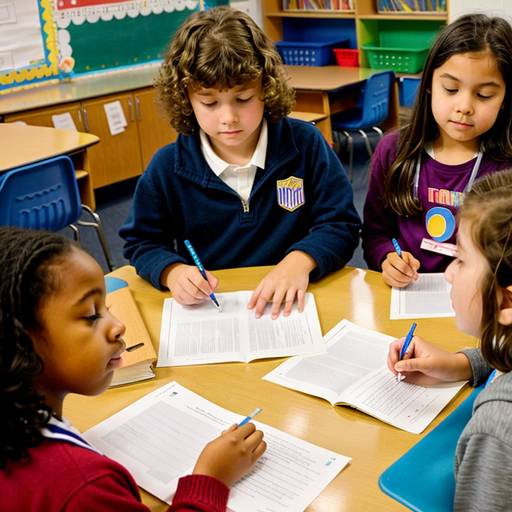
In this 3rd-grade Language Arts lesson, students will engage in learning about context clues to understand unfamiliar vocabulary. The class will begin with a discussion about their experiences with unknown words, followed by an explanation of context clues and their significance. The teacher will model how to identify context clues within sentences, demonstrating the process using examples to guide student understanding.
Students will then work in pairs on a vocabulary worksheet to practice identifying context clues in provided sentences. Following guided practice, they will participate in an independent activity where they will find unfamiliar words in a familiar text and write sentences using context clues.
The lesson will conclude with a review of key concepts and a reflective sharing of new vocabulary. Assessment will be conducted through the collected worksheets and observation of student participation. Extensions for advanced learners and additional support for those needing extra help are included, ensuring a comprehensive approach to vocabulary development.