
Filters
Level
Grade
Subject
Subject Area
Subject Topic
Standard(s)
Audience
Keyword
DurationMinutes
3rd Grade Lesson Plans

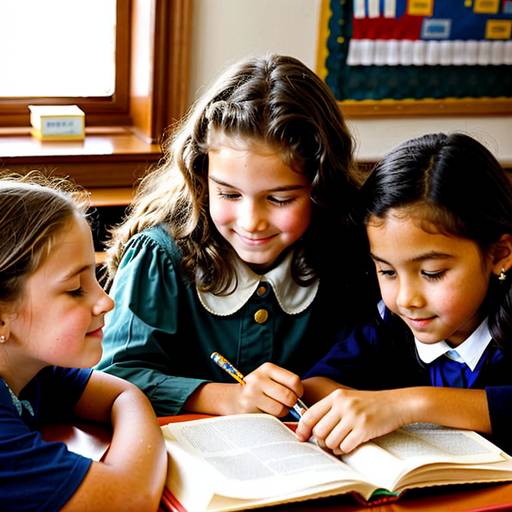
In this engaging social studies lesson for 3rd graders, students will explore key historical figures who have significantly shaped American history. The lesson begins with a discussion about personal role models to introduce the concept of influential leaders. Students will learn about important figures such as George Washington, Harriet Tubman, Martin Luther King Jr., and Susan B. Anthony through biographies and presentations.
In small groups, they will create visual posters highlighting the contributions and significance of their assigned historical figure, fostering collaboration and critical thinking. As individuals, students will complete worksheets to summarize their learning and creatively express their understanding through drawings.
The class will conclude with presentations of the group posters and a reflective discussion on the lessons learned from these historical figures that can be applied to their own lives. Assessment will be based on group posters and worksheets, while extension activities will encourage further exploration of other historical figures. This lesson aims to inspire students to connect with history and develop an appreciation for the impact of leadership and social change.

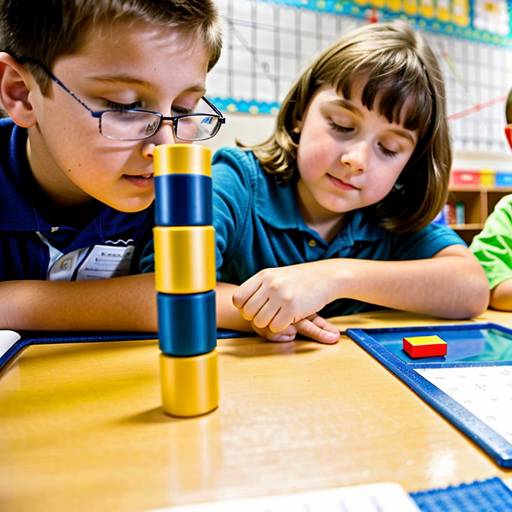
In this 3rd-grade math lesson focused on measurement and length, students will explore both non-standard and standard units of measurement. The lesson begins with a class discussion about the importance of measurement in everyday life, introducing key vocabulary such as centimeters, inches, and estimation.
Following a demonstration on effectively using rulers and yardsticks, students will participate in a small group activity where they measure various classroom objects and record their findings. This collaborative practice encourages discussion about any differences in measurements observed between groups.
Next, students will engage in independent practice by estimating and measuring a selection of items, allowing them to reflect on the accuracy of their estimates compared to the actual lengths. The lesson culminates in a class discussion to share insights and experiences, highlighting the significance of measurement accuracy.
Students will leave the class with a deeper understanding of measurement concepts, assessed through observations, completed worksheets, and exit tickets that reflect their learning and real-life applications of measurement. Differentiation strategies are implemented to support varied learning needs, ensuring all students gain confidence in their measurement skills.
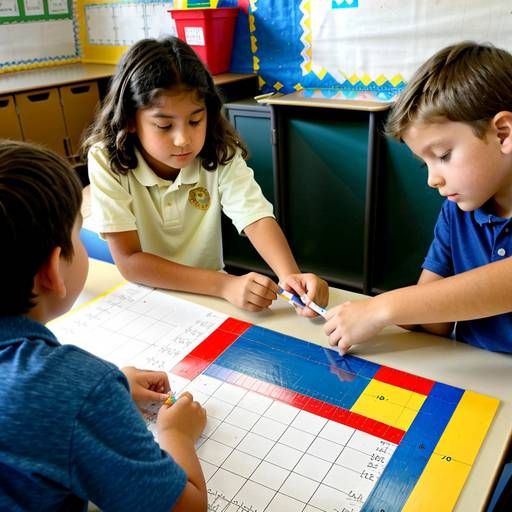
In this 3rd-grade math lesson, students will explore the concepts of measurement and length using both standard and non-standard units. The lesson begins with a discussion about the importance of measurement in everyday life, followed by a demonstration on how to use a ruler to measure objects in inches and centimeters. Students will then engage in guided practice, measuring various classroom items in small groups and recording their findings on a worksheet. Afterward, they will conduct independent measurements of an item of their choice, drawing it and labeling its length using both measurement systems.
The lesson wraps up with a class discussion, where students can share their measured items and reflect on their learning. Assessment will focus on participation, accuracy in measurements, and worksheet completion, with opportunities for extensions for those who finish early. This interactive approach encourages students to develop practical measurement skills and apply them in real-world contexts.
In this 3rd-grade math lesson, students will explore the concepts of lines and angles within the context of geometry. The lesson begins with an interactive introduction where students name various shapes and learn about different types of lines, including straight, curved, horizontal, vertical, and diagonal. The teacher will provide direct instruction on these line types and introduce the concept of angles, focusing specifically on identifying right angles.
Following the instructional segment, students will engage in guided practice by working in pairs to complete a worksheet that requires them to identify and label lines. Afterward, they will participate in a hands-on activity, collaborating in small groups to create a large geometric shape using various line types and angles. They will draw and cut out shapes, ensuring to label each line and angle accordingly.
To conclude the lesson, groups will present their geometric designs, sharing insights about the lines and angles used in their creations. Assessment will be based on worksheet correctness and group presentations, ensuring all students understand the different types of lines and their relevance in everyday life. Extensions will be available for advanced learners to further challenge their understanding. Overall, the lesson promotes collaborative learning and creativity while reinforcing foundational geometric concepts.

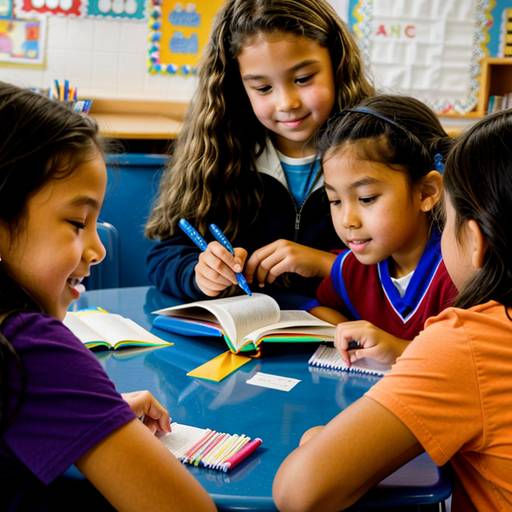
In this 3rd-grade language arts lesson, students will explore the fundamentals of narrative writing by learning about the five essential elements: characters, setting, plot, conflict, and resolution. The lesson begins with a class discussion on storytelling, where students share their favorite stories and what makes them engaging. Next, the teacher provides direct instruction on each narrative element, supported by examples and visual aids.
Afterward, the class collaboratively selects a character, setting, and plot to create a shared story outline. Students then engage in independent writing, using the outline to craft their own imaginative narratives, incorporating descriptive details and the narrative elements they’ve learned.
The lesson concludes with students sharing their stories with the class, followed by a discussion highlighting the unique aspects of each narrative. Assessment includes monitoring participation and reviewing written work for the presence of narrative elements. Extension activities invite students to illustrate their stories or engage in peer feedback, fostering further development of their storytelling skills. The lesson aims to ignite creativity, enhance writing ability, and promote collaboration among students.

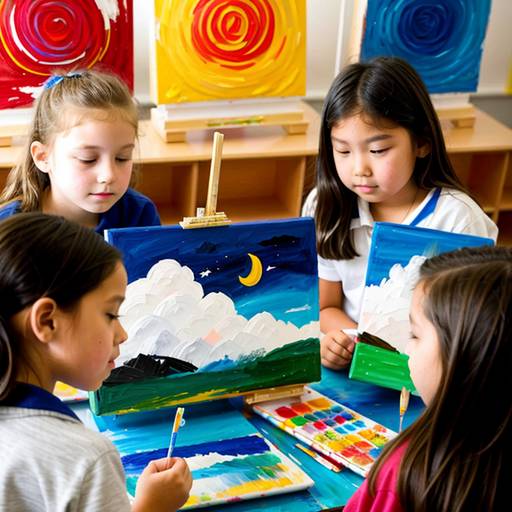
In this third-grade art lesson, students will explore various painting techniques, including wet-on-wet, dry brush, and layering, to create their own imaginative artwork. The lesson will begin with a discussion of different painting styles, showcasing examples that illustrate the use of these techniques. Following a demonstration, students will practice each technique on watercolor paper to gain hands-on experience.
Once they feel comfortable, they will independently create a final piece incorporating at least two of the techniques they have learned, allowing for creativity in their subject matter. The lesson will conclude with a sharing session where students can display their work and discuss their creative process. Assessment will focus on students' understanding and application of the techniques as well as their overall effort and creativity. Extensions to the lesson may include themed series projects and mixed media integration. The session encourages experimentation and a positive exploration of painting.
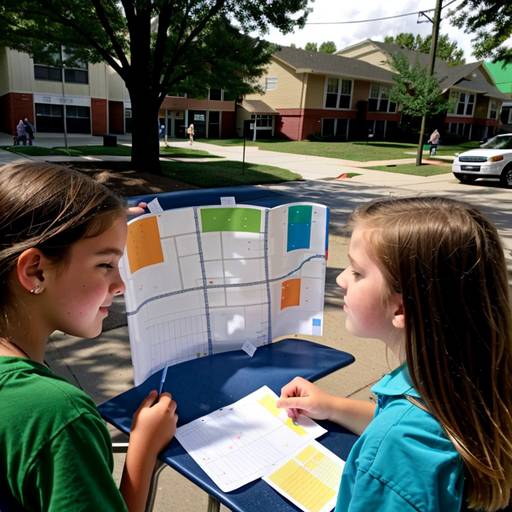
In this third-grade social studies lesson, students will explore geography and maps by learning about basic map symbols, cardinal directions, and the components of a map. The class will begin with a discussion about their neighborhood and the places they see daily. Through direct instruction, students will learn to identify and use map features such as legends and compass roses, followed by creating a simple map of their surroundings in small groups. As they collaborate on their maps, they will apply what they've learned about symbols and directions. Each group will then present their maps to the class, highlighting key locations and features. The lesson will conclude with a review of key concepts and an opportunity for students to reflect on their learning. Extension activities may include a neighborhood walk to observe real-life features and designing treasure maps with clues. This engaging and interactive lesson fosters teamwork while enhancing students’ understanding of geography.
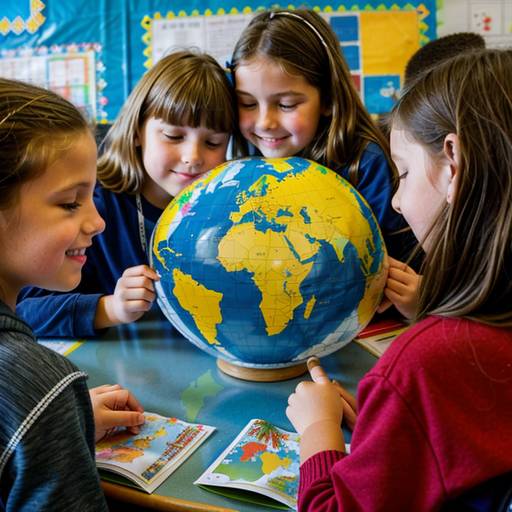
This 3rd-grade social studies lesson introduces students to the concepts of geography and countries through engaging activities. The lesson begins with a discussion where students share known countries, followed by an introduction to maps and key geographic terms. Students will then select a country of interest and work in pairs or small groups to research its location, capital, geographical features, and cultural aspects. Each student will create a presentation featuring a map, flag, and interesting facts about their chosen country. The lesson concludes with students sharing their presentations, fostering a collaborative learning environment that enhances their understanding of global diversity. Assessment will involve observing participation and reviewing the presentations for accuracy and creativity. Accommodations will be made to support students needing additional assistance, ensuring an inclusive learning experience.

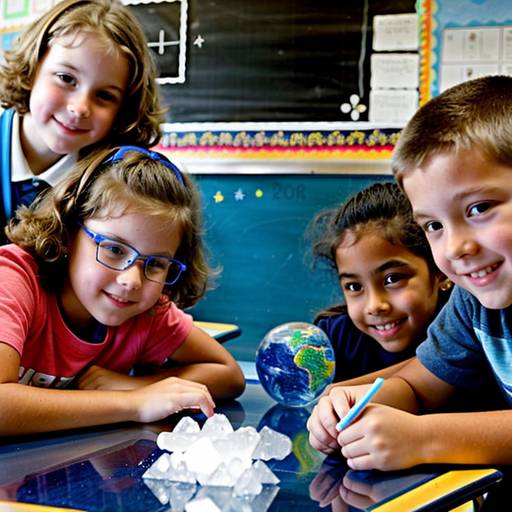
This 3rd-grade science lesson introduces students to the three primary states of matter: solid, liquid, and gas. The lesson begins with a class discussion to gauge prior knowledge and introduces the characteristics of each state using visual aids. Students participate in hands-on activities, exploring ice cubes, water, and balloons to observe and describe the properties of each state. They work in small groups to share their findings and complete drawings based on their observations. The lesson concludes with a recap of key concepts and a worksheet to reinforce learning through examples from everyday life. Informal assessments are conducted through group interactions and worksheet completion, while differentiation strategies ensure all students can engage with the material effectively. Extensions and additional explorations of matter changes provide opportunities for further investigation.
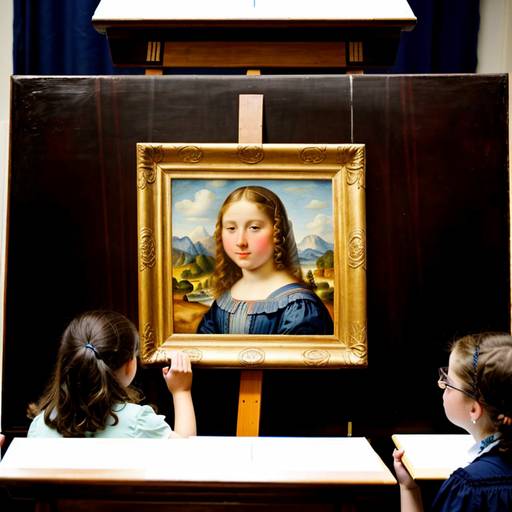
In this art lesson, 3rd-grade students will explore the world of art history by learning about three renowned artists: Vincent van Gogh, Pablo Picasso, and Frida Kahlo. The lesson begins with an engaging introduction to the significance of art and an overview of each artist's unique style and historical context.
Students will then work in small groups to discuss their assigned artist and present their findings to the class, fostering teamwork and communication skills. Following the discussion, students will create their own miniature artworks inspired by one of the artists, using various materials such as colored pencils, markers, or collage techniques.
As they create, students will have the opportunity to express their creativity while reflecting the styles of the artists they have studied. The lesson culminates in a gallery walk where students can share and appreciate each other's work, encouraging a sense of community and dialogue about art. Assessment will focus on participation, creativity, and understanding, with an extension activity available for those who finish early.