
Filters
Level
Grade
Subject
Subject Area
Subject Topic
Standard(s)
Audience
Keyword
DurationMinutes
2nd Grade Social Studies Lesson Plans

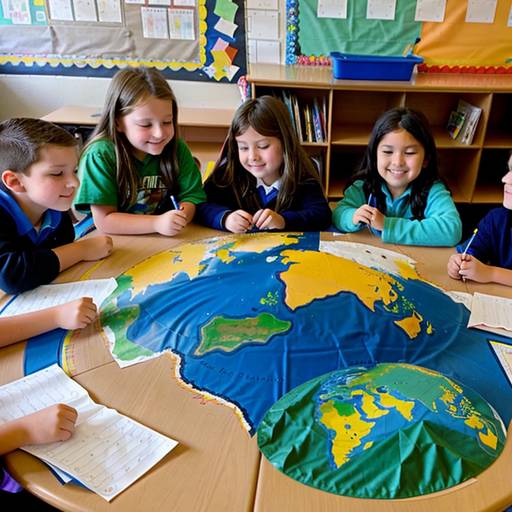
In this 2nd-grade social studies lesson, students will explore various landforms such as mountains, valleys, rivers, plains, and deserts. The session begins with a discussion about Earth's surface and an introduction to landforms, accompanied by a world map or globe to identify where these features can be found. Following direct instruction, students will work in small groups to create a "Landforms Map" using pre-printed images and art supplies. They will present their maps to the class, sharing descriptions and interesting facts about the landforms they've included. The lesson concludes with a recap that highlights the relationship between landforms and human life. Assessment will focus on student participation and the accuracy of their maps, while extensions may involve homework that encourages individual creativity and further exploration of landforms in different countries. Overall, the lesson fosters engagement with geography through interactive learning and collaboration.
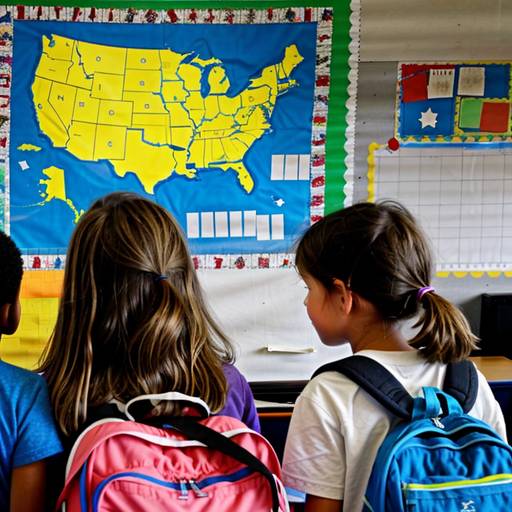
This lesson plan aims to engage 2nd-grade students in understanding the basics of geography and the use of maps. The lesson begins with an interactive discussion about students' experiences with maps, followed by a direct instruction segment that introduces essential map features, including titles, compass roses, and legends. Students will collaboratively explore a large community map to identify important local landmarks.
In the guided practice, they will work in small groups using printed maps to enhance their comprehension of the features discussed. For independent practice, students will create their own maps of either their classroom or home, incorporating the elements learned, such as titles, compass roses, and keys. The lesson concludes with a review of key concepts and sharing of students' maps with their peers. Assessment will be based on participation and the completion of the maps, with optional extensions for further learning through technology or field trips.
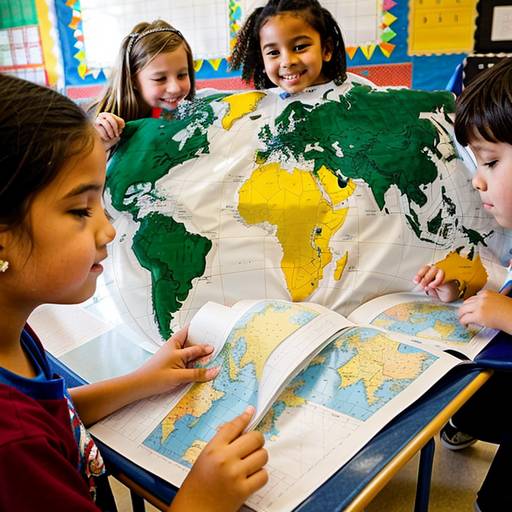
In this engaging social studies lesson for 2nd-grade students, learners will explore geography and different countries around the world. The session begins with an introduction to countries and continents using a world map, fostering an understanding of global diversity. Students will discuss various countries, discovering interesting cultural elements such as languages, foods, and traditions.
During a guided activity, students will locate and label selected countries on the map while participating in group discussions about personal connections to these places. For the independent activity, each student will research a specific country, creating a poster that highlights the country’s name, flag, and a unique cultural fact or element, thus encouraging creativity and personal expression.
The lesson concludes with students sharing their posters with the class, reinforcing their understanding of geography and cultural appreciation. Evaluation will focus on participation and the content of their posters, while extension activities may include a “Cultural Day” featuring food, games, or items from the represented countries. Overall, this lesson promotes awareness of the world’s diversity and the importance of understanding different cultures.
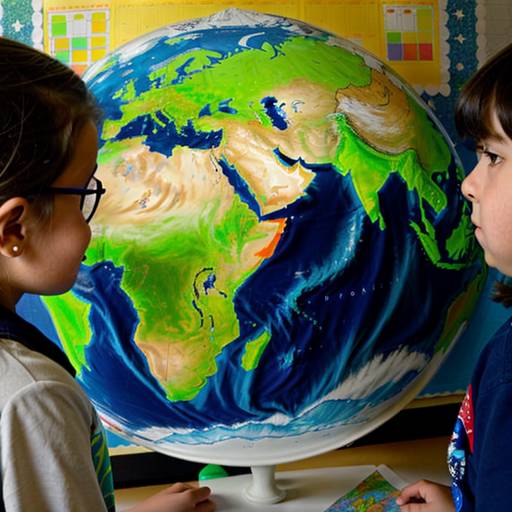
In this 2nd-grade social studies lesson, students will explore different types of landforms, including mountains, valleys, plains, hills, plateaus, rivers, and lakes. The lesson begins with an engaging introduction where students share their favorite outdoor places, leading to a discussion about the various shapes that make up our world. Using images, the teacher will guide students in describing the characteristics of each landform.
During the guided practice, students will collaborate with partners to share their thoughts on which landform they find most interesting. The main activity involves creating a colorful map where students can draw or paste images of landforms, allowing them to apply what they've learned creatively.
The lesson concludes with a gallery walk where students showcase their maps and participate in a reflective discussion to reinforce their understanding. Assessment will occur through observation during activities and the collection of maps to evaluate their identification and representation of landforms. Extension activities encourage further exploration and creativity, such as illustrating a landform book or virtual field trips to national parks.
This 2nd-grade social studies lesson plan focuses on helping students understand their community and the important roles of various community helpers. The lesson begins with a class discussion about the concept of a community, enabling students to identify different helpers such as firefighters, doctors, and teachers.
Students participate in a group activity where they match role cards to corresponding pictures, sharing facts about their assigned community helpers with the class. The main hands-on activity involves students creating their own visual representations of a community helper, including drawings and 3D models, while writing about the helper’s job and its significance.
The lesson concludes with student presentations, allowing them to share what they learned and express their creativity. Assessment focuses on participation and comprehension throughout the activities, with opportunities for extensions and accommodations to support all learners. This engaging approach fosters a sense of belonging and awareness of community roles among students.
This 2nd-grade social studies lesson focuses on understanding the concepts of community and diversity. Students will explore the different roles within their community and recognize the importance of each individual, including various community workers. The lesson begins with a discussion about what constitutes a community and its essential roles, followed by a matching activity to illustrate diversity within those roles.
Students will then engage in a personal reflection activity by completing "All About Me" worksheets, allowing them to share their unique backgrounds, traditions, and interests with their classmates. This fosters appreciation for diversity among peers. To culminate the lesson, students will create individual squares representing themselves or their cultures, which will be combined into a collaborative "Community Quilt."
Throughout the lesson, students will learn the value of each person's contribution to the community and how diverse backgrounds strengthen their collective environment. The lesson concludes with a recap of the concepts covered and encourages ongoing respect and appreciation for differences among classmates. Assessments will include participation in discussions, completion of worksheets, and the final quilt project.
In this 2nd-grade social studies lesson, students will explore the concept of timelines to understand the chronological order of events in both personal and historical contexts. The lesson begins with a class discussion about significant life events, leading into the introduction of timelines and their importance. Students will collaboratively create a large group timeline that includes class events, followed by a presentation of historical examples to highlight milestones in history.
After receiving a timeline template, each student will identify and illustrate 3-5 significant events from their own lives. They will share their personal timelines with a partner to practice articulation and reinforce understanding. The class will reconvene to reflect on what they learned about the value of timelines in organizing events chronologically. To conclude, students will complete an exit ticket summarizing one key takeaway from the lesson.
Assessment will be based on participation, creativity, and the ability to convey the significance of the included events. Differentiation strategies will support diverse learners, and opportunities for extensions may encourage deeper exploration of family history or future goals. This engaging lesson aims to instill a foundational understanding of timelines in relation to personal and broader historical narratives.
In this 2nd-grade social studies lesson plan, students will explore the concept of community and the essential rules that help maintain a safe and harmonious environment. The lesson begins with a discussion about what makes their community special and the various elements within it, such as schools, parks, and fire stations.
Following this, students will examine the importance of rules by engaging in a group conversation about why these guidelines are crucial for safety and respect. Students will then collaborate in small groups to create a poster that illustrates their neighborhood, incorporating drawings of community elements and listing community rules. Each group will present their poster to the class, fostering teamwork and communication skills.
The lesson concludes with a reflection activity, where students share one new thing they learned. Through this engaging approach, students will gain a better understanding of their community and the role of rules in promoting a positive atmosphere. Various adaptations and extensions are provided to meet diverse learning needs and enhance the experience further.
In this 2nd-grade social studies lesson, students explore the concept of timelines and their significance in understanding history. The lesson begins with a discussion about time and the importance of historical awareness, followed by an introduction to timelines through examples of significant events. Students then participate in a collaborative group activity where they create timelines of their own lives, identifying important personal milestones. Each group presents their timeline, fostering engagement and discussion among classmates. The lesson concludes with a recap of the timeline's importance, and students are assigned a worksheet to reflect on a historical event at home. Assessment includes observation of group collaboration, evaluation of the completed timelines, and review of individual worksheets. Differentiation strategies are provided to support diverse learning needs. Overall, the lesson aims to connect personal history with broader historical contexts.
In this 2nd grade social studies lesson, students will explore the contributions of important historical figures and understand their roles in shaping history. The lesson begins with an introduction to the concept of history and discussions about various historical figures. Through engaging stories, students will learn about the lives of selected individuals and their significant achievements.
Working in small groups, students will create posters that highlight their assigned historical figure, including their name, a drawing, key contributions, and interesting facts. To reinforce their understanding, students will also craft "Time Traveler" badges, featuring their figure's name and a fun fact.
The lesson concludes with group presentations, allowing students to share what they've learned and encouraging reflection on how these historical figures inspire us today. Assessment will focus on participation, group work, and the creativity and accuracy of their projects. Optional extensions include writing activities and a themed dress-up day to further engage students with the material.