
Filters
Level
Grade
Subject
Subject Area
Subject Topic
Standard(s)
Audience
Keyword
DurationMinutes
2nd Grade Social Studies Lesson Plans

In this 2nd-grade social studies lesson, students will explore the concept of community helpers by identifying various roles and responsibilities within their community. The lesson begins with an interactive discussion where students share who they believe helps them in their community. They will sort images of different community helpers into categories, followed by a worksheet activity where they draw and write about their favorite helper and their importance. Students will then engage in role-playing scenarios to illustrate how these helpers contribute to the community. The lesson concludes with a wrap-up discussion and suggestions for showing appreciation to community helpers. Assessment will include reviewing student worksheets and observing participation throughout the activities. Optional extensions involve a field trip to meet a local community helper or inviting one to speak to the class, with differentiation strategies to support diverse learning needs.
In this 2nd Grade social studies lesson, students will explore the concepts of geography and global cultures. The lesson begins with an introduction to geography, where students will identify countries on a world map. They will then be grouped and assigned different countries to research. Each group will examine cultural aspects of their assigned country through pictures and discussions, filling out a "Country Passport" with key information such as the country's name, capital city, traditional food, holiday, and clothing.
Following their research, students will present their findings to the class, allowing for interaction and questions to promote engagement. The lesson concludes with a review of the countries covered and a reflective discussion about students' favorite facts learned during the presentations. Assessment will be based on participation in group activities and the completion of the passports. Additionally, students may extend their learning through homework involving further research on another country, fostering a deeper understanding and appreciation of global diversity.
In this 2nd-grade social studies lesson, students will explore the concept of community and the essential rules that help maintain order and safety. The lesson begins with a class discussion on what constitutes a community and the various roles that individuals play within it, such as teachers, nurses, and firefighters. After identifying important community roles, students will work in small groups to discuss and choose three roles they believe are crucial, sharing their thoughts with the class.
Building on this foundation, students will brainstorm a list of rules necessary for their ideal neighborhood to promote safety and harmony. Each group will then create a colorful poster illustrating one rule along with a corresponding drawing, encouraging creativity and collaborative learning. The lesson concludes with presentations from each group, allowing students to explain their chosen rule and reflect on the importance of community regulations. An exit ticket will help assess students' understanding by asking them to identify a community role and a key rule as they leave. Extension activities may include a field trip or inviting community leaders for a guest talk, further enriching students' understanding of their neighborhoods.
This 2nd-grade social studies lesson focuses on exploring the concepts of community and diversity. Students will engage in a discussion about what constitutes a community and the importance of diversity within it. The lesson includes a read-aloud of a children's book that emphasizes various cultures and their contributions to the community.
Following the reading, students will create individual drawings that represent their own cultures and traditions, which will be compiled into a large mural to celebrate the diversity within the classroom. A reflection activity will allow students to express what they love about their community and the value of diversity.
Assessment will occur through observations of participation, the quality of the drawings and worksheets, and results from a reflection exercise. Extensions may include inviting family members to share cultural traditions and organizing a "Culture Day" for students to showcase their heritage. The lesson is designed to foster appreciation and respect for differences among peers, highlighting the rich tapestry that diverse backgrounds bring to the community.
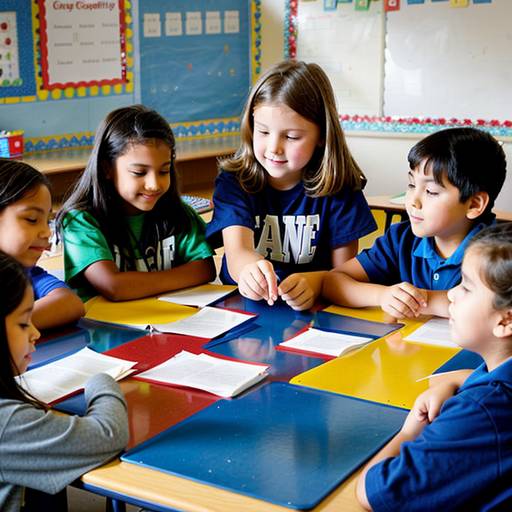
This 2nd Grade Social Studies lesson focuses on the concept of community and the importance of rules in creating a safe and welcoming environment. Students begin by discussing what makes a community and the rules that help it function effectively, supported by a read-aloud of a community-themed book. They then collaboratively brainstorm ideas for community rules which are recorded on a chart. In small groups, students create posters that illustrate their ideal community and its rules, allowing them to express their creativity and understanding of the topic. The lesson culminates with group presentations, where students share their posters and reflect on the significance of community rules. Assessment is based on participation and the quality of the posters, with extensions including a potential "Community Day" to engage families and local leaders. Accommodations are provided to support diverse learners during group activities.
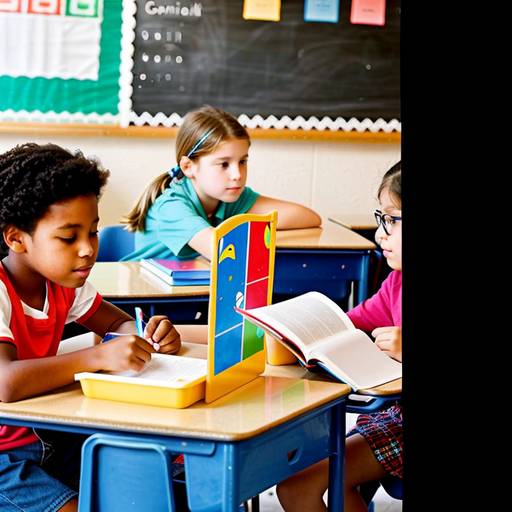
In this 2nd-grade social studies lesson, students will explore various countries around the world to understand their cultures and geographies. The lesson begins with a discussion about the concept of countries, followed by a collaborative group activity where students examine country fact cards that include pictures, landmarks, and cultural information. Each group will select 2-3 countries to research and then create a mini-presentation on a poster board, illustrating key aspects of their assigned countries. Students will share their findings with the class, fostering a sense of global awareness and appreciation for diversity. The lesson concludes with an interactive mapping activity, where students mark the countries they learned about on a world map. Assessment will focus on group participation, creativity in presentations, and individual worksheets summarizing their learnings. Extension activities may include a homework project or a pen pal exchange with a classroom in another country to further enhance their understanding of global connections.
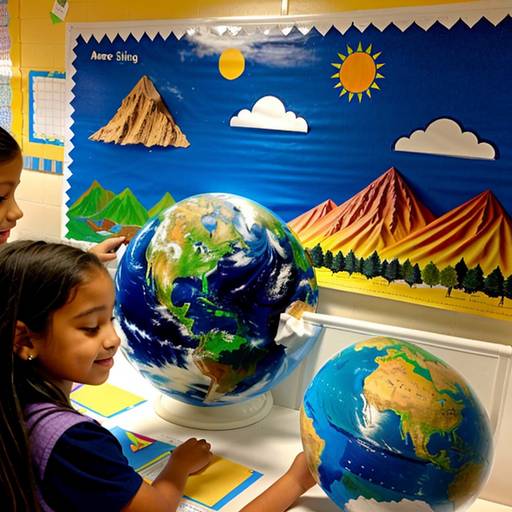
In this 2nd-grade social studies lesson, students will engage in a hands-on exploration of various landforms and their characteristics. The lesson begins with a discussion about what landforms are, complemented by a visual presentation using a world map or globe to identify mountains, valleys, hills, and plains.
Students will work in small groups to create models of their chosen landform using modeling clay or playdough, promoting collaboration and creativity. Each group will present their landform to the class, explaining its features and common locations. To conclude, students will complete a worksheet where they draw and label their favorite landform along with an interesting fact they learned.
Assessment will be based on participation, the quality of the models, and the worksheets. The lesson includes extensions such as reading related literature about landforms and a potential field trip to observe landforms in a local park, ensuring engagement and understanding while catering to diverse learning needs.
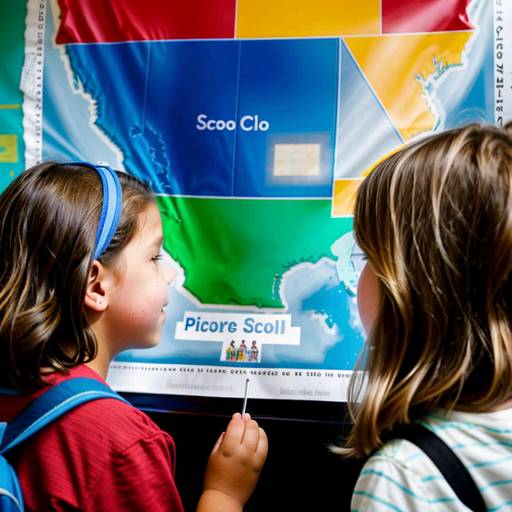
In this 2nd-grade social studies lesson focused on geography and maps, students will gain an understanding of basic map skills, including identifying essential components such as the title, legend, compass rose, and scale. The lesson begins with a discussion about maps, during which students share their prior knowledge and experiences. Following this, students will explore a printed map of their local area, learning about various landmarks and symbols through guided instruction.
After familiarizing themselves with map elements, students will create their own simple maps of their classroom or route to school, using symbols and labels discussed earlier. They will then share their creations in small groups, fostering collaboration and communication. As an independent activity, students will complete a worksheet matching symbols to locations on a community map, followed by a reflection exercise where they articulate the importance of maps and their learnings.
The lesson wraps up with students sharing their drawings and a recap of map significance. Assessment will be based on student participation, completed maps and worksheets, and reflective writing. Extensions may include an introduction to GPS and digital maps for advanced learners. Overall, the lesson aims to deepen students' understanding of map reading and their connection to the community.
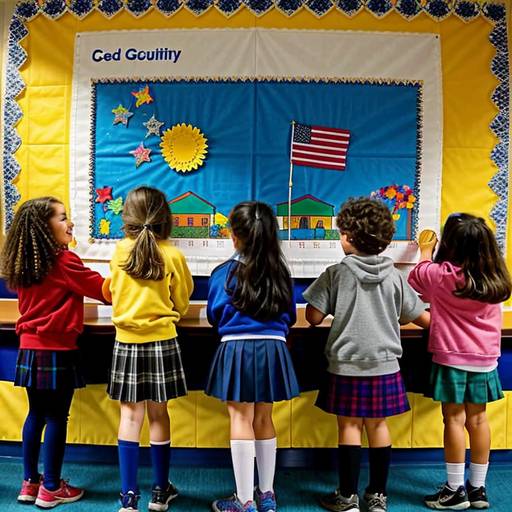
In this 2nd-grade social studies lesson, students will explore the concept of community and the importance of diversity within it. The lesson begins with a discussion about what constitutes a community, encouraging students to share their thoughts and experiences. Students will then complete a worksheet reflecting their unique backgrounds, favorite traditions, and cultural practices, followed by a sharing circle to promote active listening and respect for each other's stories.
The main activity involves creating a collaborative mural that symbolizes the diversity in the classroom. Students will work in small groups to design sections of the mural, incorporating symbols and ideas that represent their backgrounds and cultures. After assembling the mural, the class will reflect on what they learned about each other and the value of diversity in strengthening their community.
Assessment will include observations of student participation, review of their completed worksheets, and evaluation of the mural for creativity and teamwork. To extend the learning experience, a "Diversity Day" can be organized, allowing students to further celebrate their cultural differences by dressing in traditional attire and sharing food or stories with their peers. Overall, the lesson aims to foster a sense of belonging and appreciation for diversity among students.
In this 2nd-grade social studies lesson, students will explore the concept of community and the various roles of community helpers. The lesson begins with a discussion about what a community is, followed by an introduction to different community helpers such as police officers, firefighters, doctors, and teachers. Through interactive group activities, students will analyze the roles of these helpers and how they contribute to the community's wellbeing. Each student will then create a poster featuring a chosen community helper, including facts about their jobs and a drawing. The lesson concludes with students presenting their posters to the class, promoting understanding of community contributions. Assessment will involve observing participation and evaluating the completed projects. An extension activity may include a field trip or guest speaker to further reinforce the concepts learned.