
Filters
Level
Grade
Subject
Subject Area
Subject Topic
Standard(s)
Audience
Keyword
DurationMinutes
1st Grade Science Lesson Plans

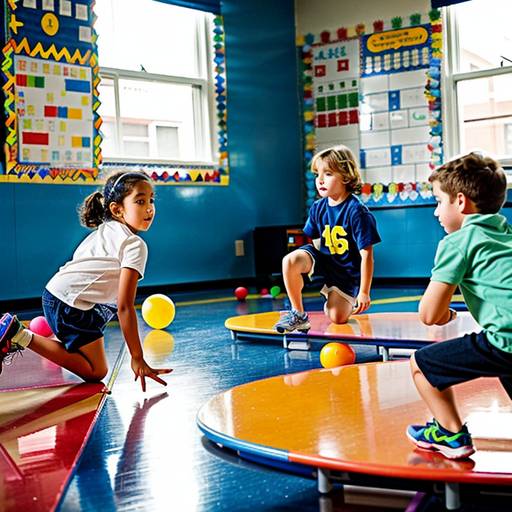
In this 1st-grade science lesson, students will explore the concept of motion through engaging, hands-on activities. The lesson begins with a discussion on motion, introducing key vocabulary such as "push," "pull," "slide," "roll," and "speed." Students are then divided into small groups to participate in three interactive stations: one focusing on rolling objects using toy cars and ramps, another on sliding objects across different surfaces, and the third on pushing and pulling various-sized balls. They will observe and record their findings, discussing how different factors affect movement. To reinforce their understanding, students will reflect on their observations and share their learning with the class. As an optional extension, they can conduct a "Motion Hunt" at home, identifying items that move and how they do so. The lesson encourages active participation and fosters an understanding of motion, distance, and speed through observation and collaboration. Assessment will involve monitoring student engagement and reviewing their notes and drawings to gauge comprehension.
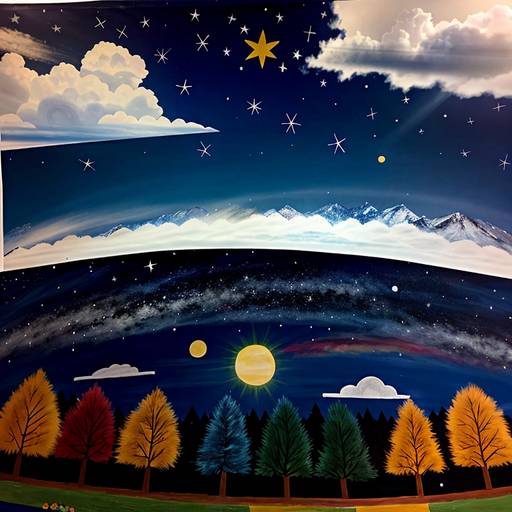
In this 1st-grade Earth Science lesson, students explore basic weather concepts and seasonal changes through engaging activities. The class begins with a read-aloud of a weather-themed book, sparking discussion about students' weather experiences. They learn to identify and describe four types of weather—sunny, rainy, cloudy, and snowy—using visual aids and vocabulary. Following this, the lesson transitions to an exploration of the four seasons, where students share their favorite aspects of each.
Students then participate in a hands-on weather observation activity outside, drawing what they see and recording their descriptions in a journal. Back in the classroom, the class collaborates to create a large "Weather Wheel," representing different weather types through illustrations. The lesson concludes with a group reflection on how weather affects daily life and an assignment for students to observe and document the weather over the following week.
Assessment is based on participation, journal entries, and contributions to the Weather Wheel, fostering students' understanding of weather and its impact on their environment. Optional extensions include creating a weather graph to chart observations over time and introducing a classroom weather station for ongoing exploration.
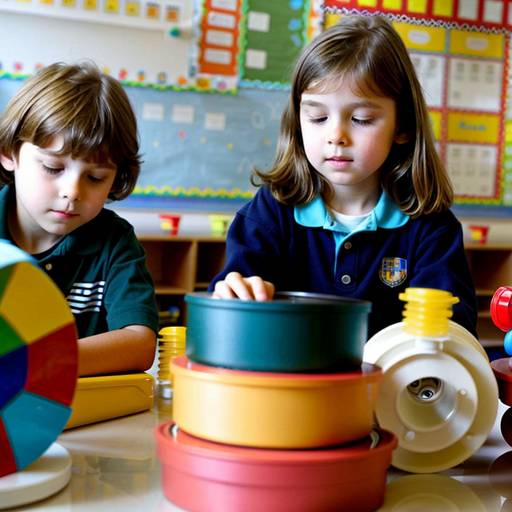
This 1st-grade science lesson focuses on introducing students to the concepts of motion in physical science. The lesson begins with a discussion about what motion is, using simple vocabulary such as push, pull, roll, slide, and stop. Students engage in hands-on activities where they experiment with various objects, including toy cars and balls, to observe how they move when pushed or pulled. Groups are formed to facilitate collaborative exploration, allowing students to work with ramps and different surfaces to see how objects roll, slide, and respond to force. The lesson encourages students to share their findings, reinforcing their understanding and vocabulary. As a wrap-up, students complete a worksheet to illustrate the different motions they explored. The lesson promotes engagement through interactive activities, group collaboration, and encourages critical thinking about everyday motion. Extensions and differentiation strategies are included to accommodate various learning needs.
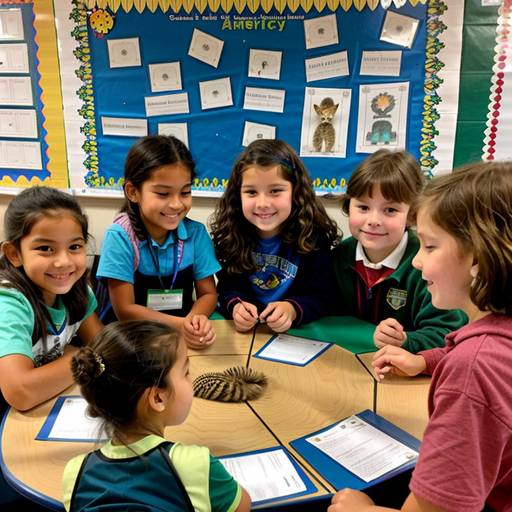
In this engaging 1st-grade science lesson, students will explore the fascinating world of animals, focusing on categorizing them into five main groups: mammals, birds, reptiles, amphibians, and fish. The lesson begins with a group discussion to elicit prior knowledge, followed by a read-aloud of a book that highlights different animals and their habitats. Students will work in small groups to sort animal picture cards into the appropriate categories, fostering teamwork and discussion. After sharing their findings with the class, they will engage in a creative art activity where they draw and label their favorite animal along with one of its basic needs. The lesson concludes with a reflection on what they have learned. Assessment will involve observing group work and reviewing students' drawings for comprehension. Extensions may include inviting a guest speaker or planning a field trip to deepen their understanding of animal care and habitats. Differentiation strategies will be included to support diverse learners. This lesson aims to spark curiosity and a sense of wonder about the animal kingdom while introducing essential life science concepts.