
Filters
Level
Grade
Subject
Subject Area
Subject Topic
Standard(s)
Audience
Keyword
DurationMinutes
1st Grade Science Lesson Plans

In this first-grade science lesson, students will explore the world of plants, focusing on their basic needs, structure, and growth processes. The lesson begins with an engaging discussion about plants, where students will learn key terms such as roots, stems, leaves, and flowers. Through group activities, students will observe and identify the parts of a potted plant, using drawing and labeling to reinforce their understanding.
Next, students will engage in a hands-on planting activity, where they will plant seeds in individual cups, while discussing the necessary conditions for growth. As they care for their plants, they will document their observations and actions on a growth chart. In the closure, students will reflect on their learning and share their discoveries about plants. Assessment will be based on participation, drawings, and a follow-up worksheet related to plant care. Additionally, students will create a Plant Growth Journal to track their plants' growth over time, fostering a deeper appreciation for nature and the environment.
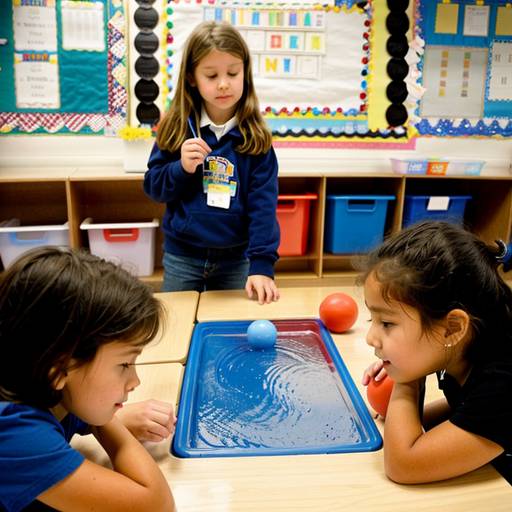
In this 1st-grade science lesson, students explore the fundamental concepts of force, specifically focusing on push and pull, and how these forces affect the motion of objects. The lesson begins with a discussion that engages students in sharing their ideas about what makes things move. They then learn the definitions of push and pull through simple demonstrations with toy cars.
In small group activities, students investigate various objects to determine whether they can push or pull them, fostering collaboration and hands-on learning. The lesson includes a hands-on challenge where students experiment with a ramp to observe how height affects the distance objects travel when pushed or pulled. Students also have the opportunity to measure forces using a spring scale if available.
As the lesson concludes, students reflect on what they learned by sharing insights with a partner and creating drawings that illustrate examples of push and pull. The instructor assesses understanding through observation during activities and by reviewing students' worksheets.
Extensions and adaptations are included to support diverse learning needs, promoting an inclusive and engaging environment. This lesson aligns with the Next Generation Science Standards for K-2 science, providing a foundational understanding of motion and forces.
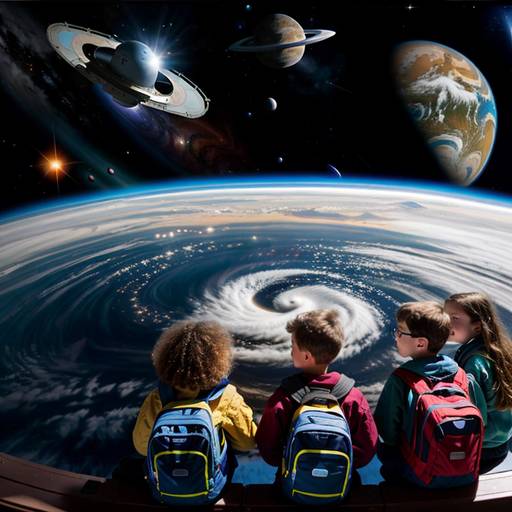
This lesson plan is designed for 1st-grade students to explore the solar system and learn about its components, including the sun and the eight planets. The lesson begins with a discussion to gauge prior knowledge, followed by a storybook reading that introduces key concepts. An interactive segment involves a hands-on activity where students work in small groups to create their own solar system models using craft materials, which fosters teamwork and creativity. As students work on their models, they learn unique facts about each planet. The lesson concludes with a discussion to reinforce learning and a takeaway activity where students create a personalized booklet about the solar system. The plan includes options for engaging videos or online games to further enhance learning. Assessment is based on observation during activities and the completion of the personalized booklets. Differentiation strategies are included to support all learners, ensuring an inclusive and engaging experience for every student.
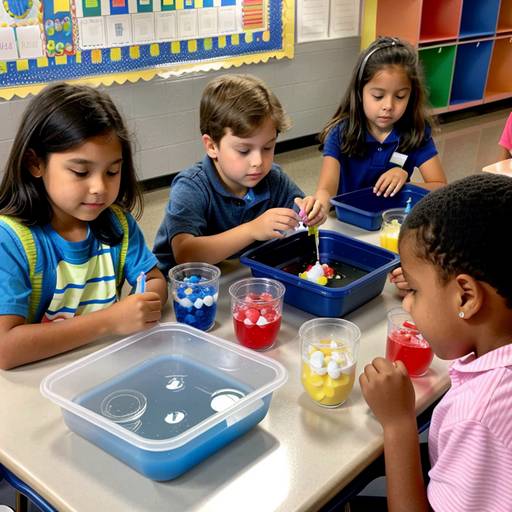
In this 1st grade science lesson, students will explore the concept of matter by identifying and classifying materials as solids, liquids, or gases. The lesson begins with a discussion where students share examples from their surroundings, followed by an explanation of the properties of each state of matter.
The class will then divide into small groups to engage in hands-on exploration at three different stations: observing solids with magnifying glasses, pouring water to understand liquids, and inflating balloons to demonstrate gases. After completing the stations, students will reconvene for a group discussion to share their findings, contributing to a class chart that summarizes the characteristics and examples of each state of matter.
An interactive sorting game will allow students to classify various objects into the appropriate category. The lesson concludes with a recap of the states of matter, encouraging students to reflect on their learning. For homework, students will find items at home that represent each state and prepare to share them in the next class. This engaging and interactive lesson fosters curiosity and a foundational understanding of physical science concepts related to matter.
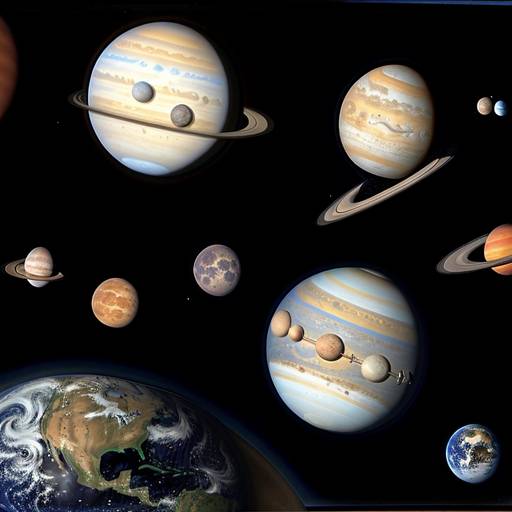
In this first-grade science lesson, students will explore the solar system by learning about the eight major planets. The class will begin with a discussion about space and a short video to engage students. Each planet will be introduced with fun facts and images, helping students understand their unique characteristics and order from the sun.
To enhance engagement, students will participate in a "Planet Parade," where they will work in small groups to represent their assigned planet using various materials. Following this activity, they will create their own space scenes on black construction paper, incorporating at least one planet and artistic elements like stars and the sun.
The lesson will conclude with students sharing their creations with the class and recapping what they have learned about the planets. Assessment will be based on participation and creativity during group activities, presentations, and optional worksheets to reinforce their understanding. Extensions may include a field trip to a planetarium or introducing stars and constellations in future lessons.
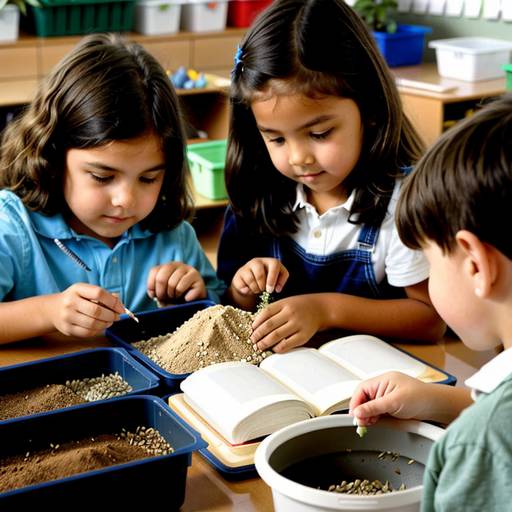
In this first-grade life science lesson, students will embark on an engaging exploration of plants, focusing on the parts of a plant and the process of growth from seeds. The lesson begins with a discussion about what plants need to thrive, fostering curiosity and activating prior knowledge. Students will have hands-on experience as they observe various seeds using magnifying glasses, noting their characteristics, and sharing their findings with the class.
Following this exploration, students will participate in a planting activity, where they will prepare small pots with soil, plant their seeds, and learn about the care required for their growing plants, such as sunlight and water. Each student will keep a Plant Growth Journal to record their observations and track changes in their plants over time.
The lesson wraps up with a review of key concepts and a creative poster activity that reinforces their learning about plant anatomy and growth. Through observation, hands-on activities, and collaborative discussions, students will gain a foundational understanding of the importance of plants in our ecosystem and the role of seeds in their growth. Opportunities for assessment will include observing participation and reviewing journals and posters for comprehension.
This 1st-grade science lesson focuses on introducing students to the world of plants and their essential parts. Students will learn to identify and describe the functions of the main parts of a plant—roots, stems, leaves, and flowers—while understanding what plants need to grow, such as sunlight, water, and soil. The lesson begins with a discussion and visual aids, followed by hands-on exploration of real plants in small groups. Each group will present their findings to the class. Students will then engage in a creative craft activity to create and label their own plant diagrams. The lesson concludes with a review of the plant life cycle using a poster, allowing students to share their insights. Assessment will be based on participation, group discussions, and the quality of their plant diagrams. The lesson may be extended with a planting activity, encouraging students to observe plant growth over time. Overall, this lesson provides an interactive and engaging way for young learners to explore life science concepts related to plants.
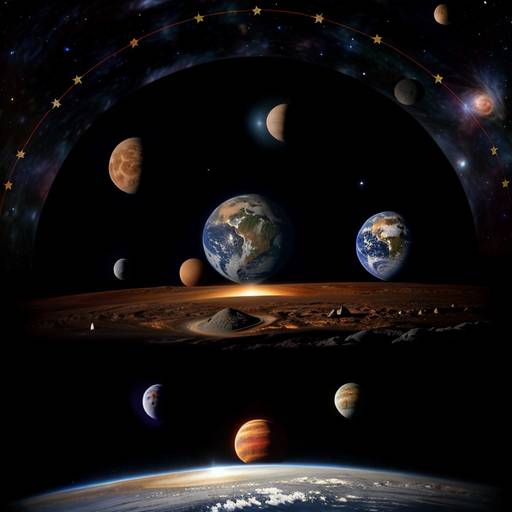
In this 1st-grade science lesson, students will explore the fascinating world of astronomy and the solar system. The lesson begins with engaging questions about the night sky, followed by a visual introduction to the sun, stars, and planets using flashcards and a large poster. Through a read-aloud session featuring a space-themed storybook, students will learn about the planets and their unique characteristics.
The activity portion of the lesson allows students to create their own models of the solar system using black construction paper, glitter, and stickers, encouraging creativity while reinforcing their understanding of the planets' order and differences. The lesson concludes with a sharing session where students reflect on what they learned and share their models with the class.
Assessment will be conducted through observation during the crafting activity and a checklist to ensure students can name planets and distinguish between stars and planets. Extensions are suggested for take-home activities, while adaptations are made to support diverse learning needs, ensuring an inclusive and interactive experience for all students. The overall goal is to ignite curiosity about space and lay a foundation for further exploration in astronomy.
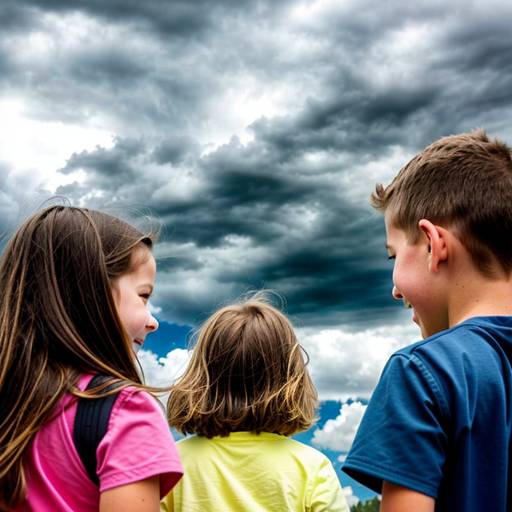
In this 1st-grade Earth Science lesson plan, students will explore various types of weather, including sunny, rainy, cloudy, and stormy conditions. The lesson begins with a discussion about weather, prompting students to share their ideas, followed by a reading of a weather-themed story to enhance understanding.
Students will then engage in a hands-on activity where they create weather charts using cotton balls to represent clouds and small cups of water to simulate rain on blue construction paper. This creative project allows them to visually represent their understanding of different weather types.
The lesson concludes with students sharing their weather charts with partners, reinforcing their learning through verbal communication. Overall, the students will gain insights into how weather impacts daily life, fostering an appreciation for the diverse conditions of our planet. Assessment will be based on participation and the completed weather charts, with potential extensions including a daily weather journal.
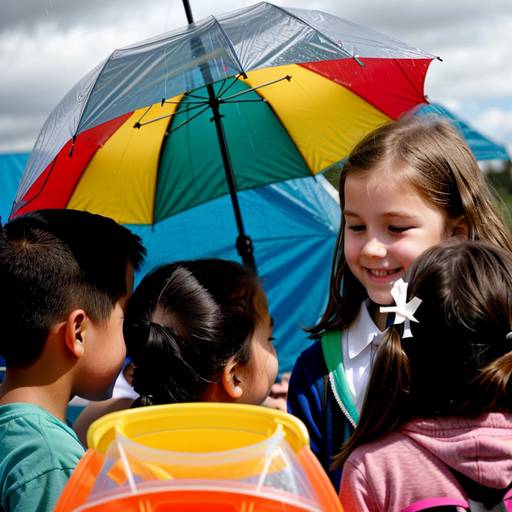
In this first-grade Earth Science lesson, students explore the concepts of weather and the water cycle. The lesson begins with a discussion about different types of weather, where students express their preferences and feelings associated with various conditions. Weather symbols are introduced to help students identify sunny, rainy, snowy, windy, and cloudy weather.
Next, the teacher presents a diagram of the water cycle, explaining its stages: evaporation, condensation, precipitation, and collection, potentially demonstrating these concepts with a simple experiment. Students then participate in an engaging activity where they create weather journals, illustrating their favorite weather and writing a sentence about what activities they enjoy during that weather.
After sharing their journals with classmates, the lesson concludes with a recap and an exit ticket activity, where students draw a weather symbol and describe something they learned. Throughout the session, students are assessed based on their participation, journal entries, and exit tickets, enabling them to actively engage with fundamental Earth science concepts while expressing their creativity. Extensions for the lesson may include outdoor observation and weather forecasting activities.