
Filters
Level
Grade
Subject
Subject Area
Subject Topic
Standard(s)
Audience
Keyword
DurationMinutes
1st Grade Language Arts Lesson Plans

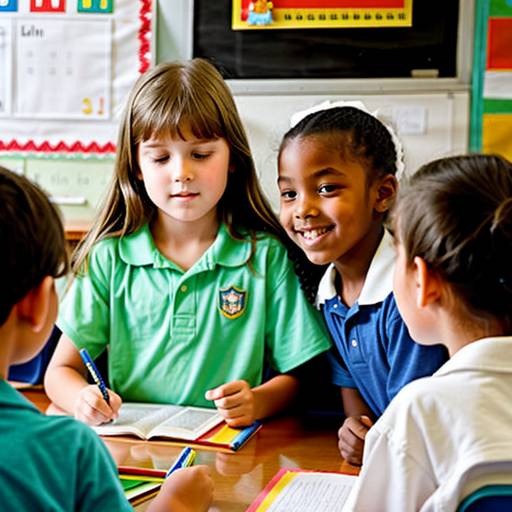
In this 1st grade Language Arts lesson, students will explore the fundamentals of grammar and punctuation through an engaging and interactive approach. The lesson begins with a discussion about safaris and animals to capture students' interest, followed by an introduction to the parts of a sentence, focusing on subjects and verbs. Students will learn about three key punctuation marks: periods, question marks, and exclamation marks, and how to use them correctly in sentences.
Through guided group activities, students will collaborate to create sentences about animals, identifying the subject and verb while ensuring proper punctuation. Independent practice will involve writing their own sentences on a worksheet, where they will underline the subject, circle the verb, and add the correct punctuation marks.
The lesson concludes with a review of the main concepts and a sharing session, allowing students to celebrate their work. Assessment will be carried out through observation during group activities and by collecting worksheets to evaluate understanding. Extensions for advanced learners are included to encourage further development of sentence complexity and creativity in writing.
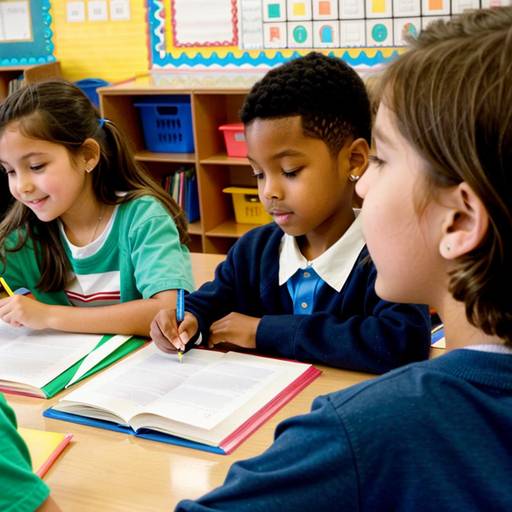
In this first-grade language arts lesson, students will explore the basics of grammar and punctuation by learning about sentences, including their subjects and predicates. The lesson begins with a discussion on the importance of sentences in communication. Students will be introduced to three key punctuation marks: periods, question marks, and exclamation marks, along with their appropriate uses.
Through guided practice, students will work collaboratively to identify and add the correct punctuation to provided sentences displayed on chart paper. They will then complete a worksheet independently, where they will practice adding punctuation and labeling the components of simple sentences.
The lesson concludes with a review of the key concepts and an opportunity for a few students to share their written sentences. Assessment will take place through the collection of worksheets, and early finishers will have an extension activity involving illustration. Overall, the lesson aims to engage students in understanding the foundational elements of sentence structure and punctuation.
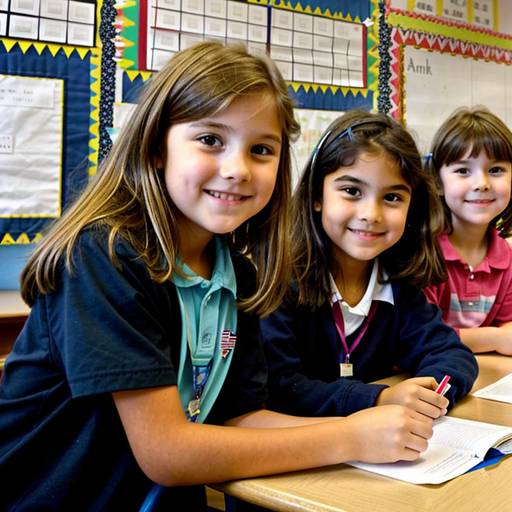
In this 1st Grade Language Arts lesson, students will learn about grammar and capitalization, specifically focusing on the importance of capitalizing the first letter of a sentence. The lesson begins with a class discussion on why capitalization is necessary, followed by a demonstration using incorrect sentences to illustrate the concept. Guided practice involves students working in pairs to identify and correct sentences lacking capital letters. Afterward, students will complete a worksheet individually to reinforce their understanding. The lesson concludes with students sharing their corrected sentences, emphasizing the role of capitalization in writing. Extension activities and differentiation strategies are included to cater to various learning needs, ensuring all students can engage with the material effectively. Assessment occurs through observation during activities and review of completed worksheets. Reflection on the lesson's effectiveness will help inform future instruction.
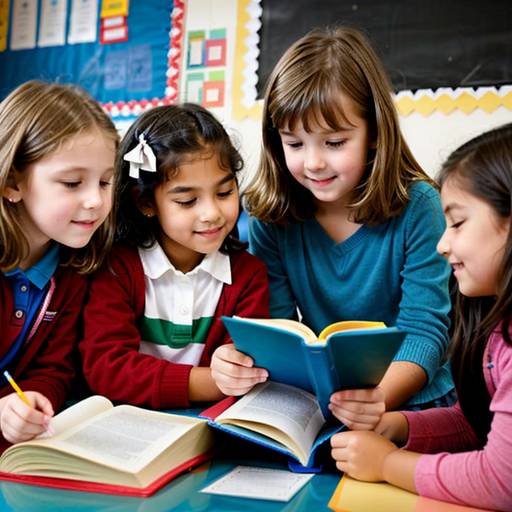
This lesson plan focuses on enhancing first-grade students' reading skills through an engaging exploration of story elements and reading strategies. Students will learn to identify key components of a story, including characters, setting, and plot, while practicing strategies such as predicting, questioning, and summarizing. The session begins with a read-aloud of a picture book, where students participate by making predictions and posing questions. Following the read-aloud, the class engages in a group discussion to fill out a graphic organizer, summarizing the story's elements. In small groups, students will then work with different picture books to identify similar story components and share their insights with the class. The lesson concludes with a recap of the strategies developed, and all students receive recognition for their participation. Assessments will include observations of student engagement and comprehension through group work and the completion of graphic organizers. Differentiation strategies are also included to support varying proficiency levels among students.
In this first-grade Language Arts lesson, students will engage in creative writing by crafting their own short stories. The lesson begins with a group reading of a picture book that highlights key story elements such as character, setting, and plot, prompting a discussion to identify these components. Students will then use a provided worksheet to brainstorm and outline their stories, focusing on the main character, setting, and sequence of events. After drafting their stories, they will illustrate a scene from their narratives. The lesson concludes with students sharing their stories in pairs or small groups, fostering a supportive environment for feedback. Assessment will involve observing participation and reviewing their worksheets for comprehension of story elements. The lesson encourages creativity and confidence in writing while emphasizing the joy of storytelling. Extensions are available for students needing further challenge or engagement.
In this 1st grade Language Arts lesson plan, students will explore narrative writing by understanding its structure, which includes a beginning, middle, and end. The lesson begins with a discussion about stories, followed by a read-aloud of a sample story to illustrate key components. Students will collaboratively brainstorm and fill out a Graphic Organizer, learning to identify and organize elements of their own narratives. After receiving writing materials, each student will create their own story using the organizer as a guide, incorporating descriptive language. The lesson concludes with students sharing their narratives with the class or in pairs, followed by the opportunity to illustrate their stories. Assessment will focus on participation and the clarity of the narrative structure, with differentiation strategies in place to support varying levels of ability. An extension activity involves displaying student narratives on a "Story Wall" for further engagement.
In this 1st-grade Language Arts lesson plan, students will explore the concept of synonyms, learning to identify and understand words with similar meanings. The lesson begins with a brief introduction to vocabulary and synonyms, using examples and visuals to engage the class. Students will participate in guided activities, including matching word cards that represent synonyms and collaborating in small groups to find synonyms for picture cards. Independent practice will involve completing worksheets where they write synonyms for provided words. The lesson concludes with a recap of the importance of synonyms and an option for students to share findings from a short story. Assessment will occur through observation during group activities and review of completed worksheets, with differentiation strategies in place to support individual learning needs. Students will also be encouraged to explore synonyms at home and share their discoveries in future classes.
In this 1st-grade Language Arts lesson, students will learn about synonyms—words that have similar meanings. The lesson begins with an introduction to the concept of synonyms, using flashcards to illustrate examples. During a read-aloud of a simple storybook, students will participate by identifying synonyms for descriptive words used in the text.
Next, students will be divided into small groups to engage in a synonym matching activity with flashcards. After regrouping, they will share their matched pairs with the class, reinforcing their understanding through discussion. Students will then complete a worksheet that includes exercises related to identifying and using synonyms.
The lesson concludes with students sharing their favorite “word friends” from the day's activities, emphasizing the importance of synonyms in enhancing their communication. Assessment will be based on participation in group activities and the completed worksheets, while potential extensions include creating a classroom “Word Friends Wall” to display new synonyms discovered during reading. Differentiation strategies will be implemented to support varied learning needs.
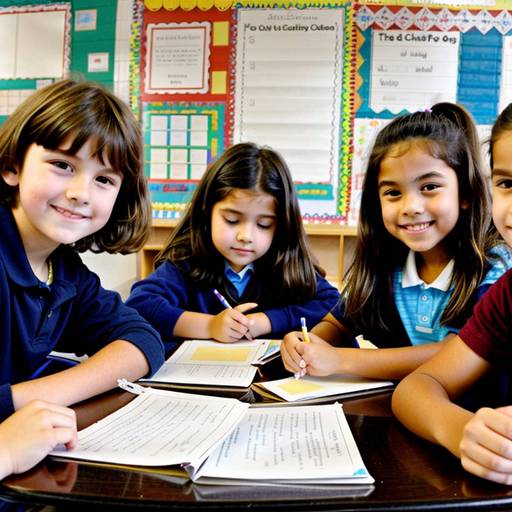
This lesson plan focuses on helping 1st-grade students understand the basic components of sentences, specifically the subject, verb, and object. It begins with an engaging introduction that encourages discussion about what constitutes a sentence. The teacher explains each component and demonstrates how they combine to form a complete sentence.
Students then work collaboratively in small groups using picture prompts to choose subjects, verbs, and objects, ultimately constructing their own sentences. Following guided practice, individual students complete a worksheet where they draw and write their chosen sentences. The lesson concludes with student presentations, fostering a supportive environment for sharing and feedback.
Assessment is based on participation during group activities and the completion of the worksheets. Extensions are provided for advanced learners, and post-lesson reflection encourages continuous improvement of instructional strategies. Overall, the lesson aims to build foundational grammar and sentence structure skills in a fun and interactive way.
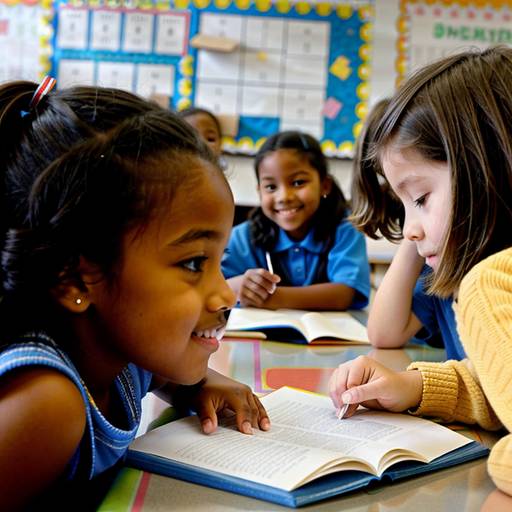
This 1st-grade Language Arts lesson focuses on reading fluency and comprehension. The lesson begins with a discussion about what reading fluency means, followed by an introduction of high-frequency words that will aid in students' reading development. The teacher models fluent reading with a short passage, demonstrating expression and speed.
Students then engage in a paired reading activity, where they take turns reading leveled texts aloud to each other for one minute, allowing them to practice fluency. Following the paired reading, the class participates in a discussion to assess comprehension by answering questions about the story.
For independent practice, students receive fluency exercise sheets to underline high-frequency words and reflect on the text. The lesson concludes with a group reflection, encouraging students to share their experiences and consider reading at home.
Assessment occurs through observation during partner reading, review of comprehension responses, and collection of the fluency sheets. The lesson includes extensions for advanced students and differentiation to support those who may need additional help, ultimately aiming to foster a love of reading and improve fluency skills in a fun and interactive manner.