
Filters
Level
Grade
Subject
Subject Area
Subject Topic
Standard(s)
Audience
Keyword
DurationMinutes
Preschool Phonics Lesson Plans
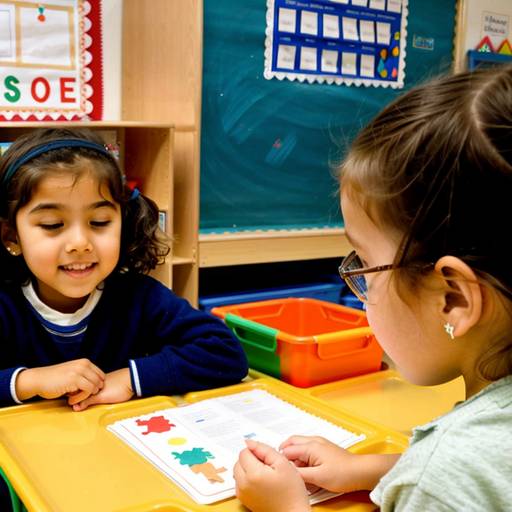
In this preschool language lesson, students will engage in activities designed to enhance their phonemic awareness by exploring letter sounds. The session begins with a warm gathering where children share their knowledge of letters. They will then participate in a flashcard game that introduces letter sounds associated with corresponding objects, encouraging repetition and sound recognition.
Next, a sound hunt activity will involve children finding picture cards that start with specific sounds, fostering both individual exploration and group sharing. Following this, students will use sound shakers while singing along to phonics songs, reinforcing their understanding of letter sounds through movement and rhythm.
The lesson will conclude with a wrap-up discussion about favorite sounds and a brief read-aloud of a phonics-based picture book to reinforce the day’s learning. Throughout the session, children are assessed on their ability to recognize and produce sounds while participating actively in the activities. Optional extensions for future learning may include creating a collaborative phonics display.

This preschool language lesson focuses on introducing young learners to basic phonics concepts through an engaging, ocean-themed experience. The session begins with a welcoming environment and a phonics song that encourages children to participate actively.
Students embark on a letter hunt, finding letter cutouts around the room and practicing their sounds. Following this, they interact with sea creature puppets to combine phonics with imaginative play. A sensory bin filled with water beads and hidden letter beads provides hands-on exploration and reinforces letter recognition.
Creative time is dedicated to coloring phonics-themed sheets and crafting a sea scene, encouraging children to connect letters with words and sounds. The lesson concludes with a group discussion, allowing students to share their learning experiences while revisiting the phonics song.
Throughout the activities, children receive support and adaptations based on their individual needs, ensuring an inclusive learning environment. Caregivers are encouraged to reinforce these phonics concepts at home, promoting continued learning beyond the classroom.
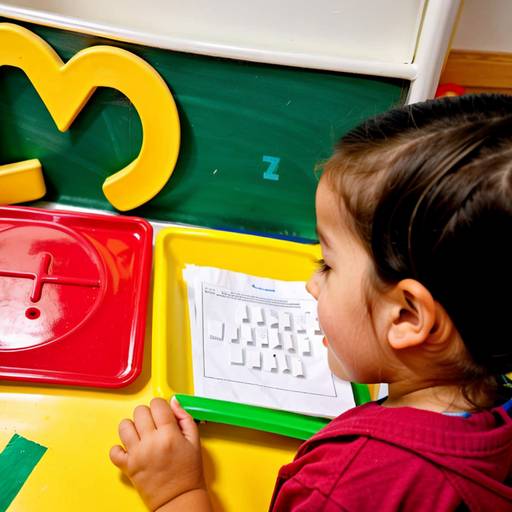
This preschool language lesson plan focuses on introducing young children to the sounds of letters in the alphabet, helping them associate each sound with familiar words and objects. The lesson is designed to last 30-40 minutes and includes a variety of engaging activities to reinforce phonetic awareness.
The session begins with a welcome song that incorporates letters and sounds, followed by a warm-up activity where children participate in clapping and repeating letter sounds. This is followed by an interactive introduction to letter sounds using flashcards and picture cards, encouraging students to think of words that start with those letters.
An interactive Bingo game reinforces the learning by allowing children to recognize and cover letters and sounds as they are called out. A storytime segment features a phonics-themed book, where children are encouraged to identify sounds within the text.
To conclude the lesson, students engage in a rhythmic dance, responding to letter sounds with movements. The session wraps up with a review of the sounds learned and distribution of stickers as rewards for participation. Overall, the plan emphasizes a fun and engaging approach to early literacy while fostering a love for language and learning among preschoolers.

The lesson focuses on teaching preschool students the sounds associated with specific letters of the alphabet through interactive activities. It begins with a brief introduction to letter sounds, utilizing flashcards and picture cards to engage students and promote recognition. A scavenger hunt follows, where children search for objects around the room that correspond to the sounds they’ve learned. This is complemented by a creative group activity where students make crafts related to specific letters, encouraging them to express their understanding through art. The lesson concludes with an enjoyable sing-along that reinforces phonics concepts, followed by a review to gauge understanding and celebrate participation. Extension activities are suggested for ongoing engagement with phonics during the week. The overall approach blends auditory, visual, and kinesthetic learning methods to create a fun and effective phonics experience.