
Filters
Level
Grade
Subject
Subject Area
Subject Topic
Standard(s)
Audience
Keyword
DurationMinutes
Kindergarten Physical Science Lesson Plans


In this Kindergarten science lesson, students will engage with the fundamental concept of matter, specifically exploring its three states: solid, liquid, and gas. The lesson begins with a discussion to define matter, accompanied by visuals to illustrate the different states. Students are then organized into small groups to participate in a hands-on activity where they sort various objects into the three categories based on their properties.
Following this, the students conduct simple experiments to observe the characteristics of solids and liquids using water and rocks, and explore gases by inflating balloons. They create solid shapes with playdough, reinforcing their understanding of the distinctions between the different states of matter.
To conclude, students complete a worksheet that reinforces their ability to identify types of matter, followed by a reflection discussion to share their insights. The lesson incorporates hands-on activities, visual aids, and collaborative learning, fostering engagement and curiosity about the physical properties of the world around them. Extensions and modifications are also included to cater to diverse learning needs, ensuring all students have the opportunity to participate and learn effectively.
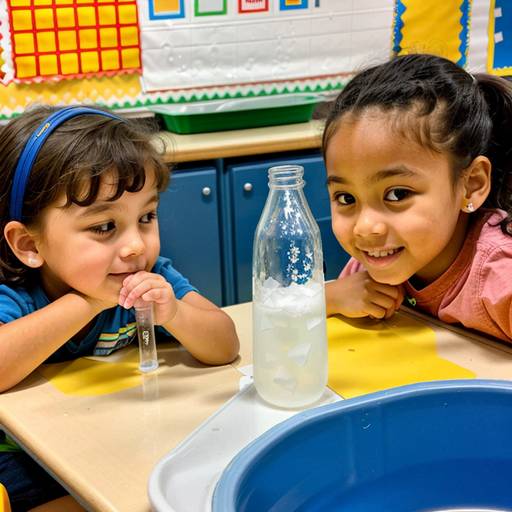
This Kindergarten science lesson introduces students to the concept of matter by exploring its three states: solids, liquids, and gases. The lesson begins with a discussion about everyday objects to help students recognize different forms of matter. Demonstrations using ice cubes, water, and balloons illustrate the unique properties of each state. Students engage in a hands-on activity where they classify a variety of materials into the three categories while practicing observation skills. A collaborative Venn diagram activity allows them to visualize the characteristics and overlaps between states of matter. The lesson culminates in a fun outdoor experience with bubble-making, reinforcing the concept of gas in a playful manner. Throughout the lesson, students participate in discussions and group work that fosters understanding and retention of key scientific concepts related to matter. Finally, a simple exit ticket provides an assessment of their learning, allowing for reflection and additional exploration if desired.
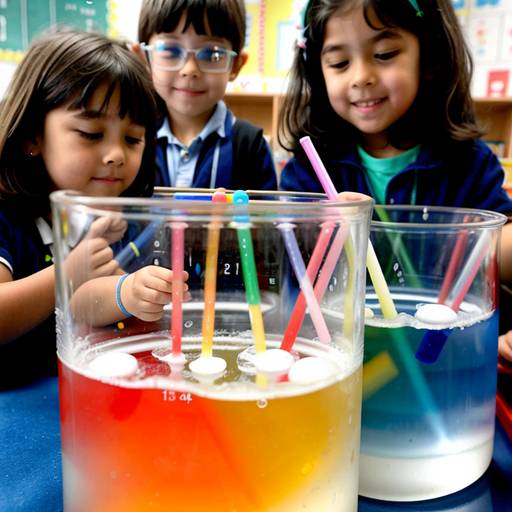
This kindergarten science lesson focuses on exploring the three states of matter: solids, liquids, and gases. Students engage in discussions to define and identify matter, using various objects and visual aids. Through hands-on activities, they sort items into categories based on their state and perform an experiment observing the transformation of ice (solid) into water (liquid). The lesson emphasizes participation and critical thinking as students share their observations and examples from daily life. Assessment is conducted through observation and a sorting worksheet to evaluate understanding. Extensions may include cooking activities and read-alouds to deepen knowledge on the topic. Overall, the lesson promotes an interactive approach to understanding physical science concepts related to matter.
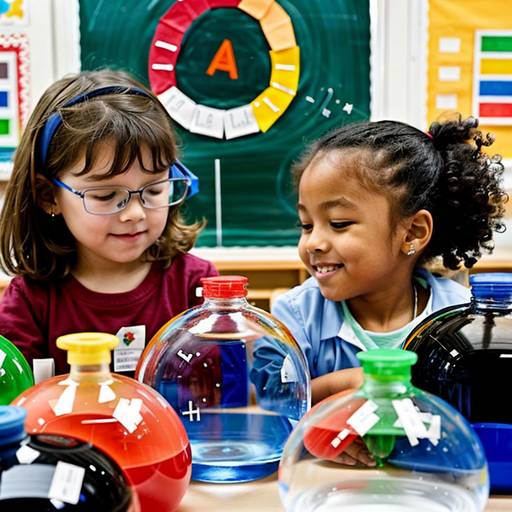
In this kindergarten science lesson, students will explore the concept of matter by learning to identify and classify it into three states: solids, liquids, and gases. The lesson begins with an engaging introduction, using everyday objects to capture students' attention and spark their curiosity about matter. Direct instruction follows, where simple definitions and examples are provided alongside a visual aid to reinforce understanding.
Students will then participate in hands-on exploration stations, where they will interact with solid objects, observe the behavior of liquids, and experiment with gases using balloons. After the exploration, a group discussion will allow students to share their observations and reflect on their experiences at each station.
To conclude the lesson, students will journal about what they've learned by drawing and labeling items from each state of matter. Assessment will include observational notes during activities and review of the journal entries to gauge comprehension. The lesson can be extended in future sessions to include concepts of changing states of matter, fostering further curiosity and engagement.