
Filters
Level
Grade
Subject
Subject Area
Subject Topic
Standard(s)
Audience
Keyword
DurationMinutes
Infant Social Play Lesson Plans


This lesson plan focuses on enhancing social skills in infants aged 6 to 12 months through interactive social play activities. The session begins with a welcoming song and a demonstration of sharing a soft toy, prompting infants to pass toys to each other. Following this, infants engage in a ball game that encourages turn-taking as they roll and toss colorful, soft balls among themselves. Musical play is introduced next, where infants explore instruments and move rhythmically, promoting joint attention and cooperative engagement. The session continues with bubble play, allowing infants to chase bubbles and interact with peers in an exciting way. To conclude, infants engage with mirror play blocks, observing their reflections and those of their peers, while reinforcing social recognition. Throughout the activities, caregivers are encouraged to observe and support positive interactions, and suggestions for extending social play at home are provided. This plan fosters connection and social development through fun and age-appropriate activities.
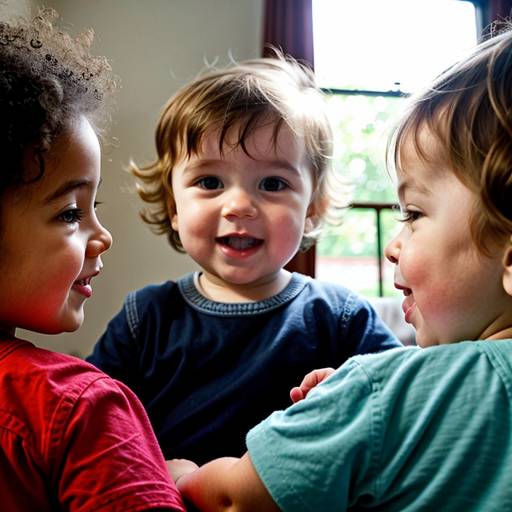
This lesson plan focuses on developing social skills in infants through engaging and interactive play activities. The primary goal is to encourage social interaction, communication, and collaboration among peers.
The session begins with a welcoming introduction to set a joyful tone and involve caregivers in the experience. Activities include exploring soft toys to promote sharing, a sensory ball toss that fosters turn-taking, and a fabric waving activity designed to inspire movement and cooperative play. Infants then engage in a block-building task, working together to create a tower while practicing communication and teamwork.
The lesson concludes with a reflection circle where caregivers can share observations of their infants’ interactions, emphasizing the significance of social play in forming friendships and enhancing social expression. The structure allows for adaptations to accommodate different developmental needs, ensuring an inclusive environment where all infants can thrive socially.
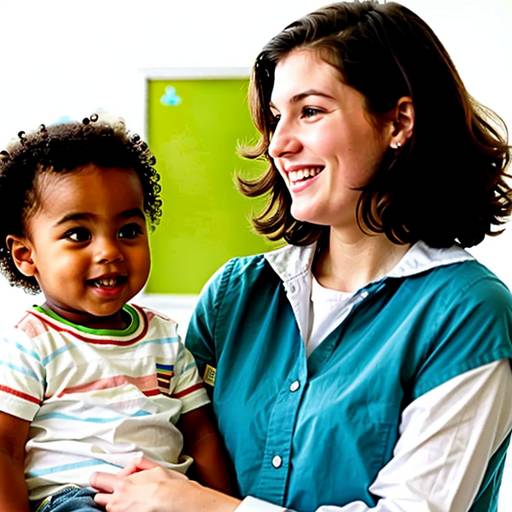
This lesson plan focuses on enhancing social skills among infants through engaging and interactive play activities. It begins with a welcoming circle where caregivers and infants gather, followed by sensory exploration using colorful bins to facilitate sharing and interaction. Partner games with mirrors encourage imitation and turn-taking, fostering social connections. Cooperative play with soft blocks and plush toys allows infants to explore together while caregivers support their interactions. A group movement activity involving a parachute promotes fun and teamwork. The session concludes with reflective circle time where caregivers share observations and a short story is read to reinforce concepts of social play. Overall, the plan emphasizes the importance of play in developing foundational social skills, offering caregivers insights and follow-up activities to continue nurturing these skills at home.
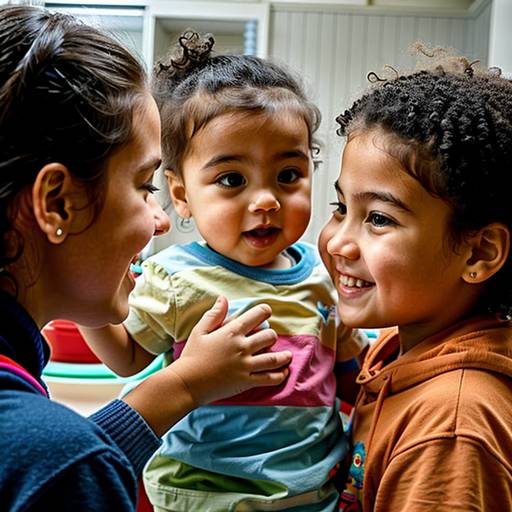
The lesson plan focuses on nurturing social skills in infants aged 12-24 months through engaging activities centered around social play. It aims to promote cooperation, turn-taking, and communication among peers in a supportive environment. The session begins with a welcoming circle time that sets a warm tone and introduces simple social concepts.
Infants will enjoy a group snack where sharing is encouraged, followed by rotating through interactive play stations featuring soft blocks, balls, and puppets. This setup facilitates joint engagement and play among the children. A storytime segment allows caregivers to discuss emotions and actions of the characters, further enhancing social understanding.
The lesson concludes with a fun music and movement activity that encourages imitation and expressive play. The final circle time wraps up the session with a goodbye song, reinforcing community ties. Throughout the lesson, caregivers receive observations and suggestions to continue fostering social interactions at home, ensuring continued development of these essential skills.