
Filters
Level
Grade
Subject
Subject Area
Subject Topic
Standard(s)
Audience
Keyword
DurationMinutes
Infant Hand Eye Coordination Lesson Plans

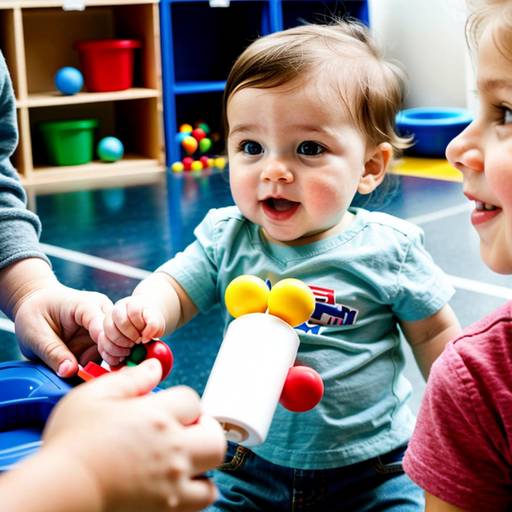
This lesson plan focuses on enhancing hand-eye coordination in infants aged 6-12 months through interactive, play-based activities. The session begins with a welcoming introduction, where caregivers are informed about the objective of developing motor skills.
The warm-up involves engaging infants with toy instruments, promoting sound exploration. The first main activity encourages infants to crawl towards rolling soft balls, fostering movement and visual tracking. Next, colorful scarves are tossed in the air, inviting infants to reach and grasp them as they fall, which further develops their coordination.
Building on motor skills, a stacking blocks activity allows infants to either stack or knock down blocks with caregiver assistance, reinforcing grasping abilities. Additionally, container play encourages reaching and transferring small sensory toys, promoting fine motor skills.
The session concludes with a calming circle time where a familiar nursery rhyme is sung, incorporating hand movements to maintain engagement. Parents receive guidance on safe play practices at home and suggestions for continuing development through daily activities. Overall, the lesson emphasizes fun, interactive learning while fostering essential motor skills in a supportive environment.

This lesson plan focuses on enhancing hand-eye coordination for infants aged 12-24 months through a series of engaging activities designed for a small group with caregivers. The session lasts 30-40 minutes and includes five interactive tasks: rolling a soft ball back and forth, tossing and catching colorful scarves, building with stacking and foam blocks, playing a bowling game with empty plastic water bottles, and bursting bubbles. Each activity aims to develop fine motor skills and visual tracking in a fun and social environment. Caregivers are encouraged to participate actively and engage with their infants, promoting interaction and cooperative play. The lesson concludes with a group reflection and a handout for caregivers, providing suggestions for continuing motor skill development at home, ensuring a comprehensive approach to nurturing early motor skills in a supportive setting. Assessment is carried out through observations to tailor future sessions effectively.

This lesson plan focuses on developing hand-eye coordination in infants aged 6 to 12 months through engaging and interactive play activities. The session begins with an introduction that captivates infants’ attention using colorful materials. The activities are designed to enhance motor skills and encourage social interactions among infants and their caregivers.
The first activity involves rolling soft balls and encourages infants to reach for them, promoting both movement and coordination. In the second activity, infants use colorful stacking blocks, developing fine motor skills as they practice grasping and stacking. The third activity introduces texture exploration with large, varied fabric squares, stimulating sensory awareness and visual processing.
Finally, a bouncing and catching exercise with inflatable balls fosters effective coordination and collaborative play. The lesson concludes with a group circle where infants can explore freely and engage in a sing-along, further promoting social bonding. Throughout the session, caregivers receive feedback on their infant's progress, highlighting the importance of these foundational skills and suggesting simple activities to reinforce learning at home. Adaptations are included to meet the varying skill levels of infants, ensuring a fun and inclusive environment for all participants.