
Filters
Level
Grade
Subject
Subject Area
Subject Topic
Standard(s)
Audience
Keyword
DurationMinutes
Infant Motor Skills Lesson Plans


This lesson plan is designed for infants aged 12 to 24 months, focusing on developing balance and coordination through playful activities. The session begins with a warm-up song to engage the infants and get them moving. Key activities include walking along a low balance beam to practice balance, stepping in and out of hula hoops to enhance coordination, and participating in a gentle tossing game with lightweight balls or beanbags to improve hand-eye coordination. The lesson concludes with a free dance session using colorful scarves, promoting rhythmic movement and coordination.
Throughout the lesson, educators emphasize safety and provide support where needed, ensuring that each infant is appropriately challenged based on their developmental level. The session ends with a calming circle discussion about favorite activities, fostering communication and relaxation. Educators observe each infant's engagement and provide encouragement, aiming to boost confidence while enhancing motor skills in a fun and interactive manner. Overall, the plan offers a structured yet flexible approach to supporting the physical development of infants through movement and play.
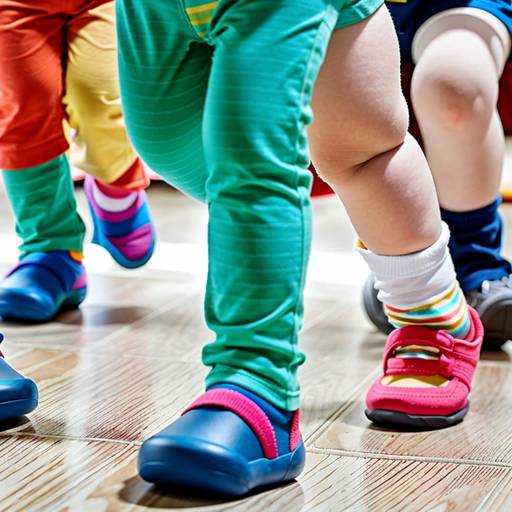
This lesson plan is designed to enhance gross motor skills in infants and toddlers through engaging and interactive activities. Over a 45-minute session, infants and their caregivers will participate in various movement-focused exercises aimed at promoting crawling, walking, and overall physical coordination.
To kick off the lesson, a warm-up period will allow participants to stretch and explore their environment. The activities will flow into a crawling challenge, where infants navigate an obstacle course made of soft toys, encouraging them to develop their crawling abilities while engaging with peers. Following this, walking will be emphasized with the use of push toys and a designated walking path that helps build stability and balance.
Incorporating music, a wiggle and dance segment will provide a fun opportunity for movement and rhythm, allowing infants to express themselves and enjoy physical activity. The session will conclude with a cool-down period, fostering relaxation as caregivers and infants reflect on their experiences.
Throughout the lesson, caregivers will have the opportunity to observe and support their child's growth in gross motor skills while fostering social interaction among participants. The plan also includes provisions for differentiation to accommodate infants at various developmental stages, ensuring an inclusive and supportive environment for all. Feedback from caregivers will also be encouraged to inform future activities and adjust to the needs of the group.
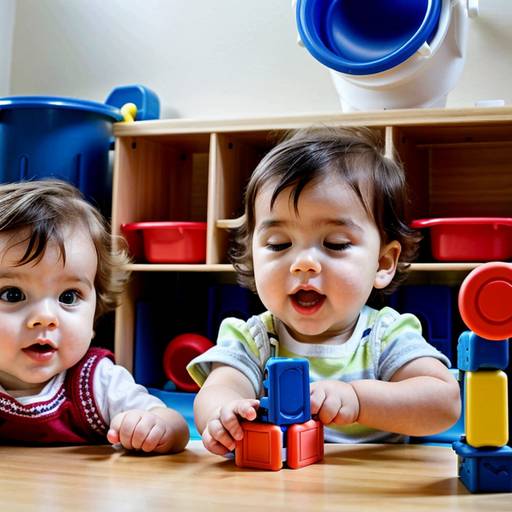
This lesson plan aims to help infants aged 6 to 12 months develop fine motor skills through a series of engaging activities designed to enhance hand-eye coordination, grasping, and manipulation. The session begins with a welcoming circle that includes a song with hand movements to foster engagement.
Infants will explore texture through soft sensory balls and wooden blocks in a sensory exploration station. Following this, they will have creative manipulation time using non-toxic play dough to squish and roll, promoting finger strength. A sorting and grasping activity with large buttons and containers will encourage pinching and dropping skills, while a fun pull and tug segment with fabric strips will focus on grasping and pulling.
The lesson concludes with a musical movement finale, where infants can explore sound using easy-to-grab shakers. Observations will be made regarding each child’s progress, and caregivers will be encouraged to support fine motor development at home through shared insights. Overall, this interactive session promotes the essential fine motor skills critical for infants' growth and future exploration.
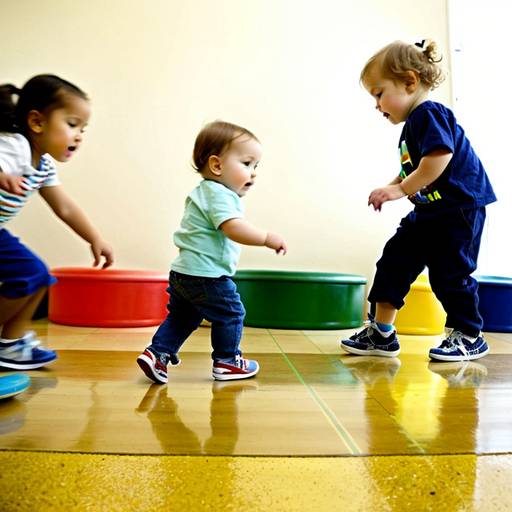
This lesson plan aims to enhance gross motor skills in infants aged 6 to 12 months through engaging, interactive activities. The session begins with a welcoming circle and a fun song, followed by warm-up stretching and tummy time to activate key muscle groups.
The main activities include a mini obstacle course designed to promote crawling, climbing, and coordination, as well as a ball-rolling game to improve hand-eye coordination and arm movements. The session culminates with a lively dance party, allowing infants to bond with caregivers while moving to upbeat music.
To conclude, a gentle cool-down with calming music and story time helps relax the infants and caregivers alike. Caregivers receive observational feedback regarding their child's participation and suggestions for at-home activities to further support gross motor skill development, emphasizing the importance of play in promoting physical movement and confidence in infants.
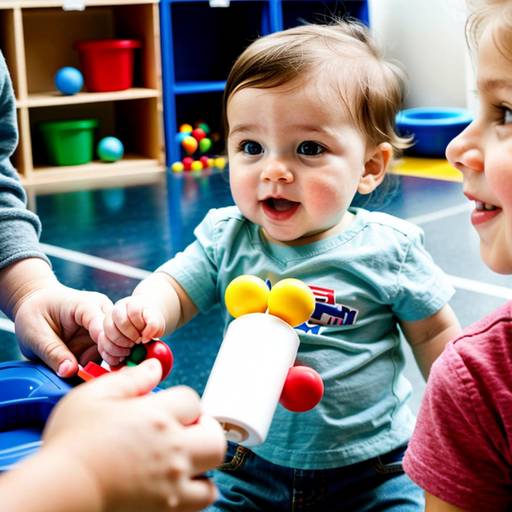
This lesson plan focuses on enhancing hand-eye coordination in infants aged 6-12 months through interactive, play-based activities. The session begins with a welcoming introduction, where caregivers are informed about the objective of developing motor skills.
The warm-up involves engaging infants with toy instruments, promoting sound exploration. The first main activity encourages infants to crawl towards rolling soft balls, fostering movement and visual tracking. Next, colorful scarves are tossed in the air, inviting infants to reach and grasp them as they fall, which further develops their coordination.
Building on motor skills, a stacking blocks activity allows infants to either stack or knock down blocks with caregiver assistance, reinforcing grasping abilities. Additionally, container play encourages reaching and transferring small sensory toys, promoting fine motor skills.
The session concludes with a calming circle time where a familiar nursery rhyme is sung, incorporating hand movements to maintain engagement. Parents receive guidance on safe play practices at home and suggestions for continuing development through daily activities. Overall, the lesson emphasizes fun, interactive learning while fostering essential motor skills in a supportive environment.
This lesson plan focuses on enhancing the fine motor skills of infants aged 6-12 months through a series of engaging, hands-on activities. The session begins with an introduction to the theme of hand movement and exploration. Infants will rotate through three activity stations designed to promote dexterity and coordination: stacking soft building blocks, stringing large beads or buttons, and searching for toys in a sensory bin filled with rice or sand.
Following the station activities, a group sharing time allows the infants to showcase their creations and discoveries, encouraging social interaction and celebration. The session concludes with a creative expression segment, where infants can use finger paints or thick markers to make art, promoting sensory exploration. Throughout the lesson, caregivers receive observations and insights into their child's fine motor development, along with suggestions for fostering these skills at home. Supervision is emphasized to ensure safety and maximize engagement with all materials throughout the lesson.
This lesson plan is designed for infants aged 12-24 months, focusing on enhancing hand-eye coordination through engaging play activities. It spans 30-45 minutes and accommodates a group size of six to eight infants along with their caregivers.
The session begins with a welcoming circle time that introduces the theme and involves a participatory song. Infants then rotate through five activity stations, each promoting different aspects of hand-eye coordination: rolling soft balls, stacking foam blocks, manipulating colorful scarves, exploring sensory bins, and engaging with musical instruments. Each activity encourages movement, coordination, and tactile exploration while fostering caregiver-infant interaction.
The session concludes with a group closure where participants share their experiences, followed by an optional free play period for independent exploration. Caregivers receive feedback opportunities, and extensions for at-home activities encourage continued development. Safety precautions are highlighted to ensure a secure environment for all infants. This plan emphasizes the importance of playful learning in developing foundational motor skills for young children.
This lesson plan is designed for infants aged 0-12 months, focusing on enhancing gross motor skills through engaging and interactive play activities. The session lasts for 30-45 minutes and begins with a warm-up to get the infants moving.
Four movement stations are set up throughout the play area, allowing infants to explore various gross motor skills. Activities include rolling balls to encourage reaching and crawling, navigating a crawling tunnel, practicing standing with push toys, and experiencing texture through sensory play. A group activity incorporates music, inviting infants to move freely while shaking instruments, promoting rhythm and coordination.
The session concludes with a calming cool-down period and a brief group discussion to reflect on the activities. Parents will receive feedback on their child's engagement and development, along with handouts of additional activities to promote gross motor skills at home. The emphasis throughout is on fostering physical development, social interaction, and parental involvement.
This lesson plan focuses on enhancing fine motor skills in infants aged 6 to 12 months through a series of engaging, hands-on activities. The session aims to promote hand-eye coordination, pincer grasp development, and grip strength while providing opportunities for sensory exploration and play.
The activities include stacking large beads or blocks, finger painting on large sheets of paper, and transferring objects between containers to encourage manipulation skills. Infants will also explore various textured fabrics and items, stimulating their tactile senses. Throughout the lesson, caregivers are encouraged to support and praise the infants, fostering a positive learning environment.
The lesson lasts for 30-45 minutes and incorporates both structured activities and free exploration, allowing infants to practice and develop their motor skills effectively. Observations during the activities will help assess individual progress, and adaptations are included to accommodate infants with varying abilities. Additionally, follow-up activities are suggested for caregivers to continue supporting fine motor development at home.

This lesson plan focuses on enhancing hand-eye coordination for infants aged 12-24 months through a series of engaging activities designed for a small group with caregivers. The session lasts 30-40 minutes and includes five interactive tasks: rolling a soft ball back and forth, tossing and catching colorful scarves, building with stacking and foam blocks, playing a bowling game with empty plastic water bottles, and bursting bubbles. Each activity aims to develop fine motor skills and visual tracking in a fun and social environment. Caregivers are encouraged to participate actively and engage with their infants, promoting interaction and cooperative play. The lesson concludes with a group reflection and a handout for caregivers, providing suggestions for continuing motor skill development at home, ensuring a comprehensive approach to nurturing early motor skills in a supportive setting. Assessment is carried out through observations to tailor future sessions effectively.